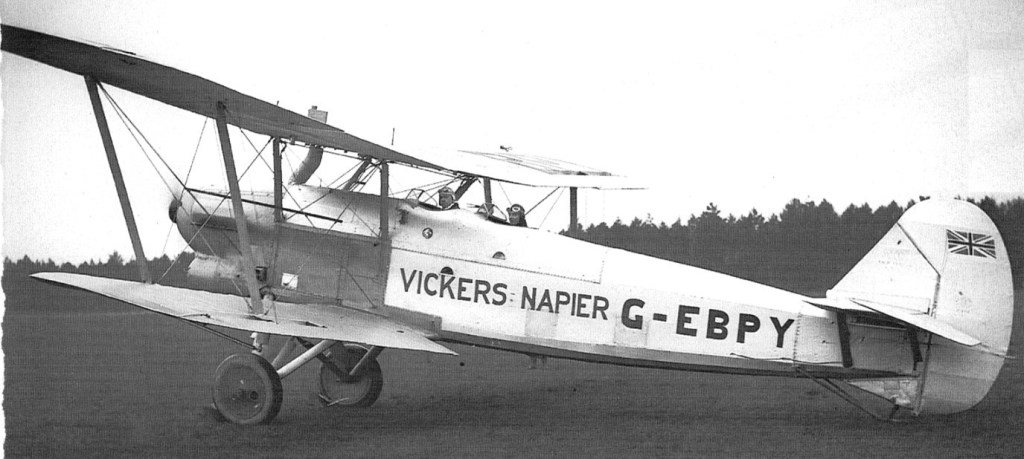
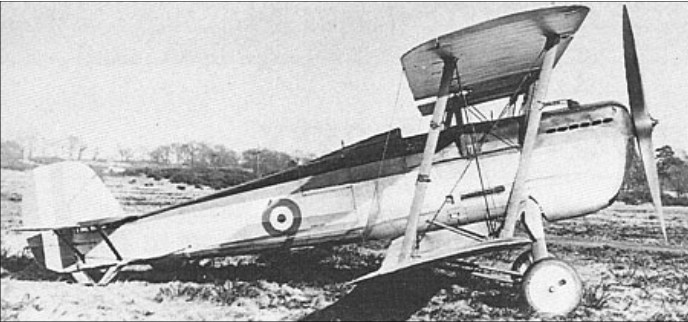
Vickers 207 / M.1/30

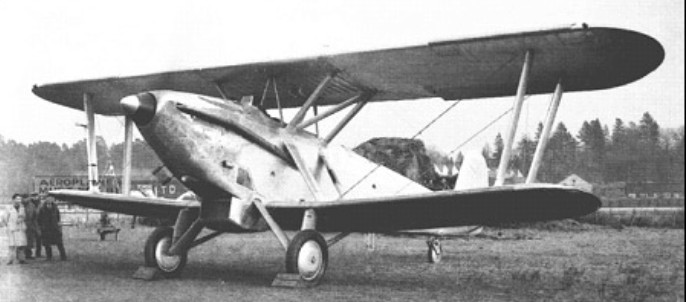
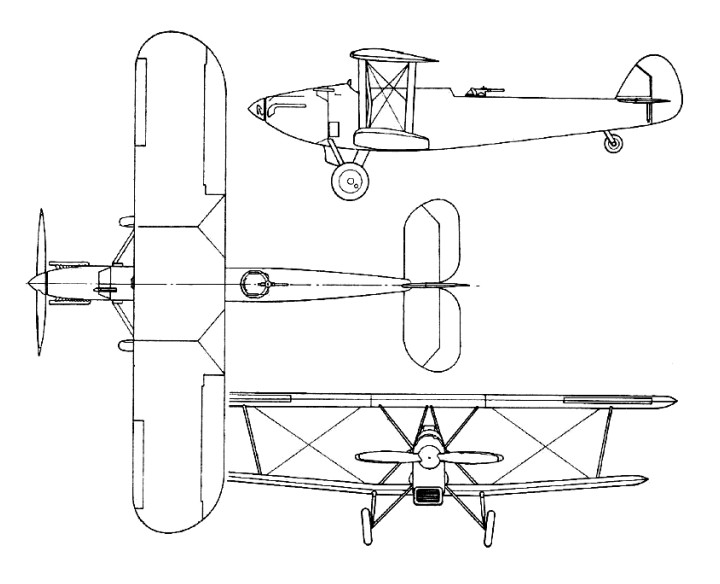
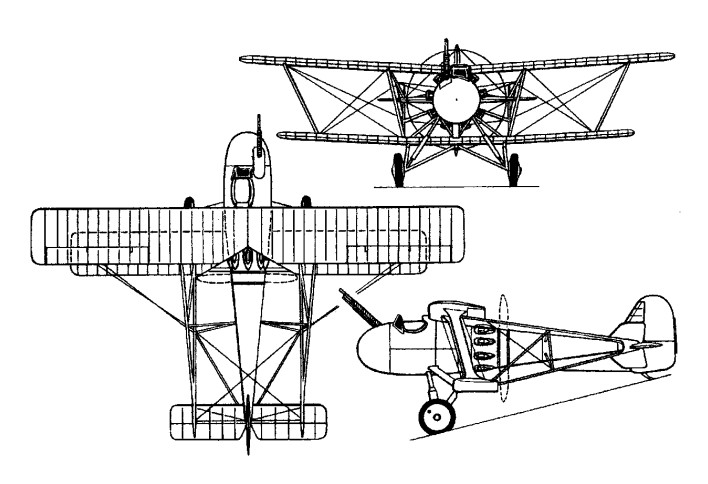
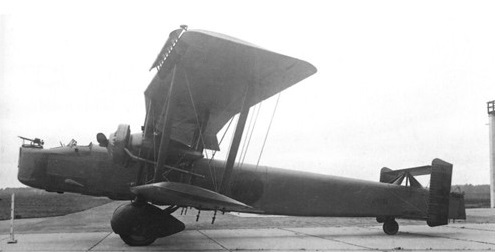
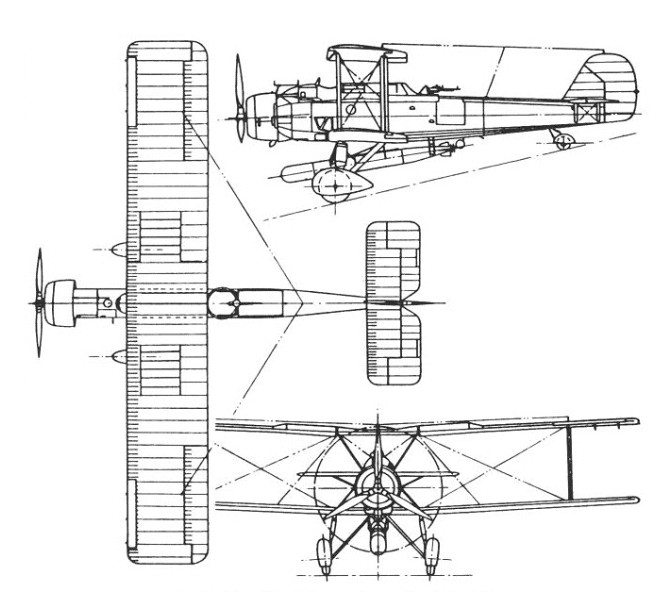
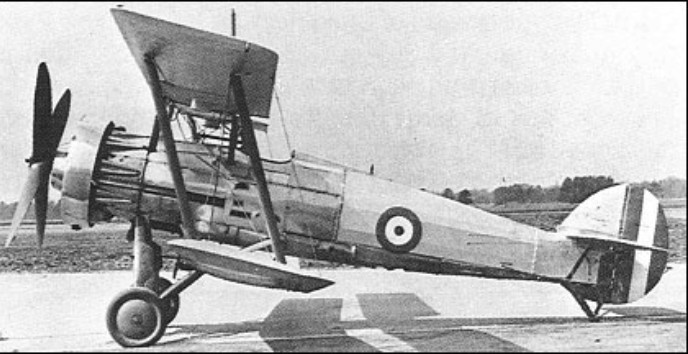
Designed by R.K Pierson & Barnes Wallis, the Vickers Type 207 was a single-engined two-seat biplane. Often known as the Vickers M.1/30, for it was built to Air Ministry specification for a carrier based torpedo bomber to replace the Blackburn Ripon. The Air Ministry paid Vickers for a single prototype; its competitors were the Blackburn M.1/30 and the Handley Page H.P.46.

Like Blackburn, Vickers chose the 825 hp (615 kW) Rolls Royce H10 engine, later called the Buzzard IIIMS, a liquid cooled V-12 to power their aircraft. The Type 207 was a single bay biplane, without sweep or stagger and with wings of almost equal span. The upper wing carried Handley Page slots and Frise ailerons; the lower wing alone had dihedral. Both wings used the relatively thick and still novel Raf34 aerofoil section; they folded for storage. The rudder was balanced and the braced tailplane carried aerodynamic servo-assisted elevators operated via trailing edge tabs. Barnes Wallis had recently been appointed chief structural engineer for Vickers aircraft and he brought to the Type 207 new methods of duralumin construction in both wings and fuselage from his previous work on airships. Typically, these structures were complicated but light. The aircraft was fabric covered throughout.

The upper wing was well above the fuselage, braced to it by two pairs of V-form struts on either side; two single struts from the same points on the upper fuselage braced each lower wing. The pilot sat below the wing leading edge and the observer, equipped with a Lewis gun, sat well aft. The split axle undercarriage allowed torpedo dropping from under the aircraft and was fitted with wheel brakes as its ship-borne role required, together with an arrester hook and tail wheel. The Buzzard’s underslung radiator was positioned between the forward undercarriage legs.

The Type 207 flew for the first time on 11 January 1933, with Mutt Summers at the controls. The only notable modification was the addition of 2o of dihedral to the previously flat upper wing. The aircraft but neither of its crew was lost in the first fast diving test on 23 November 1933, when structural breakup was initiated by a tailplane failure. In the end there were no orders for any of the M.1/30 entrants.

Only one was built.

Engine: 1 × Rolls Royce Buzzard IIIMS, 825 hp (615 kW)
Wingspan: 50 ft 0 in (15.24 m)
Length: 43 ft 7 in (13.69 m)
Height: 14 ft 5 in (14.42 m)
Wing area: 724 sq.ft (67.3 sq.m)
Empty weight: 5,200 lb (2,359 kg)
Gross weight: 9,600 lb (4,354 kg)
Maximum speed: at 4,000 ft (1,220 m) 159 mph (256 km/h)
Rate of climb: to 4,000 ft (1,220 m) 800 ft/min (4.1 m/s)
Armament:
1× 0.303 in (7.7 mm) Lewis gun
1×torpedo of a 2000 lb (907 kg) or 1000 lb (453 kg) bomb under fuselage; or 4×500 lb ((227 kg)bombs under inner wings
Crew: 2

Vickers 207 (M.1/30)

Vickers Vincent

The Vincent was a three-seat general-purpose version of the Vildebeest, designed essentially for tropical service in the Middle East and therefore carrying comprehensive equipment. Fitted with a 484kW Bristol Pegasus IIM3 engine, it (like the Vildebeest) had sufficient fuel as standard for a 1000km flight while cruising at 195km/h; this range could be increased to 2000km by the use of an auxiliary fuel tank attached in the position normally occupied by the torpedo. A number of Vildebeests were converted into Vincents and, with new production aircraft, the RAF operated just under 200 from 1934. The last were withdrawn in 1941.

Engine: 1 x 635hp Bristol Pegasus IIM.3
Wingspan: 14.94 m / 49 ft 0 in
Length: 11.18 m / 36 ft 8 in
Height: 5.41 m / 17 ft 9 in
Wing area: 67.63 sq.m / 727.96 sq ft
Max take-off weight: 3677 kg / 8106 lb
Empty weight: 1920 kg / 4233 lb
Wing loading: 11.07 lb/sq.ft / 54.0 kg/sq.m
Max. speed: 124 kts / 229 km/h / 142 mph
Ceiling: 5791 m / 19000 ft
Maximum range: 1086 nm / 2012 km
Range: 543 nm / 1006 km / 625 miles
Crew: 3
Armament: 2 x 7.7mm machine-guns, 8 x 50kg + 8 x 9kg bombs

Vickers Vincent

Vickers 163

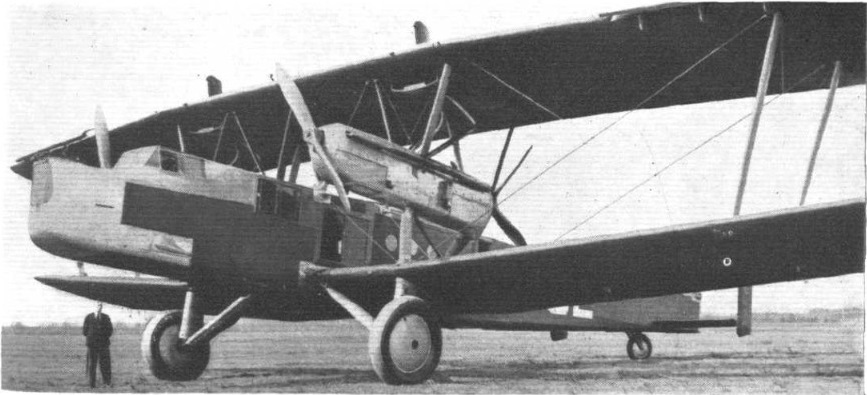
The Vickers Type 163 prototype biplane bomber design of the 1930s. It was based on the Vickers 150 Vanox scaled up to take four Rolls-Royce FXIVS 480 hp engines in paired mountings. The engines are mounted in tandem pairs on Y struts between the wings, two engines driving tractor props and two driving pusher props.

It was submitted both as a bomber and as a troop carrier to Air Ministry specifications B.19/27 and C.16/28 respectively first flying on 12 January 1931. As a bomber, the load weighed up to 1361 kilograms, housed in the inner compartment (a maximum of 8 bombs weighing 114 kg) and external hardpoints (up to 4 bombs weighing 114 kg or two 226 kg). Defensive armament consisted of two 7.7-mm machine guns Lewis, mounted on a mobile turret Scraff fore and aft fuselage. The 163 is all metal. Wheel brakes are fitted, and under the tail is a castoring tail wheel.

The aircraft was rejected by the military. In order to fully exploit the potential of the aircraft, it was decided to convert the Type 163 military transport aircraft that meets the specifications C.16 / 28. In this configuration, the aircraft could carry up to 21 soldiers. The machine can be operated as a bomber with a crew of 5, or as a troop carrier, with a crew of 4.

Vickers Type 163 (C.16 / 28)

Only one was produced.

Gallery

Engines: 4 × Rolls Royce FXIVS, 480 hp / 358 kW
Length: 66 ft 9 in / 20.34 m
Wingspan: 90 ft 0 in / 27.4 m
Height: 22 ft 4 in / 6.80 m
Wing area: 1,948 m² / 178 sq.m
Gross vehicle weight: 25,700 lb / 11,700 kg
Maximum speed: 139 kn / 258 kph / 160 mph at 6,500 ft / 1,980 m
Cruising speed: 220 kph
Range: 1,000 NMI / 1850 km / 1,150 mi
Service ceiling: 25,200 ft / 7680 m
Time to 10,000 ft (3,050 m): 18 min 15 sec
Armament: 2 × 0.303 in Lewis Guns
Capacity: up to 12 x 250 lb / 1361 kg bombs / 10 troops
Crew: 4 / 5

Vickers 163

Vickers 161

In the mid ‘twenties, the British Air Ministry found attractive the possibility of the 37mm COW (Coventry Ordnance Works) gun for use against bombers. Accordingly, Specification F.29/27 was issued calling for a single-seat dedicated bomber-interceptor armed with this large and heavy weapon. The specification called for the gun to be mounted in a fixed position to fire forward and upward at an oblique angle of at least 45°. Provision was to be made for oversize and automatically-fed ammunition clips totalling 50 shells, the entire COW gun mechanism had to be easily accessible to the pilot and steadiness as a gun platform was a prime requisite. Vickers submission to this Specification, the Type 161, was extraordinary in that it reverted to the long-abandoned pusher biplane formula with tail surfaces carried by booms. Despite its archaic configuration, however, the Type 161 embodied some advanced features and became the subject of a single-aircraft Air Ministry contract. An unequal-span two-bay biplane with comparatively high aspect ratio wings with duralumin plate and tube structure, it had a metal mono-coque nacelle, accommodating the pilot to port and the COW gun to starboard, which was faired into the upper wing and raised above the lower wing by splayed N-type struts. The 530hp Bristol Jupiter VIIF nine-cylinder radial carried at the rear of the nacelle drove a four-bladed propeller, aft of which was a curious, long tapered cone which, intended to promote directional stability, was supported by struts from the tubular tail-booms and the tailplane. The Type 161 was flown for the first time on 21 January 1931, and after provision of a broader-chord rudder, it flew extremely well, arriving at Martlesham Heath in September 1931 for official evaluation. Development was discontinued when official interest in promoting the quick-firing COW gun lapsed.

Max take-off weight: 1520 kg / 3351 lb
Empty weight: 1080 kg / 2381 lb
Wingspan: 9.75 m / 32 ft 0 in
Length: 7.16 m / 24 ft 6 in
Height: 3.76 m / 12 ft 4 in
Wing area: 25.08 sq.m / 269.96 sq ft
Max. speed: 298 km/h / 185 mph

Vickers 161

Vickers 150 / 195 / 225 Vanox

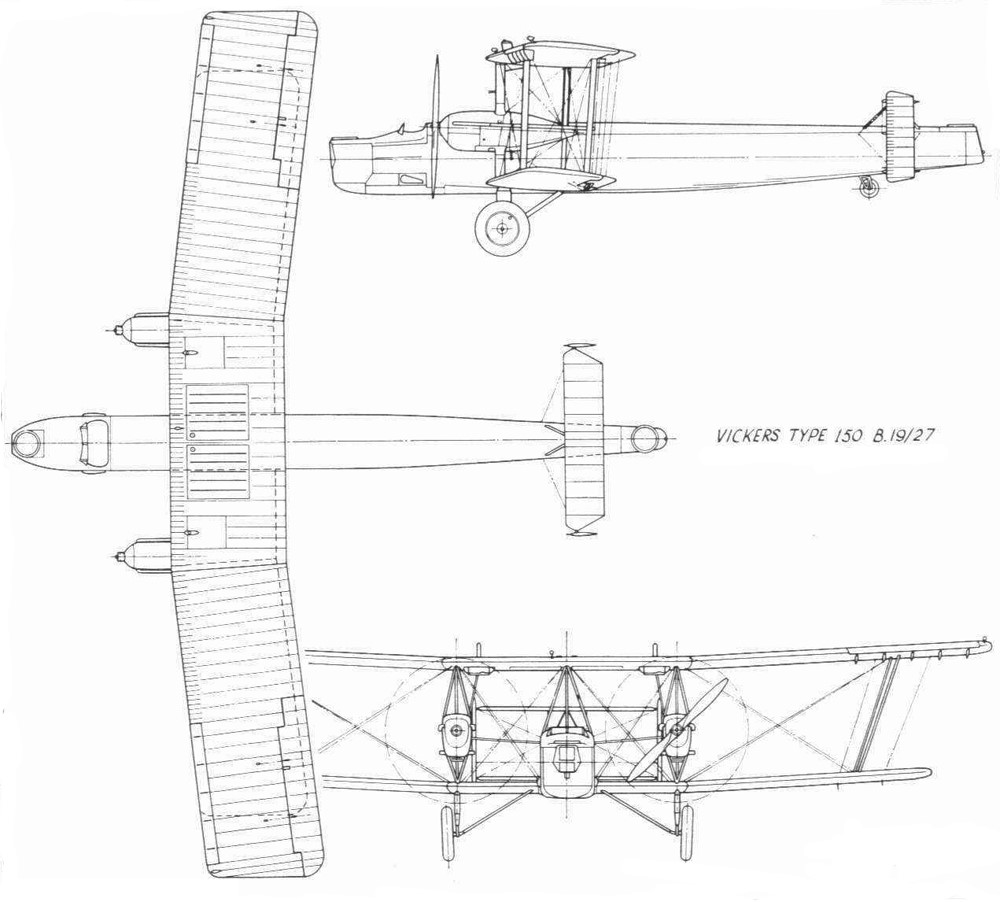
Initially a private venture, the submission of Vickers design to the Air Ministry coincided with the issuing of Air Ministry specification B.19/27 for a Virginia replacement. Conceived as a biplane powered by the Bristol Jupiter radial engine it was to have much better performance than the Virginia with similar engines.

The B.19/27 specification meant that the Vickers submission would be tested competitively in trials against other manufacturer’s designs. In the redesign to meet the specification, the B.19/27 project took the Virginia Mark X all moving rudder together with an all-moving tailplane. Three designs were submitted in total; two biplanes with Jupiter and geared Bristol Mercury engines respectively and a monoplane version. The Mercury engined design, the Vickers Type 150 was selected by the Ministry for consideration and building, now to be funded by the Ministry, started. Part way through it was agreed that an alternative engine was allowable, the Rolls-Royce F.XIV.

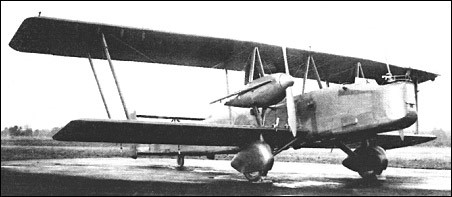
The aircraft was a two-bay biplane of all metal construction, with a biplane tailplane and with the two engines mounted between the wings.

The aircraft flew for the first time on 30 November 1929. Initial testing and evaluation showed that the aircraft had poor handling, being unstable laterally, prone to Dutch roll and to severe flexing of the rear fuselage. It was handed to the RAF in 1932. Following a forced landing it was rebuilt incorporating recommendations made in reports from Ministry test pilots to try to resolve these problems, and was powered by Kestrel III engines. It was then given the name Vickers Vanox by Vickers.

These changes did not solve the aircraft’s handling problems, and the sweepback of the wings was reduced, which resolved the handling problems. The Kestrel engines proved unreliable, and were replaced by more powerful Bristol Pegasus radial engines. In this form, the aircraft was designated the Vickers Type 195 Vanox, and was demonstrated to meet the requirements of specification.

Following further modifications in February 1933 to improve performance, with extended, three bay wings being fitted, it was now designated the Type 255. However, by this time, the competing Handley Page Heyford and Fairey Hendon bombers had already been ordered into production.

The sole Type 255 spent most of its time in Malta (Raf Luqa) and Gozo on bombing trials and W/Ops training. The aircraft did not perform well and was removed from service after 1 year having been superceded by the Handley Page Heyford.

The Vanox did fly again very fleetingly in 1938 taking part in Air Refuelling trials by the Royal Aircraft Establishment in the Mediterranean, being flown for the last time on 7 January 1938.

Specifications:

Type 150
Engines: 2 × Rolls Royce F.XIV, 480 hp (358 kW) each
Length: 60 ft 6 in (18.45 m)
Wingspan: 76 ft 6 in (23.32 m)
Height: 19 ft 3 in (5.87 m)
Wing area: 1,367 ft² (127 m²)
Airfoil: RAF 34
Empty weight: 10,435 lb (4,743 kg)
Loaded weight: 15,400 lb (7,000 kg)
Max. takeoff weight: 16,170 lb (7,350 kg)
Maximum speed: 125 mph (109 kn, 201 km/h)
Range: 920 mi (800 nmi, 1,481 km)
Service ceiling: 23,000 ft (7,000 m)
Wing loading: 11.3 lb/ft² (55.1 kg/m²)
Power/mass: 0.062 hp/lb (0.10 kW/kg)
Climb to 6,500 ft (1,980 m): 19 min 45 sec
Guns: 2 × .303 in (7.7 mm) Lewis Guns
Bombs: Up to 2,200 lb (1,000 kg) of bombs
Crew: 4

Vickers 286 Vildebeeste / Vildebeest

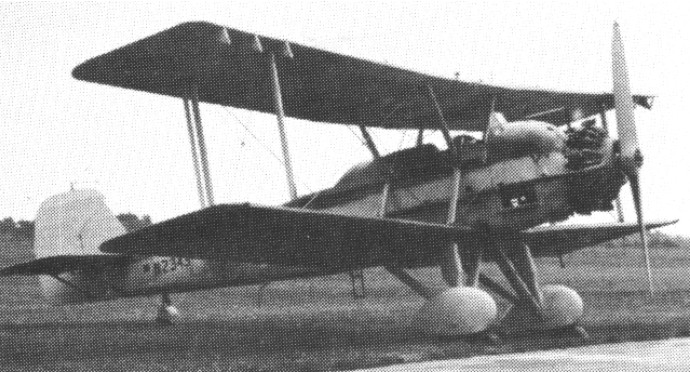
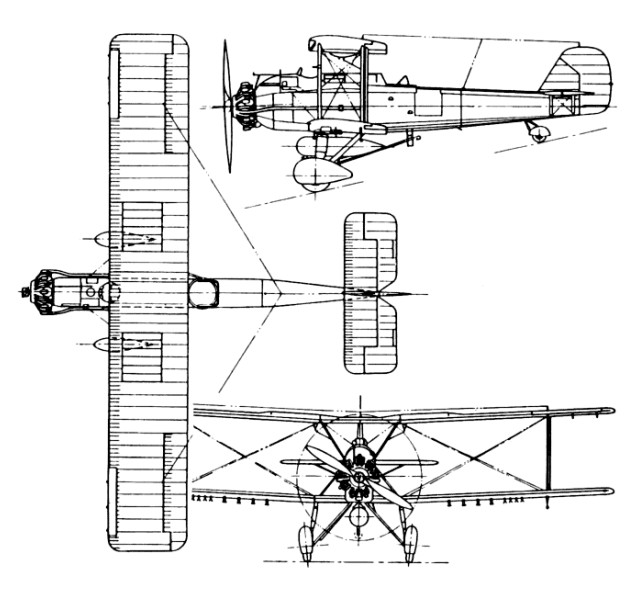
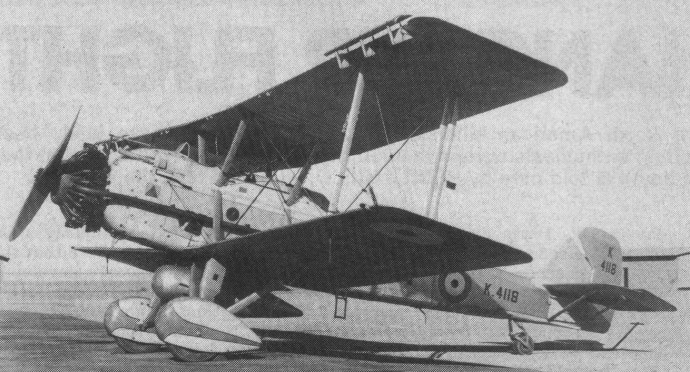
The Vickers Vildebeeste first flew in 1928 as a torpedo bomber and entered RAF squadron service in Mk.I form in 1933. The aircraft type was christened Vildebeeste in 1928 but amended to Vildebeest in 1934. Powered by a 462kW Bristol Pegasus IM3 engine, the pilot occupying an open cockpit below the leading edge of the upper wing and the observer aft of the wings in a shallower and lower section of the fuselage. A prone bombing position was provided below the pilot’s seat. Armament comprised one fixed Vickers gun firing through the propeller and one Lewis gun on a Scarff ring over the back cockpit. The crutch for the 450mm torpedo or bomb rack was under the fuselage between the two legs of the landing gear.

Vickers Vildebeeste Article

The Mk.I was followed into service by the Mks.II to IV, powered by 484kW Pegasus IIM3 and 603kW Bristol Perseus VIII engines. The final variant – the Mk. IV – was built between December 1936 and November 1937. The Mk.IV featured an electric starter, replacing the previous model’s inertia starter. Eighteen went into service with the RAFs No. 42 Squadron in 1937 until replaced by Bristol Beauforts in mid-1940. The distinguishing feature of the Mk. IV was its Perseus sleeve-valve engine, clad in a long chord low drag cowling and driving a three blade variable pitch Rotol propellor. The Mk. IV, the ultimate example of the Vildebeeste, was obsolescent even by 1936 standards.

Total production for the RAF was just over 200, about half of which were still operational at the outbreak of World War II. Two RAF squadrons of Mk.III Vildebeest were based in Singapore in 1941 and went into action against the Japanese with total loss of aircraft. In addition the Vildebeest was adopted by the Spanish Ministry of Marine as a standard torpedo-carrying seaplane and a batch of about 27 were ordered from the Spanish CASA firm, which had acquired a manufacturing licence. These were powered by 443kW Hispano-Suiza 12Nbr engines.

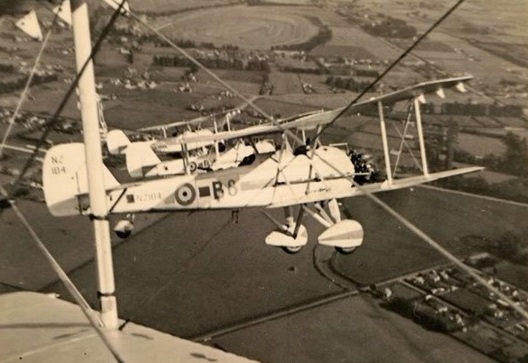
The RNZAF, having order eight Mk. Is in 1933, stayed with the original spelling. With four more ordered the following year the Vildebeeste was to re-equip the soon to be formed (April 1937) RNZAF with two bomber-reconnaisance flights.

Twenty seven more Vildebeestes were taken on charge by the RNZAF in 1940-1 and of these twelve were Mk. Vs. Eight arrived by ship at Hobsonville in October 1940 and four in April 1941. In December 1940 the first two Mk. Vs were delivered to No.1 General Reconnaisance (GR) Squadron at Whenuapai to join the Pegasus-powered Mk. IIIs already on strength. All eight of the first shipment appear to have served with this unit, being joined by three of the final four — after delayed assembly — in October 1941.

Gallery

Vildebeeste II
Engine: Bristol Pegasus IIM-3, 660 hp
Prop: 2 blade

Vildebeeste III
Engine: Bristol Pegasus IIM-3, 660 hp
Prop: 2 blade
Max speed: 143 mph
ROC: 630 fpm

Vickers 286 Vildebeest Mk. IV
Engine : Bristol Perseus VIII, 814 hp
Length : 37.664 ft / 11.48 m
Height : 14.665 ft / 4.47 m
Wingspan : 49.016 ft / 14.94 m
Wing area : 727.969 sq.ft / 67.63 sq.m
Max take off weight : 8502.5 lb / 3856.0 kg
Weight empty : 4725.3 lb / 2143.0 kg
Max. speed : 136 kts / 251 km/h
Service ceiling : 18996 ft / 5790 m
Wing load : 11.69 lb/sq.ft / 57.0 kg/sq.m
Range : 1412 nm / 2615 km
Crew : 2-3
Armament : 2x cal.303 MG (7,7mm), 1x Torp. 18in / 1000kg Bomb

Vildebeeste IV
Engine: Bristol Pegasus VIII, 825 hp
Prop: 3 blade
Wingspan: 14.94 m / 49 ft 0 in
Length: 11.48 m / 38 ft 8 in
Height: 4.47 m / 15 ft 8 in
Wing area: 67.63 sq.m / 727.96 sq ft
Empty weight: 2143 kg / 4725 lb
Max take-off weight: 3856 kg / 8501 lb
Max speed: 156 mph / 251 km/h
ROC: 840 fpm.
Ceiling: 5180 m / 17000 ft
Range: 1014 km / 630 miles
Armament: 2 x 7.7mm machine-guns, 1 x 457mm torpedo or 450kg of bombs

Vickers Vildebeest

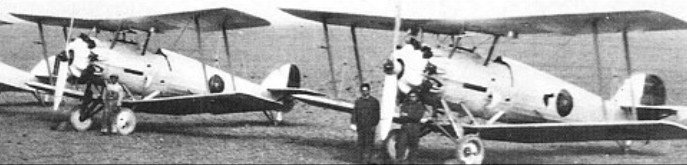
Vickers 177

Effectively the seventh Type 143 airframe, the Type 177 was intended as a single-seat shipboard fighter to Specification 21/26 – for which the Type 141 was also a contender – and flew for the first time on 26 November 1929. Powered by a 540hp Bristol Jupiter XFS nine-cylinder radial air-cooled engine, the Type 177 was purely a private venture and was the final development in the line of Vickers single-seat tractor-engined fighter biplanes. Armament comprised the standard pair of synchronised 7.7mm Vickers machine guns. On 20 May 1930, the Type 177 demonstrated a terminal velocity dive from 6100m in which it attained a speed of 483km/h, and, in the following month, deck landing trials were performed aboard HMS Furious. Unaccustomed to steerable hydraulic brakes – an innovation featured by the Type 177 – one pilot applied the brakes too harshly and put the aircraft on its nose, after which these trials were discontinued. The Type 177 proved unacceptable for shipboard use and development was discontinued.

Max take-off weight: 1837 kg / 4050 lb
Empty weight: 1286 kg / 2835 lb
Wingspan: 10.44 m / 34 ft 3 in
Length: 8.38 m / 28 ft 6 in
Height: 3.43 m / 11 ft 3 in
Wing area: 31.21 sq.m / 335.94 sq ft
Max. speed: 306 km/h / 190 mph
Range: 756 km / 470 miles

Vickers 143

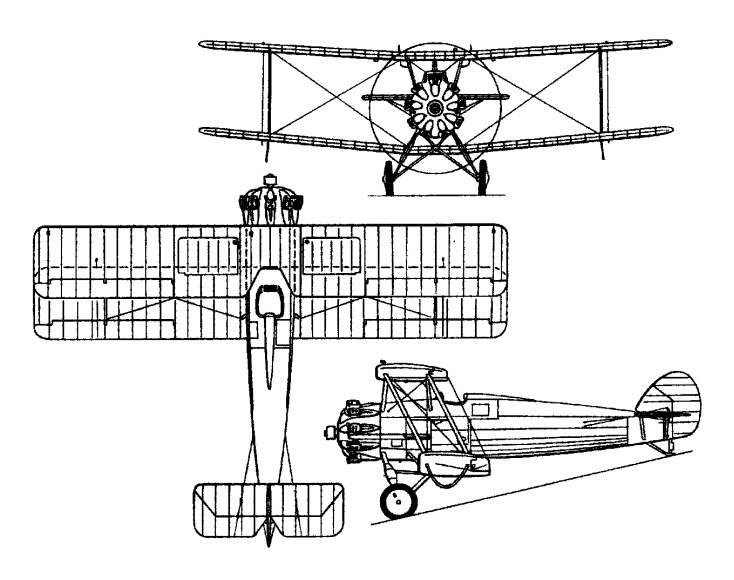
Evolved from the Type 141 to meet a Bolivian requirement which was to result, in 1929, in an order for six aircraft, the Type 143 was flown for the first time on 11 June of that year. The Type 143, known unofficially as the Bolivian Scout, differed from the Type 141 in having squared-off wingtips, longer-span, narrow-chord ailerons, a larger cut-out above the pilot’s cockpit, a split-axle undercarriage, hoop-skids under the inter-plane struts and a modified fuselage faired to a broader oval section to mate with a 450 hp Bristol Jupiter VIA nine-cylinder air-cooled radial engine. As with the Type 141, the upper wing centre section was carried above the fuselage on splayed, cross-braced struts, the fuselage being supported above the lower wing by N-type struts. Construction was all metal and armament comprised two 0.303-in (7,7-mm) Vickers guns firing through troughs in the fuselage sides. The first of the six Type 143 fighters for Bolivia’s Cuerpo de Aviation reached El Alto, La Paz, in January 1930, the sixth having been fitted with a Jupiter VII for Air Ministry trials at Martlesham Heath before being re-engined with a Jupiter VIA for shipment to Bolivia. By the time sporadic border disputes between Bolivia and Paraguay in the Chaco Boreal escalated, in June 1932, into full-scale warfare, the Cuerpo de Aviation of the former nation had already written off three of its Type 143s. On 30 September, one of the surviving Type 143s was effectively responsible for the first Paraguayan loss as a result of air-to-air combat – probably the first loss of an aircraft in such circumstances in the history of Latin-American military aviation – when a Wibault 73 received damage that, indirectly, was to lead to its destruction.

Max take-off weight: 1415 kg / 3120 lb
Empty weight: 1019 kg / 2247 lb
Wingspan: 10.36 m / 34 ft 0 in
Length: 8.50 m / 28 ft 11 in
Height: 3.43 m / 11 ft 3 in
Wing area: 31.21 sq.m / 335.94 sq ft
Max. speed: 241 km/h / 150 mph
Ceiling: 6100 m / 20,000 ft

Vickers 143

Vickers 142 Vivid

The record-breaking Vickers 142 Vivid general purpose biplane sea plane was later converted to a land plane.

Flown by Capt. Neville Stack and John R. Clifton during 1931 from Heston, West London, it made a series of record-breaking flights to Berlin, Copenhagen, and Warsaw.

The Vivid was later destroyed in a hanger fire at Broomfield Aerodrome, Chelmsford, Essex.

Engine: 590 hp
Seats: 2

Vickers 141

The Specification 21/26, issued by the Air Ministry’s Directorate of Technical Development (DTD) on September 30, 1926, called for a “Single Seater Fighter Ship¬-plane for use from HM ships,” fitted with a land undercarriage which could be replaced by floats, and vice versa, within half an hour. The aircraft, which was to have an all metal structure but could be fabric covered, was to be suitable for launch from a catapult and for taking off from and alighting on the deck of an aircraft carrier. It was to have a good degree of positive stability about all axes in both configurations, and tail incidence had to be adjustable in flight to enable the aircraft to fly horizontally at all speeds without attention from the pilot.

It was to be “highly controllable” at all speeds, and especially close to stalling speed, with no tendency to ‘hunt’ in a steep dive. Control had to be adequate to stop an incipient spin when the machine was stalled. A high degree of manoeuvrability in the air and on the ground or water was desired, and it had to respond quickly to the controls while not being tiring to fly. The ailerons were to have the minimum of yawing effect.

As a seaplane, the machine was to have good static stability in the water, and when under tow or running under its own power it was to be stable about all axes at all speeds.

Engines specified were the air cooled Bristol Mercury radial giving 550hp at 2,000rpm or the water cooled Rolls Royce Falcon X giving 480hp at 2,300rpm. The installation had to allow for rapid and easy removal of the engine. The cowling, which also had to be easily removable, had to be finished “to prevent the reflection of light which might betray the presence of the aircraft to the enemy or dazzle the pilot”. A metal propeller was specified.

There was to be tankage for 74 gallons of fuel, plus an easily removed 20 gallon auxiliary tank and a gravity tank of sufficient capacity to allow half an hour’s flight at full power at ground level. An 11 gallon oil tank was to be provided if the Mercury engine was used, or an 81/2 gallon oil tank and a 2.5 gallon reserve water tank for the Falcon.

Alternative exhaust systems for day or night flying were required, and were to be easily changed. The night flying system had to provide adequate silencing and flame damping, while the daytime system was to be “of minimum weight”. Additional equipment to be carried during the acceptance flights weighed 5581b and included a Vickers 0.5in gun and 300 rounds, a Vickers 0.303in gun and 600 rounds, a rocket launching (R/L) tube and six bombs, and flotation gear. A second 0.303in gun with 600 rounds was to be provided for if the 0.5in gun was not available in time.

Minimum performance requirements with this load, using the Mercury, called for a horizontal speed of 132kt (152mph) at 10,000ft and a service ceiling of 23,000ft. With the Falcon X the figures were 127kt (146mph) at 10,000ft and 22,000ft. The length of run to take¬off was not to exceed 47ft in a relative wind of 28kt (32mph), and the aircraft was to become airborne at a speed of 55mph when catapulted in still air. The suitability for launching from a catapult or alighting on the deck of an aircraft carrier was “of first importance”, and the aircraft had to be capable of taking off from a turret or cruiser platform.

For fighting, the pilot was to have the best possible view in all directions, and a good view forward and downwards was required for carrier landings. A clear, unobstructed view forward over the machine’s centreline was needed to enable him to sight the fixed guns, the installation of which was to dispense with blast tubes. There was also to be provision for the fitting of a G.3 aerial camera as near to the sights as practicable, and standard clips were to be fitted to allow the new “light carrier” to be installed to carry four 20 lb bombs, sufficient clearance being provided to enable the bombs to be released in a very steep dive.

Despite the emphasis placed on the machine’s naval use, it was stressed that: “The aircraft is to be designed primarily as a landplane fighter and qualities required for this work are not to be sacrificed in order to improve its characteristics when equipped with the float alighting gear”. A padded head support was to be provided to prevent injury to the pilot during catapult launch acceleration.

A limit of 35ft was put on the wing span, the overall length was restricted to 23ft, the height was not to exceed 14ft 9in. Quick and easy removal and erection of the wings was specified, with the ability to remove the wing structure completely in ten minutes and replace it in fifteen minutes.

The contractor was required to provide a full size mock up of his proposed aircraft before constructional work was begun, to enable the Director of Technical Development to examine and approve the layout. This mock up had to include “all parts and components which are likely to interfere with the all round view of the pilot”, and was to show the internal arrangement of the cockpit. Scale model floats for official water tank tests were also to be provided, along with specimens of ribs, a section of wing, and a length of spar.

Tendering for this demanding specification were Armstrong Whitworth, which offered the AW XVI; Fairey, with the Flycatcher II; Gloster, which tendered the Gnatsnapper; Hawker, which offered the Hoopoe; Vickers, with a modified version of its Type 141 Scout; and George Pamall & Co.

After re-engining of the Type 123 with the 510hp Rolls-Royce F.XI 12-cylinder Vee-type water-cooled engine as the Type 141, this fighter became a contender in January 1928 in a competition held at Martlesham Heath to select for the RAF a single-seat fighter meeting the requirements of Specification F.9/26. The Type 141 carried single 7.7mm machine guns in bulged housings on each side of the fuselage beneath the cockpit, and, apart from its engine, it differed from the Type 123 in having a retractable radiator in the forward fuselage in place of the fixed radiator beneath the wing centre section. Although possessing light and responsive controls, and a good performance, the Type 141 was bested by the Bristol Type 105 Bulldog and the Hawker Hawfinch. After its return from Martlesham Heath, the Type 141 was fitted with a revised vertical tail, a chin radiator and shortened rear undercarriage legs (enabling them to be anchored to the front wing spar), and was submitted for deck trials as a shipboard fighter to Specification 21/26. Other modifications included provision of an arrester hook, wheel brakes, interconnected elevators, detachable wing spar joints and hoist attachments. After initial trials, the dihedral of the lower wings was increased from three to five deg in an attempt to improve lateral stability. Sea trials took place aboard HMS Furious in June 1929, but these were not entirely satisfactory, and, after its return to Vickers, the Type 141 was flown in the 1929 King’s Cup Air Race (5-6 July), but was forced to retire, the aircraft subsequently being scrapped.

Although none of the aircraft tendered to Specification 21/26 won a production contract, Hawker went on to develop a Kestrel engined fleet fighter which first flew as the Norn in 1930 and went into production as the Nimrod.

Max take-off weight: 1678 kg / 3699 lb
Empty weight: 1202 kg / 2650 lb
Wingspan: 10.36 m / 34 ft 0 in
Length: 8.23 m / 27 ft 0 in
Height: 2.72 m / 9 ft 11 in
Wing area: 35.12 sq.m / 378.03 sq ft
Max. speed: 285 km/h / 177 mph