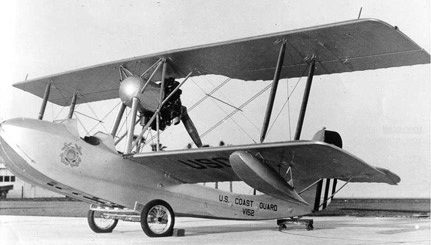
Viking Flying Boat Co built in 1936, at New Haven, Connecticut, five OO-1 single pusher-engined flying-boats for US Coast Guard, based on French Schreck FBA 17HT-4.
Viking OO-1 V155
The five built as OO-1 (V152-156) were USCG scout version of the V-2. The cost $6500.
Wingspan: 38’7″ Length: 29’4″ Max speed: 104 mph Cruise: 88 mph Stall: 45 mph Range: 390 mi
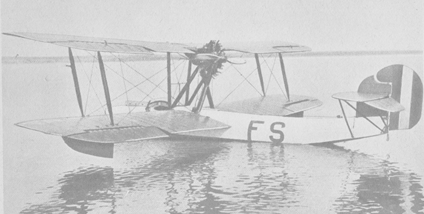
The 1929 VK-1 was a two-place, open cockpit biplane powered by a 90hp Cirrus Mk III engine. Designed by Felix Knoll and registered N851N c/n 101, the wingspan was 30 ft 0 in.
The registers indicate this was a possible metal-fuselage evolution of Knoll KN-1, but leave unexplained a major engine change to 220hp Wright.
Designed by William L Shaffer, the 1928 SS-1 was a three-place, open-cockpit biplane. It was fabric-covered steel-tube fuselage with wood-framed wings.
No production data was found about this short-lived company, who announced they would keep the initial selling price at $2,000, except for a sole registry of NX5626 c/n 1. Some records show the 50hp Hallett H-526 installation replaced by a 90hp Curtiss OX-5 engine. The X license was cancelled on 2 January 1930 and the ID cancelled 2 July 1934.
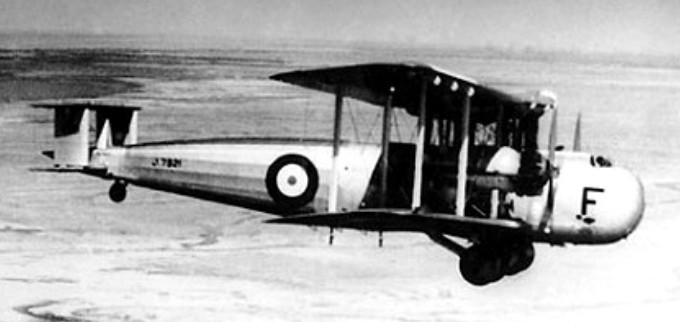
The Vickers Vanncock was designed to meet the Air Ministry Specification B.19/27 calling for a long-range night bomber.
Only one prototype was built, J9131, but it was twice modified and given new type numbers.
The Vanncock Mk.I, Type 150, was powered by two Rolls-Royce Kestrels and fitted with single-bay outer wings.
The Vanncock Mk.II, Type 195, was re-engined with two Bristol Pegasus I,M.3s and had a three-bay wing. The four-seat Mk.II had an AUW of 16,000 lb, span of 76 ft 6 in, and length of 60 ft 4 in.
The final Type 255 reverted to two-bay wings of increased area, retaining the Pegasus engines.
Following the first Lympne trials held in 1923 for single-seat motor-gliders, the Air Ministry organised a similar event in 1924, this time for low-powered two-seat aircraft. The engine capacity limit was set at 1,100 cc. and, as before, the wings had to fold for easy transport and storage.
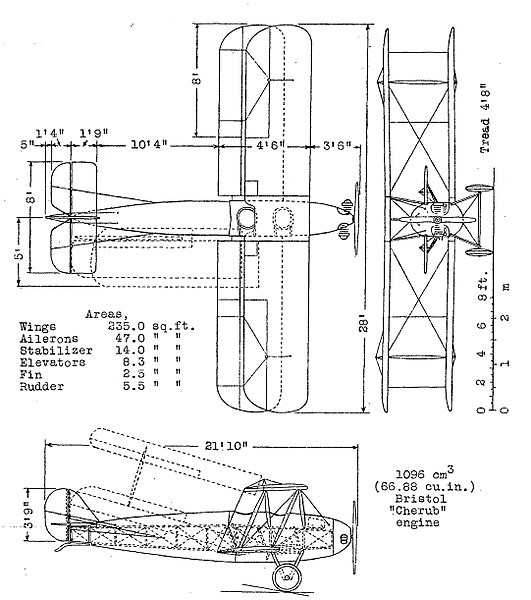
The Vickers Type 98 Vagabond was Vickers’ entrant for the second Lympne light aircraft competition, held in 1924. Designed by R.K. Pierson, it was a single-bay, wire-braced biplane with wings of constant chord except towards the rounded trailing tips. The wings had equal span and carried marked stagger. There were ailerons on both upper and lower wings, with flaps inboard on the lower wings which could be folded to assist wing-folding. The pilot and passenger sat in open cockpits, the latter under the upper wing. The pilot’s upward view was enhanced by a small cutout in the trailing edge of the top wing. The fuselage had a more rounded cross-section than that of the earlier Viget, Vickers’ single-seat entry to the 1923 competition, extending a little below the lower wing. The 32 hp (24 kW) Bristol Cherub III flat twin engine was mounted in a smooth nose with the finned cylinders exposed for air cooling. The horizontal tail was similar to that of the Viget, but the fin and rudder were much more rounded. Because of the stagger, the mainwheels were in front of the lower wing, braced to the lower fuselage logeron aft to the front wing spar and forward to a point roughly below the upper wing leading edge.
A most unusual feature of the Vagabond was the method of longitudinal trimming. Rather than changing the angle of the tailplane with respect to the fuselage, the whole rear part of the fuselage was hinged just ahead of the lower wing’s trailing edge. This was controlled via a handwheel between the two cockpits; the rear fuselage was raised at the start of a landing descent to increase drag and slow the aircraft.
Early flight trials, with H.J.Pain as pilot revealed a need to stiffen the engine mountings. When this was done, the Vagabond, now fitted with a three-cylinder 1,095 cc Blackburne Thrush radial engine flew well enough at Lympne, but was eliminated in the preliminary rounds. The trials took place between 29th September and 4th October 1924.
Nevertheless, the aircraft and engine performance were improved once it had been eliminated from the main event and it subsequently took part in the 100-mile Grosvenor Challenge Cup Race, which was won by Bert Hinkler flying the Avro Avis.
Only one Vagabond, registered as G-EBJF on 1 July 1924 was built. It was deregistered on 24 January 1928.
Powerplant: 1 × Bristol Cherub III, 32 hp (24 kW), later 1,095 cc Blackburne Thrush Wingspan: 28 ft 0 in (8.53 m) Wing area: 235 sq ft (21.8 m2) Width: 10 ft 0 in (3.05 m) (width wings folded) Length: 21 ft 10 in (6.65 m) Empty weight: 527 lb (239 kg) Gross weight: 887 lb (402 kg) Maximum speed: 77 mph (124 km/h, 67 kn) Crew: 1 Capacity: 1 passenger
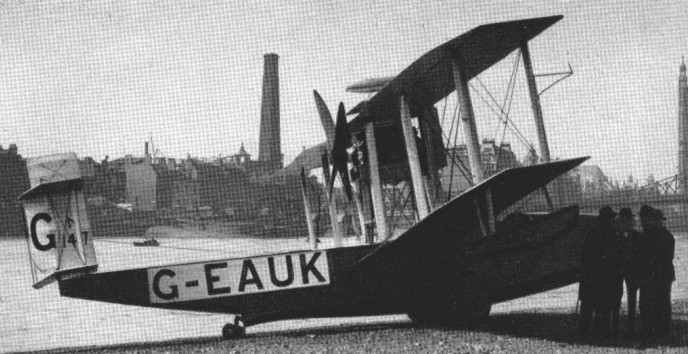
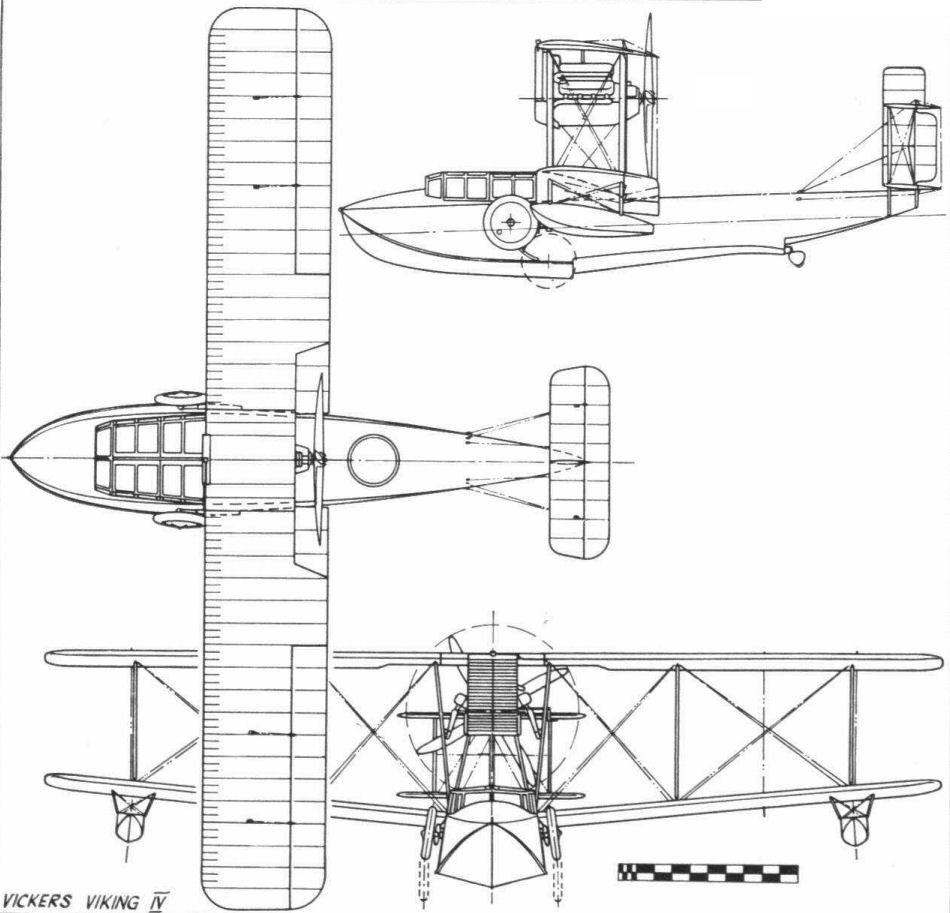
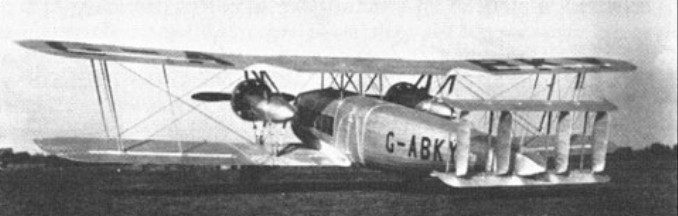
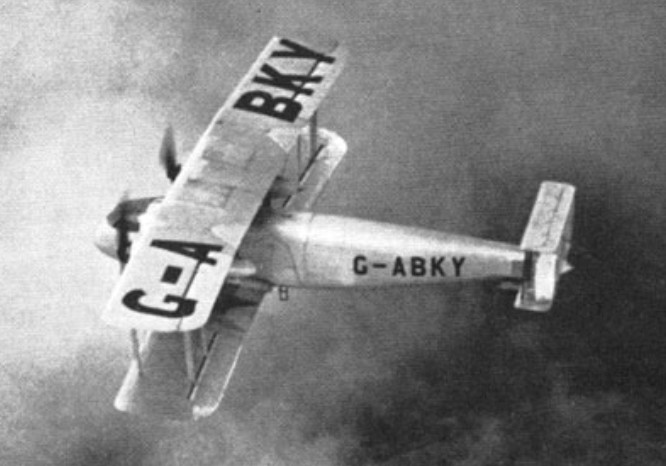
Direct London to Paris flights were pioneered in 1921 by a Vickers Viking III.
1921 Vickers Viking III flew from the Seine, near the centre of Paris, to the Thames, near the Houses of Parliament, in two hours with Major-General Sir Frederick Skyes, Controller General of Civil Aviation.
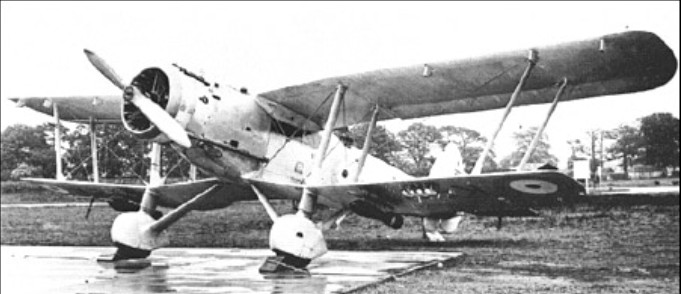
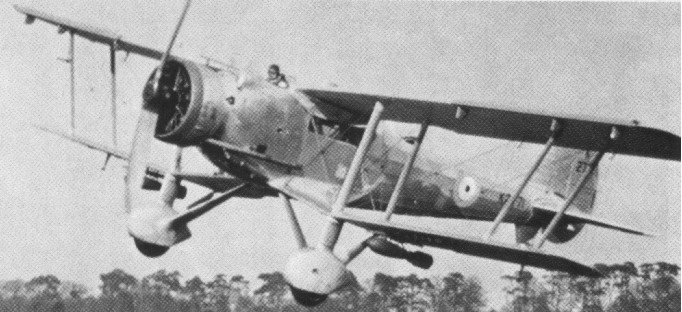
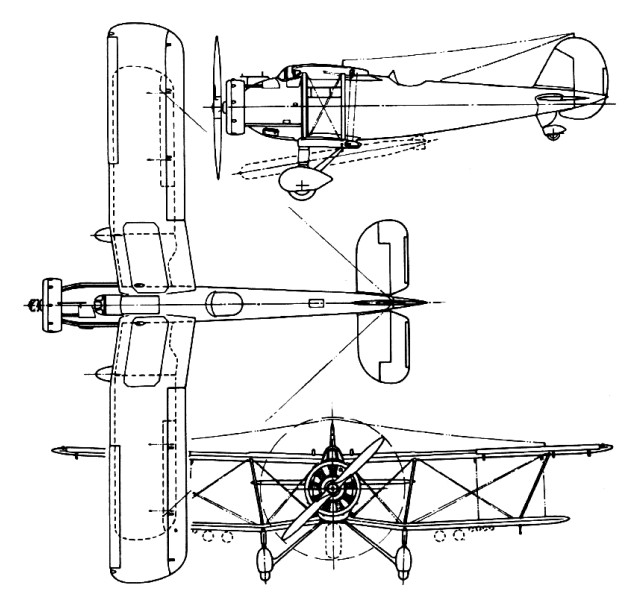
Air Ministry Specification G.4/31 called for a General Purpose aircraft, capable of level bombing, army co-operation, dive bombing, reconnaissance, casualty evacuation and torpedo bombing. The Vickers Type 253 won against the Fairey G.4/31, Westland PV-7, Handley Page HP.47, Armstrong Whitworth AW.19, Blackburn B-7, Hawker PV-4 and the Parnell G.4/31.
Designed by Rex Pierson, the Type 246 was the first aircraft built which partly used the Barnes Wallis geodetic design in the fuselage. Despite an order for 150, Vickers offered their private venture monoplane design the Type 253. This used the same geodetic design principles for both the fuselage and the wings, and first flew on 19 June 1935. It had superior performance to the 246 but did not attempt to meet the multi-role requirement, being a day and night bomber only. First flown with PV 0-9 markings, the 253 showed a lower tare weight, better performance and larger payload., partly as a result of the 8.85 – 1 high aspect ratio wing. An initial order for 96 Type 246s was substituted for the Type 253 order.
One prototype, first flown on 6 August 1934. No production.
Engine: 1 x 635hp Bristol Pegasus IIM.3 Max take-off weight: 3791 kg / 8358 lb Empty weight: 1982 kg / 4370 lb Wingspan: 16.03 m / 52 ft 7 in Length: 11.28 m / 36 ft 0 in Height: 3.81 m / 12 ft 6 in Wing area: 53.79 sq.m / 578.99 sq ft Max. speed: 259 km/h / 161 mph Ceiling: 6614 m / 21700 ft Crew: 2
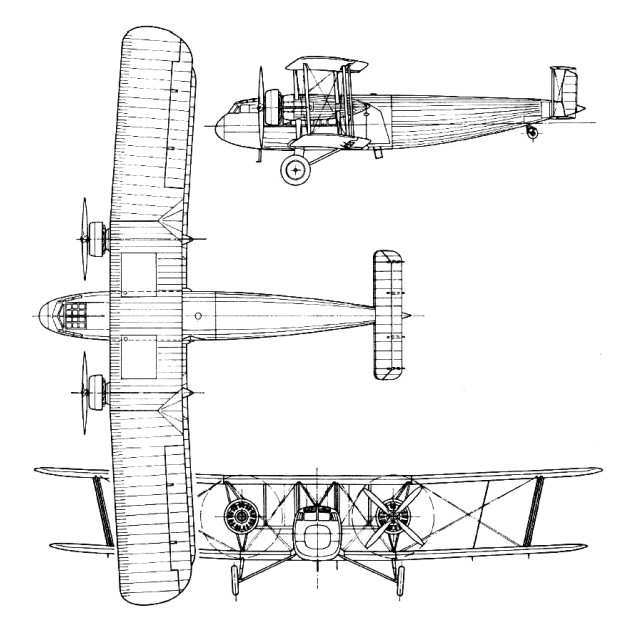
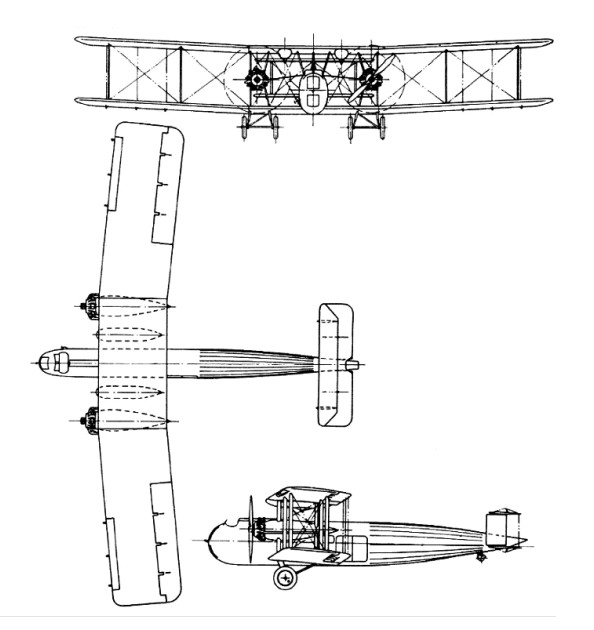
The Valentia was a development of the earlier Victoria troop-carrier, differing by having two 484kW Bristol Pegasus II.L3 or II.M3 engines (the latter for use in India) and an improved landing gear. Accommodation was for a crew of two and 22 troops; lockers were used for equipment and rifle-racks and stretcher supports were provided. Bomb racks could also be fitted if required. Twenty-eight were built as new and 54 Victorias were brought up to this standard.
Engines: 2 x Bristol II M3 Pegasus radials, 464kW / 626 hp Wingspan: 26.62 m / 87 ft 4 in Length: 18.14 m / 50 ft 6 in Height: 5.41 m / 17 ft 9 in Wing area: 2178 sq.ft / 202.34 sq.m Max take-off weight: 8845 kg / 19500 lb Empty weight: 4964 kg / 10944 lb Wing load: 9.02 lb/sq.ft / 44.0 kg/sq.m Max. speed: 104 kts / 193 km/h / 120 mph Service ceiling: 4955 m / 16250 ft Range: 695 nm / 1287 km / 800 miles Crew: 2 Bombload: 1000kg





 All Aero