Waco 9

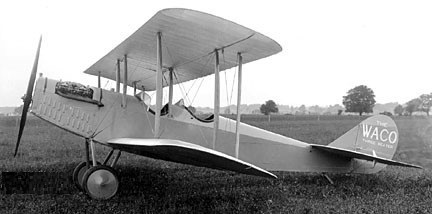
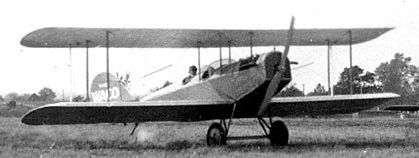
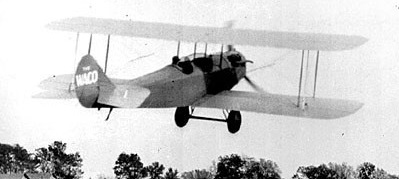
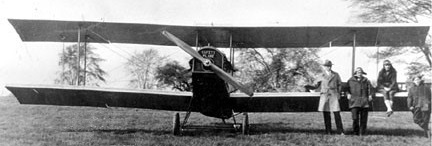
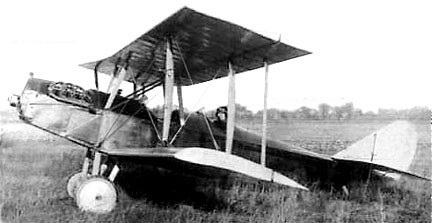
Following Buck Weaver’s death in 1924, Clayt Bruckner and Sam Junkin reorganized the business and soon introduced the company’s popular Model 9 (or Nine) in 1925. Powered by a Curtiss OX-5 or Wright Hispano engine, the WACO Nine delivered better performance than the readily available war surplus Curtiss Jennys at an affordable price.

The design of the 1925 Waco 9 (ATC 11) was state-of-the-art for its time—a fabric-covered wooden wing structure strengthened with welded steel tubing. The front cockpit was equipped with a bench seat that accommodated two passengers with a single cockpit for the pilot in the rear of the aircraft. An engine radiator mounted under the forward edge of the upper wing became a distinguishing WACO trait.

First mass-production model was the three-seat Model 9, steel-tube framing, powered by OX-5, equipped for EDO floats. The first aircraft to be fitted with aluminum floats, by EDO Corp in 1928.
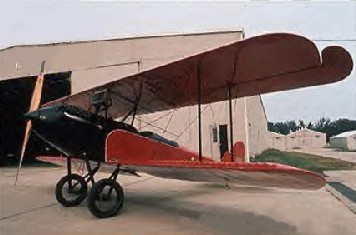
The design of the Nine was state-of-the-art for its time—a fabric-covered wooden wing structure strengthened with welded steel tubing. The front cockpit was equipped with a bench seat that accommodated two passengers with a single cockpit for the pilot in the rear of the aircraft. An engine radiator mounted under the forward edge of the upper wing became a distinguishing WACO trait.

The stylish WACO Nine made a good showing during the 1925 Ford Air Tour. The accompanying publicity quickly translated into increased aircraft sales and 276 Nines were sold between 1925 and 1927 for $2,025-2,500.

An outstanding barnstormer, more than 14 Nines competed in the 1926 National Air Races with several finishing first in their events. WACO Nines also saw duty as crop-dusters—the airplane could be outfitted with floats for water landing—and were also used as an early commuter aircraft.

Mainly poweed with a 90hp Curtiss OX-5, they were also supplied with 100hp Curtiss OXX-6, 100hp Curtiss C-6 or 150hp Hisso A.
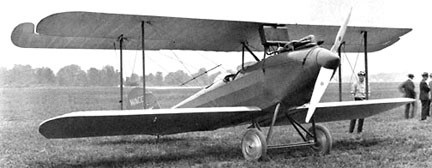
Waco 9 with Curtiss C-6

Advance 9
Engine: 90hp Curtiss OX-5
Wingspan: 29’6″
Length: 23’4″
Useful load: 780 lb
Max speed: 92 mph
Cruise speed: 79 mph
Stall: 32 mph
Range: 375-400 miles
Seats: 3
Waco 8

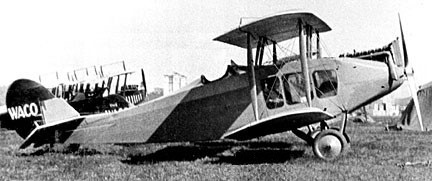
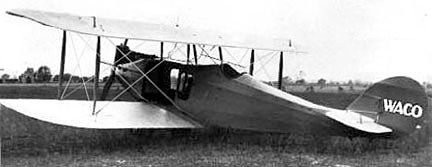
In 1924, the first cabin WACO aircraft was manufactured, the six-passenger WACO 8, featuring an open cockpit positioned behind the cabin for the pilot and co-pilot, powered by 200 hp (149 kW) Liberty.

A preliminary first flight was made in late Aug 1924, piloted by Clayton Brukner, and an official first flight was made on 21 October 1924, piloted by Tex LaGrone.

Only one WACO 8 was ever sold for $4,500 to an aerial photo company in Kansas City and it was eventually used to aerially map the Ozarks. It was eventually destroyed in a landing accident.

One other Waco 8 was uncompleted.

Engine: 200hp Liberty 6
Wingspan: 40’0″
Length: 32’0″
Usefulload: 1473 lb
Max speed: 90 mph
Cruise speed: 80 mph
Stall: 37 mph
Seats: 8

Waco 7

The Waco team continued to assemble airplanes from parts salvaged from surplus World War I Curtiss Jennys, continuously tinkering with their designs and making improvements.

Similar to the Waco 6, the 1924 Waco 7 used many Curtiss JN-4 parts with new interchangeable wing panels and powered by a 90 hp (67 kW) Curtiss OX-5.

The three-passenger WACO 7 was modestly successful with 16 aircraft sold at $2,500.

Engine: 90 hp (67 kW) Curtiss OX-5
Max speed: 90 mph
Stall: 30 mph

Waco 6

The Waco team continued to assemble airplanes from parts salvaged from surplus World War I Curtiss Jennys, continuously tinkering with their designs and making improvements.

Used many Curtiss JN-4 parts with new interchangeable wing panels and powered by a 90 hp (67 kW) Curtiss OX-5.

The first Troy-built model, the WACO 6, was soon being marketed and four were built

Engine: 90hp Curtiss OX-5
Wingspan: 30’0″
Length: 24’0″
Useful load: 750 lb
Max speed: 88 mph
Stall: 32 mph
Seats: 3

Waco 5

The Waco team continued to assemble airplanes from parts salvaged from surplus World War I Curtiss Jennys, continuously tinkering with their designs and making improvements.

The 1921 Weaver 5 three place open cockpit biplane used many Curtiss JN-4 parts with new interchangeable wing panels and powered by a 90 hp (67 kW) Curtiss OX-5.

Eventually, they sold two WACO 5 biplanes, conversions of JN-4C Canucks, two with 150hp Hisso A engines. Selling for $1,500-2,000, the final one was built at Advance Co in 1923.

Engine: 90h Curtiss OX-5
Wingspan: 37’0″ / 33’0″
Length: 25’3″ / 23’0″
Useul load: 750 lb
Max speed: 80 mph
Stall: 30 mph
Seats: 3

Waco 4 / Weaver 4

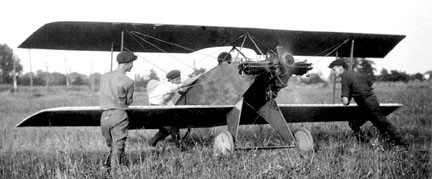
The WACO partners persevered, designing a practical three-seat biplane, the WACO 4, and building it out of parts left over from the Cootie and other biplane efforts. The team continued to assemble airplanes from parts salvaged from surplus World War I Curtiss Jennys, continuously tinkering with their designs and making improvements.

The 1921 Weaver 4 used many Curtiss JN-4 parts with new interchangeable wing panels and powered by a 90 hp (67 kW) Curtiss OX-5.

Selling for $4,000, the model 4 was the company’s first public sale and the last of the all-wood Wacos.

One appearing in early registers as Waco 4 (NABCW) was actually a modified Hisso-Curtiss JN-4 Canuck with Brukner “high-lift” wings.

Engine: 90hp Curtiss OX-5
Wingspan: 28’0″
Length: 23’0″
Useful load: 890 lb
Max speed: 84 mph
Stall: 33 mph
Seats: 3-4

Waco 2 Cootie Biplane

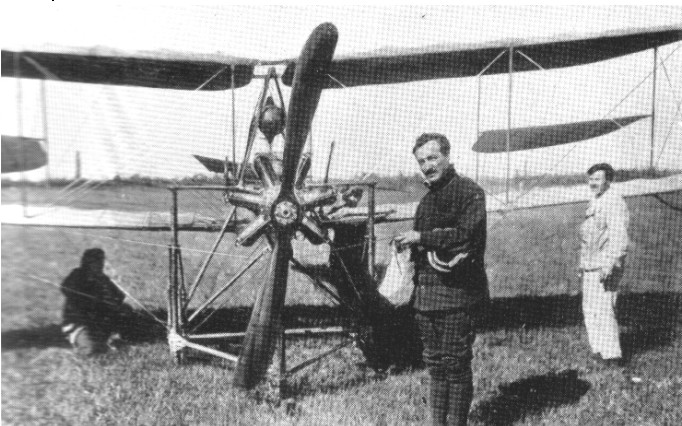
The Weaver 2 Cootie Biplane of 1920 was a single place open cockpit biplane rebuild of the Cootie #1 with a larger tail area and a beefed-up landing gear.

First flown on 14 June 1920, piloted by G Weaver, it eventually crashed in April 1923 having cost $1,500.

A 30hp hydroplane version was begun, but never completed because of funding problems.

Empty weight: approx 340 lb
Speed: 62 mph

Waco 1 / Baby Flying Boat / DJB Air Boat

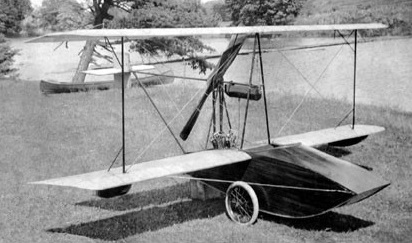
The “Model 1” designation was more symbolic as the ship was built before there was a Waco Company. Designed by Elwood J Junkin and Clayton J Brukner, the 1919 Baby Flying Boat had a mahogany veneer hull, demountable wheels for beaching, and a 6′ propeller.

Notably underpowered, with motor vibrations shaking the craft to an alarming degree, it would not unstick from the Lake Erie, so was retired to its room above a dance hall in Lorain OH, and none of the principals recalls its ultimate fate.

This effort led to the formation of DJB Aeroplane Co which was basis for Weaver Co the following year.

Engine: 15hp Hendee
Wingspan: 18’0″
Seats: 1

Vreeburg A2m

This is the one and only Vreeburg A-2M bomber was designed by HA Vreeburg as the chief of the Technical Service of the Dutch Air Force (The LVA = Luchtvaart Afdeling). The machine was built by the government works on the airfield of Soesterberg. Development started in 1918, and the machine was finished in 1919, making its first flight on February 10th in 1919.

The machine received no orders from the LVA and was scrapped in 1920.

Engines: 2 x Le Rhone, 110-120 hp
Max speed: 140 kph