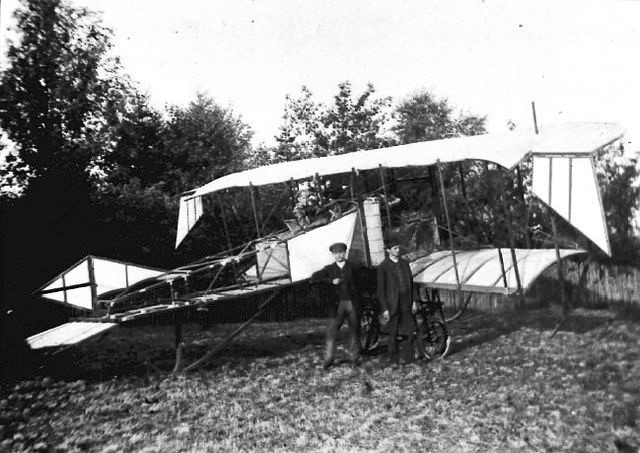
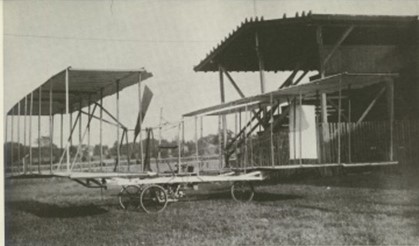
The business syndicate, displeased with Vivian’s seemingly excessive caution, took possession of the Manurewa; soon after, it crashed and was damaged beyond repair. Recovering from this setback, Leo, with Vivian’s help, began to design a flying boat of the American Curtiss type which he thought would suit New Zealand conditions. The brothers gained the financial and practical assistance of R. A. Dexter, an American engineer and motor dealer in Auckland, who was to be a consistent supporter.
Fifteen months’ spare time work went into the construction of this aircraft; all the work was carried out by the Walsh brothers, Leo and Vivian, with the exception of the steel fittings which were manufactured by Mr R.A. Dexter, an Auckland engineer who was backing the project.
The hull planking was cedar with ash stringers and mahogany ribs; the hull weighed 305 lbs. Aluminium decking was provided on the forward portion of the hull and the after portion was covered with a special cloth stretched over cedar battens. Seven watertight compartments were built into the hull. The two mainplanes (each 41 ft 6 ins long) had front and rear spars of ash with cedar rib. The fabric covering the wings and the tailplane was doped with cellulose. The aircraft was powered by a 10-cylinder 4-stroke Anzani engine fitted in a special housing at the rear end of the top mainplane. An 8 ft laminated walnut and mahogany propellor with brass tips was fitted.
The aircraft was constructed at the Walshs’ home in Remuera and when completed was dismantled and carried to Bastion Pt, Orakei. After re-assembly the aircraft was launched on January 1, 1915. After taxiing trials and final adjustments, Vivian Walsh took off in the flying boat for a short test flight around Bastion Pt. Many practice flights followed and on March 14 carried its first passengers (covering a distance of five miles).
Even with the light weight of this aircraft (1,200 lbs) the 80 hp Anzani radial engine was only just sufficient to keep the aircraft flying and many hours of work by Leo Walsh were required to keep the engine tuned.
In March 1915 Vivian took the first of many passengers on a flight of five miles. The flying boat itself lasted only 15 months before being dismantled and parts from it were used in the building of an im¬proved flying boat known as “The Roberts”.
Engine: 80 hp Anzani
Weight: 1,200 lbs



 All Aero