Abrial A-12 Bagoas

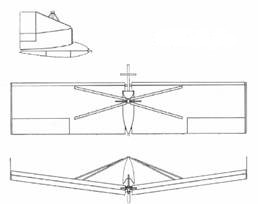
Georges Abrials main interest was soaring, so he decided to design a tailless glider: the A-12. After testing successfully a scale model at the St Cyr wind tunnel, he built the full-size prototype. This glider had an aspect ratio of 6 to 1. During the development of this new glider, in 1932, Georges Abrial had to face so much technical difficulties that he decided to give up the project. He christened his project “Bagoas”, the name of a famous Persian poisoner.

A.B.C. Military Biplane

The rationale of the name, A B C, is firstly, that it contains the initials of those associated in the development of the machine; Anient, Buranelli & Carisi, and, secondly, that it expresses the constructional simplicity, which is a prominent feature of the machine.

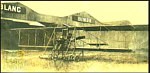
In April 1915, a machine to be known as the A B C Military Biplane (pusher”), was to make its debut shortly. Mr. Robert S. Anient, a well-known newspaper artist, was directing the exploitation, and Messrs. John Carisi and Yincent J. Buranelli were responsible for the design and construction of the machine.

The airplane was designed to especially facilitate quick assembling, and the machine, being a pusher, has a splendid range of vision, and for military work gives the gunner a sweep of 180 deg. The machine is a two-seater, seats arranged side by side, and dual controls are provided. The fuselage is covered entirely with duralumin. The landing chassis has four wheels, two in front, to facilitate running over rough ground.

The top wing warps from the end uprights out, similar to a monoplane. The power plant was to be a 100-hp specially built A B C aviation motor.
Aachen FVA 6

After re-authorization of powered flight, in 1926 Ilse and Theodor Kober designed the FVA-6, a two-seater biplane. The FVA-6 was a biplane had two seats in tadem, and was powered by an English ABC engine with 30hp. The FVA-6 was built in the workshop of the former “Aachener Segelflugzeugbau GmbH”, which was acquired by Junkers.

For the test-flying the FVA-6 Ludwig Pfitzner had been chosen. He was one of the few new FVA – generation and just made his pilot’s license.

The two-seater biplane was completed before the end of 1926 and has done test flights to Dusseldorf – Lohausen because Aachen was still occupied by the Belgians. The FVA-6 totally destroyed during the first flight when entering Dusseldorf. The designers of the FVA-6 were no longer in Aachen, as the aircraft was completed. The new students who could fly hardly knew what to do with a new untried design.
