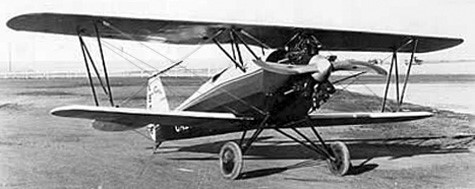
Designed by Floyd Copeland, the 1929 LeBlond powered Cadet NC9026 was a two place sport trainer development of the single place Wilson Cadet.
Designed by Floyd Copeland, the 1929 LeBlond powered Cadet NC9026 was a two place sport trainer development of the single place Wilson Cadet.
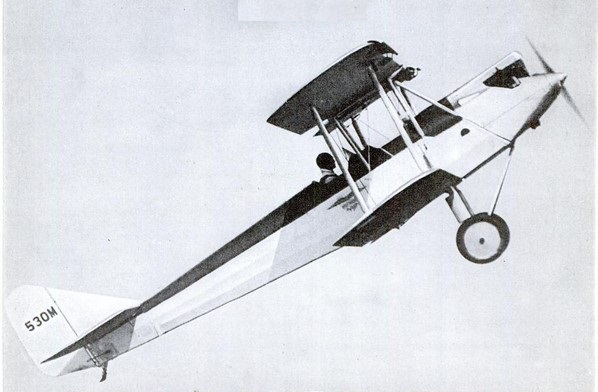
The Whittelsey Avian was advertised as a ‘safe’ aircraft in 1929, featuring Handley-Page wing slots and built to 8g. Designed for training and sport flying, the flyaway price of $4995 from Bridgeport. Powered by a 95 hp Cirrus, the Avian landing speed is 35 mph, and it achieved 20 miles per gallon.
The British Avro folding-wing sportplanes manufactured under license, the Whittelsey Avian was advertised as a ‘safe’ aircraft in 1929, featuring Handley-Page wing slots and built to 8g. Designed for training and sport flying, the flyaway price of $4995 from Bridgeport. Powered by a 95 hp Cirrus, the Avian landing speed is 35 mph, and it achieved 20 miles per gallon.
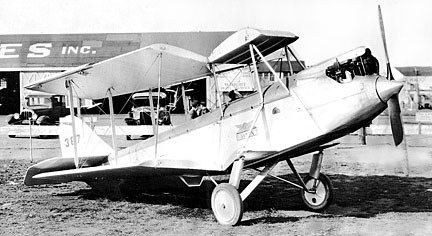

The Whittemore-Hamm L-2 and L-3 built in 1917 were fabric-covered, laminated-wood fuselage trainers developed for Army interest, of which there was none. With two seats and open cockpit, one each was built, the L-2 sold to the Boston Post.
L-2 / L-3
Engine: Hall-Scott A-7, 100 hp
Wingspan: 36′ 5″
Length: 25′ 6″
Max speed: 75 mph
Stall: 45 mph
Seats: 2

A prototype White & Thompson No.3 was built in 1914 for the cancelled Daily Mail Round Britain race.
Eight White & Thompson No.3 were built in 1915 for the RNAS as coastal patrol aircraft.
Engine: 120 hp Beardmore
Max speed: 80-85 mph
Armament: Lewis gun

The Bognor Bloater gained its nickname from the scaley effect created by copper wire-stitching the cedar plywood covered monococque fuselage.
The 1915 Bognor Bloater tractor biplane is believed to have been the first aircraft in production with a monocoque fuselage. Twelve were ordered for the RNAS, but only 10 were delivered.
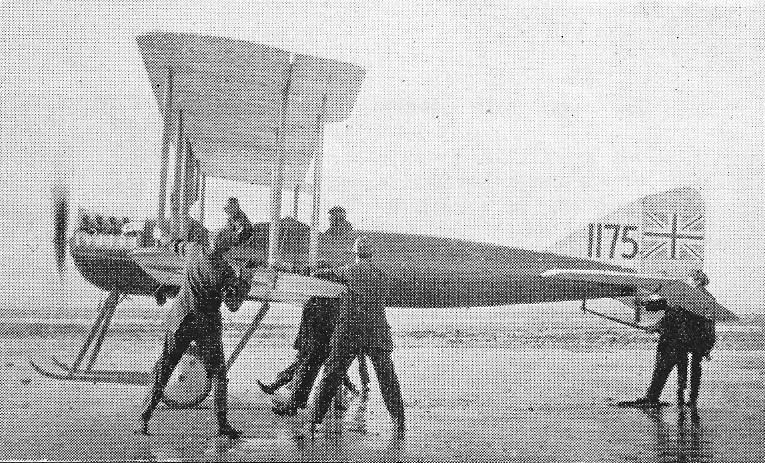
Testing was carried out on Middleton sands.
Power was a 70 hp Renault engine.
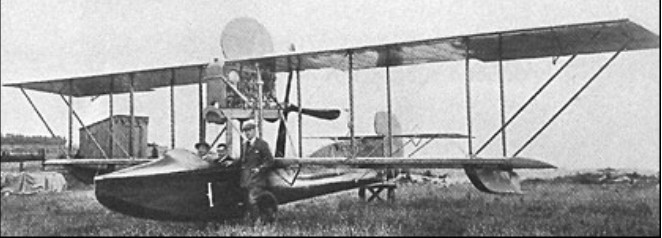
1914

At the end of 1916, the Whitehead Aircraft Company completed, at its Richmond, Surrey, works, a small single-seat fighting scout. Not unlike the Camel in general appearance – and perhaps inspired by the Sopwith type, for the production of which Whitehead was a major contractor – the aircraft was a compact single-bay biplane, with ailerons on all four wings. The fuselage was faired to a near-circular cross section and the engine was an 80hp Le Rhone nine-cylinder rotary. The name Comet was bestowed upon the fighter by its manufacturer, although it was also known within the works as the Boyle Scout, in an allusion to its principal designer, Edwin Boyle. It is not clear if it was designed by T. Navarro, who left Whitehead Aircraft to work on another scout project at Thomas Lowe & Sons, or if the designer was the then 23 year old Edwin Boyle. If it was known in the works as the Boyle Scout, that does suggest Boyle.
No details of the planned armament appear to have survived, nor of any flight testing, although the Comet was reported to have flown.
The 1939 White Aircraft PT-7 two place open cockpit biplane was a planned primary trainer for CPTP with acquisition of rights to the 1930 Verville AT, but production never got under way.
The “PT” was White’s designation, not the military’s (actual PT-7 was a Mohawk product).
Engine: Warner Super Scarab, 200 hp
Wingspan: 31′ 0″
Length: 24′ 3″
Seats: 2
The 1940 White Aircraft D-25B (108 2-557) was New Standard D-25 production, bought from Jones Co, and repowered with a 285hp Wright J-6 for use as a crop duster.
Five were built, of which two were destroyed in a 1940 hangar fire at Monroeville AL, NR25317 and NR25318, and two went to the Dept of Agriculture in 1941 (NR25319, NR25320). The fifth, actually a D-25A airframe, was delivered to White Co in 1942 as NR25313.
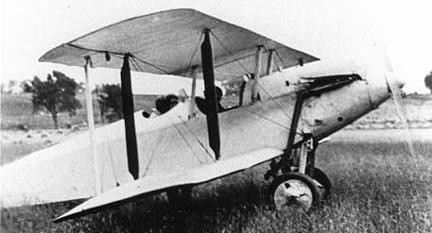
Burd S. and Harold L. White, of Des Moines, Indiana, designed and produced their own private and commercial aircraft, Humming Bird, in 1926. Priced at $2,150 it was reported about 25 were built, with most unregistered. N3046 and N3047 were found.
In 1924 Des Moines, J H Banning found WW1 ace Raymond Fisher to teach him to fly. Banning then bought his own Hummingbird biplane, naming it Miss Ames. Banning attended Iowa State College, and became the first black to receive a CAA pilot’s license, #1324. He bought the Hummingbird to use in the 1928 Iowa Goodwill Air Tour.
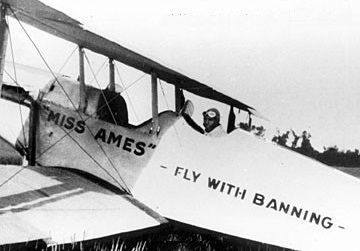
Hummingbird
Engine: Curtiss OX-5, 90hp
Wingspan: 33’2″
Length: 23’6″
Useful load: 1000 lb
Max speed: 93 mph
Cruise speed: 85 mph
Stall: 28 mph
Range: 375 mi
Seats: 3
 All Aero