During 1911-1914, several single and two place open cockpit biplanes were built apparently following the Curtiss design as exhibition ships. Later models with fabric-covered fuselage and rounded wingtips made them quite modern for their day.
The 1911 original had a 60hp Hall-Scott motor and later versions 80hp Curtiss power.
Williams soloed his own creation at Hyde Park Aviation Field (Pasadena CA) on 26 August 1911 at age 19 as the world’s youngest licensed pilot, according to Aero Club of America officials.
In 1912 Alexander Williams built a single place open cockpit biplane powered by a 40hp Williams. It was described as being a “combination Farman and Howard Wright.”
Charles F Willard, who had been leasing a Curtiss airplane for his exhibition flights, returned it, and reportedly designed a similar machine customized to his requirements, but still leased the motor from Curtiss (the one used on Curtiss’ Rheims Racer). This apparently was distinct from the 1910 Banshee Express, which he implied was his design, but was really another Curtiss product.
First flying on 12 August 1910, two were built, the second of which, christened simply The Express, had 50hp five-cylinder Gnôme rotary. Willard set a payload record with this craft by carrying two passengers with him on 14 August 1910.
Wilcox ran an airport, located NE of Tulsa in Verdigris, that consisted of associated hangars and an office on 300 acres. William Collier built a number of planes there, reportedly including the 1930 T-12, until he relocated to Kansas.
The T-12-1 Sport Trainer was possibly first registred N550V.
T-12-1 Sport Trainer Engine: 110hp Warner Scarab (originally a Siemens) Wingspan: 31’6″ Length: 21’7″ Seats: 2
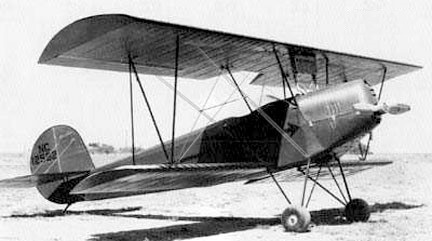
Wiley Post Aircraft Corp was founded in Oklahoma City in 1935 to build Model A (ATC 2-478, ATC 561), cheap two-seat aircraft. Designed by Ross Holmes and Glenn Stearman and powered by a 40hp Straughn AL-1000 converted Model A Ford engine, the first example was built by Straughan Aircraft. Reportedly was first developed as a parasol monoplane at Cessna factory. The ATC was issued in 1934.
One prototype (NX12561) and two production Model As were built in 1931-32 (N11919 and NC12582). Originally price at $1,438, it was $1,692 in 1935.
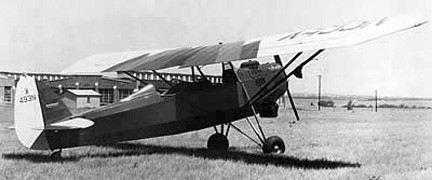
One 60hp experimental B NX493N was built.
Straughn B NX439N
Wiley Post acquired rights to Straughan assets 1935, and transferred production to Oklahoma City. Thirteen Model As built before company liquidated after Wiley Post’s death.
Engine: 40hp Straughn AL-1000 (converted Ford A) Wingspan: 28’6″ Length: 19’9″ Useful load: 393 lb Max speed: 82 mph Cruise speed: 70 mph Stall: 28 mph Range: 110 mi Seats: 2
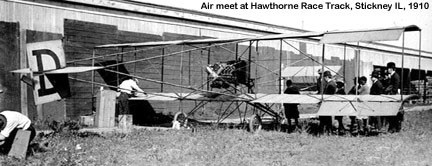
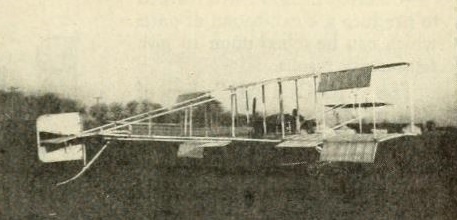
Mr. Wilcox is now engaged at the factory of Moore and Morgen automobile body manufactures, 600 W. Fifth Street, here in the City of New York, building two more aeroplanes, which will be ready to try out at Garden City, L. 1., in about two or three weeks. Louis Strang has purchased one of these machine for $4,500. An effort is being made to have the other one ready for the International Aviation Meet at Belmont Park, L. 1., to defend the Cup won by Glen Curtis at Rheims. The machine which Wilcox has called the “White Ghost” will be operated by a professional aviator who has taken part in aero races abroad.
The Wilcox Aeroplane is modelled upon the Farnam style, but has a large number of decided improvements which, according to Captain Baldwin, make it the steadiest aeroplane on the field. Wilcox has formed a stock company for the purpose of building aeroplanes and has registered his machines in the United States Aeronautic Reserve in which about one thousand aeroplanes have been recorded. Aviators making the above registration, agree to give the use of their machines to the Government as scouts, absolutely free, should there be any wars.
Built in 1910 by Phillip W. Wilcox, the White Ghost was a two-place open cockpit biplane powered by a 50hp Rinek engine.
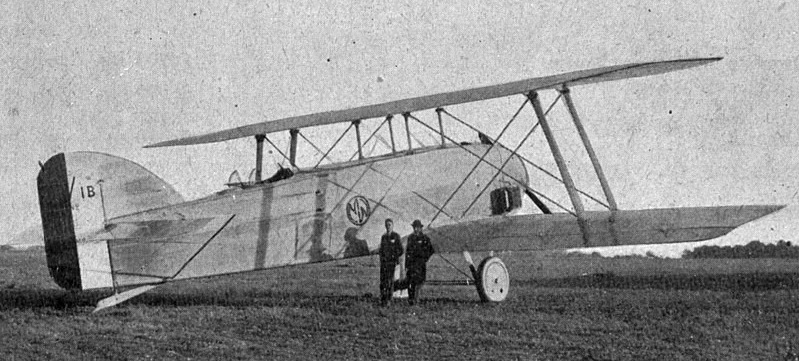
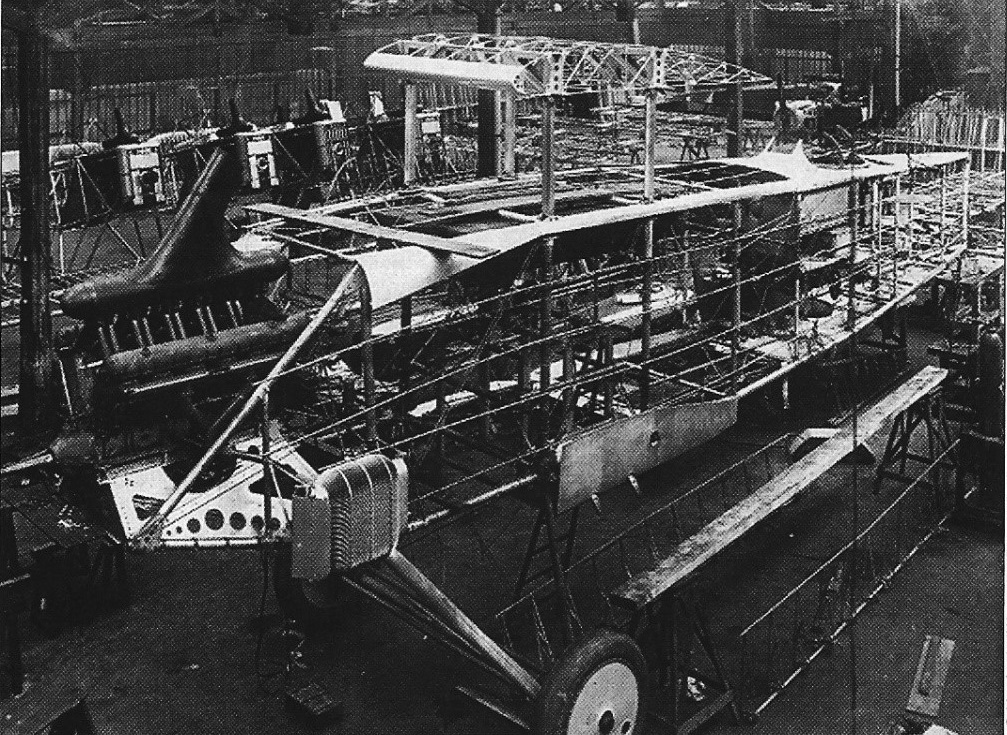
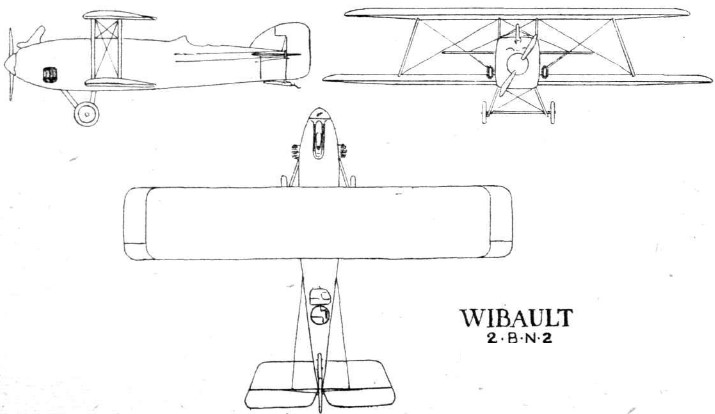
As the military description BN.2 indicates, the Wib 2 was designed as a two-seat night bomber, but the designer, Michel Wibault, had hopes of a passenger carrying derivative. As it was structurally an all-metal aircraft it had, by the standards of the times, a low structural weight and, as a consequence, a high useful load of 1,406 kg (3,100 lb) making the suggested capacity of thirteen passengers plausible. In addition to its metal construction, contemporaries noted other unusual design features, in particular the position of the wings well back along the fuselage, Flight speculated the idea being to distribute the passenger (or bomb) load symmetrically about the centre of pressure and over a greater longitudinal distance than usual, rather than along the span. The pilot sat quite close to the tail with the gunner (in the bomber version) in a separate, gun mounting equipped cockpit immediately behind him. Its span was large for a biplane with only a single set of struts and its upper wing had a shorter span than the lower.
The wings of the Wib 2 were rectangular in plan and mounted without stagger or dihedral. The single bays were defined by parallel pairs of inward leaning interplane struts, assisted by crossed flying and landing wires from the bases of the struts to the fuselage. Cabane struts supported the upper wing above the fuselage. The wings had thick, high lift coefficient sections, constructed around deep single spars built up from Duralumin sheet; the ribs were formed from cross-braced metal tubes. Ailerons were mounted only on the lower wing.
The fuselage was metal framed and fabric covered, with a straight edged, wire braced tailplane carrying divided elevators mounted on top. Its vertical tail was low and broad, with a curved leading edge; the rudder was deep and aerodynamically balanced. The Wib 2 was powered by a 600 hp (447 kW) water-cooled V-12 Renault 12 M engine completely enclosed within a smooth cowling and drove a two-blade propeller. Small radiators projected out on either side of the cowling. The undercarriage was of the fixed conventional type, with the mainwheels on a rigid axle supported by V-struts and assisted by a tailskid.
September 1922
Built by Lavasseur, the Wib 2 flew for the first time on 29 October 1921 but only one, in bomber configuration, was built.
Powerplant: 1 × Renault 12 Ma, 450 kW (600 hp) Propeller: 2-bladed fixed pitch Wingspan: 16.92 m (55 ft 6 in) Wing area: 96.2 m2 (1,035 sq ft) Length: 12.75 m (41 ft 10 in) Height: 5.00 m (16 ft 5 in) Empty weight: 2,096 kg (4,620 lb) Gross weight: 4,286 kg (9,450 lb) Maximum speed: 201 km/h (125 mph, 109 kn) at 1,980 m (6,500 ft) Range: 600 km (370 mi, 320 nmi) Endurance: 4 hr at full throttle Service ceiling: 4,000 m (13,000 ft) Wing loading: 44.6 kg/m2 (9.13 lb/sq ft) Power/mass: 0.048 kW/m² (0.063 hp/lb) Crew: Two
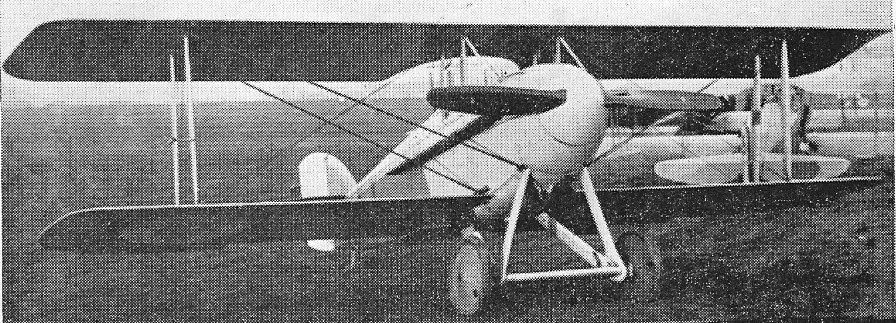
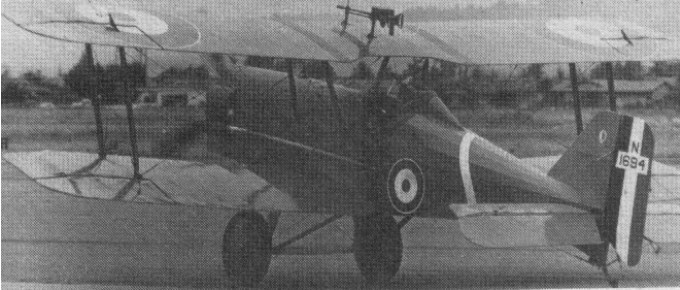
This little single-seat biplane is a 4/5 scale model of the famous British S.E.5A fighter of World War I. Designed by William Wienberg of Kan¬sas City, Missouri, it is constructed of wood and fabric. The wing structure consists of conventional wooden spars and ribs with center-section bracing struts and fabric covering. The fuselage is an all-wood box structure covered with plywood. The tail assembly is a wire-braced steel tube structure also covered with Ceconite fabric. Accom¬modations include a single-seat cockpit and a small baggage com¬partment behind the headrest.
Gross Wt. 1100 lb Empty Wt. 900 lb Fuel capacity 24 USG Wingspan 22 ft Length 18 ft Top speed 95 mph Cruise 85 mph Stall 50 mph Climb rate 600 fpm Takeoff run 200 ft Range 250 sm
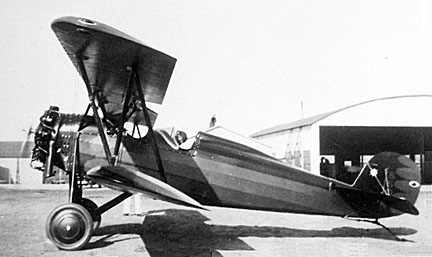
John C Wieber built, in 1934, a two-place open cockpit biplane, powered by a 100hp Curtiss OXX-6 and registered N13694 c/n JW-53. The registration was cancelled on 1 August 1937.
One reference found as being N5249, possibly a rebuild of American Eagle A-1 c/n 159.
 All Aero