The 1922 Wissler Airplane Co WA-6 was a two place open cockpit biplane. With about 100 hours flying time logged, it ended up in a treetop on 2 August 1922 upon experiencing aileron problems, was extensively damaged, and was not repaired.
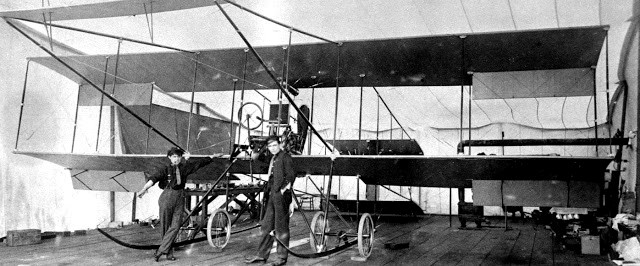
Fred J. Wiseman and Jean Peters working on their aircraft at the Laughlin ranch, 1910
Fred J. Wiseman attendance at the Los Angeles air meet that January cemented his ambitions to take up flying and to build an aircraft with his long-time racing partner and mechanic, Jean Peters (AKA J. W. Peters, Julian Pierre and John Peters). Funding the venture was a $10,000 investment by Ben Noonan, an old Santa Rosa friend and former business partner of Wiseman’s.
Working under a tent in a pasture – appropriately, about a mile northeast of today’s Sonoma County Airport – they began assembling the flying machine the pair had started designing in San Francisco. About six weeks later their first test flight occurred.
The Press Democrat printed a lengthy description of that version of their aircraft that will probably be of interest to historians (although not without mistakes; what they called “macadamite” was probably phenolic, for example, and poor Jean Peters was cleaved in twain, ID’ed simultaneously as “Julian Pierre and M. W. Peters”). The Press Democrat erred in writing they were building a “Farman biplane.” Today it’s recognized that they ended up mixing features from Farman, Curtiss, and the Wright brother’s designs. Given that the Wrights were already suing Curtiss for patent infringement, the hybrid Peters-Wiseman plane had the potential to win any competition for Aeroplane Most Likely To End Up In Court.
Events followed breathlessly by both of the town’s newspapers. Over forty articles about his doings appeared in one year alone. Reporter Tom Gregory flew one morning with Fred Wiseman and thus entered the record books himself as the world’s first terrified passenger.
“I had assured Wiseman that there was no limit to my nerve,” Gregory wrote in his Press Democrat essay, “but when I saw him monkeying around the engine of his bi-plane, and I looked aloft and saw the emptiness of things up there, I begin to get skreeky.”
“How shall I describe it? Just as soon as the wheels left the ground we seemed to stand still, and every object around us and below us seemed to hurry past. There wasn’t a bump or jar, though occasionally a swinging sensation when Wiseman tipped his plane the fraction of an inch–infinitesimal things count for much up in the air–and we were pulling higher against gravitation…I didn’t do any talking or anything else except gasp and catch breath, but I noted that Wiseman was exceedingly busy. He would elevate and depress his altitude planes as we would strike a warmer body of air which would drop us–or a colder, which, being heavier, would buoy us up to a greater elevation. Of course we would fall first on one side and then the other, and Fred’s shoulders woud work the tilting planes in his almost-agony to get her level again. Once when we went over until I almost quit breathing he attempted a jest by saying our starboard wing had passed over somebody’s hot chimney…He picked a “soft place to fall on,” and killed the engine, and in the silence which seemed doubly silent after the boom of the motor and propeller, we glided softly down; the wide planes parachuting us in safety, to the old earth.”
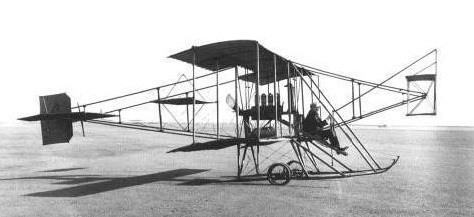
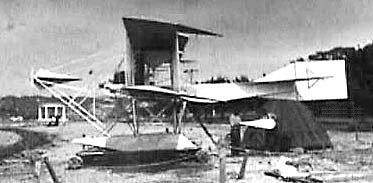
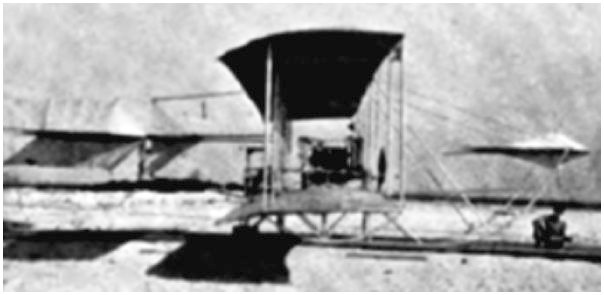
The Wiseman Biplane, built by Frederick J. Wiseman and also known as the Wiseman-Cooke biplane, from 1910/1911, was a pusher that combined the designs of Wright, Farman and Curtiss. Claimed to be the first biplane to be flown in California, it was fitted with an overbored 4-cylinder engine from a “San Francisco engine company” by Frederick J. Wiseman, who increased the power output to 50 hp.
First flying on 23 April 1910, which makes puts this among the earliest California-built aircraft to fly, auto racer Wiseman and his mechanic, Peters, used their race winnings to construct this pusher (aka Wiseman-Peters)—admitted by Wiseman to have incorporated design features of Curtiss, Farman and Wright from notes, photos, and sketches of these planes seen at air meets, with innovations like laminated wing ribs, front and rear elevators, and trailing-edge ailerons on all wings.
First flown in Sonoma County, piloted by Wiseman, then, with a 60hp Hall-Scott A-2, at Petaluma on 24 July 1910 piloted by Peters.
Today it is displayed in the Smithsonian’s National Postal Museum in Washington, D.C. after being restored in 1983-1985 by NASM.
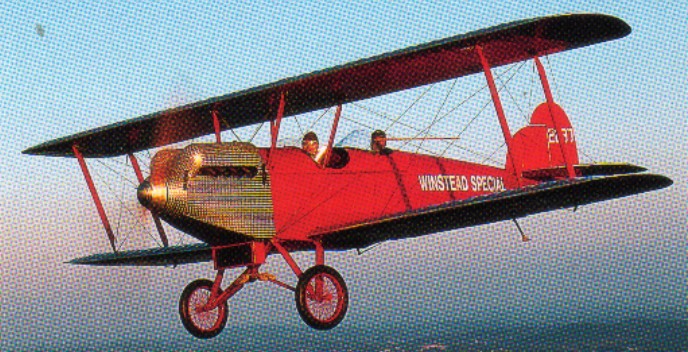
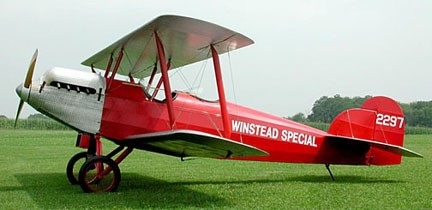
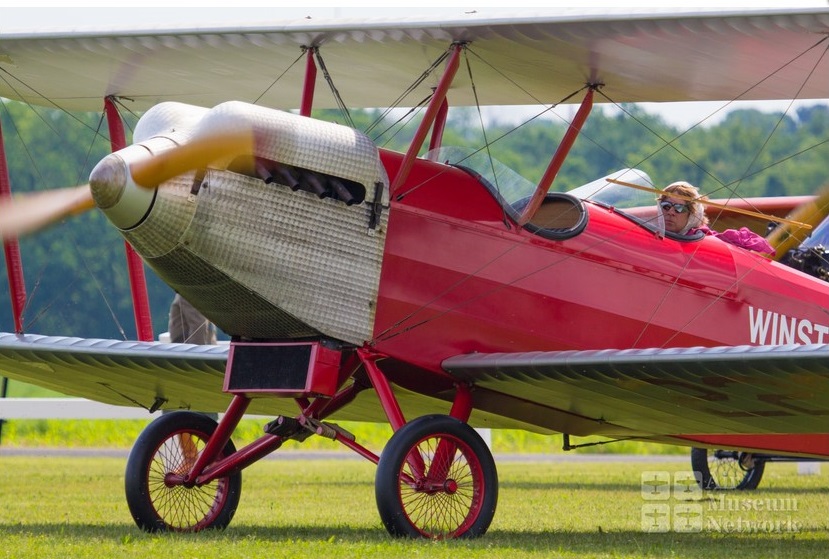
A one off, the Winstead Special was built by Carl Winstead in 1926, and flown in the Flying Aces Air Circus in the late 1920s. It was a hybrid with a Travel Air fuselage and Swallow wings used for sport racing competition as N2297, piloted by J J Davis. The fuselage is believed to be the steel tube fuselage Walter Beech and Lloyd Stearman built while working for Swallow, but their idea of steel tubing was shot down by Jake Moellendick, president of Swallow at that time. The fuselage was set aside, then sold.
Carl flew it with the Flying Aces Air Circus, Jessie Woods walked its wings. Carl also raced it and barnstormed with it. The next owners, the Marvin Mara family, used it for racing and barnstorming. It changed hands several times until the Davis Family of Ary NB purchased it in 1935 and took it apart for a rework in 1937. It was never reassembled until the remains were found c.1975 in storage and purchased by Paul Dougherty Jr in 1994.
The aircraft was still flying at the Golden Age Air Museum in Bethel, PA, in 2018.
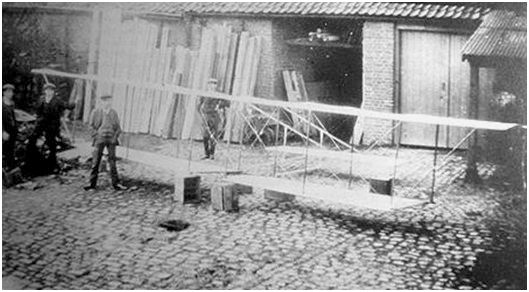
Sydney Camm, one of Britains most distinguished aircraft designers and father of the Hawker Hurricane, was born in 1893. From his schooldays he had shown a keen interest in aviation, founding the Windsor Model Aeroplane Club and constructing many successful model aircraft. Camm and his friends built a full sized Chanute-type glider 1912-1913 with plans to put an engine on it. It is seen with wing extensions that were added after the first experiments. It was used for almost a year, before being wrecked by a hurricane.
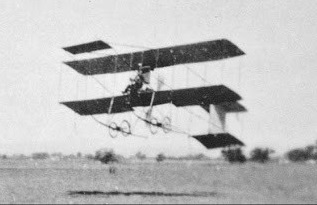
In 1909 John H Wilson, of Middlesex PA., USA, built an open cockpit biplane with two chain-driven pusher props. It appears to be a Wright copy in essence, except for wings with one lateral rib, around which the surfaces are bowed in an airfoil shape.
The 1913 single place, open cockpit biplane was motion picture and stunt pilot Al Wilson’s first effort as a teenager, a Curtiss pusher type that only gained 50′ altitude and refused to turn. It was abandoned because of structural fatigue after a few hard landings.
Built in 1910, the Delaplane was designed by Robie Seidelinger as a single place open cockpit biplane. Powered by a 45hp Elbridge engine, the elevator was in the front, rudder in the back, and ailerons were under the lower wings.
The machine made a couple of short flights in 1910, rising from the ground a few feet, according to Delaware Aviation History. It was later destroyed in a hangar fire.
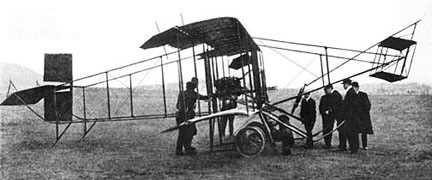
The Capt Hugh L. Willoughby War-Hawk built circa 1910 was described in Aero 10/14/11: “[Willoughby}, who built the famous War-Hawk, perhaps the largest biplane ever constructed…”
Hugh L. Willoughby (1856-1939) made his first flights in this machine at Atlantic City in the autumn of 1910. The pusher biplane with dart-shaped tail surfaces featured design cues from both Wright and Farman. It was powered by a 30 hp engine built by the Pennsylvania Automobile Co.
 All Aero