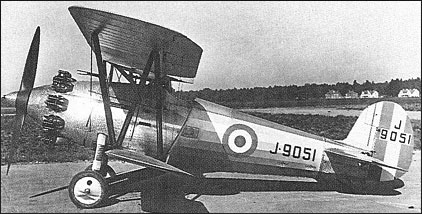
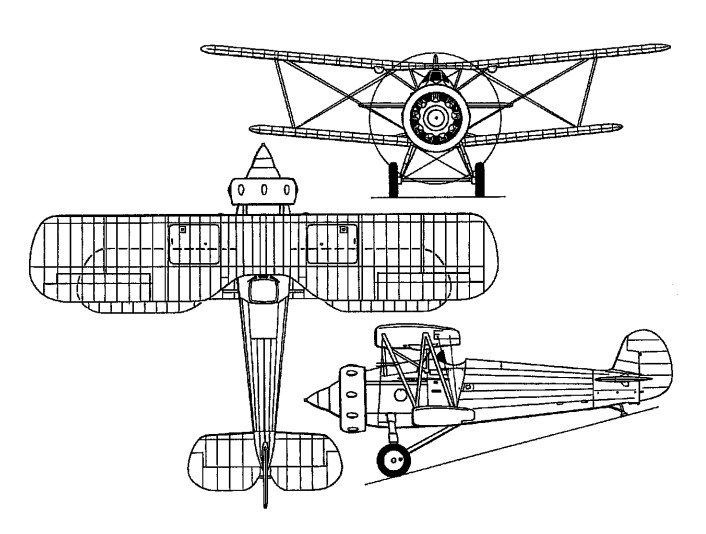
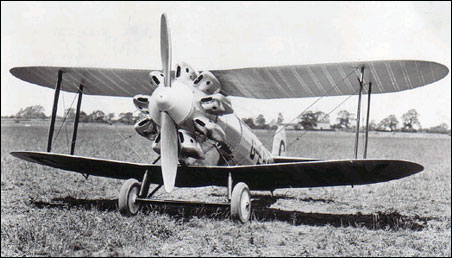
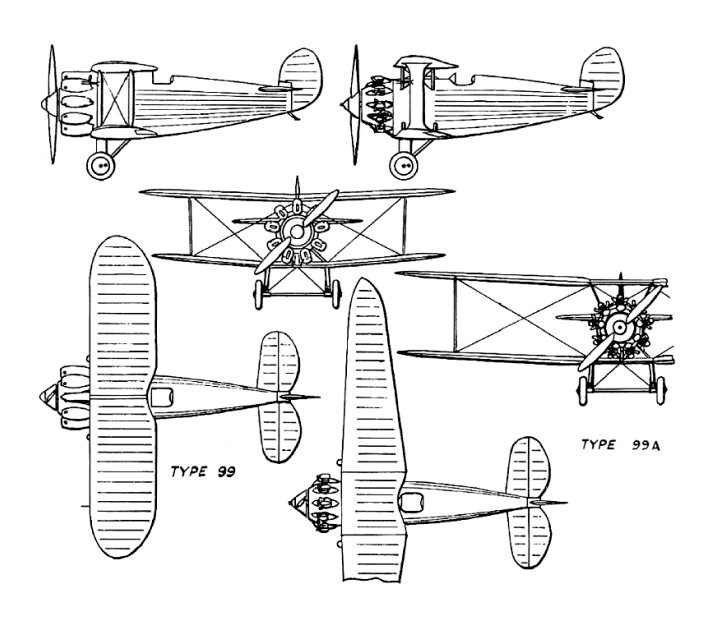
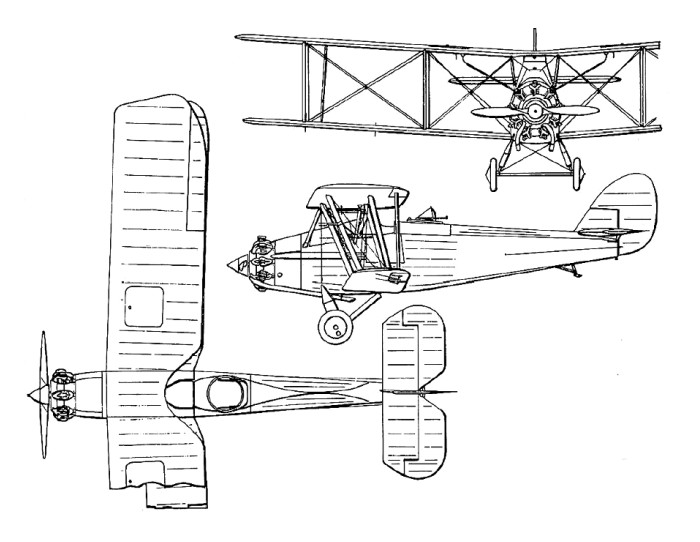
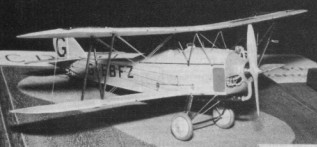
Of similar construction to the parallel Type 105 Bulldog, the Bullpup was ordered in prototype form to participate in the F.20/27 interceptor contest. It was first flown on 28 April 1928 with a Jupiter VI engine in place of the 480hp Bristol Mercury IIA for which it was intended. With the Mercury IIA, it was evaluated at Martlesham in the spring of 1929. Smaller and faster than the Bulldog, and possessing superior handling characteristics to those of its stablemate, it was nevertheless deemed to afford an insufficient advance to warrant production, and the sole prototype was utilised as an engine test-bed until 1935 when it was scrapped.
Engine: Jupiter VI Take-off weight: 1293 kg / 2851 lb Empty weight: 866 kg / 1909 lb Wingspan: 9.14 m / 29 ft 12 in Length: 7.16 m / 23 ft 6 in Height: 2.87 m / 9 ft 5 in Wing area: 21.37 sq.m / 230.02 sq ft Max. speed: 306 km/h / 190 mph
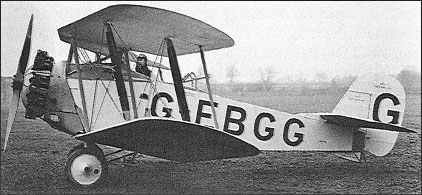
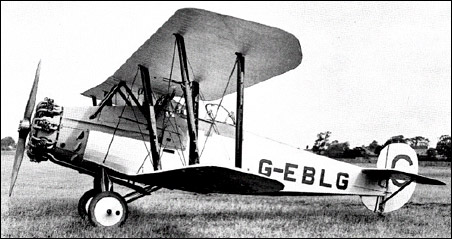
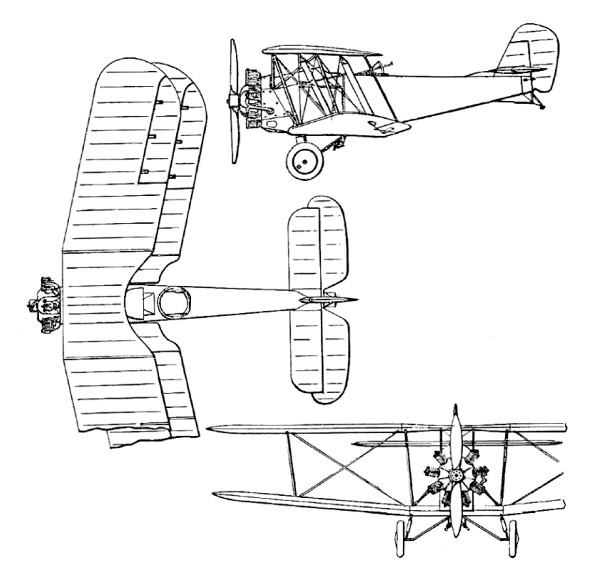
Designed as a private venture, the Type 101 two-seat fighter was powered by a 450hp Bristol Jupiter VI nine cylinder radial. The fuselage was a ply-covered spruce structure and the wings of steel with fabric skinning. Armament comprised two synchronised 7.7mm Vickers guns and a Scarff-mounted Lewis gun. The Type 101, which was first flown on 27 July 1927, offered a relatively high performance, but was rejected by the Air Ministry because of its use of wood. As no other customers presented themselves, the prototype served in the test bed role.
Engine: 450hp Bristol Jupiter VI nine cylinder radial Take-off weight: 1606 kg / 3541 lb Empty weight: 953 kg / 2101 lb Wingspan: 10.23 m / 33 ft 7 in Length: 8.33 m / 27 ft 4 in Height: 2.89 m / 9 ft 6 in Wing area: 33.44 sq.m / 359.94 sq ft Max. speed: 257 km/h / 160 mph Armament: 2 x 7.7mm Vickers, 1 x Lewis gun
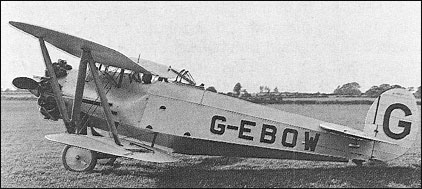
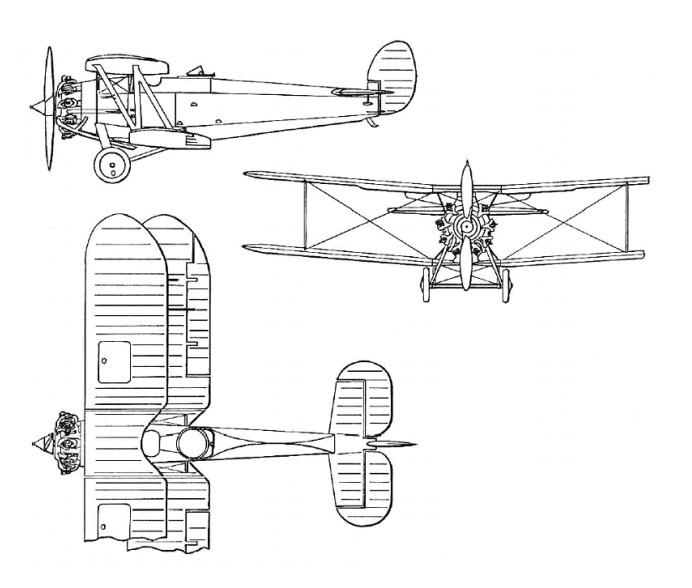
Engine: 1 x 510hp Bristol Jupiter VI Take-off weight: 1121 kg / 2471 lb Empty weight: 804 kg / 1773 lb Wingspan: 7.34 m / 24 ft 1 in Length: 6.45 m / 21 ft 2 in Height: 2.79 m / 9 ft 2 in Wing area: 19.51 sq.m / 210.00 sq ft Max. Speed: 258 km/h / 160 mph Crew: 1
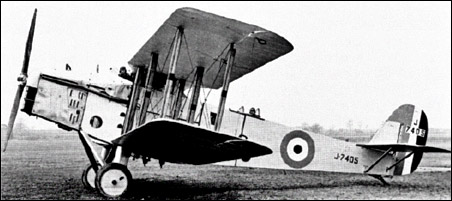
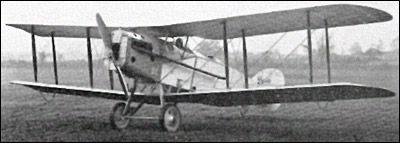
Designed by Wilfrid T Reid to meet Air Ministry Specification 3/22 issued in June 1922 for a two-seat fighter, the Bloodhound was flown for the first time at the end of May 1923. Featuring a welded steel-tube fuselage and wooden wings, and powered by a 425hp Bristol Jupiter IV engine, the Bloodhound carried an armament of two synchronised 7.7mm Vickers machine guns and a 7.7mm Lewis gun on a Scarff mounting on the rear cockpit. Three additional Bloodhounds were built to the order of the Air Ministry, the first of these being of all-metal construction and the others having wooden wings and tail. All three were powered by the Jupiter IV, but the engine of the third aircraft was fitted with an RAE supercharger. The three aircraft were delivered to Martlesham and Farnborough between March and September 1925, but no production was undertaken. The original prototype was successively fitted with the Jupiter V and VI, and served primarily as an engine test bed.
Boarhound
In 1927 a Mexican purchasing commission placed contracts in the UK for 10 new Hispano-Suiza engined Bristol Fighters and two Type 93B Boarhound II reconnaissance fighters.
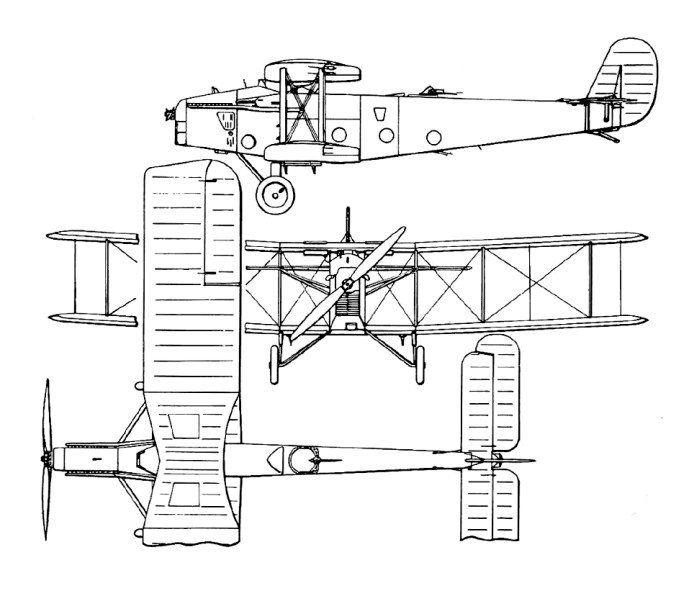
Boarhound Engine: 1 x 400hp Bristol Jupiter IV Take-off weight: 1828 kg / 4030 lb Empty weight: 1165 kg / 2568 lb Wingspan: 13.64 m / 44 ft 9 in Length: 9.60 m / 31 ft 6 in Height: 3.56 m / 11 ft 8 in Wing area: 43.11 sq.m / 464.03 sq ft Max. speed: 206 km/h / 128 mph Ceiling: 7193 m / 23600 ft Armament: 2 x 7.7mm machine-guns, 2 x 50kg bombs Crew: 2
93B Boarhound II
Bloodhound Take-off weight: 1921 kg / 4235 lb Empty weight: 1141 kg / 2515 lb Wingspan: 12.24 m / 40 ft 2 in Length: 8.08 m / 26 ft 6 in Height: 3.25 m / 10 ft 8 in Wing area: 45.89 sq.m / 493.96 sq ft Max. speed: 209 km/h / 130 mph
Engine: 1 x 450hp Bristol Jupiter VI Take-off weight: 1544 kg / 3404 lb Empty weight: 999 kg / 2202 lb Wingspan: 10.97 m / 35 ft 12 in Length: 8.94 m / 29 ft 4 in Height: 3.96 m / 12 ft 12 in Wing area: 40.13 sq.m / 431.96 sq ft Max. speed: 213 km/h / 132 mph Ceiling: 7925 m / 26000 ft
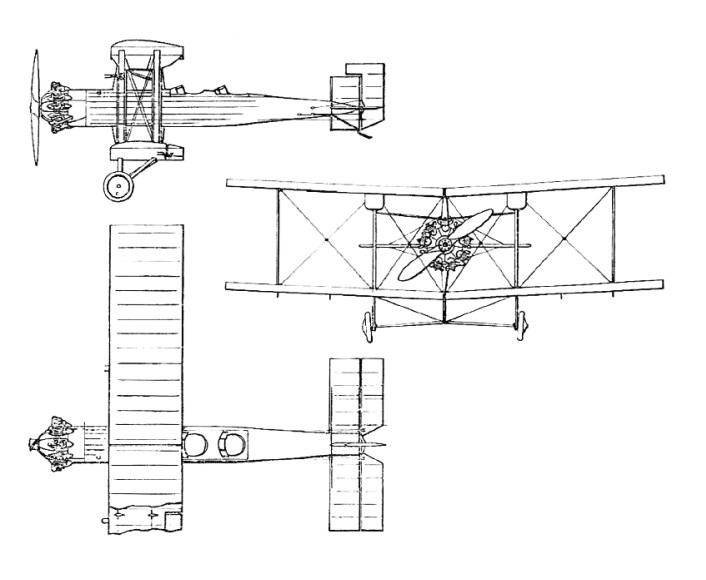
Engine: 1 x 650hp Rolls-Royce Condor III ake-off weight: 3690 kg / 8135 lb Empty weight: 2361 kg / 5205 lb Wingspan: 17.65 m / 57 ft 11 in Length: 14.48 m / 47 ft 6 in Height: 4.37 m / 14 ft 4 in Wing area: 91.51 sq.m / 985.00 sq ft Max. speed: 193 km/h / 120 mph Ceiling: 5456 m / 17900 ft Range: 1385 km / 861 miles Armament: 3 x 7.7mm machine-guns, 1 x 250kg or 2 x 100kg bombs
Greek Tourer Engine: 1 x 230hp Siddeley Puma Take-off weight: 1271 kg / 2802 lb Empty weight: 795 kg / 1753 lb Wingspan: 12.01 m / 39 ft 5 in Length: 7.92 m / 25 ft 12 in Height: 3.05 m / 10 ft 0 in Wing area: sq.m / 406.98 sq ft Max. speed: 193 km/h / 120 mph
The Bristol Tourer was originally a conversion of the Bristol F.2b Fighter built for and flown by the RAF in World War I. At the end of the war a number were converted in the UK as low-cost commercial airliners, fitted with a 134 kw (180 hp) Wolseley Viper, 179 kw (240 hp) Siddeley Puma, or 224 kw (300 hp) Hispano Suiza engine. Four distinct conversions were built, all flown from the front seat, varying in type of accommodation provided for the passengers, ie an enclosed cabin or open cockpit. Bristol type-numbers 27, 28, 29 and 47 were allotted to the series in 1923.
The first conversion was flown in 1919 and another was shown at the Paris Salon in December of that year. Two were sold in the USA and two others were fitted with floats. Two went to Spain and eight to Australia.
Replica: Air Charter Bristol F.2b Tourers
Bristol Tourer 2-seater Engine: 1 x 230hp Siddeley Puma Take-off weight: 1271 kg / 2802 lb Empty weight: 772 kg / 1702 lb Wingspan: 12.01 m / 39 ft 5 in Length: 7.95 m / 26 ft 1 in Height: 3.05 m / 10 ft 0 in Wing area: 37.81 sq.m / 406.98 sq ft Max. speed: 193 km/h / 120 mph Ceiling: 6706 m / 22000 ft


 All Aero