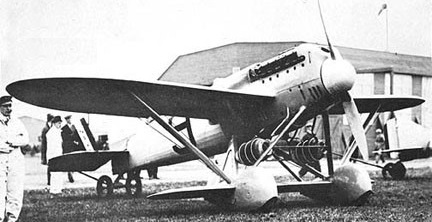
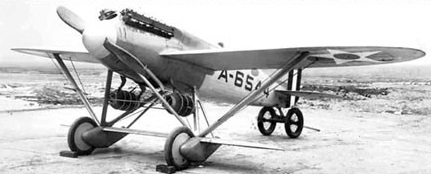
The 1922 Wright NW was a Pulitzer racer with a 650hp Packard T-2 engine. Two were built, as NW-1 sesqui-wing monoplanes, A6543 and A6544.
Wright NW-1 A6544
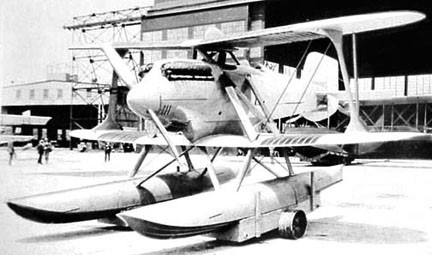
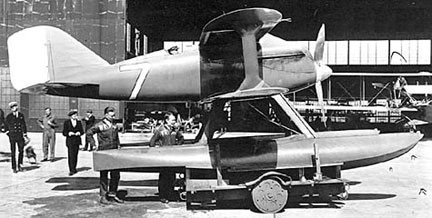
The first crash-landed in Lake St Clair and the second was only used as a test-bed for the 750hp Wright Tornado engine. It was then modified as a float equipped biplane NW-2 for the 1923 Schneider Cup race.
Wright NW-2 A6544
A6544 did not compete for the Schneider Cup after a shattered propeller blade tore its float during trail runs.
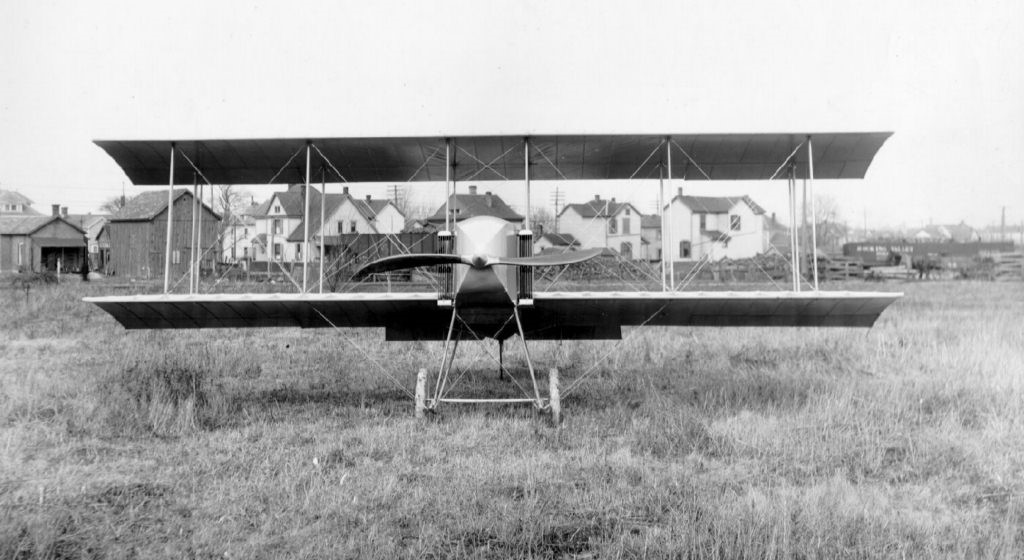
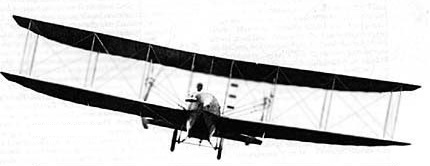
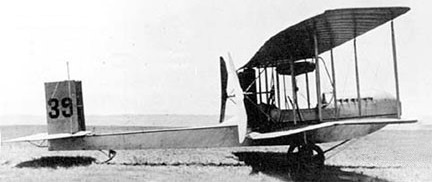
The 1915 Wright L was a two-place, open cockpit biplane primary trainer with standard control surfaces. Powered by a 100hp Hall-Scott A-7, it was similar to the Dayton-Wright FS-1 except for a longer wing.
The Model L was inferior to many other biplanes that were being produced at the time. It failed to secure any military orders and few were produced.
This was the last airplane produced by the Wright Company under that name. By this time Orville Wright no longer owned the company, but he was retained as a consultant and may have had some input on the design of the Model L.
Wright Model L Engine: 100hp Hall-Scott A-7, 75 hp at 1400 to 1560 rpm Propeller: Single direct-drive, 8 ft (244 cm) Wingspan: 29 ft (8.8 m) Wing area: 360 sq ft (33.4 sq. m) Wing chord: 6.5 ft (198 cm) Wing separation: 5.7 ft (174 cm) Camber: 1:20 Length: 24.2 ft (7.4 m) Horizontal rear elevator: 20 sq ft (1.9 sq m) Twin movable vertical rear rudders: 8.5 sq ft (0.8 sq m) Weight: 850 lbs (386 kg) Speed range: 25 to 80 mph (40 to 129 kph)
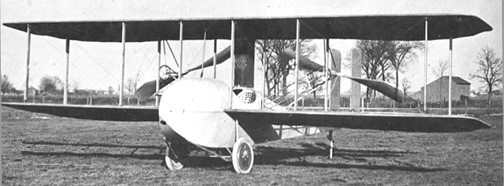
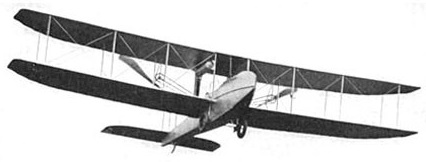
The Wright K of 1916 featured chain-driven, interwing-mounted twin props, powered by a 60-70hp Wright engine. One was built, going to the USN as AH-23 / A51.
The 1915 Wright J, or Long Bull (Burgess), was a two-place, open-cockpit, biplane floatplane similar to the Aeroboat. It was a license-built civil version of the Burgess-Wright C.
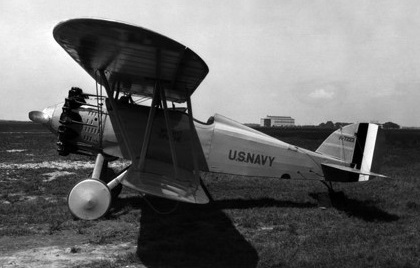
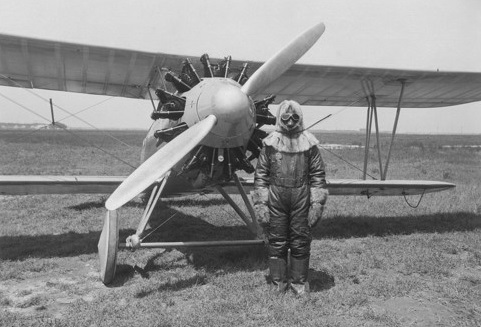
After the U.S. Navy declared its preference for radial engines, Wright developed the P-1 Simoon. To demonstrate the engine, the F3W was designed to carry it. The new air-cooled, supercharged 1,176.036-cubic-inch-displacement (19.272 liters) Wright Aeronautical Division R-1200 Simoon 9-cylinder radial engine, was rated at 350 horsepower at 1,900 r.p.m. The R-1200 weighed 640 pounds (290 kilograms). The F3W was a single-seat biplane, with a steel tubing fuselage and wood wings, covered by fabric. Designed to be a carrier-based fighter and powered by the Simoon engine, its performance was poor. One was built, A7223, and tested XF3W-1. After the Navy took delivery of the aircraft, they installed a rival company’s engine, the number two Pratt & Whitney R-1340 radial Wasp A engine. The aircraft was redesignated XF3W, and flew with the new engine for the first time on 5 May 1926. The XF3W-1 was the first airplane to fly with a Pratt & Whitney Wasp engine. The Navy used the XF3W as a test bed for the Pratt & Whitney engine until 1930, during which time the aircraft set a number of records.
On 6 September 1926, the XF3W set the world altitude record for seaplanes of 38,500 ft (11,700 m). On 8 May 1929: Lieutenant Apollo Soucek, United States Navy, set a Fédération Aéronautique Internationale (FAI) World Record for Altitude when he flew the prototype Wright Aeronautical Division XF3W-1 Apache, Bu. No. A7223, to 11,930 meters (39,140 feet) over NAS Anacostia, Washington, D.C. The record was certified by the National Aeronautic Association. Lieutenant Soucek was awarded the Distinguished Flying Cross for this achievement.
The National Advisory Committee for Aeronautics (NACA) used the XF3W-1 for engine and cowling tests at the Langley Memorial Aeronautical Laboratory (LMAL), Langley Field, Hampton, Virginia. Which engine was installed at the time of Lieutenant Soucek’s record flight is uncertain.
Wright XF3W-1 Apache, Bu. No. A7223, at NACA Langley.
The XF3W-1’s engine was supercharged by a NACA Model 2E Roots-type supercharger, built by the Allison Engineering Company. This supercharger, serial number 1, is in the collection of the National Air and Space Museum.
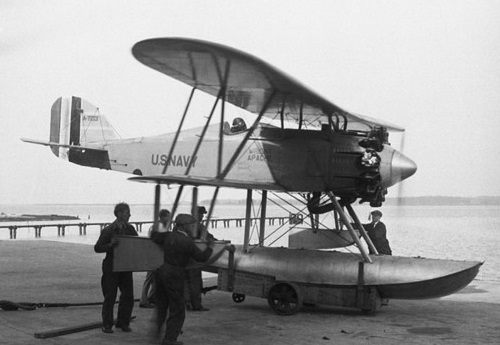
Lieutenant Soucek set two other World Records with the XF3W-1 Apache. On 4 June 1929, with the Apache configured as a float plane, he flew it to an altitude of 11,753 meters (38,560 feet). The following year, 4 June 1930, he flew the Apache to 13,157 meters (43,166 feet). The XF3W was fitted with a single centreline float to evaluate the concept of basing floatplanes on battleships.
XF3W-1 with floats Engine: 1 × Pratt & Whitney R-1340-B, 450 hp (336 kW) Wingspan: 27 ft 4 in (8.33 m) Wing area: 215 sq.ft (19.97 sq.m) Length: 22 ft 1 in (6.73 m) Height: 8 ft 6 in (2.59 m) Empty weight: 1,414 lb (641 kg) Gross weight: 2,128 lb (965 kg) Maximum speed: 162 mph (261 km/h) Service ceiling: 38,560 ft (11,753 m) Crew: 1
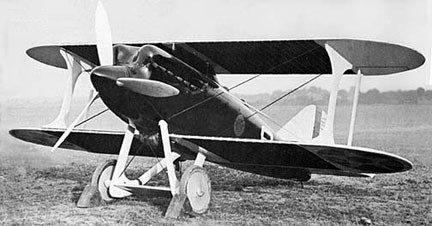
Two Wright F2W-1 were built for the US Navy in 1923 as Pulitzer racers A6743 and A6744. First flying on 27 August 1923, piloted by L H Sanderson, the first crashed on landing during trials and was damaged beyond economical repair.
A6744 was converted to twin floats as F2W-2 in 1924, but also crashed during testing.
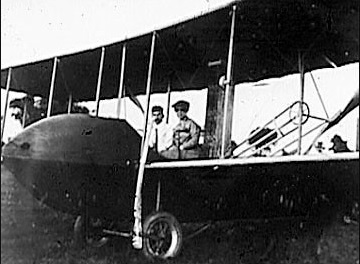
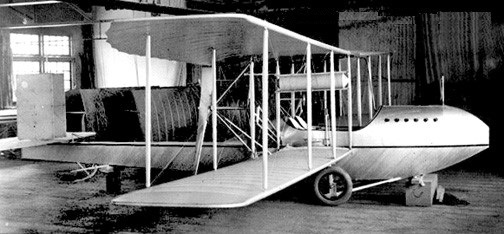
The 1913 Wright F, or Tin Cow, was the first of the fuselage models, but it still retained wing-warping and two chain-driven propellers.
Although this designation is often seen applied to the Model B built under license by Burgess as their model F, only one was ever produced by the Wrights, delivered in 1914 to US Signal Corps as SC39.




 All Aero