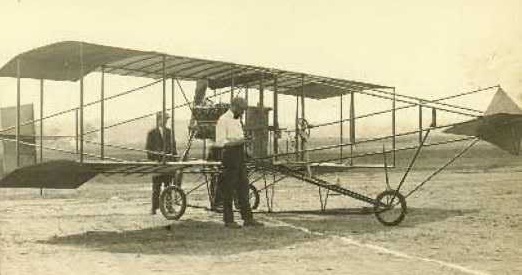
The Curtiss-Willard Banshee Express of 1910 was designed on the specifications of Charles F. Willard and built by Curtiss.
The first flight of the Banshee Express took place at Mineola, N.Y., and established an American record by carrying 3 passengers (1200 lb gross) on August 14, 1910.
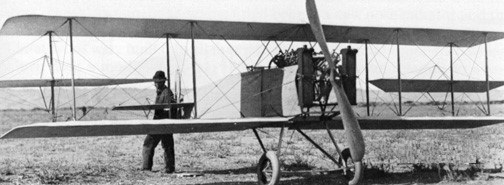
The second Curtiss tractor landplane, the Curtiss-Beachey biplane, was intended as an exhibition craft for Lincoln Beachey but, after a short flight, he rejected it as unsuitable.
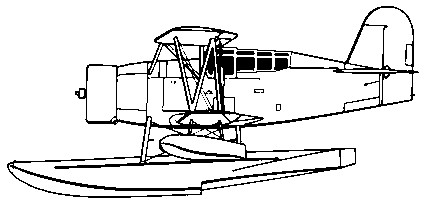
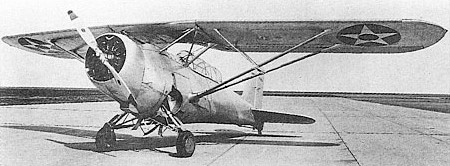
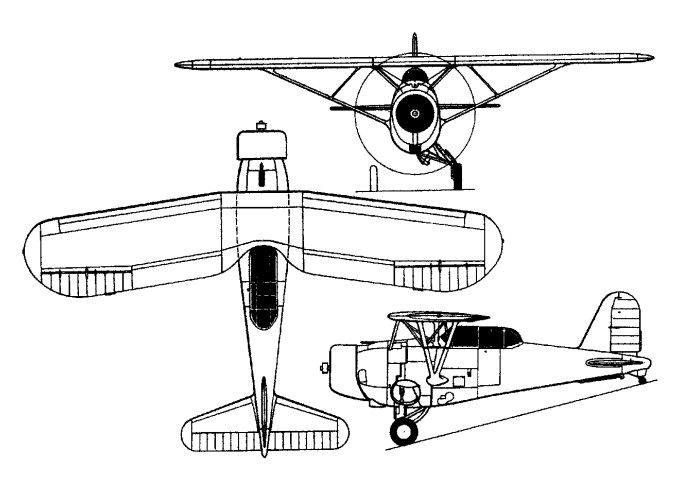
1937 saw the United States Navy looking for a replacement aircraft for its Curtiss SOC Seagull series of biplane floatplane aircraft. The requirement was circulated to US manufacturers in early 1933, resulting in proposals from Curtiss, Douglas and Vought, but it was the XO3C-1 prototype, company-designated Curtiss Model 71, ordered on 19 June 1933 and first flown in April 1934, which was ordered into production as the SOC-1 (Model 71A). This changed official designation reflected the combination of scout and observation roles. When first flown the prototype was equipped with amphibious landing gear, twin main wheels being incorporated in the central float. However, standard production aircraft were built as floatplanes, with non-retractable tailwheel landing gear optional; in any event they were easily convertible from one configuration to the other. Construction was mixed, with the foldable wings and tail unit of light alloy, a welded steel-tube fuselage structure, and a mixture of light alloy and fabric covering. The pilot and gunner/observer were accommodated in tandem cockpits, enclosed by a continuous transparent canopy with sliding sections for access. To provide a maximum field of fire for the flexibly-mounted gun in the rear cockpit, the turtleback could be retracted. Deliveries of the first SOC-1 production aircraft began on 12 November 1935. These were powered by Pratt & Whitney R-1340 Wasp engines, and the first squadrons to become fully equipped with the type comprised Scouting Squadrons VS-5B/ -6B/ -9S/ -10S/ -11S. Production of 135 SOC-1s was followed by 40 examples of the SOC-2 (Model 71B) with wheeled landing gear, detail improvements and R-1340-22 Wasp engines. A total of 83 examples of the SOC-3 (Model 71E) was built, these being generally similar to the SOC-1. SOC-2s and SOC-3s, after modification to install arrester gear during 1942, became redesignated SOC-2A and SOC-3A respectively. Curtiss also built three aircraft virtually the same as the SOC-3 for service with the US Coast Guard: these SOC-4 (Model 71F) aircraft were acquired by the US Navy in 1942 and equipped with arrester gear to bring them up to SOC-3A standard. In addition to the SOC Seagulls built by Curtiss, 44 were produced by the Naval Aircraft Factory at Philadelphia, Pennsylvania. Basically the same as the Curtiss-built SOC-3, these were designated SON-1 or, if fitted with arrester gear, SON-1A. Following termination of SOC production in early 1938, Curtiss became involved in the development and manufacture of a successor, designated SO3C Seamew. However, when the operational performance of the Seamew proved unsatisfactory it was withdrawn from first-line service; all available SOCs then reverted to operational status, continuing to fulfil their appointed role until the end of the war.
Curtiss SOC-1 Seagull Engine: 1 x Pratt & Whitney R-1340-18 Wasp, 447kW / 600 horsepower. Wingspan: 10.97 m / 35 ft 12 in Wing area: 31.77 sq.m / 341.97 sq ft Length: 8.08 m / 26 ft 6 in Height: 4.50 m / 14 ft 9 in Maximum Speed: 157mph (253kmh; 137kts) Cruise speed: 214 km/h / 133 mph Maximum Range: 954miles (1,535km) Rate-of-Climb: 1,000ft/min (305m/min) Service Ceiling: 14,895ft (4,540m) Armament: 1 x 0.30 cal (7.62mm) fixed, forward-firing machine gun. 1 x 0.30 cal (7.62mm) trainable machine gun in flexible mount in rear cockpit. 2 x 100lb bombs held underwing. Accommodation: 2 Hardpoints: 2 Empty Weight: 3,508lbs (1,591kg) Maximum Take-Off Weight: 5,437lbs (2,466kg)
Among the evaluations of the Model 73 XF12C-1 was a dive bombing test in September of 1934 that resulted in a failure of the parasol monoplane wing assembly. Though the pilot and machine were wholly spared, the prototype was nonetheless heavily damaged. Testing had shown that the parasol wing assembly was generally unfit for the stresses of what the new aircraft would be called upon to achieve. As a result, the US Navy ordered a new prototype to fall in line with stricter requirements. Curtiss once again delivered an answer, this time the Model 77, to which the US Navy affixed the designation of XSBC-2. With a biplane wing, Wright R-1510-12 Whirlwind radial and three-bladed propeller, the first flight of the XSBC-2 was on December 9th, 1935. In March of 1936, a Pratt & Whitney R-1535-82 Twin Wasp Junior radial piston engine was fitted to the airframe, resulting in the revised company designation of “Model 77A” and the revised US Navy designation of “XSBC-3”.
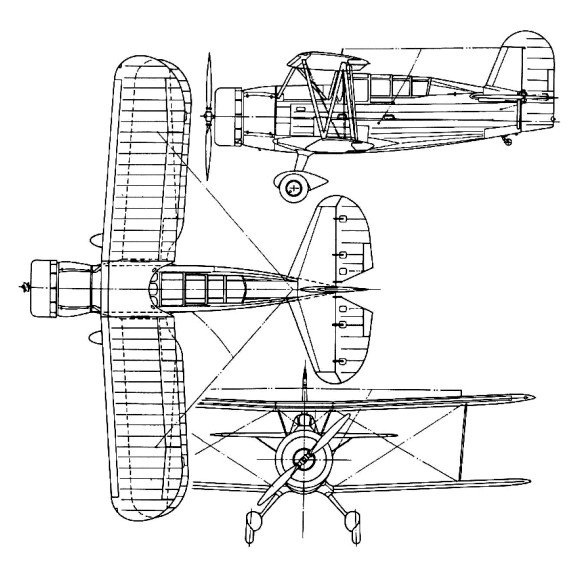
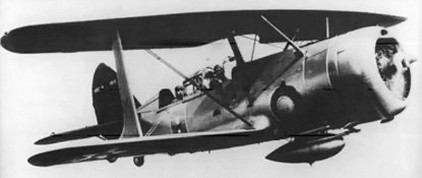
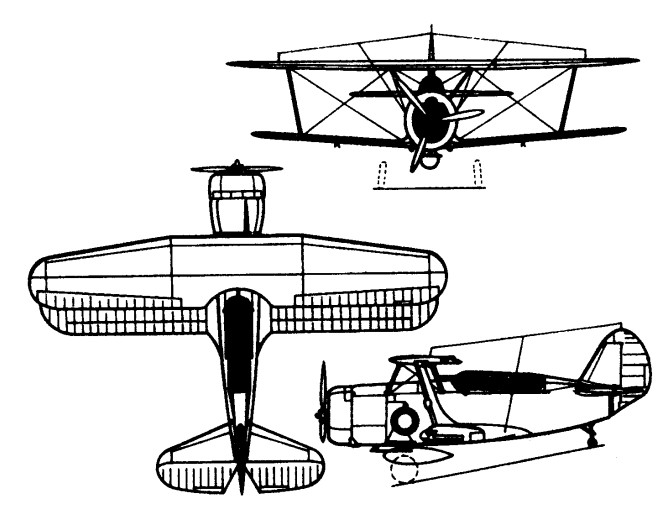
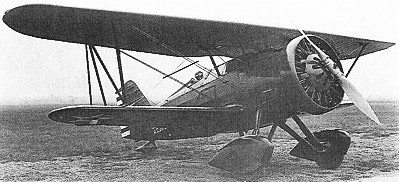
The United States Navy contracted the company on August 29th, 1936, to deliver 83 SBC-3 “Helldiver” production aircraft. Initial deliveries occurred on July 17th, 1937 to Squadron VS-5 of the carrier USS Yorktown. By all reports, the SBC proved a rather pleasant airframe to control, however, the constantly changing world of technology in the late 1930s solidified the SBC as an out-of-date design, forcing the fighter to undertake second-line duties in the training of upcoming airmen out of Florida. The biplane dive-bomber soldiered on for a time longer with both US Navy and Marine Corps branches aboard such active carriers as the USS Hornet. The SBC Helldiver would lead a short active life with the US Navy and officially meet her end by October of 1944, being replaced by much-improved and modern types. The SBC Helldiver was the last biplane aircraft to be purchased by the United States Navy. The design was characterized by its staggered, uneven span biplane wing arrangement with outboard struts, cabling and skeletal inboard struts holding the wings in place. The fuselage was metal clad. The undercarriage, while retractable, still sported its visible wheels tucked in alongside each forward fuselage side. The crew of two sat in tandem under a glazed canopy. The cockpit was set at amidships, aft of the both wing assemblies.
Curtiss worked on improving the base SBC-3 series design and set one airframe aside for testing. The resulting tests yielded the new Model 77B, US Navy designation SBC-4. Fitted with a more powerful Wright R-1820-22 Cyclone 9 series radial piston engine of 850 horsepower, the US Navy signed a production contract on 5 January 1938 for 174 examples, 1938 with the first deliveries beginning in March of 1939.
France desperately attempted to counter the German advance by quickly improving their military inventory, even contracting American aircraft firms for whatever they could make available. In early 1940, the United States Navy rerouted some 50 of its actively serving SBC-4 Helldiver aircraft to the French Navy with a total of 90 on order for France. Aircraft were repainted via French standards and the 0.30 caliber armament was upgraded to a more potent pairing of 2 x 0.50 caliber. All American instruments were replaced by French-labeled ones and Curtiss employees would be involved in delivering the aircraft to the French carrier Bearn by way of Nova Scotia. The Bearn eventually accepted the aircraft and made her way across the Atlantic back to France. This delivery would arrive too late to be of much use in combat and the nation of France eventually capitulated. The Bearn moved south to the Caribbean island of Martinique where the remaining forty-nine SBC-4s fell victim to the corrosive effects of the tropical environment, destined never to fight. At least five SBC-4s were accepted into the inventory of the Royal Air Force under the designation of Curtiss “Cleveland” Mk.I and generally used to train ground personnel out of Little Rissington, UK.
The US Navy secured a revised SBC-4 model with the addition of self-sealing fuel tanks, and a total of 175 were built by April 1940, of which 117 were in service by December 1941. By the time the USA became involved in World War II, the SBC-3s had become obsolescent, but SBC-4s were then in service with US Navy Squadrons VB-8 and VS-8 on board the USS Hornet and with US Marine Squadron VMO-151. Overall production for the series was 308 aircraft.
XSBC 3 Engine: 825 hp Pratt & Whitney R¬-1535 82 Twin Wasp Junior Armament: 2 x 0.30 in (7.62 mm), 227 kg (500 lb) bomb
XSBC-4 Engine: Wright R 1820 22 Cyclone
Curtiss SBC-4 Helldiver Engine: 1 x Wright R-1820-34 Cyclone radial, 671kW / 950 horsepower. Wingspan: 10.36 m / 34 ft 0 in Length: 8.57 m / 28 ft 1 in Height: 3.17 m / 10 ft 5 in Wing area: 29.45 sq.m / 317.00 sq ft Take-off weight: 3211 kg / 7079 lb Empty weight: 2065 kg / 4553 lb Max. Speed: 377 km/h / 234 mph Cruise speed: 282 km/h / 175 mph Service Ceiling: 7315 m / 24000 ft Rate-of-Climb: 1,630ft/min (497m/min) Range w/max.payload: 652 km / 405 miles Maximum Range: 590miles (950km) Armament: 1 x 7.62mm forward-fixed M1919 Browning machine gun, 1 x 454 kg / 1,000lb bomb 1 x 7.62mm trainable machine gun in rear cockpit. Crew: 2 Hardpoints: 1
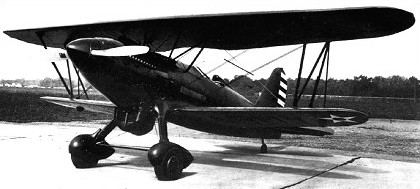
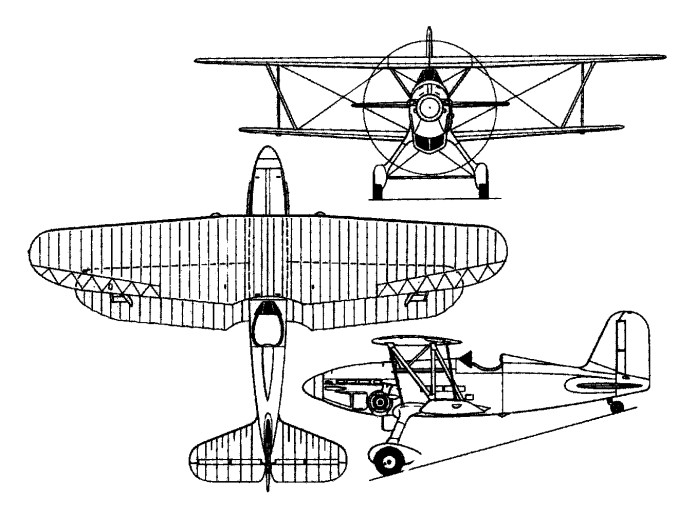
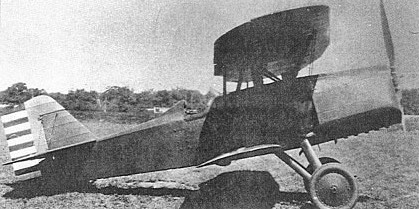
Ordered in July 1931, the Curtiss XP-23 was the last biplane in the pursuit series, altered on the production line from the final airframe of the 45 ordered as Y1P-22 but redesignated P-6E. With fabric-covered metal wings of standard P-6 planform and a new metal skinned fuselage and initially powered by a 447kW Curtiss GIV-1570C Conqueror with a turbo-charger and three-blade propeller, the YP-23 was delivered 16 April 1932. Evaluated by operational fighter pilots at Wright Field with turbo-charger removed, two-blade propeller retrofitted, and its designation changed to YP-23, the YP-23 seems to have performed very well, subject only to the limitations of the biplane configuration. Some reports that the XP-23 was excessively heavy, with maximum take-off weight as high as 1950kg appear to be based on an erroneous interpretation of Curtiss documents from the period. The XP-23 was denied a production contract, competing not with other biplanes but with the monoplane Boeing P-26 ‘Peashooter’. Ultimately, the YP-23 was deleted from Army inventory and turned back to Curtiss, where its wings were retained for use on the prototype US Navy XF11C-1 shipboard fighter.
XP 23 Engine: Curtiss V 1570 23 Conqueror, 447kW Wingspan: 9.60 m / 31 ft 6 in Length: 7.26 m / 23 ft 10 in Height: 2.90 m / 9 ft 6 in Wing area: 23.23 sq.m / 250.05 sq ft Take-off weight: 1542 kg / 3400 lb Empty weight: 1315 kg / 2899 lb Top speed: 354 km/h / 220 mph at 4570 m / 15 000 ft Initial climb, 1,370 ft/min (6,96 m/sec) Ceiling: 7925 m / 26000 ft Range: 700 km / 435 miles Armament: 1 x 12.7mm + 1 x 7.62mm fixed machine-guns, 227kg of bombs
Based on a US Navy Bureau of Aeronautics design for a two-seat fighter, the XF12C-1 all-metal parasol monoplane, ordered on 30 June 1932, featured aft-folding wings with leading-edge slats and trailing-edge flaps, and manually-operated retractable main undercarriage members. Flown in July 1933, the XF12C-1 was initially powered by a Wright R-1510-92 two-row radial rated at 625hp at 1830m. By the time the XF12C-1 was tested by the US Navy in October 1933, the Twin Whirlwind engine had been replaced by a Wright SR-1820-80 Cyclone single-row radial. With the discarding of the two-seat fighter category it was redesignated XS4C-1 in December 1933 and the XSBC-1 in January 1934 as a scout-bomber. Among the evaluations of the Model 73 XF12C-1 was a dive bombing test on 14 June 1934 that resulted in a failure of the parasol monoplane wing assembly. Though the pilot and machine were wholly spared, the prototype was nonetheless heavily damaged. Testing had shown that the parasol wing assembly was generally unfit for the stresses of what the new aircraft would be called upon to achieve. As a result, the US Navy ordered a new prototype to fall in line with stricter requirements. Curtiss once again delivered an answer, this time the Model 77, to which the US Navy affixed the designation of XSBC-2.
XF12C-1 Engine: Wright R-1510-92 Whirlwind two-row radial, 625hp at 1830m Wright SR-1820-80 Cyclone single-row radial Empty weight: 1 762 kg Wingspan: 12.65 m / 41 ft 6 in Length: 8.86 m / 29 ft 1 in Height: 3.94 m / 12 ft 11 in Wing area: 25.27 sq.m / 272.00 sq ft Max. speed: 349 km/h / 217 mph Range: 1188 km / 738 miles
During 1928 Curtiss was assigned the task of mating the 600hp Curtiss H-1640 Chieftain 12-cylinder air-cooled radial engine to the P-6 airframe. A USAAC contract was placed for three aircraft which were designated P-11s. In the event, the Chieftain proved unsatisfactory and the P-11 was abandoned (together with the projected Curtiss XP-14 that had been designed around this engine). Two of the airframes that had been ordered in January 1929 were completed as P-6Ds and the third, which was fitted with a 575hp Wright R-1820-9 Cyclone, was assigned the designation YP-20 on delivery in October 1930. It was later fitted with the V-1570 engine of the XP-22, complete with cowling, the cantilever main undercarriage members and three-blade propeller of this aircraft to become the XP-6E.
YP 20 575 hp Wright R 1820 9 Cyclone radial Take-off weight: 1466 kg / 3232 lb Empty weight: 1124 kg / 2478 lb Wingspan: 9.60 m / 31 ft 6 in Length: 7.24 m / 23 ft 9 in Height: 2.79 m / 9 ft 2 in Wing area: 23.41 sq.m / 251.98 sq ft Max. speed: 301 km/h / 187 mph tailwheel
The XP-17 comprised the airframe of the first P-1 mated to the new 480hp Wright V-1460-3 Tornado inverted inline air-cooled engine, and was intended primarily to test the power plant rather than extend the service life of the P-1 design. The conversion was undertaken by the US Army and flight testing was initiated in June 1930.
Engine: 480hp Wright V-1460-3 Tornado Wingspan: 9.63 m / 31 ft 7 in Length: 6.96 m / 22 ft 10 in Height: 2.62 m / 8 ft 7 in Wing area: 23.41 sq.m / 251.98 sq ft Take-off weight: 1358 kg / 2994 lb Empty weight: 1000 kg / 2205 lb Max. speed: 265 km/h / 165 mph
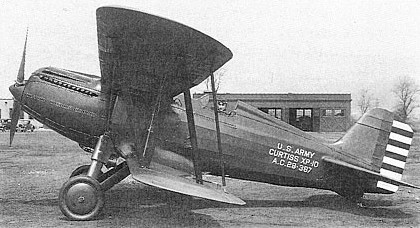
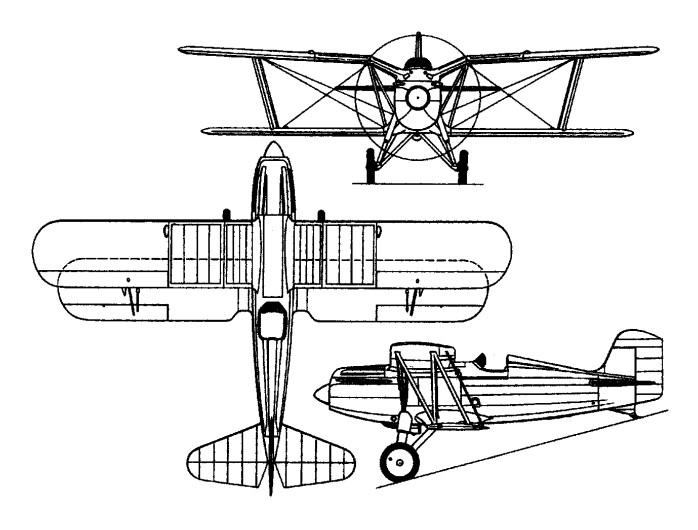
On 18 June 1928, the USAAC placed a contract with Curtiss for one prototype of the XP-10 single-seat fighter powered by a 600hp V-1570-17 Conqueror engine. Of mixed construction with fabric-covered steel-tube fuselage and plywood-covered wooden wings, the XP-10 placed emphasis on aerodynamic cleanliness and utilised surface evaporation wing radiators and a gulled upper wing. Delivered in August 1928, the XP-10 was tested until October 1930, but continuous problems with the cooling system prevented further development.
Engine: 600hp V-1570-17 Conqueror Take-off weight: 1803 kg / 3975 lb Empty weight: 1379 kg / 3040 lb Wingspan: 10.06 m / 33 ft 0 in Length: 7.47 m / 24 ft 6 in Height: 2.64 m / 8 ft 8 in Max. speed: 307 km/h / 191 mph Range: 742 km / 461 miles
In 1931, the third production P-6 (which had been converted to P-6A standard) was withdrawn from service and returned to Curtiss for extensive modification as the XP-22. Retaining the V-1570-23 engine, the XP-22 was cleaned up aero¬dynamically and featured cantilever main undercarriage legs and wheel spats, plus a redesigned engine cowling with, initially, an annular radiator. The radiator was subsequently returned to a position beneath the rear of the engine. On 30 June 1931, the XP-22 demonstrated a level speed of 202.4 mph (326 km/h) and on 10 July a USAAC contract was placed for 45 Y1 P-22s. These were subsequently redesignated as P-6Cs, but prior to the start of production deliveries the designation was to be changed once more to P-6E. By this time the engine of the XP-22, complete with cowling and three-blade propeller, plus the main undercarriage members, had been grafted on to the YP-20 which had thus become the XP-6E while the XP-22 was returned to P-6A configuration.
XP 22 Engine: Curtiss V-1570-23 Conqueror Span, 31 ft 6 in (9,60 m) Length, 23 ft 7 in (7,19 m) Height, 8 ft 10 in (2,69 m). Wing area, 252 sq ft (23,41 sq.m) Empty weight, 2,597 lb (1178 kg) Loaded weight, 3,354 lb (1 521 kg) Max speed, 202 mph (325 km/h) at sea level Max speed: 195 mph (314 km/h) at 10,000 ft (3050 m) Initial climb, 2,400 ft/min (12,19 m/sec)

 All Aero