In 1925 the Yackey Aircraft Co modified Thomas-Morse Scout aircraft as the Cruiser (202) and Scout (234). Still as two place open cockpit biplanes.
Engine: LeRhône rotary, 80hp
Seats: 2
In 1925 the Yackey Aircraft Co modified Thomas-Morse Scout aircraft as the Cruiser (202) and Scout (234). Still as two place open cockpit biplanes.
Engine: LeRhône rotary, 80hp
Seats: 2
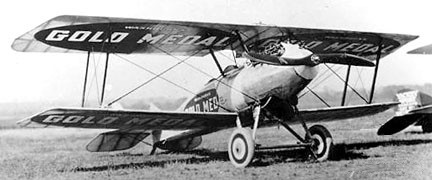
The 1924 Yackey A was a converted Thomas-Morse S-4C for exhibition pilot Charles “Speed” Holman.
Yackey A
Engine: Curtiss OX-5, 90hp
Seats: 2
A Curtiss headless type single place open biplane was built in 1915 by college student Forrest E Wysong using written instructions sent to him by Lincoln Beachey.
First flown on 16 March 1915, it was flown four times before his father ordered him to “get rid of the dangerous machine.”
Engine: 75hp Roberts 6 pusher
Propeller: 8′
Wingspan: 22’0″
Length: 18’0″
Speed: 90 mph
Seats: 1
In 2003 the Wright Redux Assn of Glen Ellyn IL. built a Wright Flyer replica with specs and construction techniques reportedly identical to the original 1903 Wright brothers’ machine.
The flying replica was built to coincide with the 100th anniversary celebrations, with a first flight date set for 17 December 2003.
Registered N203WF c/n WOW1903-02, an FAA Special certification in the category of Experimental-Exhibition was issued on 15 March 2003.

The two-place Wright-Martin R was built in 1917 as a landplane and a single pontoon floatplane. The land version was used briefly in the Mexican Border campaign, and seaplanes went to the Philippines.
Fourteen were built (AS108 and 109, and AS522-533) but some records show the total as 27, which might indicate prior production of 13 by Martin in 1916, before the merger.
Some versions had diagonal end-struts replacing the wire bracing.
Landplane
Engine: Hall-Scott A-5a, 150hp
Wingspan: 39’9″
Length: 26’7″
Speed: 93 mph
Seats: 2
Floatplane
Engine: Hall-Scott A-5a, 150hp
Wingspan: 50’7″
Length: 27’2″
Speed: 86 mph
Seats: 2
In 1933 James R Wright, St Clair Shores MI., USA, built a single-place, open cockpit biplane powered by a LeBlond engine, and registered N15185.
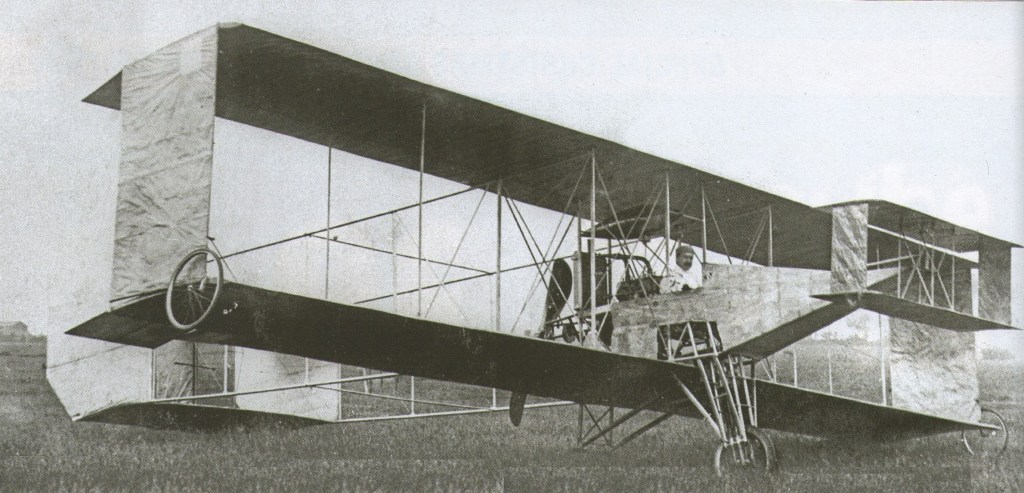
In December 1908 Howard Wright was asked to build an aircraft for Malcolm Serr Keaton. The design was similar to the contemporary Voisins, a pusher biplane with a front-mounted elevator and a rear-mounted box-like biplane tail, but differed in some details, most obviously in having biplane front elevators and an undercarriage consisting of a single wheel carried by a pyramid of struts in front of the wings, with supplementary wheels on either wingtip.
It was powered by a 50 hp Metallurgique engine, which drove a pair of contra-rotating two bladed propellers. Lateral control was by means of four small ailerons fitted to the trailing edges of both wings.
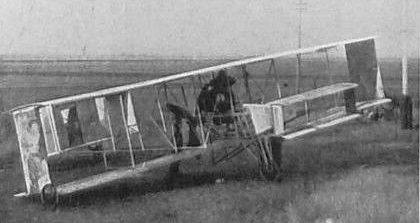
The two-seat aircraft was displayed at the 1909 Olympia Aero Exhibition and flown successfully at Camber Sands.
Leo and Vivian Walsh helped to lay the foundations for both military and civil aviation in New Zealand.
The brothers were determined to build and fly an aeroplane and succeeded in obtaining financial backing from Auckland businessmen A. N. and C. B. Lester and A. J. Powley. They then bought the plans for a British Howard Wright biplane together with materials and an eight-cylinder engine, worth about £750 in total. It took about 5½ months for the brothers to assemble the aircraft at their family home in Remuera. They were helped by fellow enthusiasts, and their sisters Veronica and Doreen, who machine-sewed hundreds of yards of material for the wings.
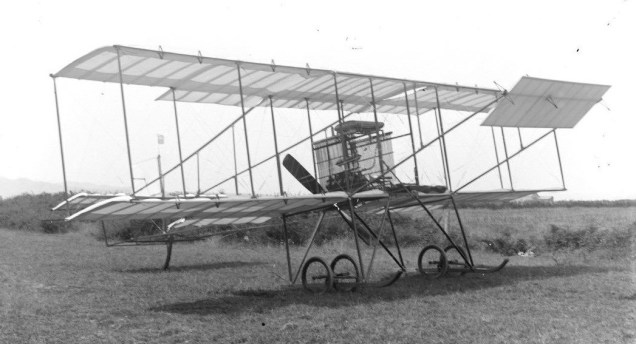
The finished aircraft, named the Manurewa No 1, bore an inscription ‘The Walsh Aeroplane Co. Aeronautical Engineers Constructors Auckland’. Beneath this was a crest and the words ‘Aero Club New Zealand’.
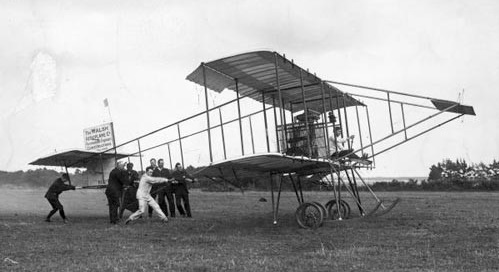
Walsh Brother’s Manurewa No 1 made the first undisputed powered flight in New Zealand – flown by Vivian Walsh on Sunday, February 5, 1911, from a grass field at Glenora Park, a total distance of 400 yards at a maximum height of 60 feet (flight data figures differ somewhat depending on the source).

Span: 36′ (48′ with extensions)
Length: 36’6″
Weight: 800 lb
Speed: 36-45 mph
Price: £650
Engine: Metallurgique 4 cyl, 50 hp
Span: 40′
Length: 43′
Weight: 1100 lb
Speed: 35 mph
Price: £1200
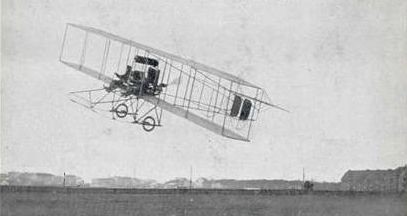
German Flugmaschine Wright-Gesellschaft (Johannisthal) Wright biplane designed by Deutsche Wright pilot Robert Thelen in 1911. It had only a single propeller, directly attached to the drive shaft of its 50 hp NAG engine. Thelen used at least one of this type with the Ad Astra Fluggesellschaft, a flight school and exhibition company that Thelen formed with Rudolf Kiepert, also a Wright pilot.
The Wright X single place, open cockpit biplane, was powered by a 30hp Wright 4 pusher.
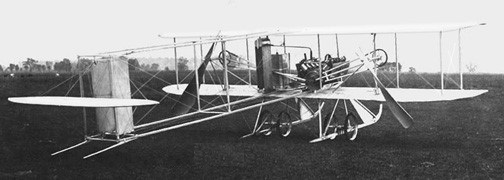
The 1910 two-place open cockpit Wright R Roadster was powered by a 30hp Wright 4 with two pusher props.
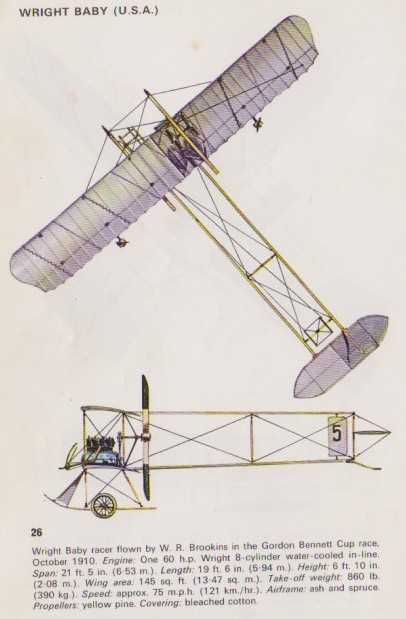
Similar 8-cylinder models were known as High Flyer and Baby Wright.
The Baby Grand, which was single place, with a 60hp Wright driving two pusher props, had no front elevator.
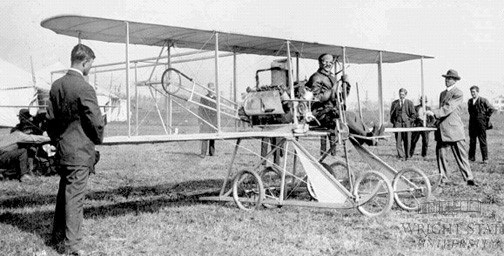
Models were also displayed at the 1917 Pan-Pacific Aero Exposition (New York) with a 75hp Wright and a 150hp Hisso.
A Wright Baby flew more than 3100 miles around the United States.
One Baby Wright, constructed in France by the Society Ariel, a Wright licensee, was discovered in an old building at Villacoublay being torn down. It is now in the Musee de l’Air in Paris.
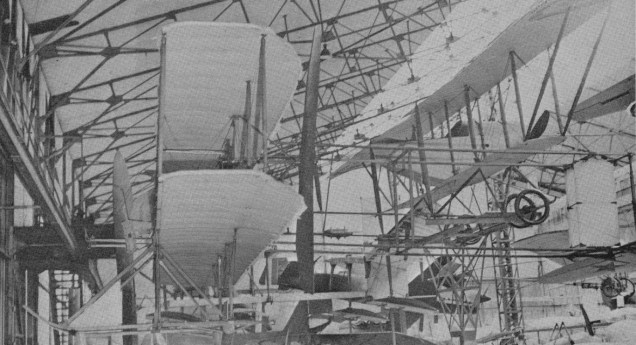
R Roadster
Engine: 30hp Wright 4
Props: two pusher
Wingspan: 22’0″
Length: 19’6″
Seats: 2
Baby Grand
Engine: 60hp Wright
Props: two pusher
Wingspan: 26’6″
Length: 19’6″
Speed: 75 mph
Seats: 1
Baby Wright
Wing span: 26.24 ft
Length: 23.62 ft
 All Aero