Built in 1928 by Richard E Young in 1928, the Model A / Special cabin biplane first flew on 5 October 1928. The registration NX7960 was cancelled on 1 January 1959.
Engine: Warner Scarab, 90hp
Wingspan: 28’0″
Length: 19’6″
Seats: 4
Built in 1928 by Richard E Young in 1928, the Model A / Special cabin biplane first flew on 5 October 1928. The registration NX7960 was cancelled on 1 January 1959.
Engine: Warner Scarab, 90hp
Wingspan: 28’0″
Length: 19’6″
Seats: 4
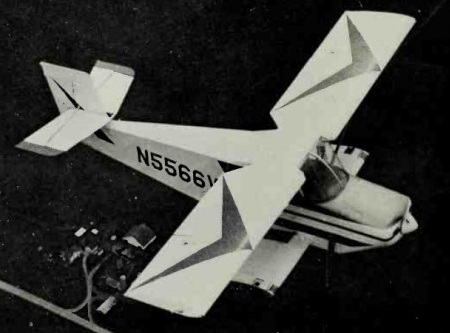
Designed by FAA employee Edward Young of Erie, Colorada, USA, the Young Eddyo F-2 was a two-seat side-by-side light aircraft and took three years of spare-time activity to complete at a cost of $2,500.
The Eddyo F-2 was a sesquiplane and had Vee-braced upper wings, which carried the ailerons, and cantilever lower stubwings which contained the fuel tanks. It had full span trailing-edge flaps. Construction was conventional, with wooden wings and a steel-tube fuselage and tail unit, all fabric-covered. The design featured tail-wheel landing gear which utilised cantilever spring steel main legs. The engine was a Lycoming O-290-D2 four-cylinder 135 hp horizontally-opposed air-cooled which drove a two-blade fixed-pitch propeller.
The sole aircraft, registered N55566V, first flew on November 4, 1963.
The aircraft registration was finally cancelled on 12 December 1983.
Powerplant: Lycoming O-290-D2, 135 hp
Wing span (upper): 23 ft 1 in (7.04 m)
Constant chord: 3 ft 10 in (1.17 m)
Length: 19 ft 5 in (5.92 in)
Height: 6 ft 0 in (1.83 m)
Empty weight: 997 lb (452 kg)
Maximum take-off weight: 1,525 lb (692 kg)
Maximum level speed at sea level at MTOW: 145 mph (233 km/h)
Cruising speed: 130 mph (209 km/h)
Landing speed: 70 mph (ll3 km/h)
Service ceiling: 8,000 ft (550 m)
Range with maximum fuel: 425 miles (685 km)
Accommodation: 2 seats
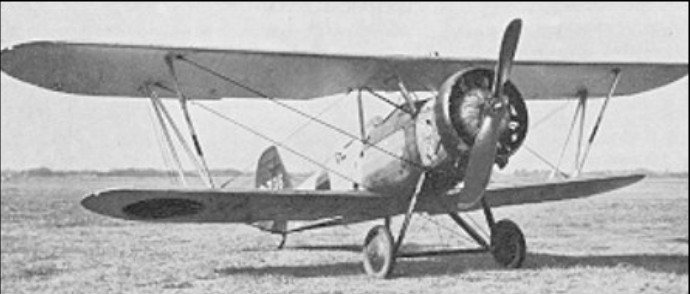
The most important of the Yokosuka-designed trainers, was the Yokosuka K5Y1, first flown during December 1933. Adopted in January 1934 as the Navy Type 93 Intermediate Trainer, it was built to a total of 5,770 by the end of the Pacific war, being allocated the Allied codename ‘Willow’. Built in three versions, with float and wheel landing gear, the 11.00m span K5Y1 with a 254kW Hitachi Amakaze radial engine had a maximum speed of 212km/h.
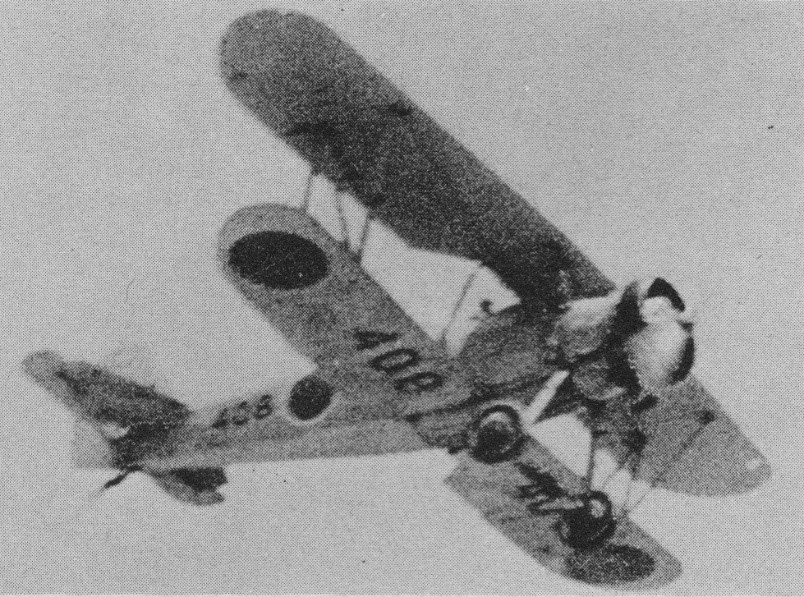
Produced by seven different manufacturers over 12 years the K5Y was called Akatombo or Red Dragon by the Japanese as the Type 93 basic trainers were painted bright red-orange.
K5Y1
Engine: 1 x Hitachi Amakaze-11, 255kW
Max take-off weight: 1500 kg / 3307 lb
Empty weight: 1000 kg / 2205 lb
Wingspan: 11.0 m / 36 ft 1 in
Length: 8.05 m / 26 ft 5 in
Height: 3.2 m / 11 ft 6 in
Wing area: 27.7 sq.m / 298.16 sq ft
Max. speed: 212 km/h / 132 mph
Cruise speed: 140 km/h / 87 mph
Ceiling: 5700 m / 18700 ft
Range: 1020 km / 634 miles
Crew: 2
Armament: 2 x 7.7mm machine-guns
Bombload: 2 x 30-kg and 10 x 10-kg


The Yokosuka B4Y1 three-seat carrier attack bomber was designed to meet a requirement of 1934, the evaluation of five prototypes with different power-plant being followed by 205 production aircraft built during 1937-38. Designated officially as the Navy Type 96 Carrier Attacker, these aircraft were used as advanced trainers after Pearl Harbor but, as the Allies believed they were still in first-line service, the type was allocated the code-name ‘Jean’.

B4Y1
Engine: 1 x Nakajima Hikari-2, 630kW
Max take-off weight: 3600 kg / 7937 lb
Empty weight: 2000 kg / 4409 lb
Wingspan: 15.0 m / 49 ft 3 in
Length: 10.15 m / 33 ft 4 in
Height: 4.36 m / 14 ft 4 in
Wing area: 50.0 sq.m / 538.20 sq ft
Max. speed: 278 km/h / 173 mph
Ceiling: 6000 m / 19700 ft
Range: 1580 km / 982 miles
Crew: 3
Armament: 1 x 7.7mm machine-guns
Bombload: 800-kg torpedo or 500kg of bombs

Yokosuka’s B3Y1 Navy Type 32 carrier biplane bomber first flew in 1932.

Reconnaissance seaplane
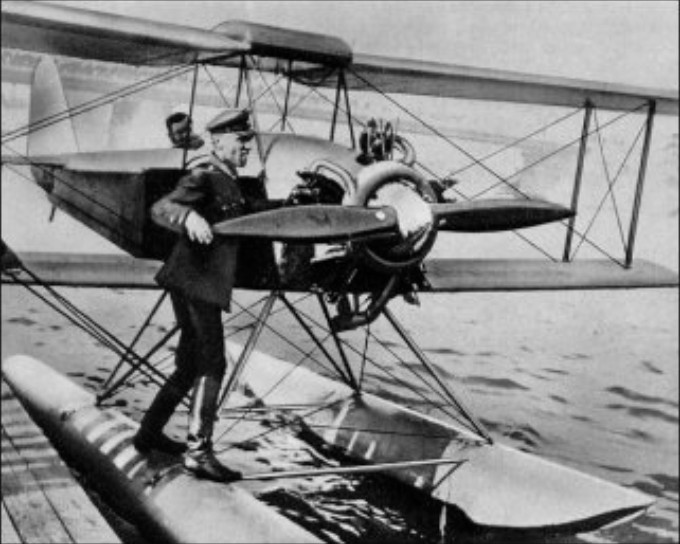
A development of the AIR-1, with a radial engine, the Air-2 was built in two versions with size and construction almost identical to the predecessor.
The first one was powered by M-23 engine. It had a plexiglas canopy covering both cockpits and opening sidewards. But the aircraft was too slow to show advantage of a canopy. In addition. engine vibration was above acceptable level.
A second version with a 60hp Walter engine had performance slightly worse (due to engine drag) than the AIR-1. Four were built and used for training.
A version of the AIR-2 with a more powerful Siemens engine was designated Ya-2S. Performance was improved substantially and it became possible to install the AIR-2S on floats designed by V.B.Shavrov. The floatplane version was flown on May 18, 1931. Transition from wheels to floats took as little as 1hour 10minutes. Pilot B.L.Bukhgolts and passenger V.B.Shavrov performed a short straight flight, and without stopping the engine another 10 minutes of circle flight. Next crew to fly were Ju.I.Piontkovskij and A.S.Yakolev.
The aircraft was flown many times on Moscow river (Moscow) without any problems.
Engine: 1 x Siemens Sh13A, 62kW
Max take-off weight: 710 kg / 1565 lb
Empty weight: 470 kg / 1036 lb
Wingspan: 8.9 m / 29 ft 2 in
Length: 7.7 m / 25 ft 3 in
Wing area: 18.7 sq.m / 201.28 sq ft
Max. speed: 140 km/h / 87 mph
Cruise speed: 120 km/h / 75 mph
Ceiling: 3350 m / 11000 ft
Range: 500 km / 311 miles
Crew: 2
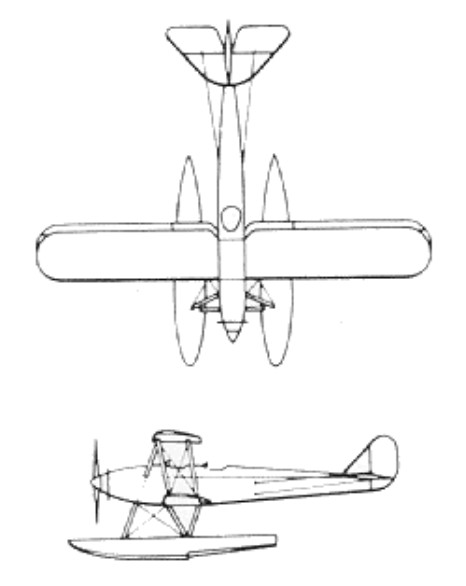

After success with the glider young designer decided to build single-seat ‘flying motorcycle’ with 18hp engine. But consultations with his advisor and good-wisher Vladimir Pyshnov changed Yakolev’s plans. There was a need in two-seat trainer with much more powerful engine. A 60hp ‘Cirrus’ was chosen. Wood-and-fabric construction was common for light trainers, with front and upper parts of the fuselage covered with plywood.
Finally the project was approved by Osoaviakhim, and Yakolev received money collected by Moscow Pioneers. After day’s work on the airfield he turned into designer, treasurer and administrator at the same time. Among his backers at this critical time was S.V.Ilyushin.
But some ill-wishers were around too. They not just expressed their skepticism. One of students at the Academy handed in a report about errors in Yakolev’s calculations. Yakolev was summoned by the Osoaviakhim executives and was examined on aircraft airworthiness. He was discouraged and almost lost trust in his project. But V.Pyshnov checked his calculation and gave Yakolev written certificate with his personal approval.
AIR-1 was finished on May 1, 1927 and performed its maiden flight on May 12 with Yu.I.Piontkovsky at the controls. It was a complete success. All test requirements were fulfilled within the following two weeks, without serious rebuilds. The aircraft was approved for a trial flight Moscow-Kharkov-Sevastopol-Moscow. It was piloted by Yu.I.Piontkovsky, A.S.Yakolev participated as a passenger. They took off early on June 12, 1927 from Moscow. After landing and refueling in Kharkov they touched down in Sevastopol in the evening of the same day.
The return leg was made by Piontkovsky alone. He flew non-stop for 15h 30min and covered distance 1420km, creating two records in the aircraft class: for distance covered and time being airborne. Designer and test-pilot were given money rewards and diplomas. But the greatest reward was Yakolev’s acceptance by Air Force Academy (VVA).
During the fall of 1927 AIR-1 participated in military exercises of Odessa military district, serving as communication aircraft. It proved to be superior over other presented light aircraft (powered by 18-20hp engines). Later AIR-1 was operated by flying clubs.
Engine: 1 x A.D.C. Cirrus I, 44kW
Max take-off weight: 535 kg / 1179 lb
Empty weight: 335 kg / 739 lb
Wingspan: 8.9 m / 29 ft 2 in
Length: 7.0 m / 23 ft 12 in
Height: 2.7 m / 9 ft 10 in
Wing area: 18.7 sq.m / 201.28 sq ft
Max. speed: 140 km/h / 87 mph
Cruise speed: 120 km/h / 75 mph
Ceiling: 3800 m / 12450 ft
Range: 480 km / 298 miles
Crew: 2
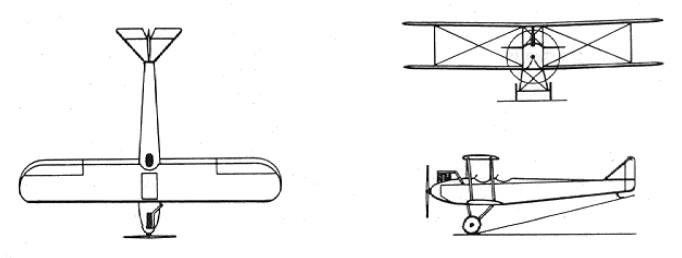

The 1926 Yackey BRL-12 Transport was a conversion of war surplus Breguet 14.B2 with corrugated-metal fuselage.
One was converted for Dr Matthew Stirling 1926 New Guinea expedition, as “The Ern” for $7,500. When glue on the wooden floats deteriorated after two months, the plane was abandoned on the Mamberamo River.

Engine: Liberty 12, 420hp
Wingspan: 48’3″
Length: 29’1″
Useful load: 2400 lb
Max speed: 120 mph
Cruise speed: 114 mph
Stall: 32 mph
Seats: 3

The 1926 Yackey Aircraft Co Sport were conversions of Thomas-Morse S-4 with side-by-side front cockpit. Conversions included N3905 and N5833.
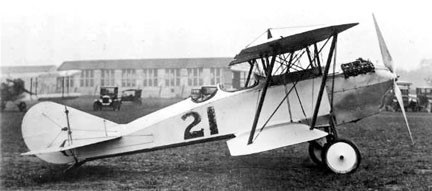
Engine: Curtiss OX-5, 90hp
Seats: 3
 All Aero