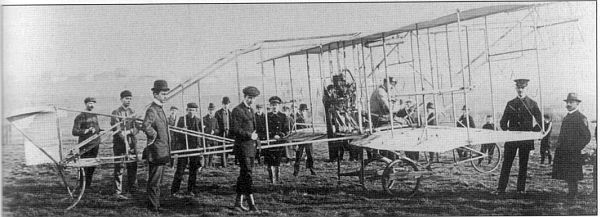
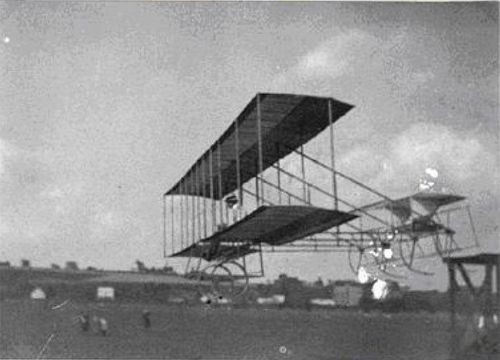
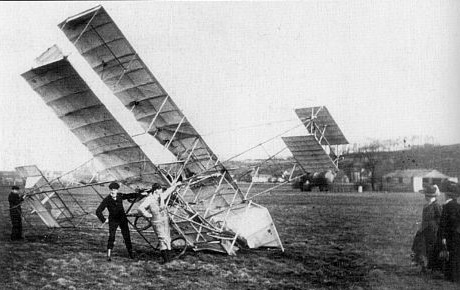
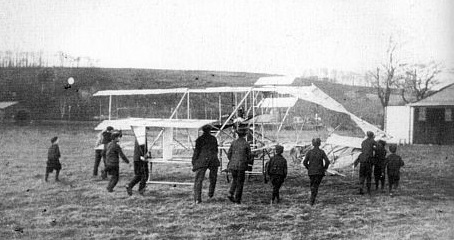
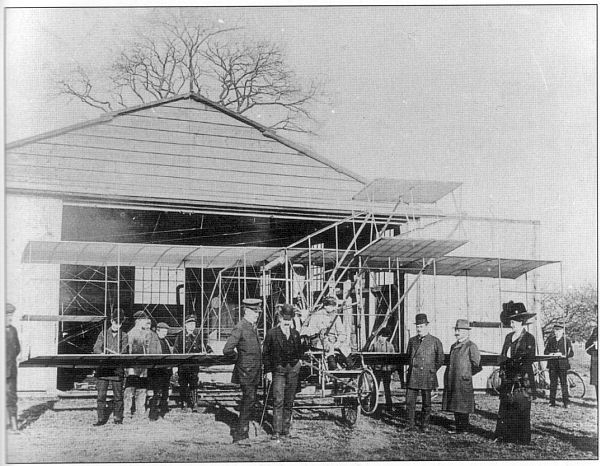
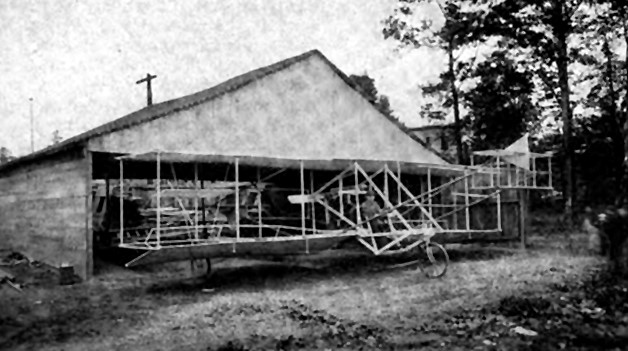
The Essen NVfL “Essener Flugmaschine” Gleiter of 1909 was owned by the Flugtechnische Kommission of Sektion Essen of the flying club NVfL (Niederrheinischer Verein für Luftfahrt). It was designed by a member of the club, Ing. Düll, and built under the direction of Otto Hilsmann at the carpenter’s workshop “Schmetz & Diepenbrock” during 1908/1909. Tests were made by Heinrich Schmetz, flown from a ramp [Flugplatz Holten] that could be turned into the wind.
During one of the flight tests in the first half of 1910, the NVfL’s machine crashed when the left wing got ground contact.
The self-built flying machine was pushed back into the workshop and rebuilt. Flights were then made to Holten Airport (Oberhausen), which had already been built in 1909, as the terrain in the Ruhr meadows was no longer suitable for flight operations.
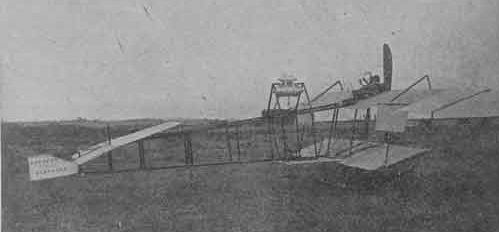
The Escofet II was built by the brothers Escofet; Rodolfo, Carlos, Julio and Armando in Uruguay, bankrolled and probably mostly designed by Enrique Martinez Velazco. It flew in August, 1910.
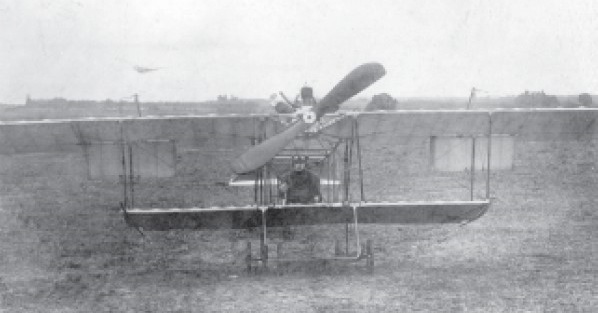
The first machine built by Louis G. Ericson, president of the Eureka Soap Company, Springfield, Massachusetts, USA, and member of the Springfield Aeronautical Club. It was a pusher biplane of Curtiss type with variable incidence lower wings with a span of 30″, a 4-cyinder. Knox 225 auto engine, removed from Ericson’s own Buick, and a total weight of 800-900 lbs. No flight was recorded. Ericson built three more machines. All crashed, and the last crash broke his hip and forced him to retire from aviation.
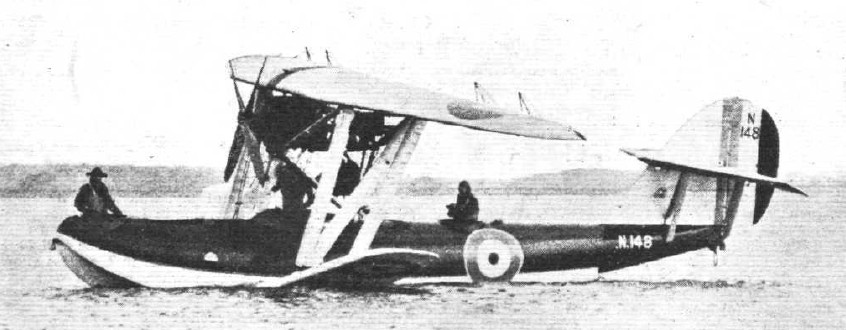
While the company were working on the Kingston they decided to experiment with a design for a small flying boat. The aircraft was a single-engined biplane flying-boat named the Ayr and was built in 1924. The hull was designed by Linton Hope, who had designed the Kingston hulls. An unusual feature was the lower wing, or stub wing mounted low down on the hull. It was designed to carry bombs underneath the stub-wings, these would have been underwater when the aircraft was afloat. During trials the aircraft rolled to the right and refused to become airborne.
Engine: 1× Napier Lion IIB 12-cylinder ‘broad arrow’ piston engine, 450 hp (336 kW) Length: 40 ft 8 in (12.40 m) Wingspan: 46 ft 0 in (14.02 m) Height: 13 ft 8 in (4.12 m) Wing area: 466 sq ft (43.3 m²) Empty weight: 4,406 lb (2,003 kg) Loaded weight: 6,846 lb (3,112 kg) Maximum speed: 127 mph (110 knots, 204 km/h) Service ceiling: 14,500 ft (4,400 m) Armament: 2 x 0.303 in (7.7 mm) Lewis machine guns Crew: 3
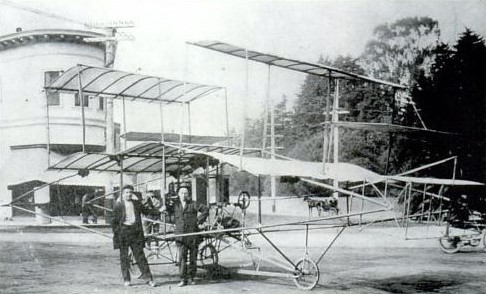
A design of father and son English who built this design – variously named helicopter, helicopter-monoplane or heliocopter in contemporary reports. Construction took place in guarded secrecy in a shed in Fruitville near Oakland from 1910.
The two propellers (today it would be ‘rotors’) were in the front of the machine, diameter 20 feet, and were of an adjustable type. Power was provided by an engine of 8 cylinders producing 75 hp. The curved planes (‘wings’) with a total of 800 sq. ft were intended for soaring the machine.
The idea was to make a straight ascent by use of the propellers and then travel at will by soaring. The whole construction was extremely expensive at least $ 10.000 were outlaid to build it.
In 1906, it was towed through 24th and Harrison streets in Oakland.
Aeronautics Vol. 5 (1909) 1 (July) p.30 The English helicopter met with disaster in a test for lift. It became unfastened from the floor, and the lift testing mechanism in its shed and the helices were wrecked against the rafters. It has never been tried in the open or free flight.
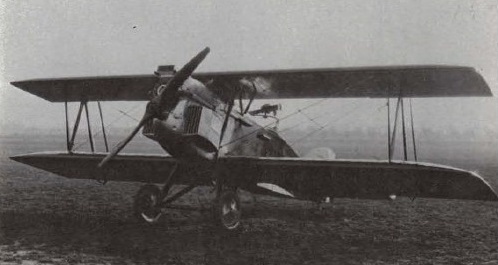
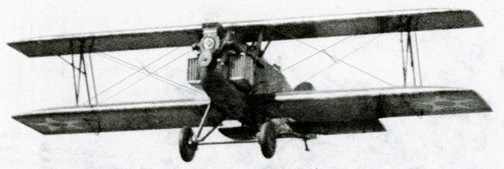
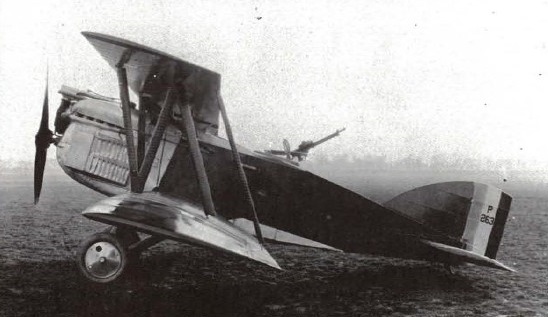
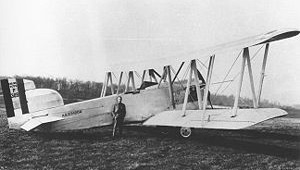
The Engineering Division TP-1 was a two-seat biplane fighter designed by Alfred V. Verville and Virginius E. Clark at the United States Army Air Corps Engineering Division.
The prototype TP-1 was built as the XTP-1 AS68578 and tested at McCook Field in 1923. A biplane, the upper wing had a smaller span and narrower chord than the lower wing. The XTP-1 was armed with five .30 in (7.62 mm) machine guns and fitted with a 423 hp (315 kW) Liberty 12 engine. It was damaged in testing and scrapped.
A second prototype, AS68579, was completed as an observation/reconnaissance aircraft with new wings, with the designation XCO-5
The XCO-5 needed a high-lift wing suitable for high-altitude work. New wings were prepared. The aerofoil was Joukowsky StAe-27A, a heavily cambered wingshape with a thick leading edge. The upper and lower wings had a pronounced stagger, with a total wing area of 600 sq.ft. As well as lining and insulating the cockpit, heat was taken from the engine exhaust. A cover over the top of the cockpit kept the heat in; a clear panel in the cover allowed the pilot to see his instruments.
TP-1
On October 10, 1928, Bill Streett and Albert William Stevens achieved an unofficial altitude record in the XCO-5 for aircraft carrying more than one person: 37,854 ft (11,538 m); less than 1,000 ft (300 m) short of the official single-person altitude record. At that height they measured a temperature of −78 °F (−61 °C), cold enough to freeze the aircraft controls. With frozen controls, Streett was unable to reduce altitude or to turn off the engine until some 20 minutes later when it ran out of fuel, after which he piloted the fragile experimental biplane down in a gentle glide and made a deadstick landing.
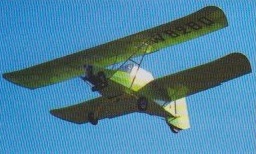
The Elias TA-1 was a 1920s American biplane training aircraft built by Elias. Only three aircraft were built for evaluation by the United States Army Air Service. The TA-1 (a United States military designation Trainer Aircooled No. 1) was designed to meet a United States Army requirement for a training aircraft for the air service. The TA-1 was a conventional two-seat biplane.