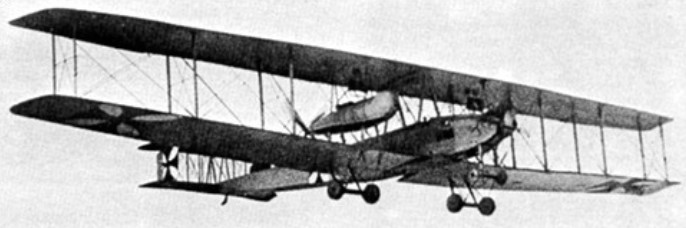
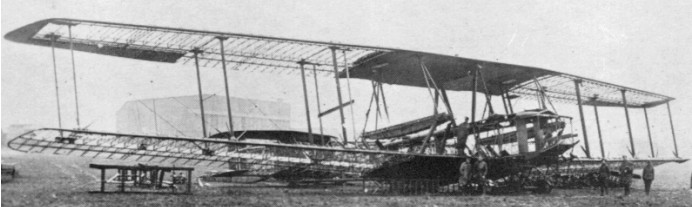
Zeppelin-Staaken R.IV

The company’s first product, the Rs I multi-engined flying-boat, was wrecked before its first flight, but three differing examples were developed progressively, the Rs IV prototype flying in 1917.

The R.VI which was built by Automobil and Aviatik, Ostdeutsche Albatros Werke and Luftfahrzeugbau Schütte-Lanz and carried out successful raids against Allied territory, dropping bombs as large as 1,000kg.

The R.VI had four engines, 4-7 machine-guns, eighteen wheel landing gear, and the capability of carrying eighteen 220 lb bombs internally. With a maximum take-off weight of just over 11.25 tons, it was used to make attacks on both France and Britain.

R.IV
Engine: 4 x Benz Bz.IV, 164kW + 2 x Mercedes D.III, 119kW
Max take-off weight: 13035 kg / 28737 lb
Wingspan: 42.2 m / 138 ft 5 in
Max. speed: 125 kmh / 78 mph
Armament: 6-7 x 7.92mm machine-guns

Zenith Aircraft Corp Albatross Z 6

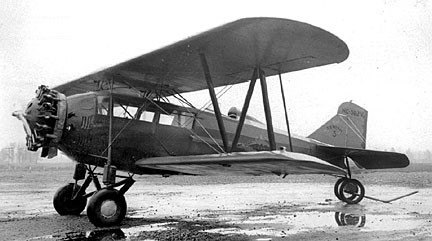
The 1927 Albatross Z-6 six place biplane was designed by Charles Rocheville, Albin Peterson. Three were built: NX578K, N7076, and NX707E, and one conversion: NX7580.

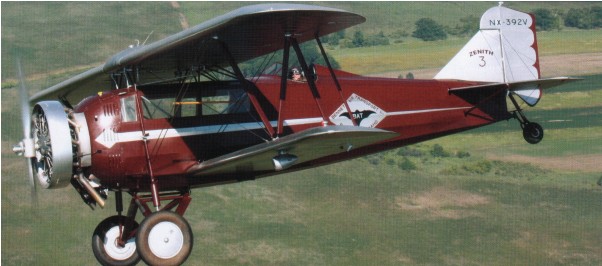
The two Albatross Z-6-A (ATC 2-269) of 1928 seated four in the cabin. For $20,000, one was for Bennett Air Lines in Idaho (NC392V), and one with ATC 2-212 for 450hp Wasp SC conversion (NC134W).

Zenith Z-6-A NC392V

NC392V was restored in 2006 at PAR, Maryland Heights MO.

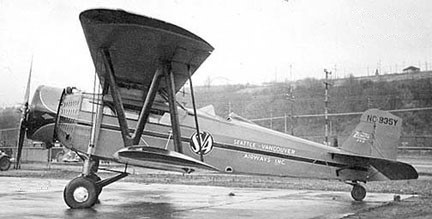
Three Albatross Z-6-B were built in 1929 (ATC 2-315). At $20,000, they were NC835Y, NC935Y, and NC977Y.

Zenith Z-6-B NC935Y

Gallery

Albatross Z-6
Engine; 220hp Wright J-5
Wingspan: 38’5″
Length: 30’0″
Useful load: 1667 lb
Max speed: 110 mph
Cruise speed: 95 mph
Range: 54 mph
Range: 500 mi
Seats: 6

Albatross Z-6-A
Engine: 420hp P&W Wasp C
Wingspan: 47’6″
Length: 29’9″
Useful load: 2100 lb
Max speed: 155 mph
Cruise speed: 130 mph
Stall: 58 mph
Range: 650 mi

Albatross Z-6-B
Engine: 420hp P&W Wasp C
Wing span: 41’6″
Length: 30’0″
Useful load: 1918 lb
Max speed: 150 mph
Cruise speed: 125 mph
Stall: 58 mi
Range: 650 mi
Seats: 7

Zbierański and Cywiński Biplane

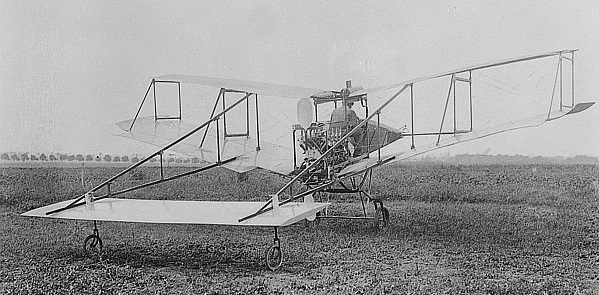
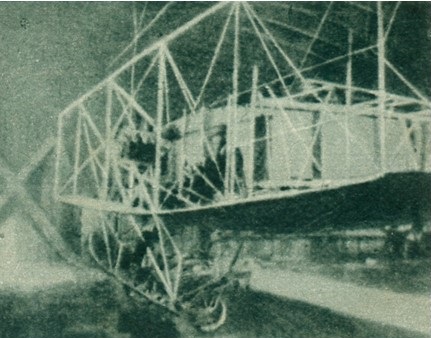
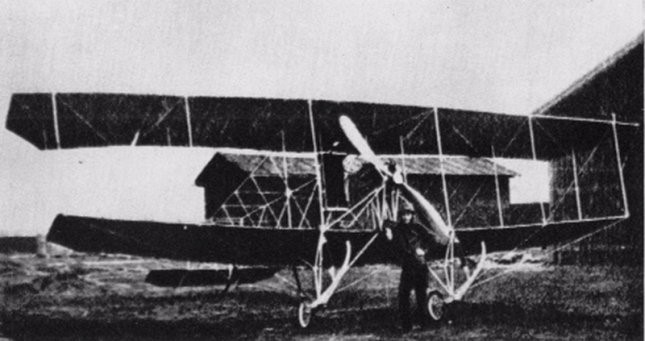
On the initiative of the Association of Technicians at the Technical Association in Warsaw in the autumn of 1909, Czeslaw Zbierański went to Paris to get acquainted with the aviation technique of the time. On his return, he designed a wooden plane using a pulling propeller engine, while the biplanes at that time had pushing propellers. After the approval of the project by Wheeler Zbierański left for France to buy materials. Having encountered a Voisin airplane with a steel tube construction, he decided to build a hull from the tube.

Stanisław Cywiński became Stanisław Cywiński’s co-worker, who in the spring of 1910 adapted the project to steel construction and elaborated on the design. The hull of the aircraft was built in the summer of 1910, in a shed on the premises of E. Krzemiński’s lamp factory at ul. Solec 103 in Warsaw. After the construction of the hangars of the Warsaw Aircraft Association “Awia” on the Mokotowskie Field, they moved in the early autumn of 1910 to the hangar No. 1. There construction was completed. In the autumn of 1910 Cywiński bought the engine for the plane.

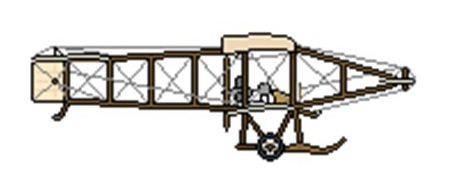
The biplane was rectangular, double-girder, wooden construction panels, supported by steel pipe posts and crossed with wires. Canvas cover. Controls were only on the upper wing. Truss lattice made of steel pipes connected by screws. Tubes stiffened by ash rods. Rear hull triangular section. Trusses framed by wires. With fabric covering

In May 1911, while attempting to fly an improper connection of the wires to the spark ignition caused gasoline to burn and burn part of the airfoil. In the summer the plane was renovated.

On September 25, 1911, the plane was flown by Michał Scipio del Campo, flying 15-20 km, at a height of 50-60 m, within 15 minutes. The engine was too heavy and too weak, so the Gnome engine from the Morane-Borel aircraft belonging to M. Scipio del Campo was mounted.

When the Russian army took over at the beginning of 1912, the plane was evacuated by Russian lieutenant Krachowiecki, fictitiously buying it. Cywinski dismantled the engine, and Zbierański donated the craft to the Union of Students of the Lviv Polytechnic. The plane was transported to Cracow in 1912, where it was exhibited in the Oleander area and then stored for over a year. There at the beginning of the war in 1914, it burned down during the fire of the exhibition buildings.

Engine: ENV type D, 29 kW (39 – 40 hp)
Wingspan: 10 m
Length: 8.5 m
Height: 3.3 m
Wing area: 31-34 sq.m
Gross weight: 240 kg
Useful weight: 100 kg
Total weight: 340 kg
Speed: 70 km / h
Flight time: 1 h 30 min
Zalewski WZ-I

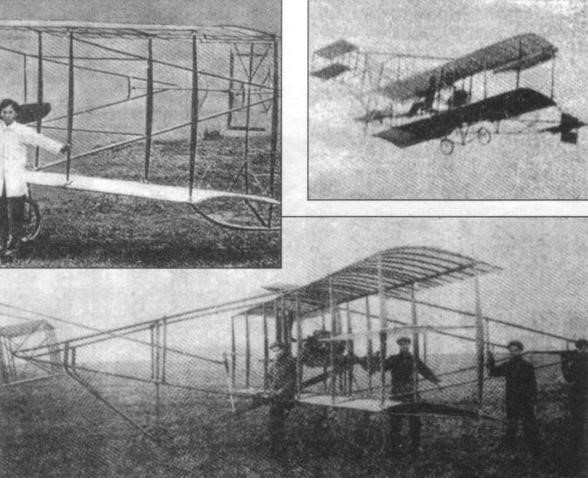
In 1909 the then-17-year old student of engineering Władysław Zalewski begun designing an airplane being essentially a scaled-down Farman. In 1911 he proceeded to construction works but financial constraints caused a break until 1913 when they resumed only to be interrupted again year later by the outbreak of the Great War, this time for good. Interestingly, already built elements managed to survive the war and years later some of them were used in construction of another Zalewski’s aircraft, the WZ-XI/XII.

Yunker Y-1 / Y-2

Designed by Felix Knoll during 1929-1930, the Y-1 and Y-2 were three place open cockpit biplanes.

The Y-1 N421N c/n 1 was powered by a 165hp Warner. When the company floundered it sold for a whole dollar ($1) to Carrol Beckwith of Larned KS. The registration was cancelled by CAA 7 January 1933 after he informed them it was dismantled.

The Y-2 N490N c/n 2 was powered by a165hp Wright R-540A. the Y-2 crashed on 27 March 1930 and its registration was cancelled.

Yue No.2 / Ru, Feng No. 2

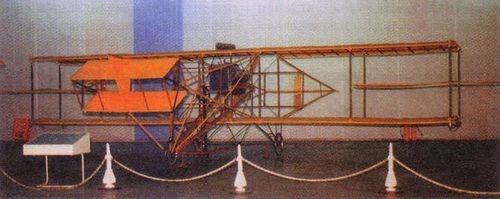
Feng Yue #2 at the National Aviation Museum in Nanking.

Although the “Feng Ru No. 1″ airplane was damaged during the first test flight, it can be proven that it flew, and the Chinese immigrants in the USA were legitimately very proud. They continued to support Feng Ru’s airplane endeavors, and in January 1911 Yue started his new airplane”Feng. 2” in Oakland.

Yue launched his second airplane above the Piedmont hills on September 21, 1909. The Feng Yue #2 was Curtiss-like, but had some differences in the front elevator assembly.

This was the first airplane manufactured by an Oakland resident to fly in that area. Unfortunately, this airplane crashed as well after a twenty minute flight when the bolt holding the propeller shaft broke. Fong continued building planes, and in 1911, his plane stayed in the air for 40 minutes and landed without a mishap.