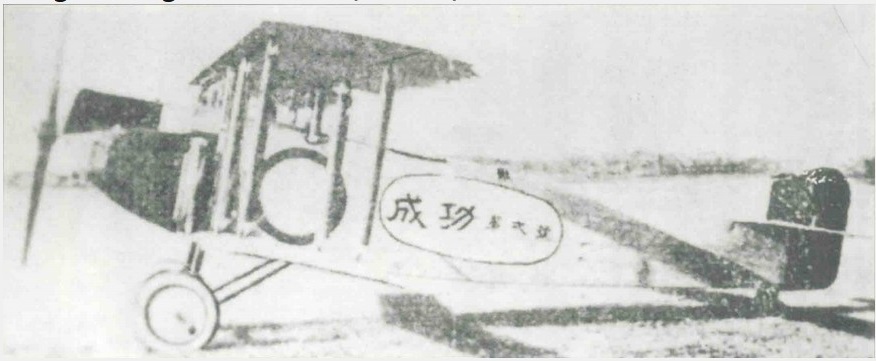
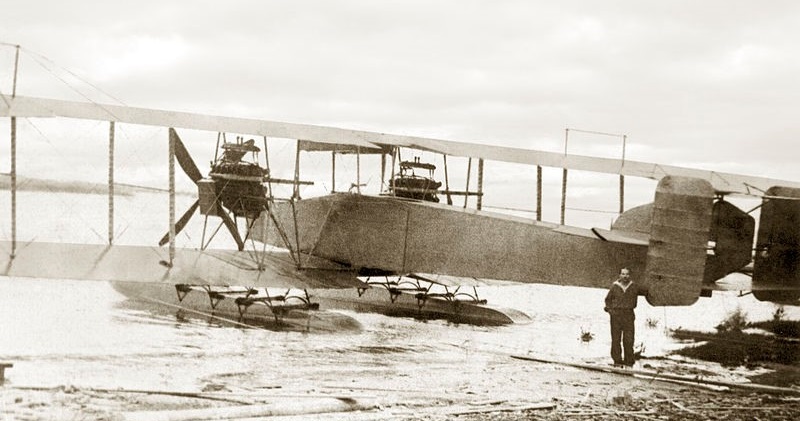
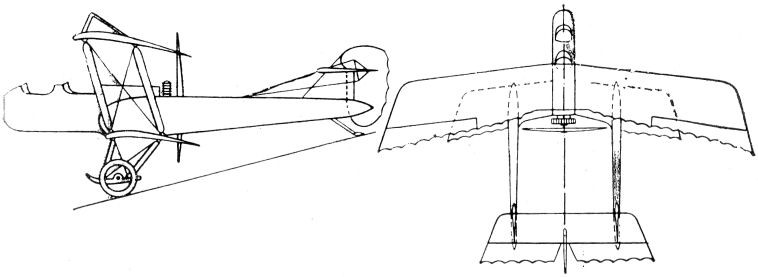
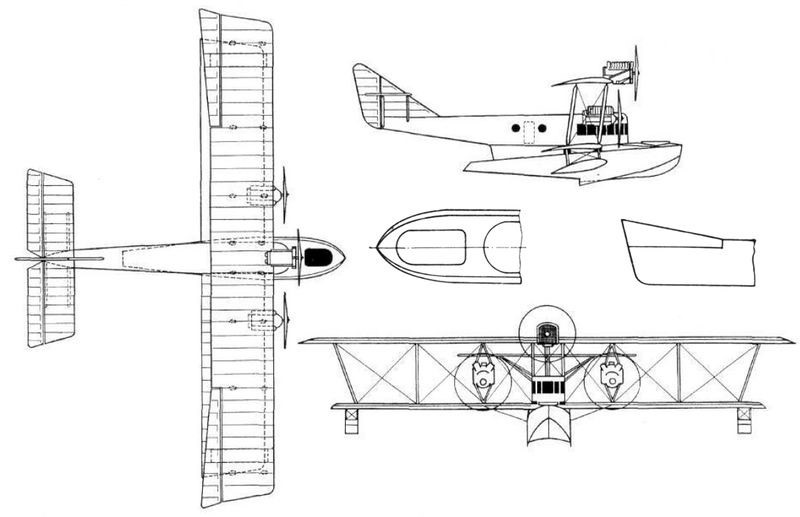
One Yang Ch‘eng 51 成功號 was built by Guangzhou/Kunming 1st Aircraft Manufacturer. The engine came from the crashed Curtis OX-5 trainer. The instruments and other equipment were also from disassembled or refurbished on the crashed plane. Yangcheng 51 was completed in December 1928, and the test flight was successful on December 29. It was named “Success” by the Guangdong Aviation Association and was hailed as “the first aircraft made in China.”
Yangcheng 52 was completed in early 1929. After completion of the two aircraft, they were delivered to the Guangdong Air Force for training.
Engine: Curtis OX-5, 90 hp Wingspan: 9.75 m Length: 7.32 m Height: 2.67 meters Empty weight: 950 kg Maximum take-off weight: 1360 kg Maximum flight speed: 128 kph Crew: 3
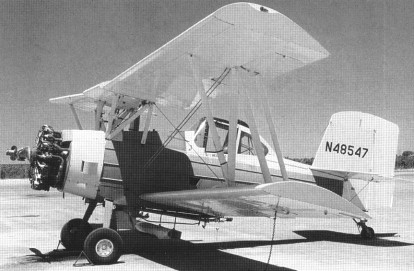
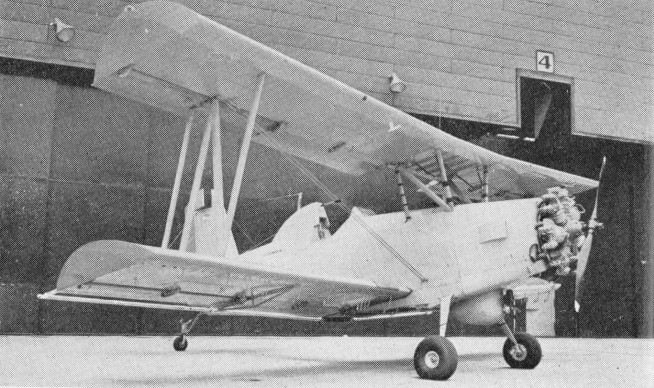
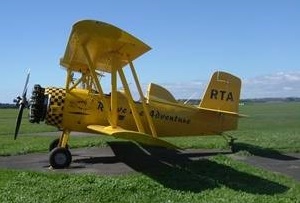
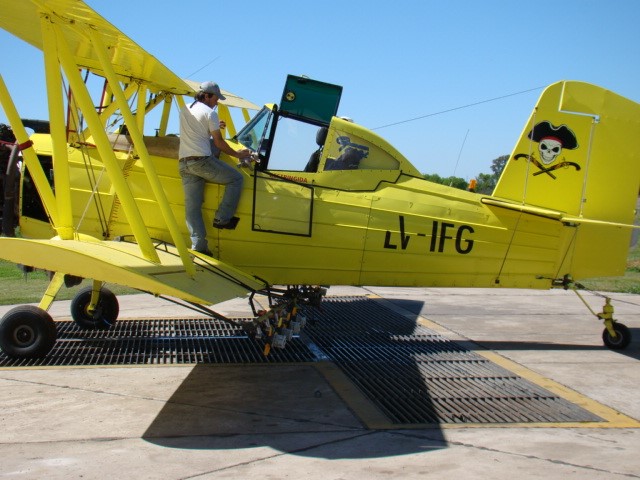
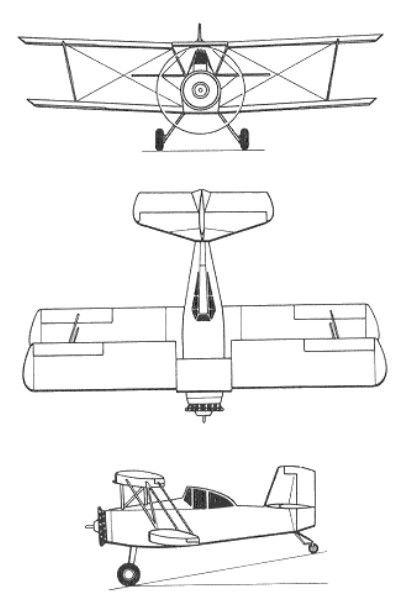
The Grumman Aircraft Corporation designed the G-164 Ag-Cat in the middle of the l950s but only built two aircraft, the first, N74054 (#X1) being flown on 27 May 1957, as later that year Grumman contracted the Schweizer Aircraft Corporation of Elmira, in New York State, to build 100 aircraft. The first of these, N10200, was flown on 17 October 1958 and the Grumman G-164 Ag-Cat was certified by the FAA in the restricted category in January 1959. The engine for the prototypes and early production aircraft was the Continental W670-6N seven-cylinder radial of 220 hp. Because of its lighter weight than other engines, the longer engine mounts were cowled and gave the Ag-Cat a length of 24 feet and six inches. The wing-span was 35 ft8 in. The first twenty-odd aircraft had flat fuselage side panels, rather than the more familiar ribbed panels. These early model aircraft were fitted with 215 US gallon hoppers.
The G-l 64 was also certified for the 220-225 hp Gulf Coast W670-240 (a modified Continental tank engine) and the 245 hp L4M or L4MB, 275-300 hp Jacobs R-755. Once with operators, some aircraft were converted to the 450 hp Pratt & Whitney R-985 or the 600 hp R-1340, the latter readily recognised by extremely short engine mounts. Aircraft in the serial range 301-400 were built new with a 300 hp Jacobs R755 and an aluminium hopper of 245 US gallons installed. Nearly all of these aircraft were fitted with an enclosed canopy, which were also retrofitted to earlier aircraft. Production of the G-164A Super Ag-Cat, with the P&W R-985 and a 300 US gallon fibreglass hopper, began in 1966 with number 401, N895X. The R-1340 engine was also fitted to these aircraft. Production of the G-164A ended at number 1730 with N6894Q.
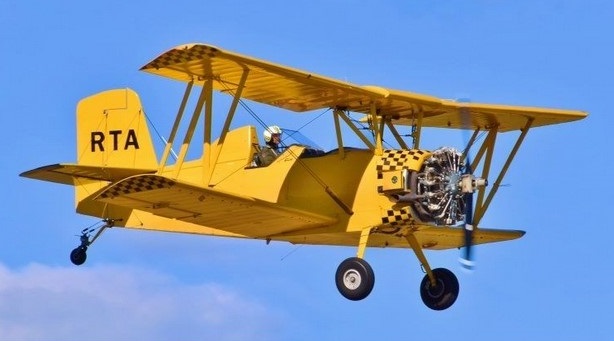
In 1974 Grumman American announced a new model Ag-Cat. The wingspan had been increased from 36 feet to 42 feet 3 inches, but the hopper size remained at 300 US gallons and the new model was introduced with the 450 hp R-985 and, again, the R-1340 was later fitted. The recognition feature of the G-164B was the broad cord fin and rudder. With the R-985 installed the length of the G-164B is 25 feet, 7 inches. N88348 (#1B) was the first G-164B completed and over 800 were manufactured before production ended. The G 164B was certified under the A model banner. In 1976 a stretched version, the G-164C, was flown and put into production. This was followed by the many turbine conversions. Grumman American introduced in 1978 the Ag Cat C duster, powered by a 600 hp Pratt & Whitney radial. It carries a 500 galIon hopper the biggest dustbin available in any production agplane. In February 1976 the Super Ag-Cat C was flown, and in November 1977 was certificated; it has a deeper and longer fuselage accommodating a 500 US gallon hopper.
The factory PT6 turbine conversion kit weighing in some 230 kgs lighter, is around 10 to 12 knots faster and the PT6 power will enable a full load of 1500 litres to be carried for most operations. Fitted will be a three bladed Harztell prop, providing for a quieter operation and a reversing capability if ever required. Although the Grumman Aircraft Engineering Company designed the Ag-Cat, built the two prototypes and marketed the type (subsequently through its subsidiary Grumman American Aviation Company), Schweizer Aircraft Corporation manufactured all the production Ag-Cats. Schweizer built 1400 aircraft between 1959 and 1975 and, with the exception of the engine fitted, the appearance of Grumman’s Ag-Cat hardly changed. In 1978 Gulfstream American bought Grumman American, and in 1979 a dual trainer Ag-Cat was shown at the Paris Air Show, although this was apparently designed and manufactured by some other company.
By 1979 Schweizer had produced 2,455 Ag-Cats at its Elmira, New York factory: 1,730 G-164As, 659 G-164Bs, 44 G-164Cs, and 22 G-164Ds – Super Ag-Cat Cs with a PT6A turbo-prop.
Reported in March 1979 was the Gulfstream American Ag-Cat B fitted, by Page Industries, with a 600 shp Lycoming LTP 101 turboprop. First flight of the prototype was made on 22 November 1978 and the installation was notable for being 34 in / 86.4cm shorter than the PT6 in the Ag-Cat. Another installation in an Ag-Cat, flight tested late 1978, was a 650 hp liquid-cooed Vee engine developed by Stage II from the Chrysler “hemi-head” auto engine and offering less drag than the Ag-Cat’s usual radial. Mid-Continent of Hayli, Missouri fitted a 1200 hp Wright Cyclone R-1820 in an Ag-Cat to produce the King Cat, which will take off at its 9500 lb / 4313 kg gross weight from a 1000 ft / 305 m strip.
In 1981 Schweizer bought the Ag-Cat manufacturing and marketing rights from Gulfstream American, and produced an improved G-164B known as the Ag-Cat B-Plus and powered by either a 450-hp R-985 or a 600-hp R-1340 Pratt & Whitney nine-cylinder radial.
A Hershy FatCat modification widens the fuselage and raises the top wing some 8 inches. Some have been powered by a Walter 601-F-II turbine engine delivering 750 hp using a five-bladed propeller, or the 600 hp Polish PZL 3S radial, and at least one has been equipped with two Lycoming TIO-540s, in separate Piper Seneca cowlings, mounted side-by-side, in the nose.
Ethiopian Airlines sc Company’s Agro Aircraft Manufacturing division produced the Ag-Cat Corporation Ag-Cat G164B Turbine under the name Eshet for distribution and operation in Ethiopia and African countries except Algeria, South Africa, and Tunisia. Admas Air Service in Ethiopia has produced over 10 Grumman Ag-Cats under licence from Schweitzer.
G-164A Ag-Cat Engines: P&W R-985, 450 hp. Seats: 1. Wing loading: 18.52 lb/sq.ft. Pwr loading: 13.5 lb/hp. Max TO wt: 6075 lb. Empty wt: 2870 lb. Equipped useful load: 3168 lb. Payload max fuel: 2688 lb. Range max fuel/ 75% pwr: 244 nm/ 2.8 hr. Service ceiling: 13,000 ft. Hopper cap: 300 USG. 75% cruise: 89 kt. Working speed: 89 kt. Working endurance: 3.4 hr. Stall: 68 kt. ROC: 400 fpm. Min field length: 2320 ft. Fuel cap: 276/480 lb.
G-164A Super Ag-Cat Engine; 600-hp Pratt & Whitney R-1340 nine-cylinder radial. Wing span; 35 ft 11 in. Wing chord (constant); 4 ft 10 in. Length; 24 ft 3in. Height; l0 ft 9 in. Wing area; 328 sq ft. Empty, equipped; 3,159 lb. Certificated max T-O; 4,500 lb. Max TO wt: 6075 lb. Power loading; 7.5 lb/hp. Equipped useful load: 2893 lb. Payload max fuel: 2413 lb. Range max fuel/ 75% pwr: 171 nm/ 1.8 hr. Service ceiling: 16,000 ft. Hopper capacity; 33 or 40 cu ft. Fuel capacity; 46, 69 or 80 US galls. Never-exceed speed; 128 kt. 75% cruise: 98 kt. Abrupt manoeuvre speed; 102 kt. Working speed; 82-91 kt. Working endurance: 2.9 hr. Stall speed, power off; 59 kt. Stall clean: 69 kt. Rate of climb; 710 ft/min. Take-off run; 395 ft. Seats: 1. Wing loading: 18.52 lb/sq.ft. Fuel cap: 276/480 lb.
G 164B Engines: P&W R-985, 450 hp. Seats: 1. Wing loading: 15.5 lb/sq.ft. Pwr loading: 13.5 lb/hp. Max TO wt: 6075 lb. Empty wt: 3025 lb. Equipped useful load: 3023 lb. Payload max fuel: 2543 lb. Range max fuel/ 75% pwr: 283 nm/ 2.8 hr. Service ceiling: 14,000 ft. Hopper cap: 300 USG. 75% cruise: 103 kt. Working speed: 91 kt. Working endurance: 3 hr. Stall: 61 kt. ROC: 625 fpm. Min field length: 1820 ft. Fuel cap: 276/480 lb.
G-164B Engine: P&W R-1340, 600 hp.
Schweizer Super Ag-Cat 164B/600 Engine: P&W R-1340, 600 hp. TBO: 1200 hrs. Prop: Hamilton Standard 2-blade, 108-in. Seats: 1. Length: 25.9 ft. Height: 11.3 ft. Wingspan: 42.3 ft. Wing area: 392 sq.ft. Wing aspect ratio: 5.49. Maximum ramp weight: 6075 lbs. Maximum takeoff weight: 6075 lbs. Standard empty weight: 3255 lbs. Maximum useful load: 2820 lbs. Maximum landing weight: 6075 lbs. Wing loading: 15.5 lbs/sq.ft. Power loading: 10.1 lbs/hp. Maximum usable fuel: 480 lbs. Hopper capacity: 400 USG. Best rate of climb: 576 fpm. ROC @ 6000ft: 379 fpm. Service ceiling: 17,000 ft. Maximum speed: 128 kts. Working speed: 100 kts. Fuel flow @ working speed: 192 pph. Endurance at working speed: 2.4 hrs: Stalling speed clean: 50 kts. Stalling speed flaps down: 52 kts. Turbulent-air penetration speed: 102 kts. Fixed tail wheel undercarriage.
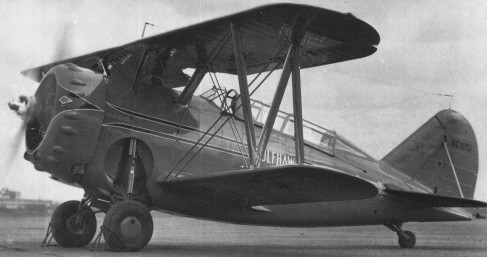
Virtually a two seat adaptation of the F3F-2 fighter, the G-32 Gulfhawk III was sold to Gulf Oil in May 1938 as a high speed transport. NC1051 was drafted into the USAAF in 1942, and designated UC-103.
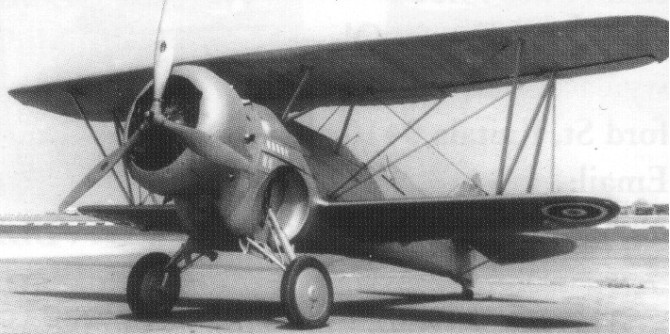
In 1931 the XFF-1 prototype two-seat carrier-based biplane fighter flew for the first time. It was of advanced design with enclosed cockpits (the canopy made up of telescoping sections) and a landing gear that retracted into well-type recesses in the forward fuselage sides.
On 6 March 1931 Grumman signed a contract to supply, for $73,975, one XFF-1 (experimental fighter, Grumman, model 1). Not a cent was to be paid until the XFF-1 had been accepted by the customer. Grumman hired Bill McAvoy from the NACA to make the first flight on 29 December 1931, powered by a 575 hp Wright R¬1820E Cyclone. It soon clocked 195 mph in level flight. Later, with a 750 hp R 1820F Cyclone, it achieved 323 km/h (201 mph).
In August 1932 Grum¬man flew the XSF-1 scout, with one of the fixed guns replaced by 45 gal of extra fuel, and this reached 207 mph. 33 SF 1s were ordered with revised internal equipment and R 1820 84 engines. These also served in the Lexington, with Scout Squadron VS 3B.
But the break¬through came just before Christ¬mas 1932, when everyone was about to be laid off because there were insufficient funds to pay the wages: the navy ordered 27 FF-ls. Deliveries of 27 FF 1s, with 559kW R 1820 78 engines, began to VF 5B (Lexing¬ton) in June 1933. Armament comprised two 0.30 in (7.62 mm) Browning machine guns in the upper front fuselage, with another in the rear cockpit, and there was provision for one 45.36 kg (100 lb) bomb beneath each lower wing.
FF-1
In 1934 similar but R-1820-84-powered SF-1 scouts were delivered. FF-1s and SF-1s totalled 60 aircraft and in 1933 these equipped fighter Squadron VF-5B aboard USS Lexington, and from then on the company never looked back. In 1935-36 the 25 surviv¬ing Fifis (the FF had to be called that) were modified with the cock¬pits arranged for dual-control pilot training. All FF 1 s and SF 1 s were withdrawn from front¬line service by the end of 1936, but served with reserve units (the former as FF 2 train¬ers) until late 1940.
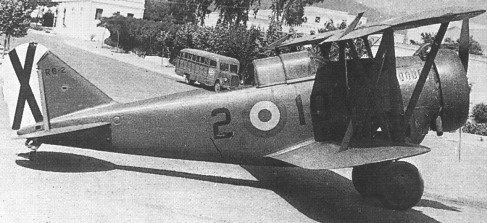
Can Car’s entry into the aviation industry was in 1936 when the company obtained a licence to assemble the Grumman FF 2 (redesignated G 23 in Canada), a two seat, carrier based, naval biplane fighter, which had first flown in 1931. It combined a duralumin stressed skin fuselage and tail with wings consisting of metal ribs and spars covered with fabric. It was also the first of its kind to have retractable undercarriage. The G 23 was already close to being obsolete by the time assembly started and there could have been no obvious market among the major aviation powers, who already possessed higher performance biplanes or were developing faster low wing monoplane fighters. By mid 1938, 42 G 23s had been assembled at the company’s plant in Fort William, Ontario, one each for Nicaragua (The prototype Grumman G 23 was sold in Nicaragua and returned to the USA in the 1960s) and Japan and the remaining forty for Turkey. Thirty -four of the latter had been shipped when complaints were received from representatives of the Spanish Nationalists that Spain, not Turkey, was the final destination of these aircraft. The GE-23s were assembled in Barcelona and pushed into service as ground-attack and reconnaissance aircraft. Despite its retractable landing gear, the GE-23 was only marginally faster but considerably less agile than the CR.32 flown by the Italians and Nationalists, and only nine survived destruction in the air or on the ground to fall into Nationalist hands at the end of the war.
GE-23
An additional ten G 23s were built and, with the exception of one sent to Mexico, these were offered to the Royal Canadian Air Force (RCAF) along with the remaining six from the ‘Turkish’ order. The RCAF was at first reluctant to accept the aircraft and the offer had to be made three times before the desperation produced by war forced them to take the G 23 into service as the Goblin in mid 1940. For a time, these fifteen obsolete aircraft formed the country’s main fighter force on the east coast, but by April 1942 all of the Goblins had been scrapped.
Other G 23s survived a bit longer than that. Several of the Spanish machines were taken over by the Nationalist forces at the end of the Civil War and the last was only scrapped in 1955.
FF-2
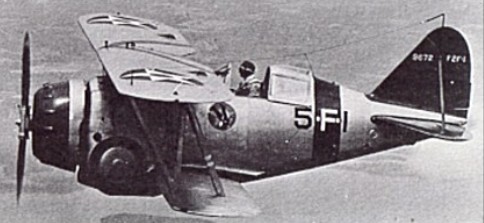
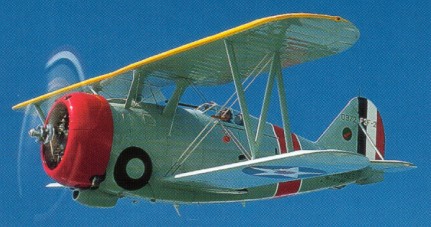
A single seat derivative of the FF-1, the XF2F-1 was flown by Paul Hovgard on 18 October 1933. Though a very tricky aircraft, needing (for example) care not to stall/spin off too tight a turn in the circuit, the single-seater had the outstanding speed range of 65 mph up to 230. The engine was the 14-cylinder Pratt & Whitney R-1535-72 Twin Wasp Junior, rated at 700 hp. The navy placed its biggest order since 1918: 55 F2Fs. These were delivered in 1935, and not only out-performed everything in the Army Air Corps but probably any other fighter in service anywhere. Even so, it was still tricky, and after designer Bill Schwendler had suggested improvements the navy ordered that these should be incorporated in the last of the 55, to be called the XF3F-1.
F2F-1
Corsair V93S in Royal Thailand Air Force
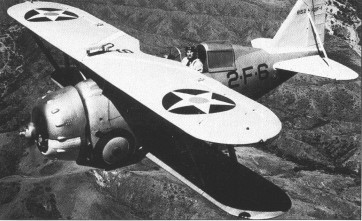
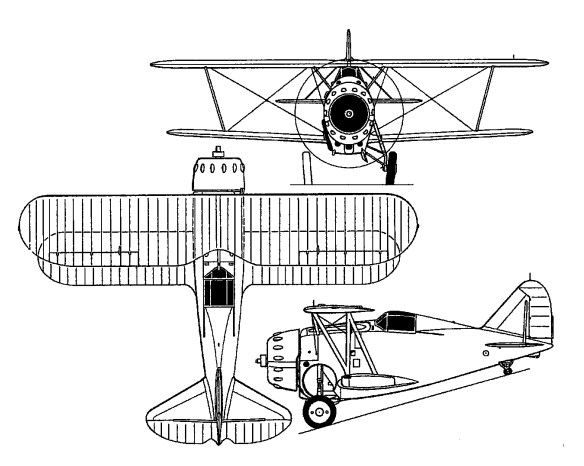
After de¬signer Bill Schwendler had suggested improvements to the F2F the navy ordered that these should be incorporated in the last of the 55, to be called the XF3F-1. This had a greater span, longer fuselage, bigger cockpit and other changes. During tests the pilot made a long vertical dive and then pulled out violently. He was aiming for 9 g. but calculations afterwards showed he actually pulled 14 g leading to fatal break-up. But after a small ventral fin had been added under the tail of a second prototype the navy placed another record order, for 54 F3F-ls, priced at over $lm. The F3F-1, powered by the 484kW R-1535-72, was good, and it carried one 0.5-in gun, one 0.3-in and two 116-lb bombs, but it could do with a bigger engine. The upshot was that on 23 March 1937 the navy placed another record order: 81 F3F-2s, priced at $1,674,310. These were powered by the 850-hp Wright Cyclone, turning a Hamilton propeller with three controllable-pitch blades. Grumman had to farm out the wings and tails to rival Brewster, but when fitted with the Cyclone R-1820-22 rated at 950 hp and the result was an order for 27 F3F-3s. They were so good the last did not come off the line until May 1939.
FF-1 Engine: Wright R-1820-78, 750 hp. Seats: 2. Wingspan: 36 ft 6in. Length: 7.47 m (24 ft 6 in) Gross Weight: 2110 kg (4655 lb) Maximum speed: 333 km/h (207 mph). Armament: 3 x 0.3 in mg, 200 lb underwing bomb load.
FF-2 Engine: 1 x Wright R-1820-78, 552kW Max take-off weight: 2190 kg / 4828 lb Empty weight: 1474 kg / 3250 lb Wingspan: 10.52 m / 34 ft 6 in Length: 7.47 m / 24 ft 6 in Height: 3.38 m / 11 ft 1 in Wing area; 28.80 sq.m / 310.00 sq ft Max. speed: 333 km/h / 207 mph Ceiling: 6400 m / 21000 ft Range: 1428 km / 887 miles Armament: 3 x 7.62mm machine-guns Crew: 2
F2F-1 Engine: 1 x Pratt-Whitney R-1535-72 Twin Wasp, 485kW / 700 hp Max take-off weight: 1745 kg / 3847 lb Empty weight: 1221 kg / 2692 lb Wingspan: 8.69 m / 28 ft 6 in Length: 6.53 m / 21 ft 5 in Height: 2.77 m / 9 ft 1 in Wing area: 21.37 sq.m / 230.02 sq ft Max. Speed: 383 km/h / 238 mph Cruise speed: 225 km/h / 140 mph Range: 1585 km / 985 miles Armament: 2 x 7.62mm (0.3 in) machine-guns, 200 lb underwing bomb load. Crew: 1
GE-23 Engine: 1 x Wright R-1820-F52, 596.5kW (800hp). Span: 10.515m (34ft 6in). Length: 7.467m (24ft 6in). Max T/O weight: 2190 kg (4,828 lb). Max speed: 216 mph at 7,000 ft. Operational range: 921 miles. Armament: 3 x 7.62-mm (0.3-in) mg.
F3F-1 Engine: Pratt & Whitney R-1535-72, 700 hp. Armament: 1 x 0.5 in & 2 x 0.3 in mg, 232 lb underwing bomb load. Seats: 1.
F3F-2 Engine: Wright Cyclone R-1820-22, 850 hp. Wing span: 32 ft. Armament: 2 x 0.3 in mg, 200 lb underwing bomb load. Seats: 1.
F3F-3 Engine: Wright Cyclone R-1820-22, 950 hp / 708kW Wingspan: 9.75 m / 31 ft 12 in Length: 7.06 m / 23 ft 2 in Height: 2.84 m / 9 ft 4 in Wing area: 24.15 sq.m / 259.95 sq ft Max take-off weight: 2175 kg / 4795 lb Empty weight: 1490 kg / 3285 lb Max. speed: 425 km/h / 264 mph Cruise speed: 241 km/h / 150 mph Ceiling: 10120 m / 33200 ft Range: 1577 km / 980 miles Crew: 1 Armament: 2 x 7.62mm machine-guns
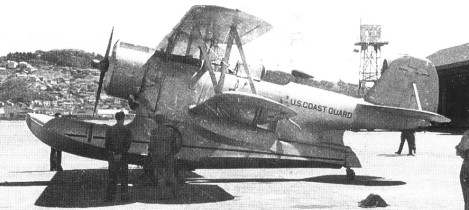
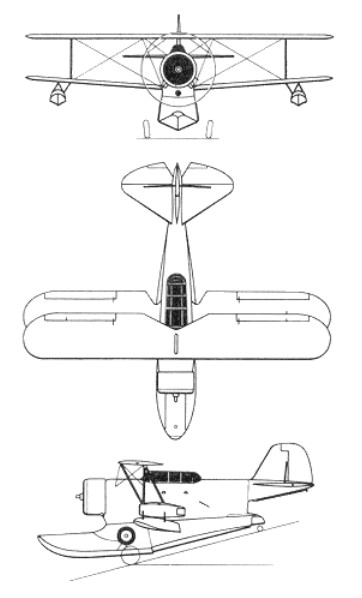
The J2F was an equal-span single-bay biplane with a large monocoque central float which also housed the retractable main landing gear, a similar design to the Leroy Grumman-designed landing gear first used for Grover Loening’s early amphibious biplane designs, and later adopted for the Grumman FF fighter biplane. The aircraft had strut-mounted stabilizer floats beneath each lower wing. A crew of two or three were carried in tandem cockpits, forward for the pilot and rear for an observer with room for a radio operator if required. It had a cabin in the fuselage for two passengers or a stretcher.
The Duck’s main pontoon was blended into the fuselage, making it almost a flying boat despite its similarity to a conventional landplane which has been float-equipped. This configuration was shared with the earlier Loening OL, Grumman having acquired the rights to Loening’s hull, float, and undercarriage designs. Like the F4F Wildcat, its narrow-tracked landing gear was hand-cranked.
Production of this general utility amphibian began in 1933 when the first prototype flew, and production continued until 1945. In all, nine series of the Duck were built.
The J2F-1 Duck first flew on 2 April 1936, powered by a 750 hp (559 kW) Wright R-1820 Cyclone, and was delivered to the U.S. Navy on the same day. The J2F-2 had an uprated Wright Cyclone engine of 790 hp (589 kW). Twenty J2F-3 variants were built in 1939 for use by the Navy as executive transports with plush interiors. Due to pressure of work following the United States entry into the war in 1941, production of the J2F Duck was transferred to the Columbia Aircraft Corp of New York. They produced 330 aircraft for the Navy and U.S. Coast Guard. If standard Navy nomenclature practice had been followed, these would have been designated JL-1s, but it was not, and all Columbia-produced airframes were delivered as J2F-6s.
The first appeared for the Navy in 1933 as the JF-1, powered by a 521.6kW Pratt & Whitney R-1830 Twin Wasp engine. This was followed by the JF-2 Coast Guard version, powered by a 559kW Wright Cyclone radial, and the JF-3.
The amphibian was originally used for photography, target-towing, scouting, and rescue work. Although the Duck is normally flown as a two-seater in tandem fashion, a folding floor in the rear cockpit gives access to a lower compartment for use in rescue work and the like; the lower compartment could house either two extra crew members or a stretcher.
A number of JF-2s were also delivered to Argentina.
By the beginning of 1941 about 115 JF and J2F-1 (company designation G-15) to J2F-4 Ducks were in service as general/utility amphibians for photographic, target-towing, scouting and rescue work. The J2F was an improved version of the earlier JF Duck, with its main difference being a longer float.
These were followed by J2F-5s and J2F-6s. The J2F6 was by far the most common. It featured aerodynamic improvements over the previous models, including a long-cord engine cowling.
The J2F-6 was produced in 1944 by the Columbia Aircraft Corporation of Valley Stream, Long Island, under licence from Grumman, bringing the total number of JF/J2Fs built to over 600.
J2F-6
J2Fs of the utility squadron of US Patrol Wing 10 were destroyed at Mariveles Bay, Philippines, by a Japanese air raid on 5 January 1942. The only Duck to survive the attack had a dead engine but had been concealed at Cabcaben airfield during the Battle of Bataan, to be repaired afterwards with a cylinder removed from a destroyed J2F-4 submerged in Manila Bay. Following repairs the J2F-4 departed after midnight on 9 April 1942, overloaded with five passengers and the pilot, becoming the last aircraft to depart Bataan before the surrender of the Bataan to the Japanese only hours later. Among its passengers was Carlos P. Romulo (diplomat, politician, soldier, journalist, and author), who recounted the flight in his 1942 best-selling book I Saw the Fall of the Philippines (Doubleday, Doran & Company, Inc., Garden City, New York 1943, pp. 288–303), for which he received the Pulitzer Prize for Correspondence.
Several surplus Navy Ducks were converted for use by the United States Air Force in the air-sea rescue role as the OA-12 in 1948.
The Argentine Naval Aviation received four new-build Grumman G-15s (equivalent to J2F-4s) in 1939, to supplement the eight Grumman G-20s (export version of the Grumman JF-2) received in 1937. In 1946–1947, 32 ex-US Navy Ducks (consisting of one J2F-4, 24 J2F-5s, and 7 J2F-6s) were acquired, with the last examples remaining in use until 1958.
The Colombian Navy operated three examples from 1948.
The Mexican Navy operated three ex-U.S. Navy J2F-6s from 1950–1951.
The Peruvian Navy operated one ex-USN example from 1961–1964.
In the United States the United States Army Air Forces, United States Coast Guard, United States Marine Corps, and United States Navy all operated the J2F.
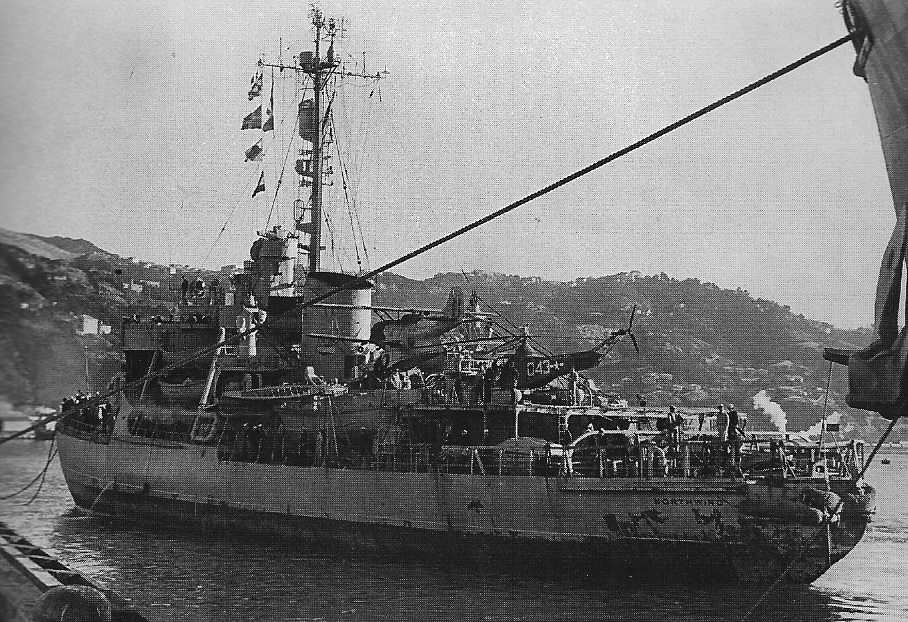
USCG Northwind March 1947 Wellington New Zealand – Grumman J2F-6 Duck & Sikorsky HNS-1
A Grumman J2F-6 Duck was owned and operated by Kermit Weeks at Fantasy of Flight in Polk City, Florida.
The United States Coast Guard worked with North South Polar, Inc. to recover a J2F-4 Duck, serial number V-1640, downed in a storm on a Greenland glacier on 29 November 1942. Two Coast Guard airmen were lost along with a rescued U.S. Army Air Forces passenger from a downed B-17 searching for a downed C-53 with five on board. The three men of the Duck are presumed to still be entombed at the site. North South Polar, under the auspices of the Coast Guard team, located the aircraft in August 2012 resting 38 feet beneath the surface of the ice sheet.
Variants:
J2F-1 Initial production version with 750 hp R-1820-20 engines, 29 built.
J2F-2 United States Marine Corps version with nose and dorsal guns and underwing bomb racks, 21 built.
J2F-2A As J2F-2 with minor changes for use in the United States Virgin Islands, nine built.
J2F-3 J2F-2 but powered by an 850 hp R-1820-26 engine, 20 built.
J2F-4 J2F-2 but powered by an 850 hp R-1820-30 engine and fitted with target towing equipment, 32 built.
J2F-5 J2F-2 but powered by a 1,050 hp R-1820-54 engine, 144 built. Engine: 1 × Wright R-1820-54 nine-cylinder radial engine, 900 hp (670 kW) Wingspan: 39 ft 0 in (11.9 m) Wing area: 409 ft² (38 m²) Length: 34 ft 0 in (10.37 m) Height: 13 ft 11 in (4.25 m) Empty weight: 5,480 lb (2,485 kg) Loaded weight: 7,700 lb (3,496 kg) Maximum speed: 190 mph (304 km/h) Cruise speed: 155 mph (248 km/h) Stall speed: 70 mph (112 km/h) Range: 780 mi (1,255 km) Service ceiling: 20,000 ft (6,100 m) Rate of climb: ft/min (m/s) Crew: two (pilot and observer) Capacity: two rescued airmen Armament: 1 × Browning .30 cal machine gun (7.62 mm) on flexible mount in rear cockpit Bombload: 650 lb (295 kg)
J2F-6 Columbia Aircraft built version of the J2F-5 with a 1,050 hp R-1820-64 engine in a long-chord cowling, fitted with underwing bomb racks and provision for target towing gear; 330 built.
OA-12 Air-sea rescue conversion for the United States Army Air Forces (and later United States Air Force, OA-12A).
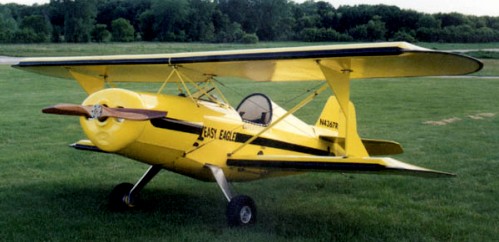
The LSA Easy Eagle I Bi -Plane is an affordable, easy to build aircraft that combines standard aircraft construction methods, steel tubing, wood and fabric covering. The 4130 steel tube fuselage is wide enough for 44 inch waist line and a 6 foot 3 inch pilot. The 300 pound useful load allows for a 228 pound pilot and 11 gallons of fuel. The low wing loading of 6.7 pounds. per square foot gives the Easy Eagle I Bi -Plane a low stall speed and great glide ratio. The aluminum 5/8 inch landing gear and 5 inch wheels provide for easy handling either on paved runways or grass strips. With the optional hydraulic brake upgrade, ground handling is superior. The Easy Eagle I Bi -Plane takes off in only 300 feet and lands in about the same, thanks to 105 square feet of wing area. Climb is 900 feet per minute at sea level. With a stall at 45 mph or less, a cruise of 100 mph, low building time and simple straight forward construction, all combine to make the Easy Eagle Bi-Plane a single place, affordable bi-plane. The airframe is rated at plus 4 and minus 3 g-s the Easy Eagle Bi-Plane is capable of doing many sportsman aerobatic maneuvers. Featuring a fully welded steel frame combined with an all wood wing and a one piece aluminum landing gear, make it a airplane for today. Landing and taking off is made easy with a fully controllable tail wheel. With a 64 hp VW engine the Easy Eagle cruises at 100mph and has a stall speed of 45mph. The Easy Eagle features a fabric covered fully welded steel frame combined with an all wood wing. In 2008 the EASY EAGLE was available from: GREAT PLAINS AIRCRAFT PO Box 545 Boys Town, NE, USA.
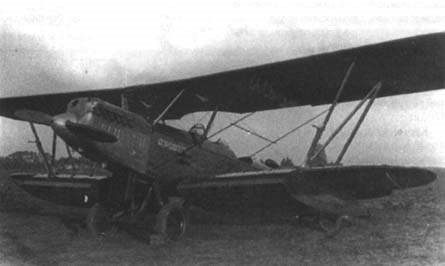
Starting in 1931, Grokhovsky worked on systems for air landing. One of the systems, the Grokhovsky G-61 (Russian: Гроховский Г-61), was to take advantage of all the payload capacity of the aircraft models without affecting their structure. It allowed a stock Polikarpov R-5 reconnaissance biplane to lift 16 people.
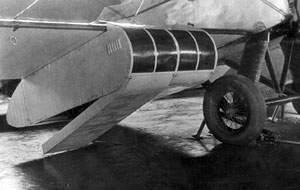
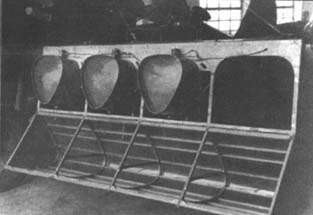
Grokhovsky decided to save resources in construction of specialized aircraft by installing two specially designed cassettes under the underwing of a stock R-5. Each had several compartments designed to carry one soldier.
The first model of the G-61 container had capacity for two paratroopers and could be opened downwards to allow jumping.
To reduce aerodynamic resistance, the cassettes were designed as a thick wing profile and by protruding from the wing plane in the front and rear area, they increased the wing area by about 7 sq.m. According to the opinion of the institute’s specialists, this should constitute an increase in the lift force and therefore increase the payload capacity of the model. The new leading edge was formed by transparent curved surfaces of Plexiglas, covering the entire width of the cassette and reinforced with a plywood structure.
In addition to transporting soldiers, these cassettes could be used to evacuate the wounded, transport supplies and cargo. Outside the military sphere, the cassettes were used to transport expeditions to remote places, carry out rescue missions, among others.
Cassettes with different capacities were designed, depending on the mission. One of the first versions of the G-61 had only 4 compartments, each calculated to transport a person weighing about 80 kg. The bottom of the compartments could be opened in flight. In this way the pilot could release loads with a parachute or launch the paratroopers into the air.
By 1935 this G-61 system passed factory tests and was delivered to state tests, but Grokhovsky kept working on higher capacity versions.
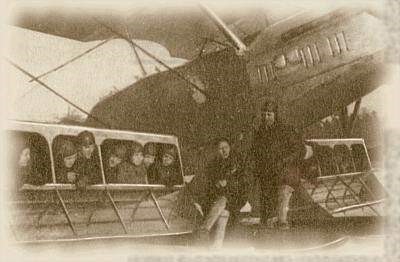
In 1936 a new version was designed. Each cassette held 7 soldiers, bringing the R-5 ‘s capacity to 15 soldiers (including one in the aircraft’s second seat). The construction turned out to be quite light, only about 200 kg. The entire structure of the R-5 was reinforced.
Yakov Alksnis and NN Polikarpov openly expressed their skepticism about the success of the new version. However, by that time Grojovski had a well-earned reputation, so he was given permission to fly his creation. The most difficult thing was finding a test pilot who wanted to test it. Three would refuse, so Grojovski finally decided to take the risk.
On December 8, 1936 at the NKTP Central Airfield in Podlipki an R-5 plane took off with the two new cassettes. The flight had been planned with sandbags until the expected takeoff weight was achieved. These sacks were jokingly known as “Iván Peskov” because this surname means “Son of the Sand”. When Alksnis and Polikarpov arrived to supervise the flight, the plane had already been loaded and the cassettes closed.
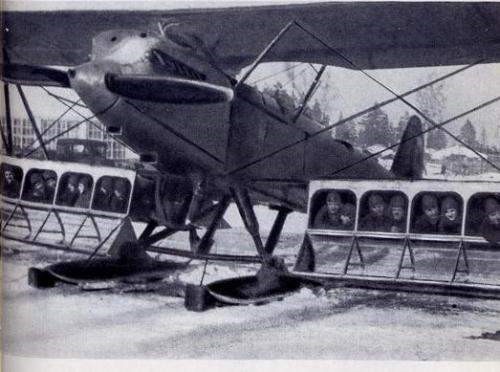
The plane with its ski undercarriage traveled around the runway for about 350 meters and took off. At the controls was Pavel Grojovski. The plane made a low-altitude circle flight and took to the runway. The surprise was tremendous when the cassettes were opened and it was found that instead of bags there were 14 Grojovski collaborators. The “official” explanation was that the Iván Peshkov sacks had not arrived on time for the tests and the collaborators had volunteered to take on the weight. In reality, this fact constitutes a sign of the confidence that the workers of the institute had in their boss.
Grokhovsky poses with his teammates after the successful test.
The take-off weight on this flight, including the pilot, a passenger and an auxiliary 250-liter fuel tank, reached 1,650 kg (tests were carried out with weights up to 2,000 kg). Top speed was set at 180 km/h and cruising at about 160 km/h.
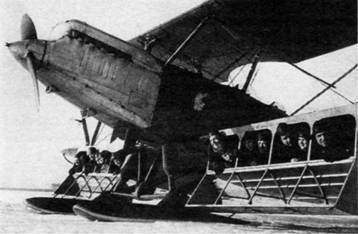
The R-5 plane with the G-61 containers under the wings after Grokhovsky ‘s flight with 14 of his companions.
Despite Grokhovsky ‘s successes at that time, he began to move away from issues related to the landing to concentrate on aeronautical production. In 1937 the institute would be reorganized and all these works abandoned.
The Polikarpov R-5 with the 14 paratroopers under the wings during tests in December 1936.
On 12 August 1937, during an attempted flight to the United States via the North Pole, the crew of the Bolkhovitinov DB-A (“Н-209”) would go missing with the crew led by polar pilot SA Levanevski.
On August 25, 1937 Grokhovsky wrote a letter to Stalin in which he reaffirmed that the capacity of the R-5 with the G-61 could be raised from 1,650 to 2000 kg. This would make it possible to locate auxiliary fuel tanks with a pump transfer system to the main tanks and increase the range of the P-5 (civilian version of the R-5) to 3,000 km. In 7 – 10 days Grokhovsky promised to have the cassettes ready. In addition to fuel, these capacities could take food for several months, a tent, an inflatable boat, and all the necessary instruments for a prolonged search.
Grokhovsky further enunciated the advantages of the R-5 for the task due to its ability to land and take off on relatively short runways, the presence of dual flight control, and the possibility of transporting the entire return crew in a single aircraft. The letter ended with a request to allow to equip a P-5 with cassettes and allow it to participate in the search for the crew of “Н-209”.
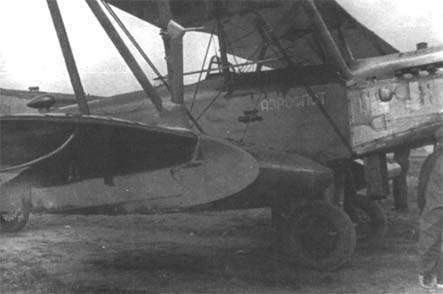
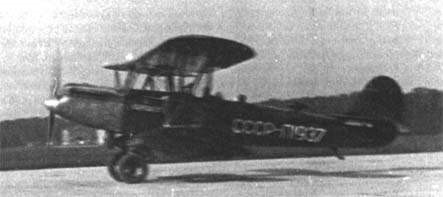
Grojovski ‘s request was approved. Two P-5 airliners were loaned from the GVF’s northern direction. The first, with factory number 8458, had been delivered in 1934, receiving registration СССР-Л1565 in August. The second example, with factory number 9627, would enter service in June 1935 with registration СССР-Л1937. Both examples received the designation PG-61.
The cassettes were installed in Factories No.89 and 241. The engineers Gubanov (Factory No.241), Mladkovski (GVF Main Directorate), Vorozhtsov (NII GVF) and instrumentalist Lomtiev played a vital role in the modifications.
PG-61 with wing cassettes. The radio station antenna is clearly visible on the rear fuselage.
The modifications made made it possible to increase the takeoff weight of the P-5 to 4050 kg. The cassettes were designed in such a way that all the weight was concentrated near the center of gravity of the model.
On September 12, 1937, the aircraft, registered СССР-Л1565, took off from Moscow to Arkhangelsk with the pilot of the experimental institute Boris Bitski. In two days it reached its destination, where the plane was disassembled for transport aboard the steamer “Roshal”, which was traveling to Rudolf Island in the Franz Josef Land archipelago .
PG-61 СССР-Л1937 takes off towards Arkhangelsk.
The second example СССР-Л1937 was kept in Moscow for a set of tests. Auxiliary fuel tanks with a total capacity of 840 liters were installed in six of the 8 cassette compartments. The takeoff weight with fuel rose to 3350 kg. In the rest of the compartments there was a reserve radio station, food for two months, weapons, sleeping bags, and additional parts for minor repairs to the plane. The takeoff weight grew to 3780 kg. Instruments for blind flights, a radio-compass and powerful radio equipment were installed in the piloting cabins.
Fuel tanks located on the G-61 cassettes.
On September 16, 1937, pilot IS Kotov and the radio operator Degtiev began the tests of the aircraft at the Bykovsky airfield. Only four flights were carried out in which it was possible to determine that the aircraft behaved quite well in flight and could be controlled without difficulty, despite its great weight. Takeoffs and landings and horizontal flight of maximum and minimum speeds were tested. The plane behaved well and not unlike the normal P-5.
During the takeoff run, no tendency to deviate to one side was recorded. Takeoff occurred at a speed of 90-95 km/h and the run lasted about 18 seconds.
Horizontal flight was tested at speeds between 135 and 185 km/h. Gliding was tested at speeds of 135 – 140 km/h, demonstrating good stability.
The landing was not unlike normal P-5 aircraft. The auxiliary tank system also passed the tests.
After the culmination of the tests, the СССР-Л1937 plane flew to Moscow, from where it departed for Arkhangelsk, taking on board the same crew that participated in the tests. In Arkhangelsk the plane was disarmed and its crew joined that of the other plane, which had not yet boarded.
The Roshal steamer arrived in Arkhangelsk on October 1. The loading of the ship took 5 days. At the end of October, it would arrive at the island of Rudolf, where a group of Tupolev G-2 planes (civilian transport version of the Tupolev TB-3 bomber) were already present. Despite the number of aircraft and crews, constant weather problems did not allow the pilots of these aircraft to conduct an active search for Levanevski’s aircraft.
Unlike these large aircraft, which arrived flying under their own power, the P-5s, after unloading, had to be fuelled and transferred to the improvised runway. During final preparation on December 2, the ice under Bitski’s aircraft gave way and the СССР-Л1565 aircraft plunged about a meter, damaging its propeller. Next to the plane, Chuxnovski, who was helping in the preparation, fell into the water.
On December 8 both planes were prepared for flights. Both pilots calculated that the weather would improve and in about four days they could take off. In one of the planes the navigator LM Rubinshtein would travel. Inclement weather thwarted this plan.
The weather situation improved only on the 20th and the P-5s, together with Chuxnovski’s G-2, were ready. Bitski and Kotov tried twice to take off, but a broken tail skid prevented them from taking off. It is unknown if the PG-61 took part in the rescue flights or not.
It is known that СССР-Л1937 survived this adventure and was still flying at the beginning of 1941. The fate of the P-5 СССР-1565 is unknown.
Grokhovsky G-61 Powerplant: One M-17B, 680 hp takeoff / 500 hp rated power Wingspan:15.5/12.6 m Wing area: 50.2 m² Length:10.56m Loaded weight: 3800kg Wing loading: :75.7 kg/sq.m Power load: 7.6 kg/hp Payload capacity: 15 soldiers Cargo volume :4.3 cu.m Top speed: 201km/h Cruising speed: 130 km/h Take-off run max load: 400 m (30 sec) Ceiling: 2800m Accommodation: 1-2
The bases of this project go back to an idea presented by Fleet Senior Lieutenant II Golenischev-Kutuzov, who proposed to build a special hovercraft capable of carrying out torpedo attacks on enemy ships. Little by little the idea of the hovercraft was derived from a specialized seaplane. This idea of Golenischev-Kutuzov was presented to PRTV for its implementation.
The plane began to be designed and built in 1916 at the Shchetinin Society. Co – engineered by Mikhail Mikhailovich Shishmariov, who headed the construction department at the Shchetinin factory. Shishmariov developed the entire technical project for the new aircraft, while Grigorovich was in charge only of the general conception of the model and the general direction during the preparation of the plans and technical documentation.
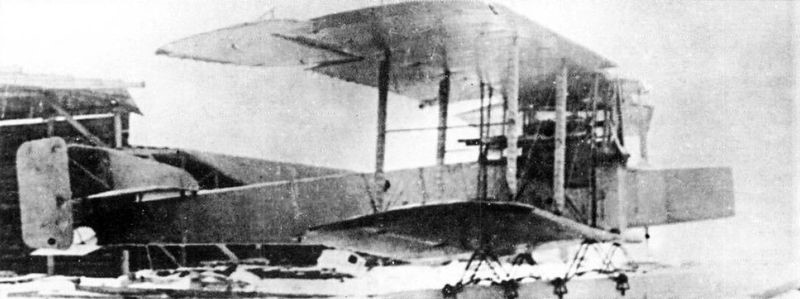
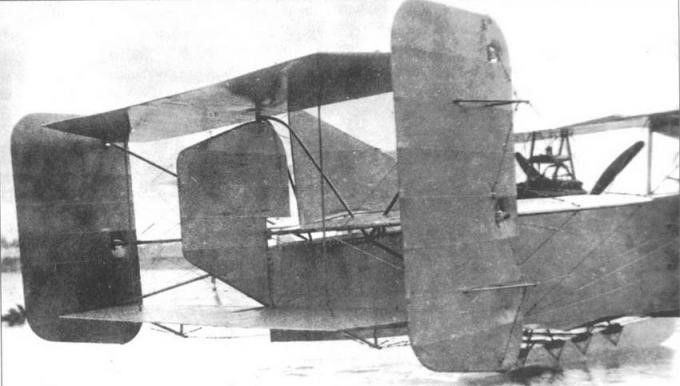
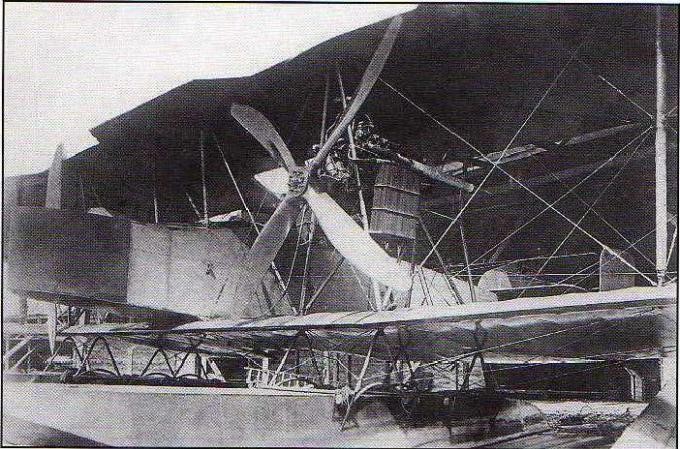
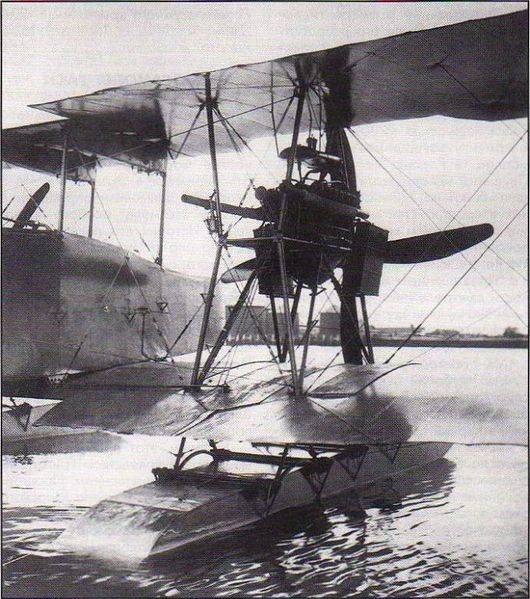
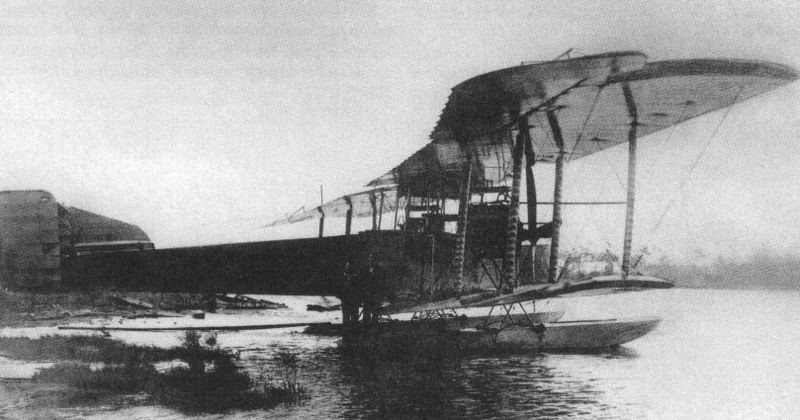
The GASN was designed as a huge twin-engine sesquiplane with a pair of floats and capable of carrying a 450-hp torpedo designed at the “Novi Lessner” factory in Petrograd. The power plant consisted of two 220 hp Renault engines located between both planes on steel tube supports and moving large four-blade propellers.
The initials GASN (Григорович/Шишмарев ГАСН) correspond to G idro Aeroplan S petsialnovo N aznachenia (Special Missions Hydroplane), although the model was also known as SON ( Samoliot O sobovo N aznachenia ) and in either of the two names it was considered to create an aircraft capable of carry and launch a naval torpedo, making this model the world’s first naval torpedo boat. We must add that this subject was considered highly secret, so in fleet documents references to the project are made as Type K.
The floats had a traditional construction similar to that used for the hull of submarines at the time and were fixed to the lower wing by means of uprights in an inverted V made of steel tubes with rubber attachment points.
The fuselage had a rectangular cross section secured by cables and covered with fabric.
The tail was of the biplane type with three rudders and a small keel on the central empennage.
The large-span wing featured traditional wood-frame construction with fabric covering. The structure had three auxiliary spars to be able to fix the large ailerons. The shape in the plane of the wing was rectangular with a constant chord, but instead of being straight it presented a slight sagging.
The leading edge of the upper wing had indentations in the area of the propellers. The interplane supports were built with steel tubes on which they installed fabric-covered aerodynamic fairings and cable tensioners.
The GASN crew consisted of 3-4 people. In the bow area there was a position reinforced with sheets of plywood for an observer-gunner in charge of defending the forward hemisphere. Behind this position was the cockpit for two pilots and behind the wing box a third position for a gunner.
Even without completing the assembly of the first example, a request for the construction of 10 examples had been sent to Shchetinin.
The first flight of the prototype took place on August 24, 1917 in Petrograd under the leadership of Senior Lieutenant A. Ye. Gruzinov. The first tests showed that the GASN had good behaviour in the water and was easily controllable, but it was necessary to modify the trim and improve the response of the rudders. It was proposed to advance the engines, locate certain weights and increase the wing’s rake angle to advance the center of gravity of the airplane. It was also proposed to increase the surface of the rudders.
The GASN on Krestovsky Island in Saint Petersburg in 1920.
On September 24, during one of the flights, one of the floats was damaged, showing the need to reinforce its structure. After the repairs the plane began to fly again. These flights produced another series of problems, which is why the possibility of the Navy not continuing development and adapting the “Ilya Muromets” bomber or the Jioni twin-tailed plane for this role was considered.
The events of the revolution in Petrograd and the chaotic situation of the first years of the revolution prevented further development. Despite these factors, the GASN and an important set of construction elements of the started series of 10 copies were preserved intact, initially at the Shchetinin factory, which had changed its name to “Gamayún” and later at the “Krasni Liotchik” Factory.
The intention to continue the works would arrive in 1920. In that year Grigorovich traveled to Moscow and received an engineering post in Glavnoavia. His first task consisted of trying to continue the development of the projects stopped in the period 1917-1918. Grigorovich proposed to restore the work on the GASN torpedo bomber, knowing the state of conservation of the prototype and a good number of parts and components to assemble various aircraft of this type.
In November 1920 the GASN was made airworthy and the pilot LI Giks began carrying out the tests. Dmitri Pavolvich was on the shore supervising the process. On the 4th of that month, after long checks on the state of the engines, the mechanic Ozolin told Giks that the plane was ready for flight. The pilot stood in the cockpit and gave instructions to release the seaplane into the water.
During takeoff runs, tabs of fire began to come out of the exhaust pipes of one of the engines. Fearing a fire Giks decided to interrupt the test.
The engines were once more overhauled and the plane was finally cleared to take off, despite the fact that the weather conditions had deteriorated with a southerly wind that made take off difficult and the appearance of floating ice in the bay.
Steering the plane in the direction of Volni Island, Giks turned the plane upwind and took off. The plane was beginning to climb without difficulty when suddenly the engine on the right stopped working. The pilot turned for a landing near Krestovski Island. After gliding, the pilot managed to land and tried to steer the seaplane with a single engine. It was found that the seaplane’s rudder was ineffective and the aircraft only rotated around one axis. Giks directed the mechanic to go to the wing to try to compensate by sinking the float, but that didn’t help either. Waiting for help Giks switched off the engines. The plane began to drift freely.
The crew members removed the cushions from the seats, sprayed them with gasoline and lit them, throwing them near the plane as a signal for help, but help did not appear anyway.
For a whole day the plane drifted. At dawn the crew confirmed that they were about three kilometers from the shore and that the entire plane was surrounded by sheets of ice that made rescue difficult. Finally it was possible to bring the plane to the shore. The analysis of the accident showed that during the preparation of the flight, instead of oil, it was poured into the diluent tank.
With this the development came to an end.
GASN Power plant: 2 x Renault, 220 hp Upper plane wingspan: 28.0 m Wing area: 150.0 m² Length: 14.50m Payload: 1450kg Speed at sea level: 110-120 km/h Accommodation: 3 – 4 Armament: two machine guns Bombload: 450 kg torpedo or 480 kg of bombs
Between 1915 and 1916 at the Shchetinin Factory and based on a Grigorovich project, two “land” models were designed (in Russian Sujoputnie and hence the S in the name as opposed to the M for Morskoi or naval). The objetive of these models was to increase the performance of the Farman biplanes that the factory built under license.
The first of these projects, known as S-1 (Григоровича С-1), was designed as a conventional biplane heavily influenced by Farman’s designs and equipped with a rotary engine. Construction was abandoned before the prototype was finished.
A second model, called S-2, was designed as a two-seater aerial observation and reconnaissance aircraft and generally repeated the successful scheme of the Farman biplanes with a central nacelle and a rotary engine. As a “novelty” it is worth noting the use of double tail cones that ended in individual empennages joined by the stabilizer with the elevators.
The selected powerplant was the 100 hp French Gnôme Monosoupape.
The entire construction was made of wood, covered with fabric. The wings had an Eifel-36 profile and were characterized by a large difference in span between both planes and the use of parallel uprights with cable tensioners.
The S-2 was built and its assembly was completed in January 1916. During flight tests, conducted by pilot Ya. I. Siedov, an accident occurred and the plane was not restored as it was considered that there was no point in trying to improve the outdated Farman designs
As early as 1915, a group of naval pilots had asked the Fleet for a long-range aircraft capable of carrying out long patrols, covering the entire Baltic Sea area. The start of the war increased the requests and increased when the conflicts with Turkey began.
On August 12, 1915, a meeting of the Aviation Committee of the Baltic Sea Liaison Service took place, in which once again the issue of the need for the provision of large seaplanes with a 6-hour patrol capacity was discussed. Based on these requirements, the builder DP Grigorovich proposed to build such a device.
The Marine Cruiser (Mosrkoi Kreiser or MK (Russian: Григорович МК-1 “Морской крейсер”)) was designed in 1916 to meet the requirements of the Naval General Staff (MGSh) and was conceived to serve with the Baltic and Black Sea fleets in long-range reconnaissance and bomber functions.
The MK-1 was the largest Russian seaplane ever designed and it only yielded to the Ilya Muromets bomber with floats.
The MK-1 featured a center float, biplane configuration, three engines, and a four-crew capacity. From the technological and constructive point of view, the model maintained the characteristics of the designs developed in the Schetinin Factory.
A feature was that the float and fuselage were merged into a single structure, resulting in a general outline of combined features. This float had such dimensions that it could generally be considered a hull. In its lower region it presented a redentient with concave and lateral sides similar to those used in Grigorovich’s M flying boats. The construction of the internal structure of the float was made of ash with plywood covering.
In the forward region of the fuselage the closed cockpit was located, built with plywood and with good frontal glazing. At the rear, the fuselage appeared as a wooden frame braced by cables and covered with fabric.
The wing box was of the conventional type with three pairs of struts in each half plane and a certain offset. The upper plane was slightly larger than the lower plane and had trapezoidal-shaped ailerons. The wing structure was conventional, with two wooden spars and a rather slim profile. It should be noted that this wing box was fixed to the upper part of the float body by means of rubber shock absorbers with a travel of 180 mm.
In the tail section there was a wide triangular keel on which the horizontal planes were fixed, braced by uprights and the large-area rudder.
Originally it was thought to equip the MK-1 with only two 220 hp Renault engines located between the planes. Later, when construction began, the designers realized that the weight of the model exceeded that calculated and the center of gravity was located a little behind, so it was decided to locate on the upper plane and on the line of the longitudinal axis a third engine. A 150 hp Sunbeam motor was first tested, but was later replaced by a 140 hp Hispano-Suiza V-cylinder motor, which was found at the factory. In this way the MK-1 became the world’s first three-engined seaplane.
The cockpit of the pilots in the MK-1 was characterized by being very spacious and located high above the hull. In the bow section a gunner was located operating a 76 mm gun.
The MK-1 was completed in the middle of 1917 and only late in the fall was it ready for testing. In November the pilot Ya. I. Siedov-Sierov attempted to make the first flight in Petrograd Bay, taking several people on board. The weather was not the most propitious, the cold wind had created waves. At the beginning of the take-off and giving full throttle to the upper engine, the nose sank and the water swept over the bow, filling a large part of the first watertight compartment of the hull. The “Cruise” was stuck on its nose and ended up sinking. All the crew members were able to be evacuated.
The flying boat was pulled out of the water with significant damage. The cause of the problem was considered to lie in design problems of the bow section of the float, which needed to be lengthened. The need was also seen to eliminate the upper engine and increase the power of the two located between the wing planes. This meant a major job that was decided not to undertake, especially considering that the GASN torpedo bomber was already being built, which seemed much more perspective. Thus ended the development.
Grigorovich/Schetinin MK-1 Sea Cruiser Power plant: 2 x 220-hp Renault & 1 x 140-hp Hispano-Suiza Upper plane span: 30 m Length: 16.50 m Height: 4.50 m Accommodation: 4