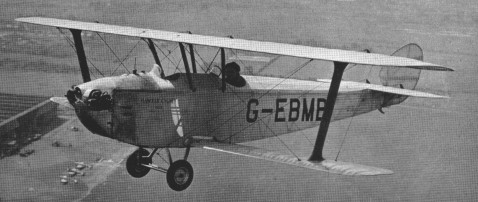
Hawker Cygnet

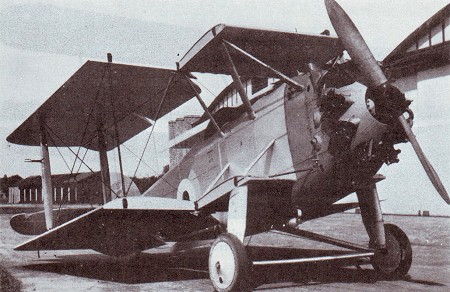
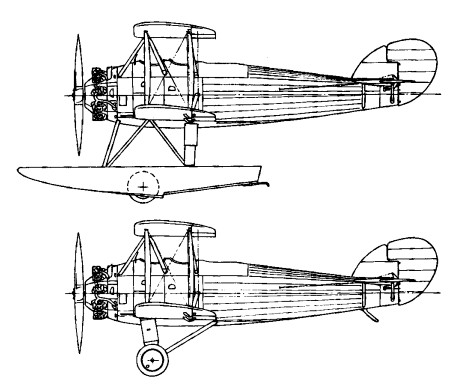
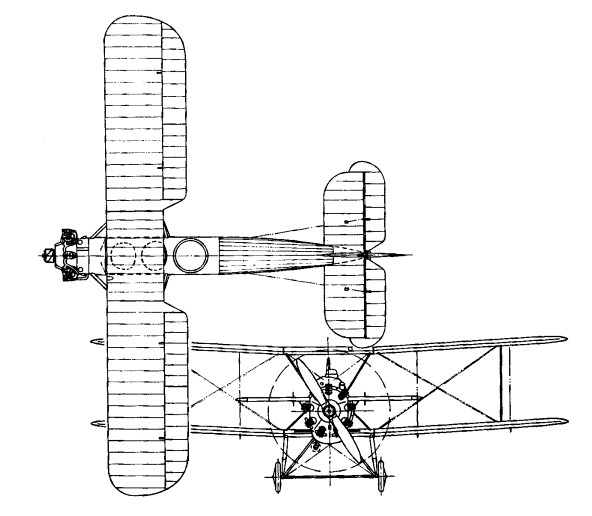
The Hawker Cygnet was Sydney Camm’s first design for Hawkers, and it was the company’s entry for the Light Aeroplane Competition organised by the Royal Aero Club in 1924, for which the Air Ministry offered prizes to the value of £3,000.

Two Cygnets, G EBMB and G EBJH, were built for the competition, with entry numbers 14 and 15. These were powered by 34 hp British Anzani and 34 hp ABC Scorpion engines respectively. It had drooping ailerons which can be wound down as flaps. But for valve trouble, No 14 might have won first prize, but the two Cygnets finished in 3rd and 4th places.

The next year EBMB won the 100 mile International Handicap Race at the R.Ae.C’s Lympne meeting, and in 1926 the Lympne Light Plane Competition brought the two Cygnets together once more, both now re engined with the 34 hp Bristol Cherub, and EBJH now belonging to the R.A.E. Aero Club. Flying as No. 6, EBMB, in the bands of P. W.S. Bulman, won the Daily Mail’s £3,000 first prize. EBJH came second.
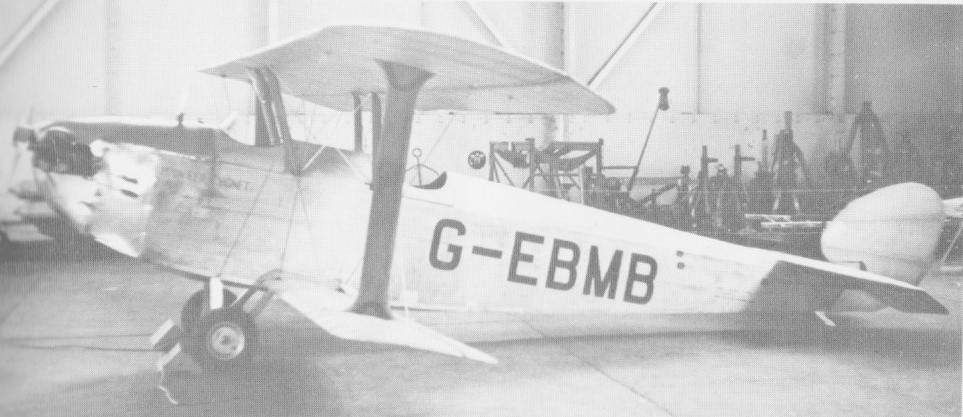
Following appearances at a number of subsequent events, including the 1927 Bournemouth Easter Meeting, EBMB was put into storage by Hawkers. After the Second War the Cygnet was completely restored, and from 1949 onwards it flew at several Royal Aeronautical Society Garden Parties.

EBMB, 1972, went on permanent display at the Royal Air Force Museum, Hendon.

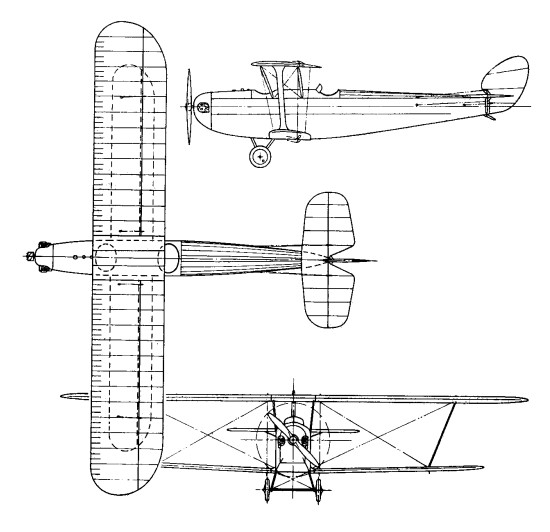
Engine: 1 x Bristol Cherab III, 25kW / 36 hp
Max take-off weight: 431 kg / 950 lb
Empty weight: 169 kg / 373 lb
Wingspan: 8.53 m / 27 ft 12 in
Length: 6.22 m / 20 ft 5 in
Height: 1.78 m / 5 ft 10 in
Wing area: 15.33 sq.m / 165.01 sq ft
Max. speed: 132 km/h / 82 mph
Ceiling: 2715 m / 8900 ft
Seats: 2
Hart Aero Zipster

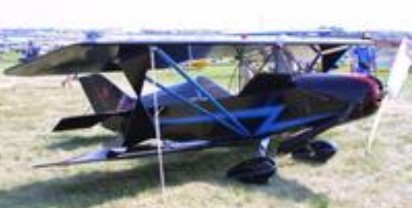
Plans and manual on CD $25 Printed plans and Manaul $75 Materials Kits $3495 Quick Build Kit $4795 Deluxe Kit $5995 Partial kits available along with many options.

Stall: 23 kt / 27 mph / 43 kmh
Cruise: 55 kt / 63 mph / 101 kmh
VNE: 78 kt / 90 mph / 145 kmh
Empty Weight: 113 kg / 249 lbs
MTOW Weight: 249 kg / 550 lbs
Climb Ratio: 450 ft/min / 2 m/s
Take-off distance (50ft obstacle): 600 ft / 183 m
Landing distance (50ft obstacle): 600 ft / 183 m

Hansa-Brandenburg W.27 / W.32

W.27

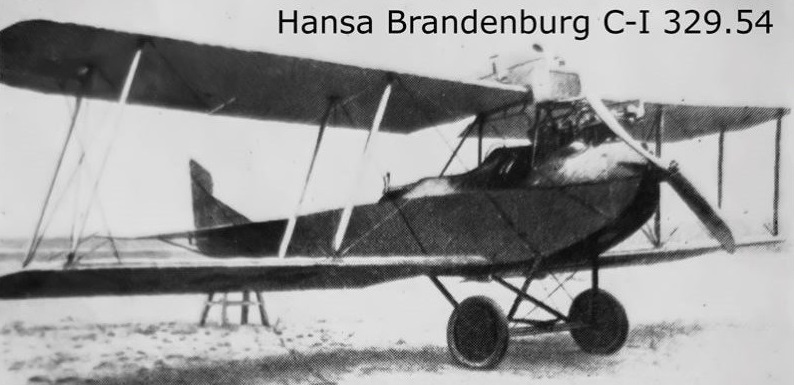
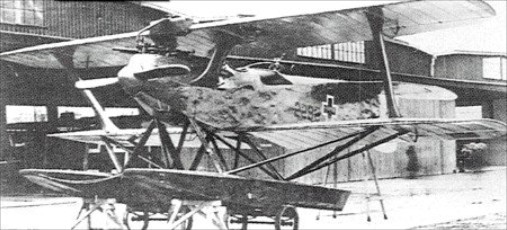
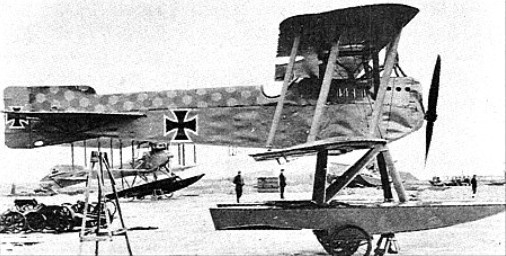
Early in 1918, it was suggested to Ernst Heinkel that a successor to the W.12 two-seat fighter would soon be required if the German Navy was to maintain its superiority over Allied types being encountered over the North Sea. To conserve valuable time, Heinkel installed the new 195hp Benz Bz IIIbo eight-cylinder Vee engine in a modified W.12 airframe and a 160hp Mercedes D IIIa in a second W.12. Wing span and gap were reduced, stagger was increased to improve visibility, and aerofoil- section I-type interplane struts were adopted. Armament comprised two synchronised 7.92mm LMG 08/15 machine guns and one 7.92mm Parabellum on a flexible mount in the rear cockpit. The Benz-engined prototype received the designation W.27 while that powered by the Mercedes engine became the W.32, but both were found inferior to the W.29 monoplane and no further development was undertaken.

W.32

W 27
Max take-off weight: 1619 kg / 3569 lb
Empty weight: 1109 kg / 2445 lb
Wingspan: 11.20 m / 37 ft 9 in
Length: 9.23 m / 30 ft 3 in
Height: 3.06 m / 10 ft 0 in
Wing area: 36.06 sq.m / 388.15 sq ft
Max. speed: 170 km/h / 106 mph

Hansa-Brandenburg W.25

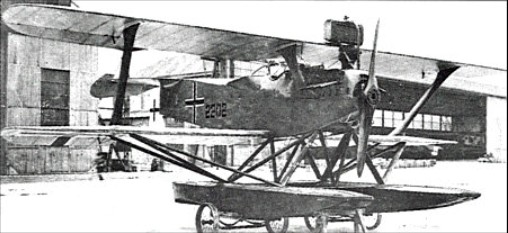
The last of the Heinkel-designed single-seat fighter float seaplanes built by the Hansa- und Brandenburgische Flugzeug-Werke, the W.25, produced as a single prototype late in 1917, was the final development of the KDW. Reverting to the 150hp Benz Bz III engine used by the prototype and pre-production KDWs, the W.25 possessed an essentially similar fuselage, but discarded the “star” interplane strut arrangement in favour of normal strut bracing. Initially the prototype flew with ailerons on the upper wing only, but these were subsequently added to the lower wing, each pair being joined at the wingtip.by link struts. Armament comprised two synchronised 7.92mm LMG 08/15 machine guns. Having by this time lost interest in single-seat fighter floatplanes, the German Navy did not foster further development of the W.25.

Max take-off weight: 1182 kg / 2606 lb
Empty weight: 918 kg / 2024 lb
Wingspan: 10.40 m / 34 ft 1 in
Length: 8.80 m / 29 ft 10 in
Height: 3.45 m / 11 ft 4 in
Wing area: 36.53 sq.m / 393.21 sq ft
Max. speed: 160 km/h / 99 mph