Heinkel He 52

Heinkel He-52B

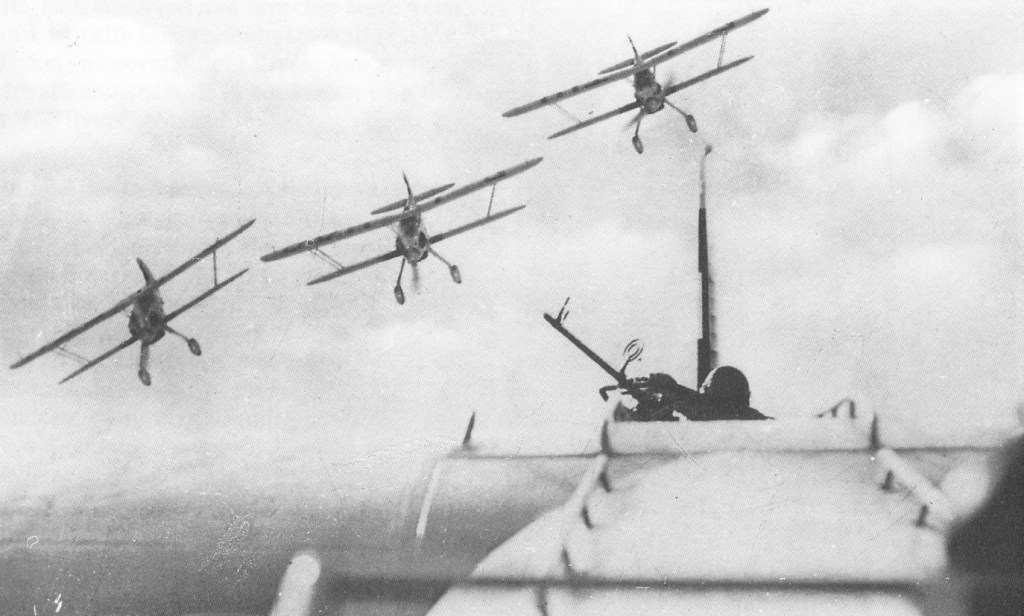
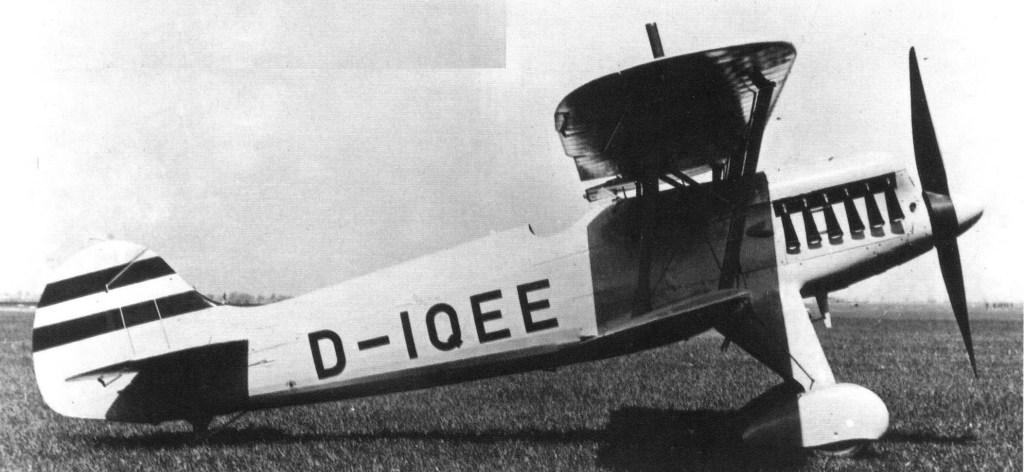
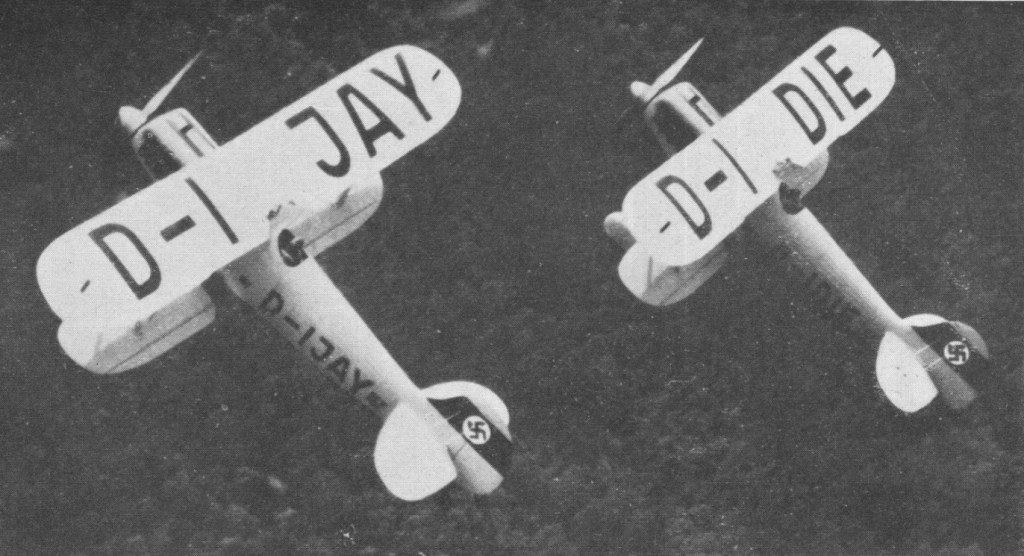
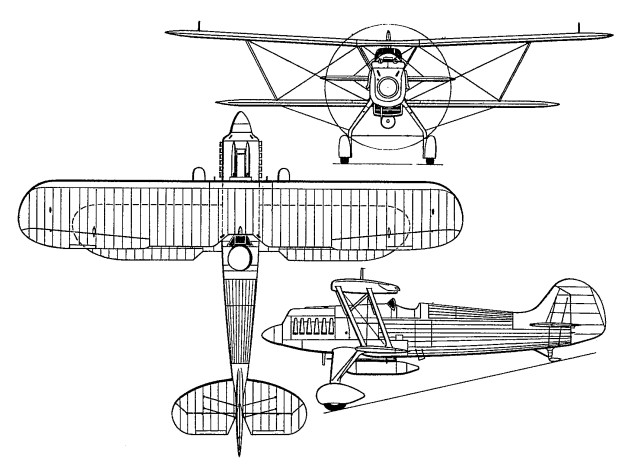
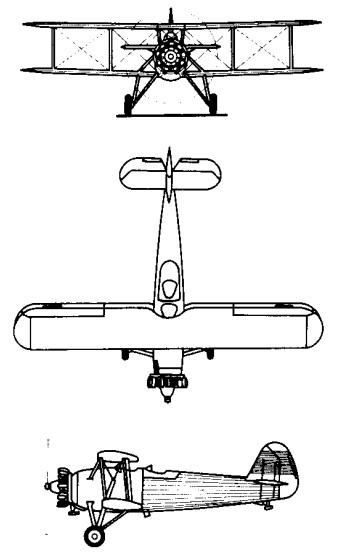
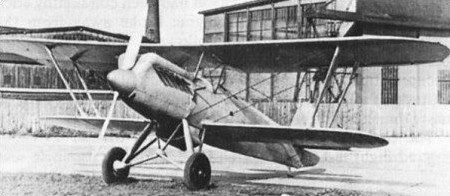
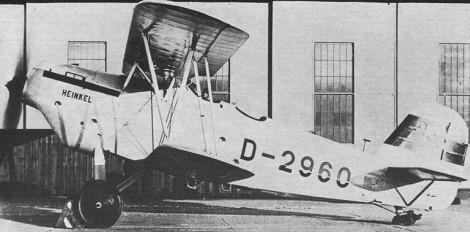
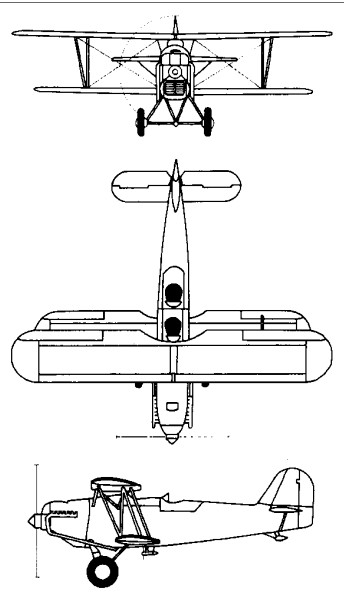
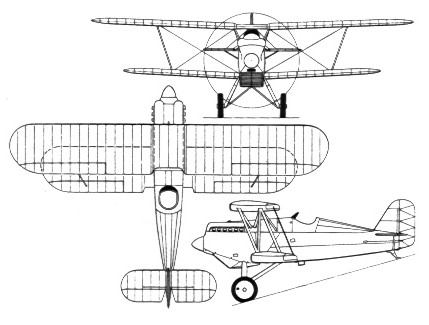
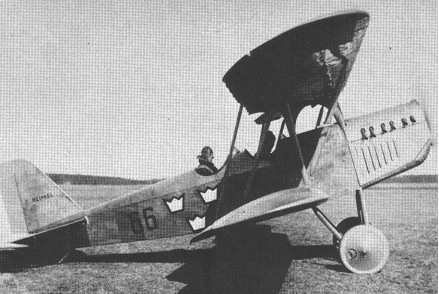
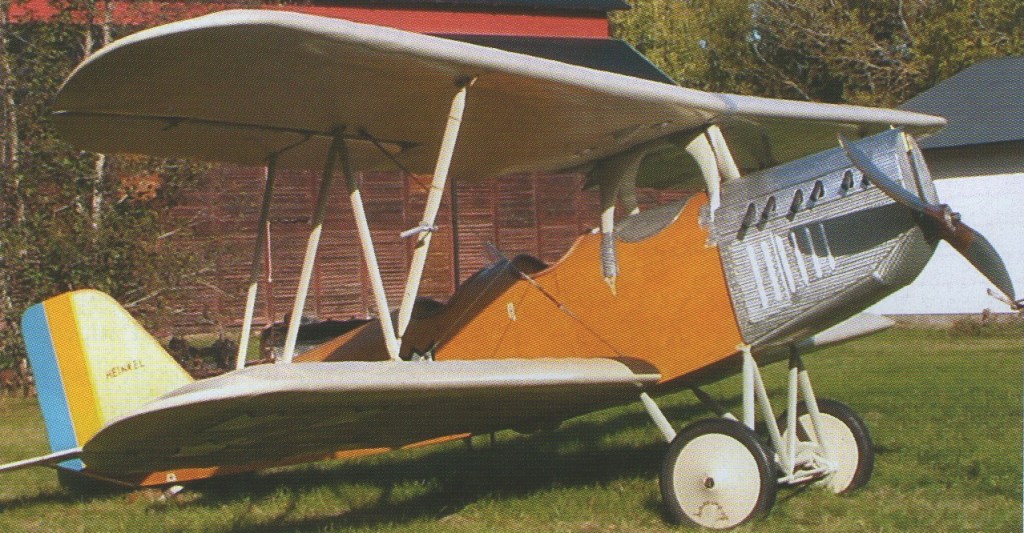
A prewar development of the He 51 design was the He 52, which evolved from earlier experiments with a single He 51B 3. This had larger span wings, and was intended for high-altitude flying. Two prototypes were built and test flown: the He 52B landplane and the He 52D floatplane. There was no series production of this type, and the proposed He 52E high altitude fighter remained no more than a project.

Heinkel He 51

The He 51 originated from three prototype He 49 biplanes designed by Walter and Siegfried Gunter. Although unarmed, there could be no doubt that the He 49a, a small machine with a 750 hp BMW VI engine, had basic fighter potential, with a top speed of approximately 320 km/h (200 mph).
The high performance of all these aircraft during tests prompted a fourth prototype, refined even further and lighter in weight by Walter and Siegfried Gunter, and this received the new designation He 51a. It was a single seat open cockpit fighter, retaining the same powerplant as the He 49 and of an all metal framework with a mainly fabric covering. Armament comprised two 7.9 mm (0.311 in) MG 17 machine guns in a fairing over the engine, firing through the disc of the two blade propeller. Its potential so impressed the German air ministry that an initial order for ten pre-production aircraft was placed before the end of 1933.
The He 51 was of unequal-span single-bay biplane configuration. The single seat for the pilot was in a cockpit just aft of the wings, and a cut-out in the centre-section of the upper wing was made to enhance the pilot’s field of view. Power plant comprised a BMW 12-cylinder in-line engine, and adoption of a minimum cowled section provided a bluff, square look to the fuselage nose. Wheel landing gear of the He 51A was neat and functional, that of the He 51B clean for a float installation.

The first of nine He 51A 0 pre-production fighters flew in May 1934. These were followed from April 1935 by the He 51A 1 initial production model, which in mid 1935 formed the first He 51 unit of the new Luftwaffe, I/JG 132 ‘Richthofen’. A total of 150 A 1s were built for squadron service (75 each by Heinkel and Arado).

He 51A-0 pre-war

In January 1935 the structurally improved He 51B 0 appeared, of which 12 were built for pre-production trials. They had a more robust wheeled landing gear and were able to carry a 170 litre (37 Imp gal) auxiliary drop-¬tank under the fuselage. From 1936 the similar He 51B-1 with a jettisonable ventral tank 450 including 46 He 51B-2 floatplanes), and the He 51C ground-attack fighter 79 C-1 and 21 C-2 variants with improved radio).

He.51A-0

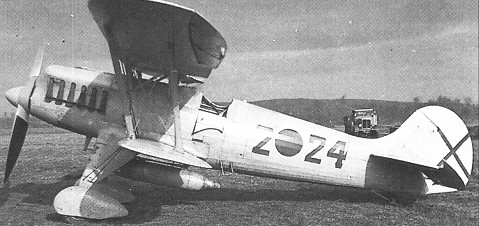
As early as 6 August 1936 an initial batch of six He 5lBs arrived by sea at Cadiz, Spain, and eventually some 135 such aircraft were delivered to Spain for use by German ‘volunteer’ pilots, Nationalist pilots and finally by the Legion Condor, created in November 1936 as the parent organisation for German air assets in Spain, including Jagdgruppe 88 with two He 51 B Staffeln. By Au¬gust 12, the Heinkels were flying from Seville with German pilots, and by Au¬gust 18, with Spaniards as well. When German air components in Spain were consoli¬dated as the Condor Legion in Novem¬ber 1936, the Heinkel He 51B fighters were formed into JagdIgruppe 88, in four StaffeIn, each with 12 aircraft: 1st Staffel (Marabou Stork); 2nd Staffel (Top Hat); 3rd Staffel (Mickey Mouse); 4th Staffel (Ace of Spades). The German fighter was successful against the miscellany of mainly French fighters flown by the Republicans in 1936 and early 1937, but during 1937 was steadily outclassed by the 1-15 and 1-16 fighters supplied by the USSR. Thereafter the He 51 B was relegated to ground-attack with the Germans and the Nationalists’ 1-G-2 and 4-G-2. Messerschmitt Bf 109s gradually replaced the He 51Bs in Jagdgruppe 88; the Germans sent the withdrawn aircraft to Nationalist squadrons who formed Attack Group 1G2 (Squadrons 1E2 and 2E2).
By June 1938, the few surviving Heinkels were combined with newly arrived He 51C 1s (which could carry 200 kilograms of bombs) in Attack Group 4G2, which served until the war’s end.
A further 100 were ordered from Fieseler, adapted to carry six 10 kg (22 lb) bombs. Designated He 51C 1 (79 built) and C 2 (21 built) they suffered some loss of performance due to the extra weight and drag of the bombload, but continued to show an ability to take considerable punishment in combat. The Luftwaffe also switched its He 51s to the ground attack role during the late stages of their service life, arming them with four or six small fragmentation bombs. From 1937 onwards, these aircraft were used to develop ground attack tactics which were later em¬ployed by the Luftwaffe during the Second World War. Some He 51s, mainly the land¬plane versions, served into the war years as fighter trainers, but were finally phased out during 1942 43.

Considerably hotter than types the still undercover Luftwaffe pilots were used to, the He 51 was never overly successful, its service career being cut short due to combat experience gained in Spain and by the appearance of Arado’s Ar 68. Kustenjagdstaffeln, coastal defence fighter units, began taking delivery of float equipped He 51B 2s in 1936.

A total of 725 were built.

He 51A-0

He 51A-1

He 51B-1
Engine: 1 x BMWVI 7.3Z, 559kW (750 hp).
Span: 11m (36ft 1 in)
Length: 8.4m (27 ft 6.75 in)
Height: 3.20 m / 10 ft 6 in
Wing area: 27.20 sq.m / 292.78 sq ft
Max T/O weight: 1900 kg (4,189 lb)
Empty weight: 1460 kg / 3219 lb
Max speed: 205 mph / 330 km/h at sea level.
Operational range: 354 miles / 570 km
Ceiling: 7700 m / 25250 ft
Armament: 2 x 7.92-mm (0.312-in) mg, up to 6×10-kg (22-lb) bombs external
Crew: 1

He 51B-2

He 51C

He 51C-1

He 51C-2

He 51

Heinkel He 50 / He 66

Wishing to contend in early 1931 for an Imperial Japanese navy requirement for a two-seat carrier-based dive bomber, Aichi requested Heinkel to design and build an aircraft to meet the navy’s specification.
Required for operation with float or wheel landing gear, the resulting Heinkel He 50 prototype He 50aW flew for the first time in mid 1931, powered by a 390 hp Junkers L 5 engine. It had a twin float undercarriage and was designed to meet the naval requirement for a marine aircraft with a 250-¬500kg (550 1100 lb) bombload capacity. A second version was built with wheel landing gear.
The Japanese requirement was pursued through the modified He 50b prototype. This went to Japan in early 1933 (with the ‘export’ designation He 66), where it entered production as the Aichi D1A, of which 590 were built between 1936 40.

The He 50 was a two seat biplane of sturdy construction, but the Junkers engine was not nearly powerful enough, and the second prototype was fitted with a Siemens Bramo 322B (Bristol Jupiter VI) 490 hp powerplant. This aircraft had a wheeled undercarriage which could, however, readily be replaced by floats. Designated He 50aL, it was delivered to the military aircraft test centre at Rechlin, where it was considered to be underpowered, and three more He 50aL prototypes, fitted with uncowled 600 hp BMW SAM 22B nine cylinder radial engines, were completed in mid 1932.

After demonstration to the RVM (predecessor to the RLM, or German aviation ministry) a production order for 25 He 50As was placed for the Luftwafre. This total was later increased to 60, the second batch of 35 being built by Bayerische Flugzeugwerke (BFW). They were armed with a single, fixed 7.9 mm (0. 311 in) MG 17 machine gun operated by the pilot, with a movable MG 15 gun on a ring in the rear cockpit. The Luftwaffe aircraft were employed as trainers, although during 1935 36 they were flown as single seater dive bombers.

Two batches of He 66s were ordered from Heinkel by China: 12 similar to the He 50b, and 12 patterned on the He 50A. Only the former batch were delivered, the latter being requisitioned and put into Luftwaffe service as He 50Bs.

Luftwaffe He 50A remained operational on the Eastern Front until 1944. Maximum level speed was 235km/h and armament comprised one forward-firing 7.9mm MG 17 or one rear-mounted MG 15 machine-gun (dive-bomber and reconnaissance types respectively), plus up to 500kg of bombs.

He-50
Engine: 1 x Bramo SAM 322, 440kW
Max take-off weight: 2620 kg / 5776 lb
Empty weight: 1756 kg / 3871 lb
Wingspan: 11.5 m / 37 ft 9 in
Length: 9.6 m / 31 ft 6 in
Height: 4.4 m / 14 ft 5 in
Wing area: 34.8 sq.m / 374.58 sq ft
Max. speed: 235 km/h / 146 mph
Cruise speed: 190 km/h / 118 mph
Range w/max.fuel: 600 km / 373 miles
Armament: 1 machine-gun
Crew: 1-2

He 50A 2 landplane
Span: 11.5 m (37 ft 8.75 in)
Length: 9.6 m (31 ft 6 in)
Gross weight: 2620 k (5775 lb)
Maximum speed: 235 km/h (146 mph).

He 50

Heinkel He 49

The He 51 originated from three prototype He 49 biplanes designed by Walter and Siegfried Gunter. Although unarmed, the He 49a, a small machine with a 750 hp BMW VI engine, had basic fighter potential, with a top speed of approximately 320 km/h (200 mph). The He 49a flew for the first time in November 1932; the second prototype, the He 49b, flew in February 1933 and had a fuselage 40 cm (15.7 in) longer, and was later converted to twin float configuration; a third prototype, the He 49c, had a wheeled undercarriage with leg and wheel fairings.
The high performance of all these aircraft during tests prompted a fourth prototype, refined even further and lighter in weight, and this received the new designation He 51a.

He 49b
Crew: 1
Engine: 1 x 690hp BMW VI 6,0
Max take-off weight: 1950 kg / 4299 lb
Wingspan: 11.00 m / 36 ft 1 in
Length: 8.24 m / 27 ft 0 in
Height: 3.50 m / 12 ft 6 in
Wing area: 27.70sq.m / 298.16 sq ft
Max. speed: 325 km/h / 202 mph
Cruise speed: 285 km/h / 177 mph
Rate of climb: 606 m/min / 2000 ft/min
Armament: 2 x 7.9mm machine-guns

Heinkel He 45 / Heinkel He 61

He 45B-2

By 1931 the German aircraft industry had become less secretive in referring to its potential military designs as ‘training’ or ‘sporting’ aircraft. The He 45 was one of the first post 1919 aircraft to be built openly and specifically for military use. Following the basic Heinkel biplane design the prototype, designated He 45A (D-2477), flew for the first time in spring 1932, with a 600 hp BMW VI engine driving a two blade wooden propeller. It was unarmed, but sufficiently powerful to carry armament and a bombload. Sturdily constructed, the He 45 had twin tandem cockpits and was well suited for training duties. The second prototype was fitted with a four blade propeller, and production of the A series began in 1932. These unarmed aircraft had 660 hp engines and were used as trainers.
A third prototype developed into the armed He 45B series, which had one movable MG 15 7.9 mm (0.311 in) machine gun and one fixed 7.9 mm MG 17 and could carry a 200 kg (440 1b) bombload.
Many different versions were produced, including at least 11 testbeds. Structurally all were similar, using the contemporary mixed wood and metal framework, which was fabric covered. Ailerons were fitted on both upper and lower wings.
Total production was 512 aircraft, although Heinkel produced only 69 of these, including prototypes. The remainder were built under licence: by Focke Wulf (159 A 1 and A 2 series and 60 He 4513 1/13 2s); 126 AA/A 2s and 30 W1/B 2s by the Bayerische Flugzeug¬werke (BFW); and Gotha built 68 of the C series. Heinkel’s own somewhat smaller production total included many aircraft used only for test purposes, including trials with various BMW powerplants and the Daimler-Benz DB 600. In addition, a small export batch of He 45Bs was built for China, which had the separate designation He 61.
Although not a very noteworthy aeroplane in itself, the He 45 was in service in greater numbers than any other Luftwaffe type by 1936, and greatly assisted the development of the Luftwalle as a fighting force. Production totalled 512 aircraft. It also formed the basis of later and better known designs from the Heinkel company. The He 45C partially equipped Aufklarungsstallel A/88, the reconnaissance element of the German manned Legion Kondor in the Spanish Civil War, and 40 were delivered to a close support group of the rebel Spanish Nationalist air force, by whom it was nick-named Pavo (turkey). Only 21 remained in Luftwaffe service at the start of the Second World War, on reconnaissance or training duties, though temporary use was made of some in 1942 43 as night ‘nuisance’ raiders on the Russian Front.

He-45B
Engine: 1 x BMW-VI-J32, 550kW
Max take-off weight: 2745 kg / 6052 lb
Empty weight: 2105 kg / 4641 lb
Wingspan: 11.5/10.0 m / 37 ft 9 in / 32 ft 10 in
Length: 10.0 m / 32 ft 10 in
Height: 3.6 m / 11 ft 10 in
Wing area: 34.6 sq.m / 372.43 sq ft
Max. speed: 290 km/h / 180 mph
Cruise speed: 230 km/h / 143 mph
Ceiling: 5500 m / 18050 ft
Range w/max.fuel: 1200 km / 746 miles
Armament: 2 x 7.9mm machine-guns
Crew: 2

He 45B-2
Engine: BMW V1, 750 hp / 559kW

He45C
Span: 11.5 m
Length: 10 m
Gross weight: 2745 kg
Maximum speed: 290 kh

He 45

Heinkel HD 15 / HD 55 / KR.1

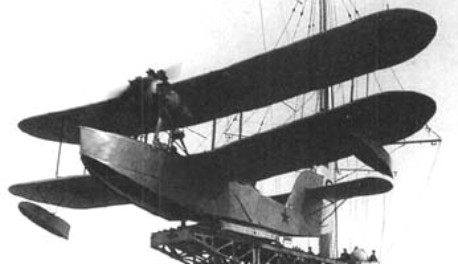
In the second-half of the 20’s the Soviets decided to acquire an aircraft carrier. Realising that experience of design of catapults nor suitable aircraft was in the country, thel VVS turned to the German firm Ernst Heinkel.

On May 10, 1929. UVVS, which was hidden under the mask of foreign trade association “metal-import”, concluded with the Heinkel the official agreement about the acquisition of two catapults of the type K -3 and six flying boats HD.55. The pneumatic catapult K -3 could launch aircraft with a weight of up to 3,5 t to the speed of 130 km/h. Under its possibilities was designed the HD.55.

The prototype for the HD.55 became the HD.15, built 1927 to order of the German ministry of transport. Officially it was considered as the prototype of the post aircraft from transatlantic liners for accelerating the delivery of mail.

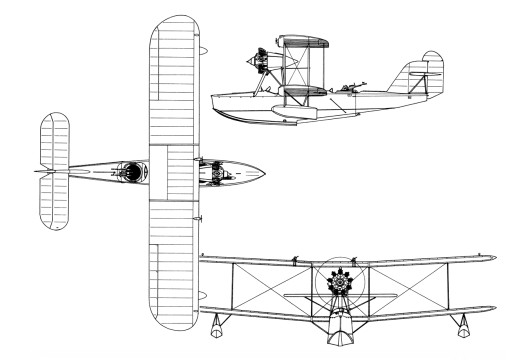
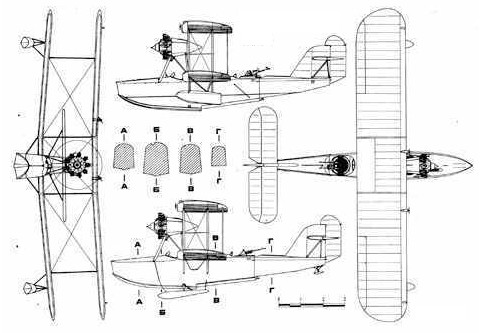
The preliminary design of new machine was carried out in several weeks and the HD.55 preserved the layout of its predecessor. A flying boat- biplane, built of wood. Wing and tail assembly were fabric covered. The HD.55 wingspan was increased in comparison to the HD.15. The upper and lower the wings were the same span – in HD.15 lower was shorter. Lengthening occurred due to the introduction to central horizontal section, to this transverse “V” began immediately from the centre of aircraft. The wings could be boxed during storage aboard the ship, decreasing the overall sizes of machine. Changes were made in the form of stabilizing floats and the outlines of the tail assembly. Horn balancing of the control surfaces were omitted.

The HD.15 was powered by the French gR9Af engine, while the HD.55 had a Siemens Sh20, but they differed little from each other since they were license copies of the Bristol Jupiter VI. The power plant was mounted on a frame of steel tubes, erected above the cockpit. Behind the engine, in a duralumin fairing, the oil tank and accessories was located.

The HD.15 did not have armament, but the HD 55 had two weapon emplacements: fixed machine gun from the front and ring mount (with the single or coaxial machine gun) after the wing. On the request of Soviets the Germans provided for ski landing gear, Heinkel did not provide the skis themselves.

After the visit to Germany by a Soviet delegation on September 28, 1929 it was decided to increase the order to 20 aircraft. Based on this, on October 11 they signed additional contract to 14 more boats. A large series cost somewhat less. Taking into account rigid delivery times and high quality requirements for weight, Soviet examiners checked the quality of each screw and rivet.

Nevertheless, the first aircraft proved to be on 15- 20 kg heavier than planned, and each excess kilogram was cost a penalty. Heinkel with the company began to develop the methods to deceive examiners. As Ernst Heinkel described the methods “For the first time we placed limiter inside the dial of weights. Finally, one young person, who with the aid of the underground lever by foot regulated weight…”.

On February 19, 1930, the first HD.55 was accepted. On July 25 five aircraft were shipped by steamship. At the beginning of autumn the aircraft arrived in the dismantled form to storage. In Leningrad the machines again subjected to thorough control. There were problems – the boats leaked, instruments malfunctions appeared, the control cables were entangled on several aircraft. They fixed 61 defects. Since to Germans did not in time send ring mount, the cameras and radio stations, the aircraft were collected without them. The machines were divided between the Baltic and Black Sea fleets.

On October 8 1930 installation of the catapult in the battleship “Commune of Paris” was finished and trials started, but the 12th and the third start the catapult was broken. All the remaining HD.55, even those that they were based on ships, took off from the water. On October 14 a taxiing the aircraft of Black Sea cruiser “Profintern (Red Trade Union International)” – pilot Chernukha damaged a left wing with a ladder.

In the Baltic region all HD.55 moved to Oranienbaume, in the Black sea to form the components of carrier-based aviation. Already cracks of bottoms and boards, and leaky fuel tanks appeared. In the Black sea in the n366 broke a propellor in air (a similar case occured during the acceptance tests in Germany). It became soon clear that declared data did not always correspond to those of the aircraft (which is not surprising with such tricks with the weight). On September 4 it was reported to Heinkel that there was no intention to buy more HD.55s.

The catapult on the “Commune of Paris” was repaired with a number of improvements and on February 17, 1931, four controled takeoffs were made. It was piloted by Ganulich, the second crew member was aircraft observer Valtonen.

In the Black sea modifications conducted at plant n45 in Sevastopol, to the HD.55, brought a redesignation to name KR-1 (shipborne reconnaissance aircraft – the first). On February 2, 1931 they there confirmed as the standard model, and plans were made to alter all machines. From the front on the brackets was a machine gun [with the ammunition box the same as the MR-1 aircraft.

It was a version 1924 Vickers machine gun, but the alteration of ammunition box, link collector and case ejection chute was required. The trigger button was located on the steering control, descent was accomplished with the aid of the cable. However, recharging occurred entirely simply – the lock of machine gun left into the cab. Pilot took aim through the simple annular folding sight.

Under the ring mount it was necessary to place 30 mm of wood so that it would move freely, so that the visor of rear cab it would not prevent rotation. It was moved forward by 60 mm. They altered the pilots visor.

Six bombs of 32 kg could be carried under the wings for dealing with submarines with an AP-2 bomb-sight.
The n45 plant altered three machines during February, the rest, which needed minor repair and strengthening it was decided to modernize on the completion of repair.

In spring 1931 for the first time they tried to place the KR-1 on the skis. On skis they made three flights with high crosswind, on the third landing they broke the right ski. They considered, that it is necessary to strengthen fastenings and to widen track of landing gear.

The new set of skis for KR -1 entered the tests in January 1932. Complete ski set weighed 93 kg, tested in January – February at Oranienbaume. Pilot Patsynko completed three tests, and then 14 additional successful flights. The new skis were accepted to the operation.

But it was in practice they proved to be weak, – the carburetors broke off from the shaking and the impacts. The plant n28 made one additional version of skis – with the rubber buffers. These skis began to enter in winter 1932 – 1933. In September 1932. on KR-1 tested the domestic propellers of the plant n28. These propellors not only proved to be more durable and more reliable than the original, but also they gave acceleration: one and the same aircraft began to develop 186 km/h instead of 173 km/h. Rate of climb deteriorated – the gain of altitude of 1000 m, took 3 min 10, instead of 2 min 30 s.

In autumn 1931 there was a rapid loss of combat efficiency in the KR-1. The construction of the lower wing led to water stagnation in it. Hence – swelling and the splitting of the structural assembly, the stratification of plywood, and mould. In January 1932 a verified state all KR -1 in the Baltic region revealed the cross cracks of bottoms, longitudinal cracks on the boards, warping of partitions, crack of screws and leak of fuel tanks. Furthermore, was revealed the weakness of the structural assembly of the deck of boat.

Repairs involved bleed holes bored in the wing, replacing part of the skin, glued ribs, and new varnish. All this charged to Heinkel, since the operational reliability was in detail in the agreement.

By this time in VVS had 19 KR-1. From them 12 were located in the Baltic region, 6 in the Black sea and one in OHM NII (Scientific Research Institute) VVS.

Already obsolete, there was no replacement to it in the Soviet fleet. To support the operational state of these wooden biplanes components were manufactured on the spot, and only the oil radiators and bakelite units were bought in Germany. Eroded Siemen engines were gradually replaced with domestic M-22 engines. The license for the M-22 was purchased not directly but from Gnome-Rhone. Soviet motors were the same power at 480 hp, but they were somewhat heavier than German.

They completed their last flights in 1938.

In June 1941 two or four) KR -1 were still stocked with the Black Sea fleet. According to German data, it was released by 41 HD.55. Different sources determine a quantity of those purchased by the USSR into 28, 30 and even 40 copies. These numbers are completely refuted.

Construction

The HD-55 flying boat was of completely wooden construction. Metal was used only in the fastenings, and the engine cowling was made of duralumin. The structural assembly of the fuselage was ashen stringers. Plywood skin varied from 2,5 to 6 mm, assembled with wood screws and nails. The entire external surface of boat had water-resistant varnish. The HD-55 had two-planing-steps.

To provide the possibility of takeoff and landing from the snow-covered surface in the housing before the first step were special links, through which passed fastens for basic skis to the tail section – load-bearing elements under the tail skid.

The navigation equipment made it possible to carry out flights at night, and in the adverse weather conditions.

The pilot’s seat was in the front open cockpit, and in the aft fuselage section was an open cockpit for the aircraft observer, whose seat could be removed to the starboard to fire the machine gun

Upper and lower the wings were of two-spar construction and cable braced. Upper wing consisted of center section and two removable panels, which could be removed for storage of the aircraft. The second longeron was equipped with rotary hinge.

Lower wing had analogous construction with the wing folding upward. Longerons are box, with pine and birch plywood. The wing ribs were pine and walls from plywood, and also several pairs of internal braces. Leading edge (to the first longeron) was faced by plywood, the rest with fabric. The center section had completely plywood covering on the leading edge of upper wing where generators (basic and reserve) were located.
To the lower wing were fastened the additional floats, which ensured stability on the water. With the installation of skis, the floats were removed and in their place were protective arcs.

The tail assembly was a semicantilever with fabric covering. The angle of stabilizer setting could be changed in flight with the aid of the coil- hoist from the cockpit.

Aircraft was equipped with the German engine “Siemens” Sh20 (by license copy of English “Jupiter” V1). Gradually on all KR -1 engines were replaced by the domestic M-22. Power plant was mounted on the frame from the steel tubes above the cockpit between the upper and lower wing. Behind the engine was a duralumin fairing, which held oil tank and fuel automation.

Propeller – wooden, two-bladed. Initially of German production, and since 1932 on KR -1 they began to use domestic propellors.

The armament of aircraft consisted of three machine guns. One machine gun PV-1 with 200 cartridges was before the cockpit position. With the aircraft observer was a ring mount “stage -5” or “stage -6” with the coaxial machine gun 500 cartridges.

HD.55
Engine, Siemens Sh.20, 480 hp
Wingspan, 14.00 m
Length, 10.35 m
Height, 4.28 m
Wing area, 56.90 sq.m
Empty weight, 1520 kg
Maximum takeoff weight, 2270 kg
Maximum speed, 194 km/h
Cruising speed, 175 km/h
Service range, 800 km
Service ceiling, 4800 m
Crew, 2
Armament: 2 machine gun
Heinkel HD.37

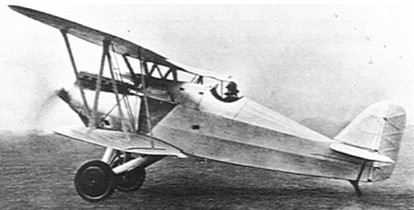
The first prototype HD-37a flew for the first time in April 1928. The HD-37 was rejected by the air force but as a transition before the availability of the Polikarpov I-5 the Soviet Union bought some HD-37c as sample and acquired the manufacturing license. The Soviet license version was called Polikarpov I-7. The I-7 was produced in Factory No.1 at Moscow.

Versions:
HD-37a: first prototype
HD-37c: Version for the Soviet Union with BMW a VIz engine with 537 kW (730 hp) and tail unit surfaces increased; Basis of the license version Polikarpow I-7
Polikarpov I-7 with a M-17F (license version BMW VI engine) with 526 kW (715 hp)

HD-37c
Engine: a V-12-Reihenmotor BMW Viz, 537 kW (730 hp)
Maximum speed 312 km/h
Service ceiling 8,600 m
Range 700 km
Empty weight 1,267 kg
Max. takeoff weight 1,685 kg
Span 10.00 m
Length 7.00 m
Wing area 26.71 sq.m
Armament: two machine guns

Polikarpov I-7
Engine: M-17F, 526 kW (715 hp)

Heinkel HD.35

One HD.35 was delivered to ther Swedish Army Aviation Service in August 1929 for evaluation as a primary trainer, designated Sk.5. It did not satisfy the requirements and further purchases did not follow. The sole copy of the Sk.5 went in 1926 to the flying military school F5 in Lyungbikhede, where it became the personal aircraft of pilot Arvid Flory. In the summer of 1929, it was sold into private hands. It continued to fly until 1940 with the new registration code SE-SAM.
Now this aircraft is located in a museum in Stockholm.

Engine 1 Mercedes D.II, 120 hp
Wingspan 10.97 m
Length, 7.40 m
Height, 3.10 m
Wing area, 32.40 sq.m
Empty weight 760 kg
Normal takeoff weight 1060 kg
Maximum speed, 138 km/h
Cruising speed, 120 km/h
Service range, 250 km
Climb rate, 108 m/min
Service ceiling, 3300 m
Passenger cap: 2
Crew: 1