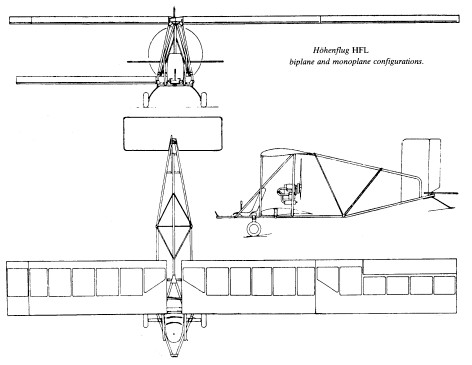
Höhenflug HFL

Single seat single engined high wing monoplane or biplane with conventional three axis control. Wing has unswept leading and trailing edges, and constant chord; conventional tail. Pitch control by fully flying tail; yaw control by fin mounted rudder; roll control by ailerons; control inputs through stick for pitch/roll and pedals for yaw. Cantilever wing; wing profile Worthmann FX63 137; double-surface. Undercarriage has two wheels side-by side with tailskid; suspension on both wheels. No ground steering. No brakes. Aluminium tube framework, without pod. Engine driving pusher propeller. Wings made from carbon fibre and unidirectional glass fibre.
This single seater is unusual in that it can be used either as a monoplane or a biplane. Its wing is in effect made up of four half wings, of which two form a high wing attached to the top of the tubular framework. The remaining two wings can either be joined to those of the top wing in a monoplane configuration or fitted to the bottom of the framework to make a biplane. These two ‘wandering’ wings are fitted with ailerons. As the four wing elements are of equal span, chord and area and the framework is wider at the bottom than the top, the biplane thus produced has a lower wing of greater span than the top. To avoid such aerodynamic nonsense, Hohenflug adds two wing tip sections to the upper wing to give it a slightly greater span than the bottom. In either configuration the wings are of cantilever construction with neither rigging wires nor interplane struts.
This Hohenflug bird was announced as due to make its first flights during summer 1983 and no information on its marketing strategy has so far been received. It is also not yet known which motor will be used, but the calculations have been based on a power range of 20 28 hp. The engine is fitted behind the pilot above the lower wing and drives a three blade pusher propeller.

Monoplane
Length overall 16.4 ft, 5.00 m.
Height overall 5.9ft, 1.80m.
Wing span 38.7 ft, 11.80m.
Chord at root 3.6 ft, 1.10m.
Sweepback 0 deg.
Total wing area 140sq.ft, 13sq.m.
Wing aspect ratio 10.74.
Wheel track 3.9 ft, 1.20 m.
Engine: 28hp.
Propeller diameter 45 inch, 1.13 m (three blade).
Power per unit area 0.20 hp/sq.ft
Fuel capacity 5.3 US gal, 4.4 Imp gal, 20.0 litre.
Empty weight 199 lb, 90kg.
Max take off weight 442 lb, 200kg.
Payload 243 lb, 110 kg.
Max wing loading 3.15 lb/sq.ft, 15.4 kg/sq.m.
Max power loading 15.8 lb/hp, 7.1 kg/hp.
Load factors; +4.9, 2.5 ultimate.
Never exceed speed 81 mph, 130 kph.
Max cruising speed 50 mph, 80kph.
Stalling speed 27mph, 43kph.
Max climb rate at sea level 400ft/min, 2.0m/s.
Range at average cruising speed 124 mile, 200 km.
Biplane
Length overall 16.4 ft, 5.00 m.
Height overall 5.9ft, 1.80m.
Wing span 22.6 ft, 6.90m.
Chord at root 3.6ft, 1.10m.
Sweepback 0 degs.
Total wing area 151 sq.ft, 14 sq.m.
Wing aspect ratio 6.311 top wing.
Wheel track 3.9 ft, 1.20 m.
Engine: 28hp.
Propeller diameter 45 inch, 1. 13 m (three blade).
Power per unit area 0.19 hp/sq.ft,
Fuel capacity 5.3 US gal, 4.4 Imp gal, 20.0 litre.
Empty weight 203 lb, 92kg.
Max take off weight 442lb, 200kg.
Payload 239 lb, 108 kg.
Max wing loading 2.92 lb/sq.ft, 14.3 kg/sq.m.
Max power loading 15.8 lb/hp, 7.1 kg/hp.
Load factors; +4.9, 2.5 ultimate.
Never exceed speed 81 mph, 130 kph.
Max cruising speed 50 mph, 80kph.
Stalling speed 27mph, 43kph.
Max climb rate at sea level 400ft/min, 2.0m/s.
Range at average cruising speed 124 mile, 200 km.
Hillson Bi-mono

The company produced the slip-wing Hawker Hurricane I, after first buillding and testing a research aircraft called the Hillson Bi-mono. An expendable slip-wing was mounted above the fuselage in order to obtain more lift for operating out of small fields and to enable the aircraft to take off at greater than normal gross weight. Once airborne, the wing could be released by the pilot.

Hild-Marshonet 1918 biplane

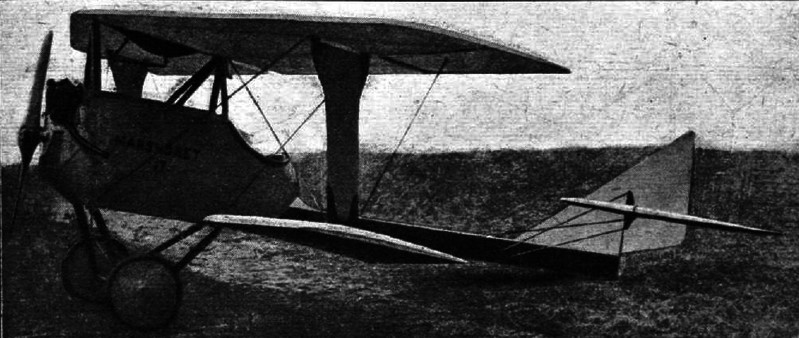
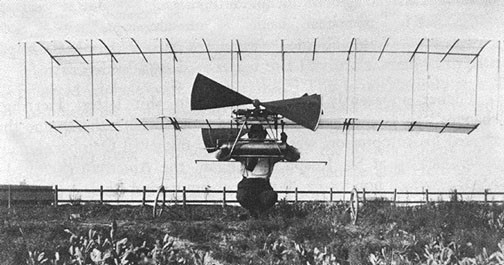
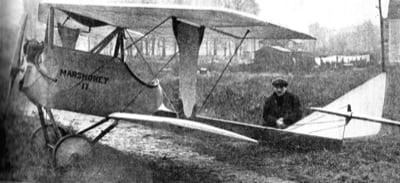
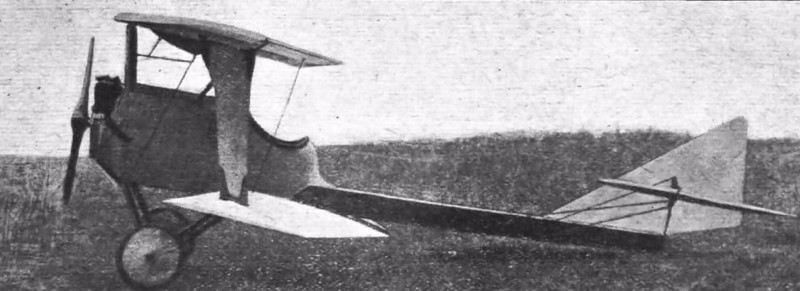
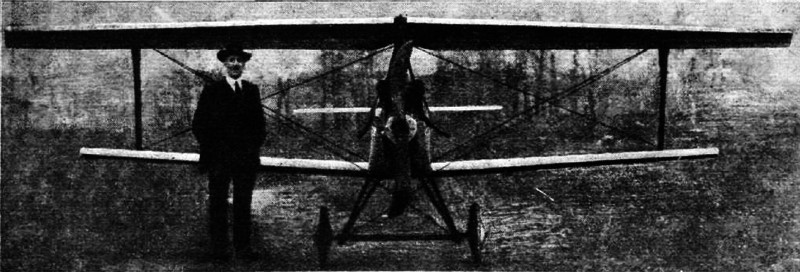
The Hild-Marshonet biplane was designed and built by Frederick Hild and Edward Marshonet of Hempstead, New York, in 1919. It had no fuselage as such, the pilot being seated in a streamlined nacelle. An outrigger of boxed cantilever construction supporting the empennage was attached directly behind the pilot’s seat. It had a single-boom tail and swept back wings.

It was powered by a 20 hp-Spainhour V-twin engine.

The plane could be taken apart in minutes.

Span: 24 ft
Length: 19 ft
Empty weight: 450 lb
Loaded weight: 700 lb
Speed: 65 mph
Price $2,000.

Hettinger 1909 biplane

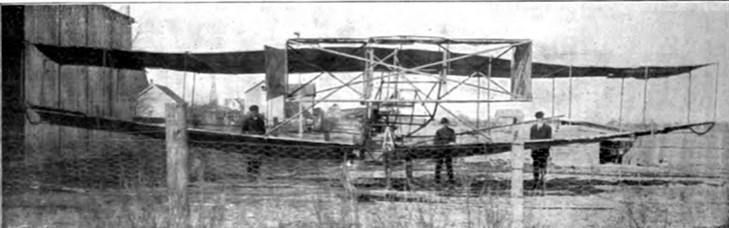
Industrialist Henry Hettinger constructed this airplane, whose fabric-covered wings were sewn by his wife Mary. Hettinger made flights along the Cohansey River meadows, at the fairgrounds on Fayette Street, Bridgeton, New Jersey, and later outfitted the plane with pontoons. The 40 HP six cylinder engine was built by the Hettinger Engine Company.

Herzog Meteor 2nd

The second pusher biplane design built by the Herzog brothers of Harvard, Nebraska, USA, in 1909. It had a span of 48 ft, with a characteristic wavy W-shaped top wing and small horizontal stabilizing surfaces at the tips of the lower wings. The apparently tail-less plane had biplane elevators and rudders at the front, a three-wheel undercarriage and an aircooled engine of 21 hp of unknown make.

Herrmann, Alfred

Alfred Herrmann, pioneer of the Belgian aviation, built the first Belgian two-seater in the Twenties. An all-metal biplane aircraft for hunting and reconnaissance. The plane was constructed under the aegis of Commander Fernand Jacquet, a hero of the First World War, with the help of a handful of mechanics from Ostend and some fishermen in a small workshop in the Zeebrugge harbor.

Herringhausen Vagabund

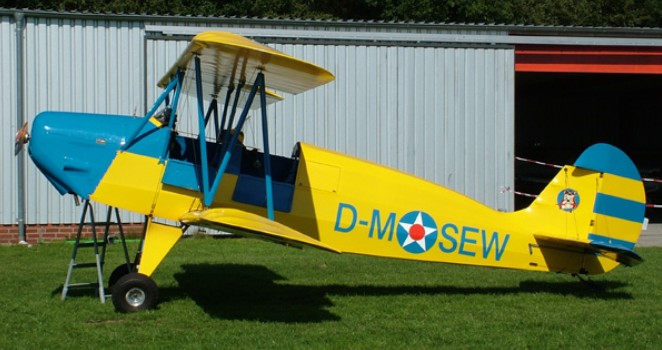
The Vagabund is a 3-axis two-seat ultralight biplane, in classic timber construction. The design of the Vagabund goes back to 1989. The open cockpit biplane is constructed using the usual materials and working procedures for wooden aircraft. The fuselage is conserved with epoxy resin and covered with polyester fabric. A high-quality lacquer finish gives it a maximum weather protection. The open cockpit biplane has a welded tubular steel chassis with one-guidable roll spur. The wooden-propeller is driven by a 80 hp, lightweight four-stroke, horizontally-opposed aircooled Jabiru 2200 engine. As power plant also the 50 hp Nissan Micra 1200 or the 80 hp Rotax 912 UL version engine can be used. The choice of the engine has its influence on the performance of the aircraft: with the Micra 1200 the cruise speed is 125km/h, with the Rotax 912 125 km/h.

Herring-Burgess Model A / Flying Fish

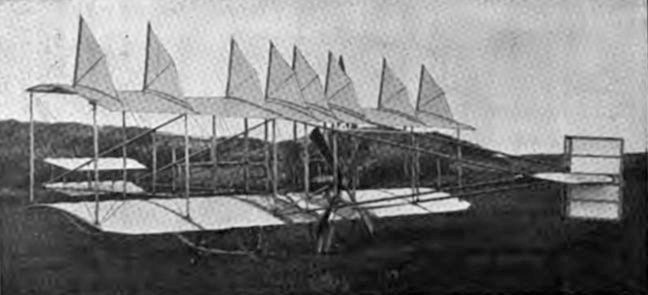
A pusher biplane with a central skid and skids under each wingtip, powered by a Curtiss 25 hp 4-cyl water-cooled engine with a four bladed propeller. Six vertical fins were arranged on the upper wing for lateral stability.

The machine was displayed at the Boston Aerial Exposition on 20-26 February, 1910.

It was first flown on 28 February 1910 by Augustus Herring on the ice at Chebacco Lake, Hamilton, MA.

It was ordered by the carousel and amusement park manufacturer Charles W. Parker of Abilene and Leavenworth Kansas. It was the first of many Burgess aeroplanes, it made the first flight in New England and was the first commercial aeroplane built and sold in New England.

Herring Glider

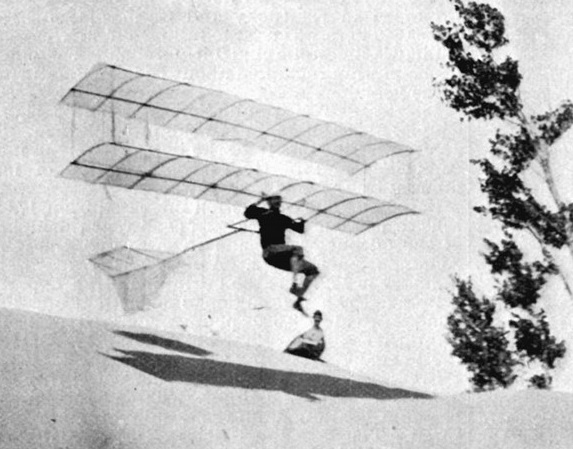
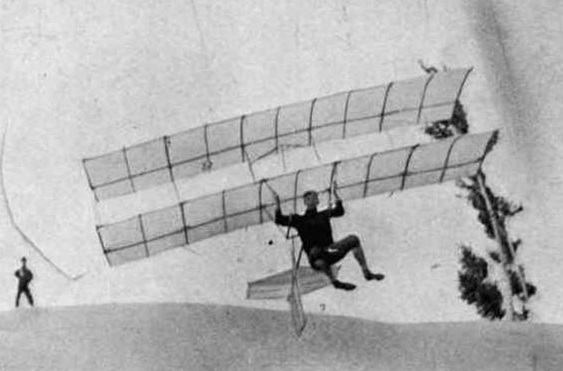
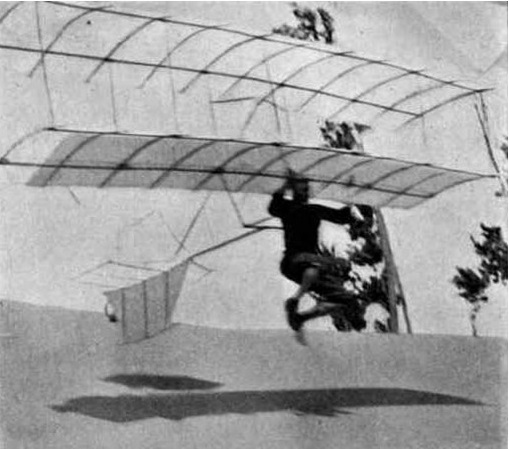
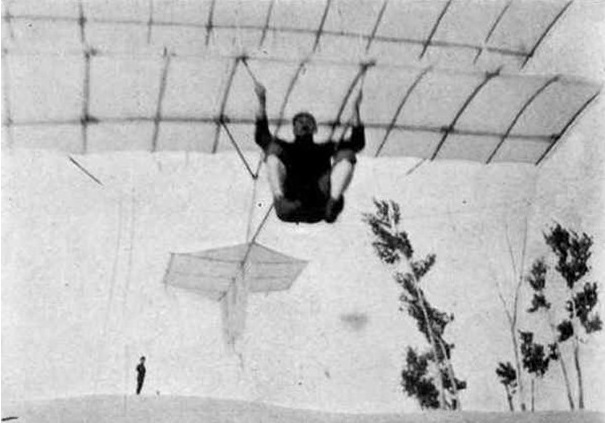
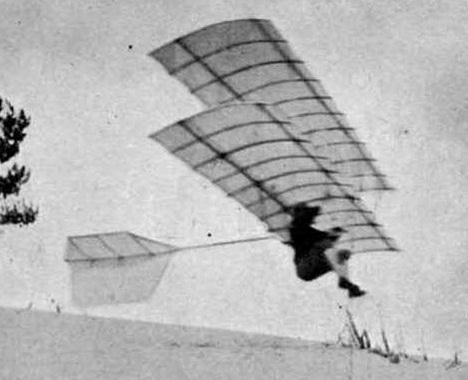
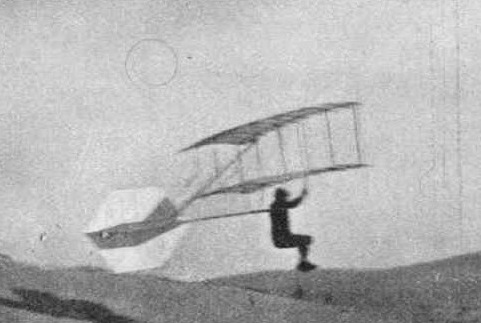
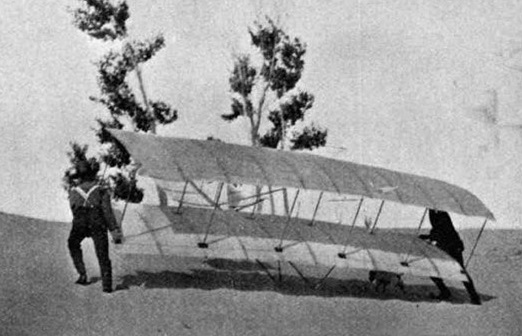
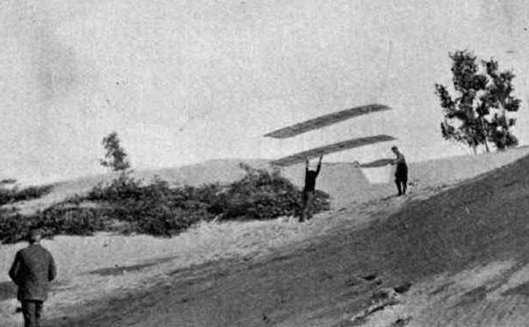
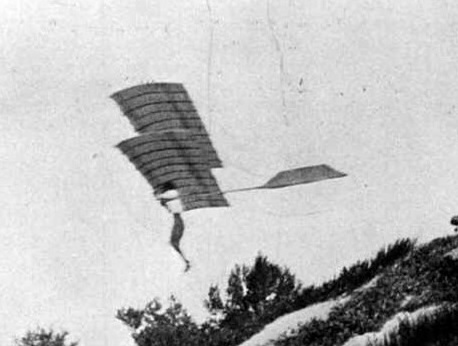
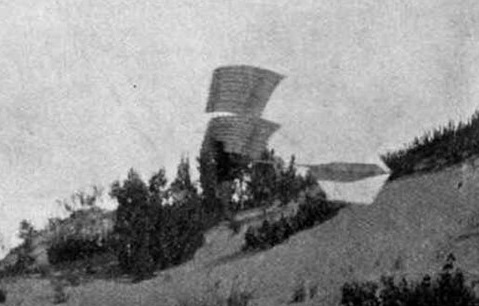
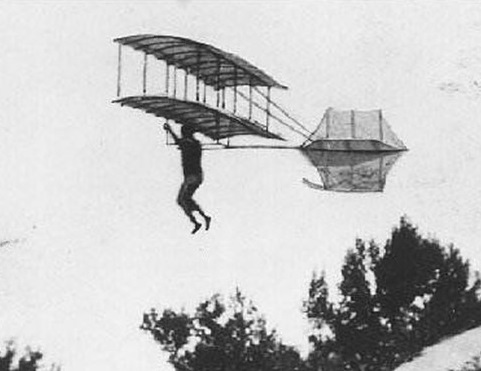
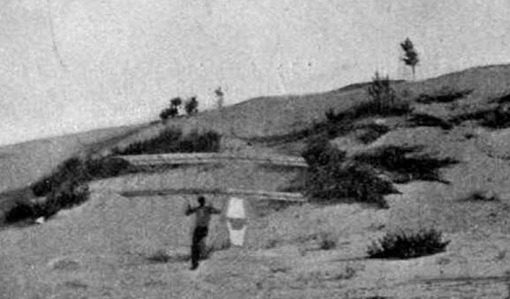
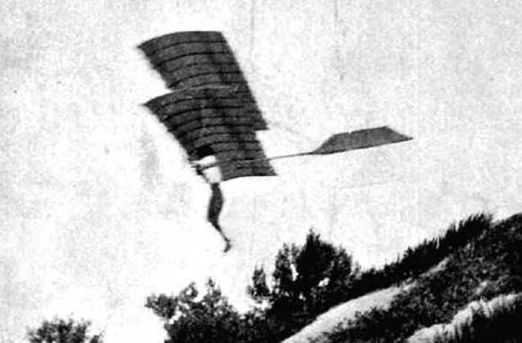
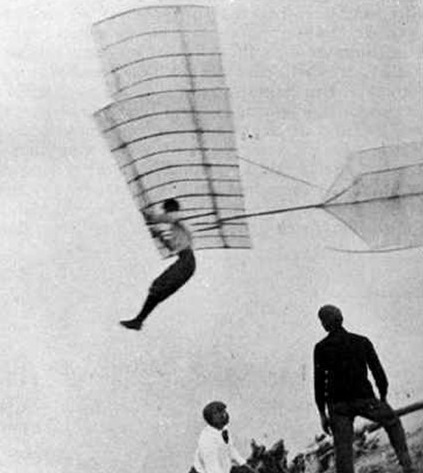
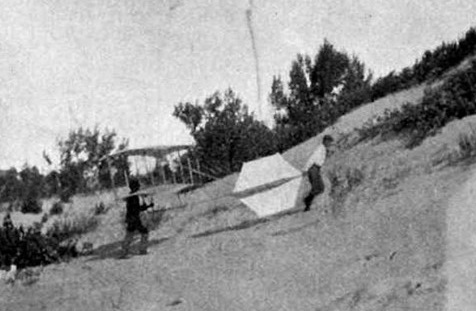
In 1897 Chanute inaugurated experiments with models for the purpose of testing still a third method of obtaining automatic equilibrium, but that these had not proceeded very far. Augustus Herring, having been requested by an amateur to supply him with a gliding machine, had built a new one with his regulating mechanism, and it being tested at Dune Park in September, 1897.

After arriving at the starting point the glider was held with the chord of the surfaces pointed downward at a considerable negative angle in order that the machine should sustain only its own weight, and at the same time the apparatus was directed squarely into the momentary wind so that both sides lifted equally, and, while the machine was thus poised, the operator (in front of the apparatus), released his hold and slipped quickly underneath, passing his arms over the longitudinal bars (called arm bars), beneath the lower surface, at the same time grasping the front pair of diagonal struts which joined these bars to the framing. This done, the whole machine was lowered until the small cross-piece in the rear of the operator rested on his hips or the small of his back. In this position a considerable leverage could be exerted, and with practice even a novice could soon hold the machine under perfect control until the actual start was made down the hill.

Mr. Herring and Mr. Avery, who were the experts who operated this machine at Dune Park, seldom or never struck the ground with greater force than would have been produced by jumping down one or two feet, and even when racing no sprained ankles occurred.

Glide were generally 200 or 300 feet long, and occupied 8 to 14 seconds. The operators generally alternate in taking such flights.

With a wing area of 131 square feet, they had been able to experiment in winds of 31 1/2 miles an hour.

The speed varied all the way from 10 to 40 miles an hour in reference to the ground or from 18 to 57 miles per hour in reference to the air, at the will of the aviator. The running start in a calm consisted of about half a dozen steps; in moderate winds, from two to three; and in high winds (those above 25 miles an hour), it was only necessary to give a slight positive inclination to the surfaces, when the machine and operator were raised high in the air, and then commenced their forward journey against the wind. After reaching a certain point over the hillside (approximately one-third the way down the hill), a sudden decrease in support was generally experienced, due, in all probability, to a mass of slower moving air between the base and top of the hill, as measurement with the anemometer showed very much higher wind at the starting point and at the foot of the hill (or over the level stretch below) than between the two.

The length of flight being on an average 268 feet horizontally in a descent of 42 feet in windy weather, or 254 feet in a calm from the same point.