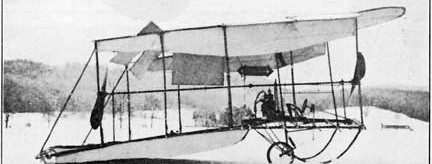
Irwin Meteorplane M-T-2 / SP-1

After the First World War the company built an improved version of the M-T, the M-T-2, powered by a 20 hp Meteor engine. The 1926 M-T-2, or SP-1, was of plywood construction and sold for $1,165.
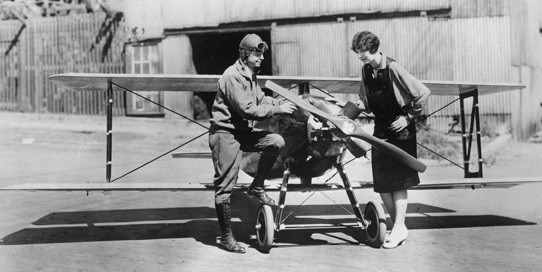
By Irwin’s estimate about 40 were sold, including N2616, plus an unrecorded number sold as kits for $350, including N579M, N3685, and N7788, less motor (the Meteormotor went for $625). One of the world’s first successful small, personal airplanes.

Engine: Irwin Meteormotor, 25hp
Wing span: 14’0″
Length: 12’0″
Useful load: 175 lb
Max speed: 85 mph
Cruise speed: 75 mph
Stall: 24 mph
Range: 200 mi
Seats: 1
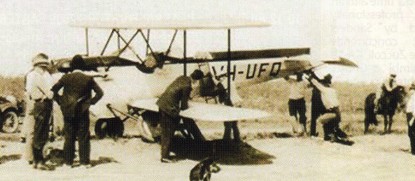
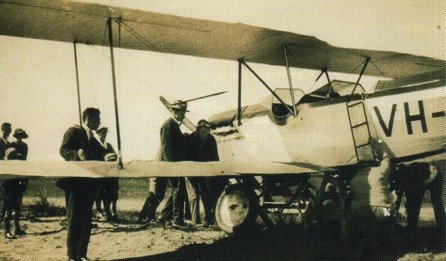
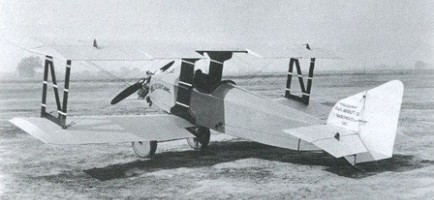
Ireland Meteor / Curtiss-Ireland Meteor

The Ireland Meteor is often refered to as the Curtiss-Ireland Meteor.

The Ireland Meteor, often referred to as the Curtiss-Ireland Meteor, was created by G. Sumner Ireland, who worked as a salesman for the Curtiss company.

With wings in production and the supply of Curtiss Oriole fuselages ended, G. Sunner Ireland created a new fuselage. Seating was for four in tandem open cockpits, each seating two side by side.
The Meteor never received a US Doc Type Certificate.
At least eight Meteors were built.

Engine: OX-5

Ireland Comet

G. S. Ireland founded his company to manufacture an aircraft known as the Ireland Comet, which combined surplus-Curtiss Oriole fuselages with new wings and tail unit.
With the closure of the Curtiss Oriole production line, a number of completed fuselages became available and Ireland was able to obtain them. With help from friends in the Curtiss design office new wings were created. These had a deeper rib section, and single bay bracing. Following initial flights in 1925, some 40 of these Comets are thought to have been produced before the fuselages ran out.

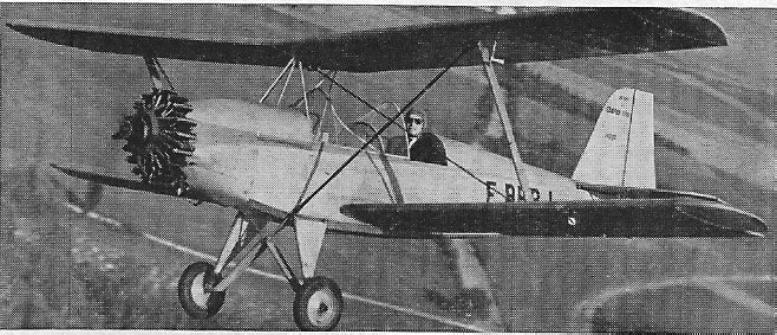
Indraero Aero 110

The Aero 110 fuselage has a fabric covered steel-tube framework and powered by a 45 hp Salmson 9ADB radial air-cooled engine.

A Single-bay staggered biplane, upper and lower wings are of equal span and chord. A hinged panel in the upper wing provides access to the front cockpit. Full dual controls are fitted.

Produced by the Societe Indraero and flown for the first time on 1 May 1950, the Aero 110 was produced for the Service de l’Aviation Legre et Sportive (S.A.L.S.).

Engine: 45 hp Salmson 9ADB
Wing span: 24 ft 11 in
Length: 18 ft 4 in
Empty weight: 594 lb
Loaded weight: 1000 lb
Max speed: 81 mph
Cruise: 71.4 mph

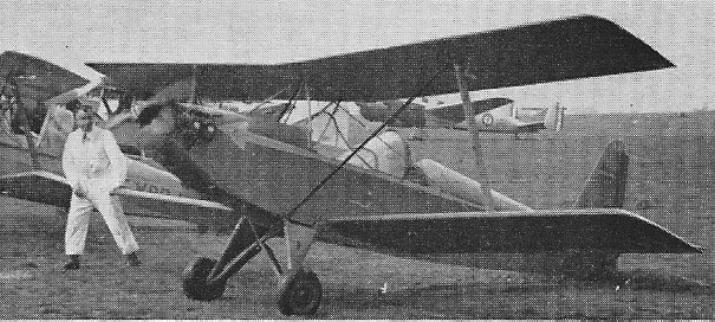
Indraero Aero 101

Developed by the Societe Indraero and first flown in 1953, the Aero 101 was designed by MM. Chapeau and Blanchet as a light tandem two-seat training biplane for the Service de l’Aviation Legre et Sportive (S.A.L.S.), and an initial production batch of thirteen was built.

Derived from the Aero 110, it differs by being all-wood construction, a tail wheel and brakes. Powered by a 75 hp Minie 4 DC-32 engine, the tandem open cockpits are fitted with dual controls.

Engine: 75 hp Minie 4 DC-32
Wing span: 24 ft 11 in
Length: 18 ft 4 in
Max speed: 108.6 mph
Cruise: 93 mph
ROC: 630 fpm

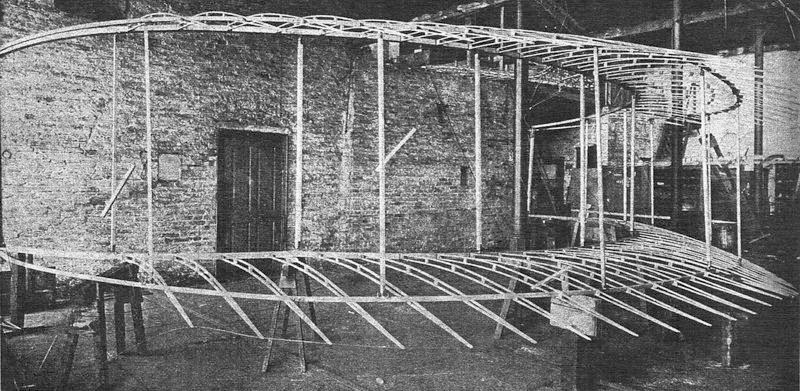
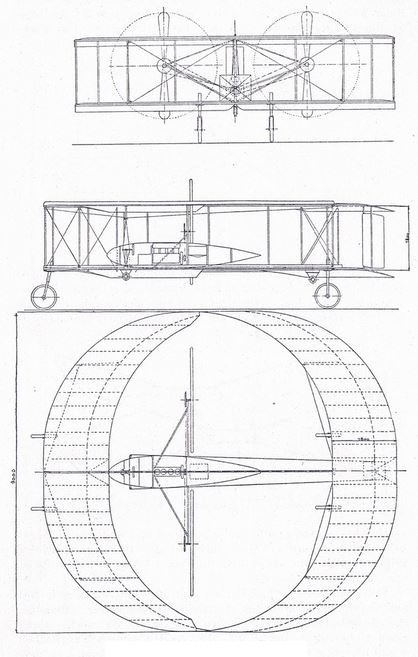
Huth Kreis-Doppeldecker

This biplane was designed by Dr. Fritz Huth and built at the Max Schüler Aeroplan-Fabrik (Berlin) in 1909. It had sickle-formed wings, the front pair with points to the rear and the rear pair with points forwards, so that almost ring-formed surfaces of 6 m diameter was formed. It’s reported that two were built, one by Huth’s Deutsche Flugwerft (Huth-Motor), another by Schüler (Aeolus-Motor).

Hurlburt 1910 Flying Machine

Designed by Jericho, Vermont dentist Dr. Dane Hurlburt and said to have been built in Lucerne, Switzerland, but flown in his native USA. A box-kite biplane with laterally-placed wings (wings rotated at 90 degrees to the direction of flight), Hurlburt’s aeroplane was powered by one 25 hp Anzani three cylinder motor driving a five and one-half metre long shaft with pusher-tractor propellers of 2 metres diameter. Contrarily claimed by various sources to have achieved several flights (notably on September 21, 1909 at Lucerne), as well as to have never been flown at all.