A biplane reconnaissance/ bombing aircraft, the Korka, was in production in the mid-1920s.
Biplane
Itoh Tsurubane No.2
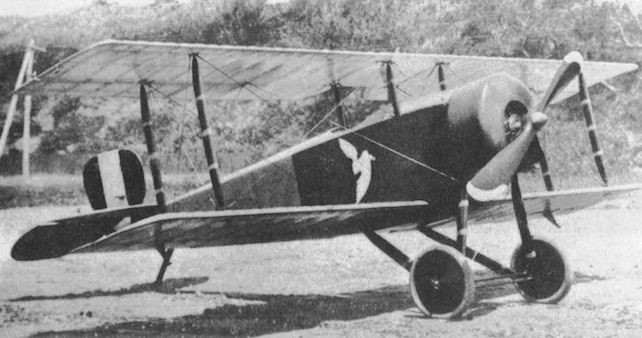
In 1918, the japanese Army purchased from France some of the most highly regarded military aeroplanes of the First World War, among them Nieuport 24 fighter. This and others were evaluated at the newly established Kagamigahara Army Airfield. At that time, 27 October, 1918, Tomotari Inagaki, a long-time friend of the company, and still studying in Tokyo Polytechnical School, became engineer of Itoh Aeroplane Research Studio. By chance, he had an opportunity to visit Kagamigahara and was able to rationalize the design and manufacture of a small aerobatic aircraft similar to the designs he had just seen. Beginning on 8 January, 1919, Inagaki started his first design as a company employee. It was to be a single-seat single bay biplane, light in weight, rugged, and easy to fly.
Logically, the design followed that of the Nieuport, but to obtain sufficient lift with the low powered 50hp Gnome engine Inagaki increased the total wing area, yet retained the same overall wing span and chord of the upper wing, by enlarging the lower wing to conform to that of an equal-span biplane rather than the sesquiplane arrangement of the Nieuport. The appearance of this aeroplane was considered radical when compared to other Japanese aircraft at that time.
The front half of the fuselage was ply-covered. To enhance the aeroplane’s appearance and resemble a fighter aircraft after which it was patterned, Itoh himself painted a white crane like a unit insignia on the sides of the fuselage similar to those often used by the French Air Force. This aeroplane was completed on 21 April, 1919, and made its first flight on 25 April.
Although Yamagata began teaching himself the skills of aerobatic flying, much had to be learned from an English-language book he had bought. His efforts included being suspended upside down while strapped in a chair to visualize control movements while in inverted flight. On 5 May, using this aeroplane, he became the first civil pilot in Japan to complete a loop.
Engine: Gnome, 50hp
Propeller: two-blade wood
Span: 7.21m (23ft 8in)
Wing area: 14.58sq m (156.942sq ft)
Length: 5.77m (18ft 11.25in)
Height: 2.38m (7ft 9.5in)
Empty weight: 204kg (450Ib)
Loaded weight: 340kg (749Ib)
Maximum speed: 74kt (85mph)
Climb to 1,000m (3,280ft): 4min 30 sec
Itoh Tsurubane No.1
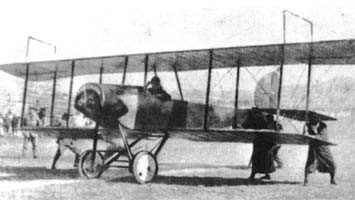
After the move caused by the destruction after the tsunami, ltoh Hikoki Kenkyusho built its first aircraft under the designation Tsurubane No.1 (“crane wing”). Its design was started by Ito’s assistant, The Tsurubane’s design was the result of the retrieval of a 50 hp (37 kW) Gnome rotary engine from the crashed Tamai No.3 by a relative of Itoh’s talented assistant, Toyotaro Yamagata, and given to him to create his own aircraft. This engine was purchased by Yamagata’s uncle to allow his nephew to finish the project. Yamagata made some initial sketches but Itoh was asked to take on the detailed design.
The aircraft that emerged was a wooden-structured, fabric covered two bay biplane. Its wings were rectangular in plan, with bays separated by pairs of upright, parallel interplane struts. The considerable overhang of the upper, greater span, wing was wire braced and a cabane of parallel struts held the central upper wing high above the fuselage. As on Itoh’s earlier aircraft there were ailerons only on the upper wings, with chords that increased outwards.
Its rotary engine was shrouded with a standard, open-bottomed cowling intended to collect oil spray. Behind it the fuselage became slender and flat-sided, as with Itoh’s earlier designs. Its pilot had an open cockpit near the wing trailing edge. The tail was like that of the Itoh Emi 2 with the horizontal tail mounted on the top of the fuselage carrying elevators that had a cut-out for rudder movement. The fin and rudder had upright, parallel edges but a sloping top.
Though its landing gear was a conventional, single axle design, Itoh was aware of the need to make it robust. It had large wheels and was taller than those of his earlier landplanes, with landing legs and rearward drag struts doubly cross-braced.
The Tsurubane was completed on 8 May 1918 and flown soon after.
The Tsurubane No.1, like several other early Japanese civil aircraft, initially paid its way with demonstration flights. Yamagata began with flights around Hiroshima. These attracted support from the Asahi Shimbun newspaper resulting in a tour of Korea, at that time part of the Japanese empire, throughout November 1918. In the following spring the Tsurubane gave many exhibition flights in Osaka. World-wide, early aircraft demonstrators included risky tricks to swell audiences: on one occasion the Tsurubane carried a passenger astride the fuselage.
When it was retired from demonstration flights, the Tsurubane was used as a trainer by Itoh’s flying school. It is not known how long it remained airworthy but it was eventually privately purchased, then donated to the Aki-Itsukushima Shrine near Hiroshima.
Tsurubane No.1
Powerplant: 1 × Gnome, 37 kW (50 hp)
Propeller: 2-bladed
Wingspan: 10 m (32 ft 10 in)
Wing area: 30 m2 (320 sq ft)
Length: 6.5 m (21 ft 4 in)
Height: 2.6 m (8 ft 6 in)
Empty weight: 380 kg (838 lb)
Gross weight: 520 kg (1,146 lb)
Maximum speed: 80 km/h (50 mph, 43 kn)
Cruise speed: 65 km/h
Crew: one
Itoh Emi 31
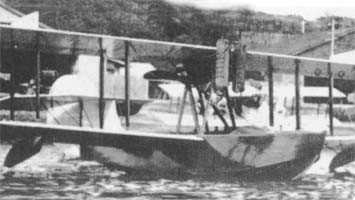
The development of the Emi 31 began in 1922 when the fledgling Japan Air Transport Research Society bought a Curtiss Seagull flying boat as their first passenger aircraft, intended for a service between Tokyo and Yokohama Bay. This was seriously damaged before it could be delivered so the airline’s founders, Sun-ichi Bando and Yukichi Goto who had earlier owned the Emi 16 racer, turned to Itoh for a replacement flying boat. In response Tomotari Inagaki designed the Itoh Emi 28, which was strongly influenced by the Seagull and powered by a 150 hp (110 kW) Hispano-Suiza engine, but this design was never built. Another passenger company, Choichi Inoue’s Japanese Air Transport Research Association (JATRA) that had provided Japan’s first regular airline service using floatplanes between Sakai to Takamatsu and Tokushima, was looking for a suitable passenger flying boat. Aware of the Emi 28 he placed an order for a more powerful development, resulting in the Emi 31.
The Emi 31 was a wooden-structured, pusher configuration biplane. Its unequal span, fabric covered, two bay wings were braced by parallel pairs of interplane struts. The shorter lower wing was mounted on top of the hull and the upper centre section, high above the water, was strengthened by the struts that supported the pusher engine. There were ailerons on the upper wings.
Its 220 hp (160 kW), pusher configuration, water-cooled V-8 Hispano-Suiza 8B engine was pylon-mounted just below the upper wing with two long, upright, rectangular radiators mounted edge-on ahead of the upper leading edge. The Emi 31’s plywood-covered hull was essentially the same as that of the single step Seagull. On the water it was stabilized by small, strongly up-pitched floats mounted below the outer interplane struts. It had two open, side-by-side seat cockpits in tandem. Initially the pilot and flight engineer occupied the forward cockpit with two passengers behind but in service the engineer was often displaced by a third passenger.
The Emi 31’s fabric-covered tail was also similar to that of the Curtiss, with a tailplane and elevator held well clear of the water on top of an abbreviated fin. Its large, comma-profile rudder moved in a deep elevator cutout and had a forward balance area overhanging the tailplane.
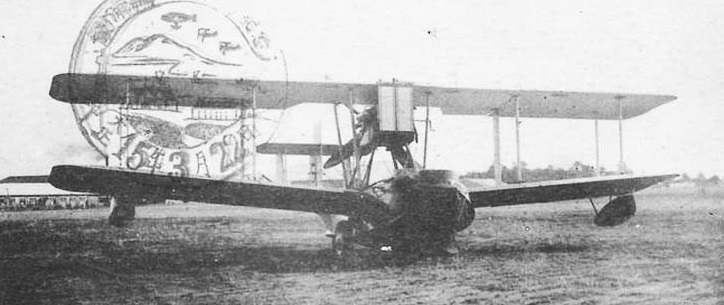
The Emi 31 was completed in mid-1922. The date of its first flight is not known but, after test flights at Itoh’s Tsudanuma base, it went to the JATRA base at Sakai to fly the planned route. It was also used by The Asahi Shimbun newspaper to report army manoeuvres, catching the attention of the Prince Regent. There were frequent, poorly recorded modifications; after only a few months of use it had been significantly improved twice. It remained in use with JATRA into 1924, after which it was retired to the water surface, further modified for use as a water taxi and sightseeing-boat.
Powerplant: 1 × Hispano-Suiza 8B, 160 kW (220 hp)
Propeller: 2-bladed wooden
Wingspan: 14.66 m (48 ft 1 in)
Wing area: 26 m2 (280 sq ft)
Length: 7.65 m (25 ft 1 in)
Height: 3 m (9 ft 10 in)
Empty weight: 780 kg (1,720 lb)
Gross weight: 1,350 kg (2,976 lb)
Maximum speed: 121 km/h (75 mph, 65 kn)
Endurance: 2 hr 30 min
Crew: one, with option of a flight engineer
Capacity: three, or two with engineer
Itoh Emi 30
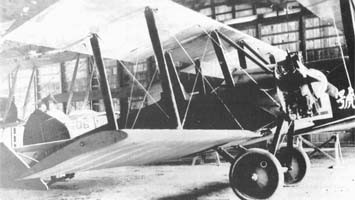
After World War I Itoh had followed design developments in both Europe and the US and had explored these trends with their own designs. The Emi 30 was the first Japanese aircraft influenced by a western interest in small sports aircraft.
The Emi 30 had a wooden structure and was fabric-covered. It was a single bay biplane with wings braced by parallel pairs of streamlined interplane struts. The lower wing, which had a slightly greater span than the upper one, was mounted on the lower fuselage longerons and the centre section of the upper wing was held over the fuselage by outward leaning, parallel cabane struts from the upper longerons. The two spar wings had thick airfoil profiles compared to most contemporary biplanes. There were inset ailerons on the upper wing.
It was powered by an Itoh built, 40–45 hp (30–34 kW) air cooled 5-cylinder radial engine. The Itoh 11 used the cylinders and pistons from a Japanese-built Renault engine, joined to a new crankshaft and crankcase. Its two-bladed propeller had a domed spinner. The Emi 30 was flown from an open cockpit under the upper wing, with a streamlined headrest which merged into a slender rear fuselage. The tail was conventional, with a tailplane mounted on top of the fuselage and braced from below, and a generous fin and balanced rudder with an overall rounded but pointed profile.
The Emi 30’s landing gear had wheels on a single axle, its ends supported by V-struts from the lower fuselage longerons.
When it was first displayed in 1922 the Emi 30, a single seat civil sports aircraft, was the smallest aircraft in Japan.
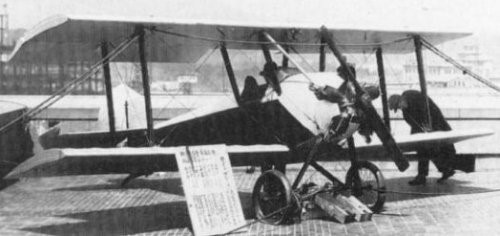
It was first seen in public at an exhibition in July 1922, where it was awarded a silver plaque for innovation. The date of the first flight is not known but it was developed in a program flown by Seizo Okhura and later used as an aerobatics trainer by the newly renamed Itoh Aeroplane Manufacturing Works. In March 1924 it was displayed on the roof of a Tokyo department store where it was on sale for 5,000 yen but its later history is not known. There is no firm evidence that more than one was built.
Powerplant: 1 × Itoh 11, 34 kW (45 hp)
Wingspan: 5.80 m (19 ft 0 in)
Wing area: 13 m2 (140 sq ft)
Length: 5.11 m (16 ft 9 in)
Height: 2.10 m (6 ft 11 in)
Empty weight: 295 kg (650 lb)
Gross weight: 605 kg (1,334 lb)
Maximum speed: 130 km/h (81 mph, 70 kn)
Endurance: 2 hr
Crew: one
Itoh Emi 29 Taihoku-go
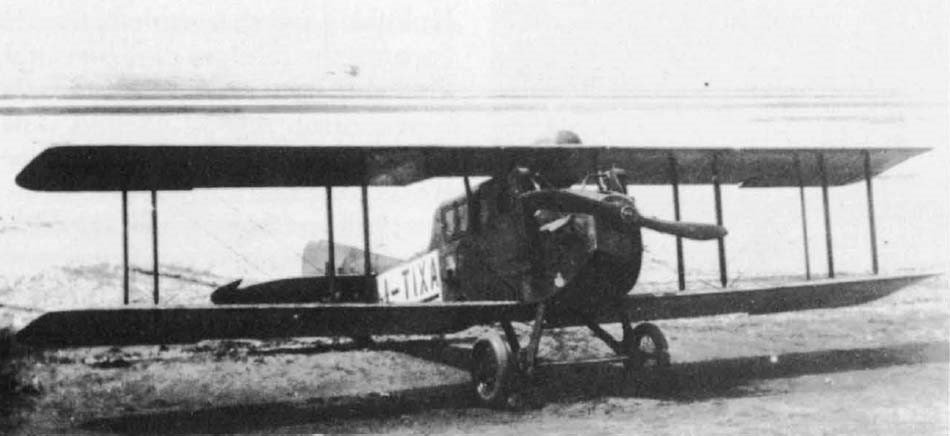
The Itoh Emi 29 Taihoku-go was a 1920s Japanese civil transport designed by Tomotari Inagaki with its two passengers in an enclosed cabin. It was the first of this “limousine” type to be built in Japan
The 1923 Taihoku-go (Taipei) was given its name since it was built to an order from Wen-Ta Shie, a pilot from Taiwan which was then under Japanese rule. It was the first Japanese-designed civil aircraft to enclose its passengers in a cabin, limousine style. Such aircraft had been developed in Europe soon after the end of World War I with conversions of war surplus machines, though luxurious accommodation for more passengers was provided in purpose-built types like the Westland Limousine as early as 1919. Generally, the pilot was separated from the passengers or raised above them, in an open cockpit.
The Emi 29 was a two-bay biplane with wooden-structured, fabric-covered wings braced by parallel pairs of interplane struts and a short, parallel-strutted central cabane. Its ailerons, fitted to both upper and lower wings, were externally interconnected.
It was powered by a 220 hp (160 kW) Hispano-Suiza 8B water-cooled V-8 engine. This had rectangular, side-on radiators just behind the engine, as on the earlier Itoh Emi 14 and Emi 16, and fuel tanks in and above the central upper wing. The pilot’s cockpit was ahead of, but separated from, an enclosed two seat passenger cabin glazed above the upper fuselage longerons and dropping away behind. The flat-sided fuselage was plywood-covered to the rear of the cabin and fabric-covered aft. The tail was conventional, with the tailplane and balanced elevators mounted on top of the fuselage and with a fin and balanced rudder of triangular profile.
The Emi 29’s wide track, fixed undercarriage was also conventional with mainwheels, on a single axle between V-struts from the lower fuselage longerons, and a tailskid.
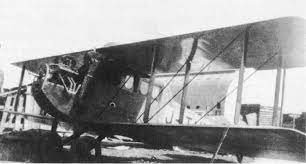
First flying in 1923, the only Taihoku-go built was operated by Tozai Teiki Kokukai on their Tokyo-Osaka service but was not heavily used.
Powerplant: 1 × Hispano-Suiza 8B, 160 kW (220 hp)
Propeller: 2-blade wood
Wingspan: 10.50 m (34 ft 5 in)
Wing area: 31 m2 (330 sq ft)
Length: 7.25 m (23 ft 9 in)
Height: 3.15 m (10 ft 4 in)
Empty weight: 870 kg (1,918 lb)
Gross weight: 1,710 kg (3,770 lb)
Maximum speed: 141 km/h (87 mph, 76 kn)
Crew: One
Capacity: Two passengers
Itoh Emi 24 Akita-go
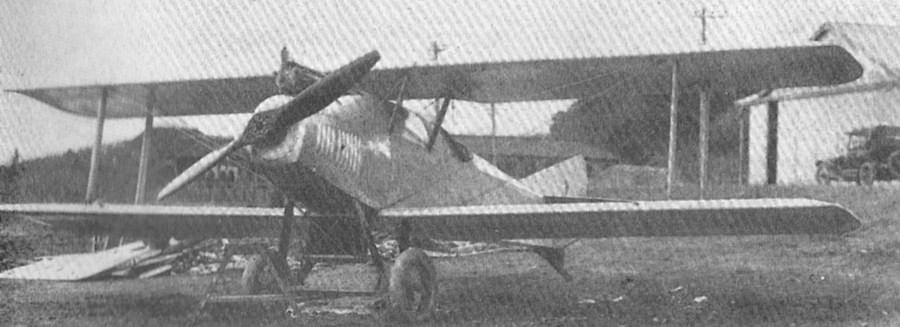
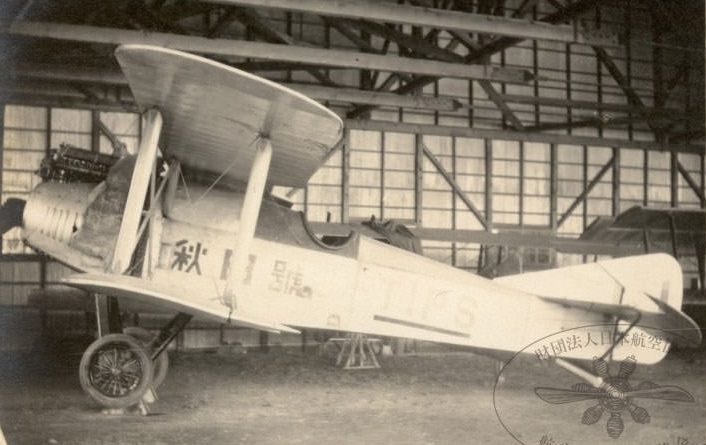
The Emi 24 was the second aircraft specially built by Itoh for the Imperial Japan Flying Association Long Range Competition in Shanghai. The aircraft was commissioned by aviator Yozo Sato and sponsored by Akito Prefecture, after which the aircraft was named Akita-Go.
It was a single-seat single-pillar biplane with a monocoque fuselage, powered by a German Maybach six-cylinder liquid-cooled engine with 320 hp.
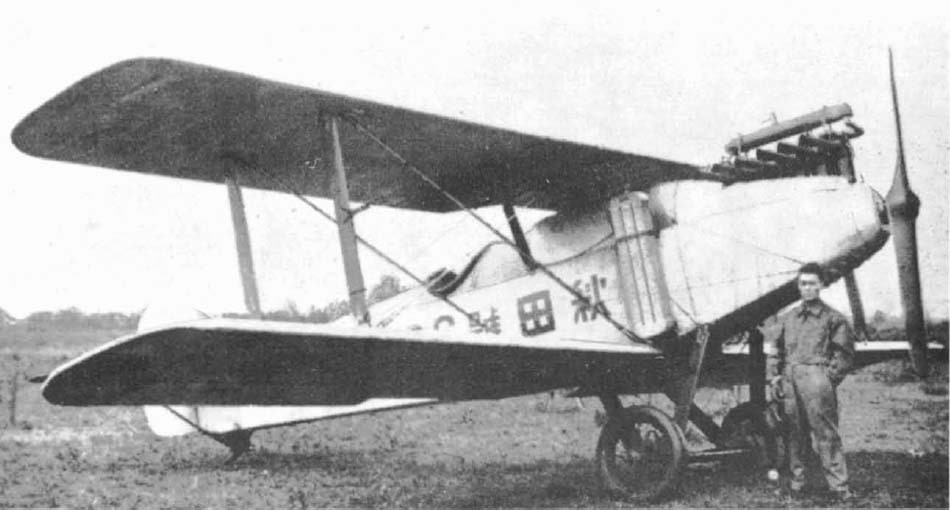
After the cancellation of the competition, the aircraft was completed in October 1921 as a light transport. During the tests, it became clear that the design of the aircraft was not perfect and the project was closed.
Engine: Maybach, 320 hp
Wingspan: 10.60 m
Wing area: 28.80 sq.m
Length: 7.71 m
Height: 2.80 m
Empty Weight: 970 kg
Maximum takeoff Weight: 1573 kg
Maximum speed: 180 km/h
Cruise speed: 155 km/h
Itoh Emi 17 Tsurubane No.3
Ito’s assistant Toyataro Yamagata decided to try his hand at aerobatic competitions, and for this purpose, the company ltoh Hikoki Kenkyusho began designing a light sports aircraft in 1920. The project was led by Tomotori Iganaki.
The aircraft, designated Emi 17 Tsurubane No.3, was preparing to take part in the August competition for the prize of the Imperial Japanese Flying Association, but problems with the rotary engine prevented this.
And just two weeks later, Yamagta crashed on Emi 14 and the plane remained ownerless. For some time it was tested with a new engine, and then the car was “abandoned”. Emi 17 was the last of the Tsurunabe family.
Emi 17
Engine: rotary, 80 hp
Wingspan: 9.15 m
Wing area: 27.80 sq.m
Length: 6.30 m
Height: 2.45 m
Empty weight: 590 kg
Maximum takeoff weight: 740 kg
Maximum speed: 121 km/h
Cruising speed: 105 km/h
Crew: 1
Itoh Emi 16 Fuji-go / Emi 18 / Emi 19 / Emi 20

The Itoh Emi 16 Fuji-go (Fuji) designed by Tomotari Inagaki and built in 1920, was intended as a cheap and simple general purpose civil biplane but gained publicity with exhibition flights and successful speed and altitude contests against higher-powered fighter aircraft.
Though the Fuji-go was best known for its successes in speed contests, it was designed as a multi-purpose, economical civil aircraft, powered by a war-surplus Le Rhône rotary engine and with a cost kept low by structural simplicities such as wings without sweep or stagger.
It was a two-bay biplane with a wooden structure and fabric covering. Its wings had rectangular plans apart from blunted tips, braced together with pairs of parallel interplane struts. Behind the engine the fuselage was rectangular in section with two open cockpits, one under the upper wing and the other for the pilot under its trailing edge, which had a small cut-out to improve the upward field of view. The forward cockpit could carry a passenger or an extra fuel tank to increase the range.
The tail was conventional with a tailplane mounted on top of the fuselage carrying elevators with a cut-out for rudder movement. Both the small fin and generous balanced rudder had polyangular profiles.
The Fuji-go had fixed, conventional landing gear with wheels on an axle between pairs of V-struts mounted on the lower fuselage longerons and a long tailskid mounted below the fin leading edge.
Its first flight was on 22 July 1920.
The Fuji-go was soon into competitions, beginning with the First Prize-winning Flight Competition held in August. Flown by Yutichi Goto, it won first prize for altitude and came second in a speed race, covering a route between Funabashi and Chiba at 128 km/h (80 mph; 69 kn). It went on to perform publicity flights over Kyoto and Osaka. It also competed in the Imperial Flying Association’s Second Airmail Flying Contest which involved a race between Osaka and Kurume. Since several competitors had much more powerful engines it was decided to reduce drag by cropping the lower wings beyond the first bay, leaving a span of 7.04 m (23.1 ft). This increased the maximum speed by 21%. Goto and the Fuji-go came second, gaining an 8,000 yen prize and beaten only by a SPAD XIII fighter with a 220 hp (160 kW) engine.
After a period of further promotional flights the aircraft returned to competition in May in the 1921 Second Prize-winning Flight Competition. It was flown into third place by Komayoshi Yasuoka.
One Emi 18 was built in 1921 powered by a 120 hp (89 kW) Clerget nine-cylinder rotary engine. The wing area was greater and airframe was shorter than the original.
The 1921 Emi 19 was the same as the Emi 18 but powered by a 120 hp (89 kW) Turrin nine-cylinder rotary engine.
The 1921 Emi 20 had shorter span and length and was powered by an 80 hp (60 kW) Le Rhône rotary engine.
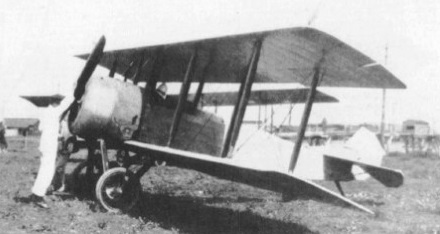
Emi 16 Fuji-go
Powerplant: 1 × Le Rhône, 89 kW (120 hp)
Propeller: 2-blade
Wingspan: 9.34 m (30 ft 8 in)
Wing area: 23.5 m2 (253 sq ft)
Length: 6.05 m (19 ft 10 in)
Height: 2.52 m (8 ft 3 in)
Gross weight: 740 kg (1,631 lb)
Maximum speed: 167 km/h (104 mph, 90 kn)
Time to 1,000 m (3,300 ft): 3 min 30 s
Crew: One
Capacity: one passenger
Emi 18
Engine: 120 hp (89 kW) Clerget
Span: 9.50 m (31.2 ft
Emi 19
Engine: 120 hp (89 kW) Turrin
Span: 9.34 m (30.6 ft)
Emi 20
Engine: 80 hp (60 kW) Le Rhône
Span: 9.0 m (29.5 ft)
Itoh Emi 14
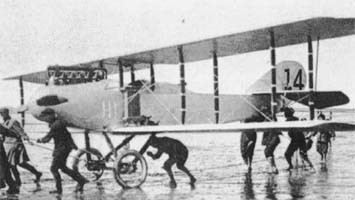
Stimulated by 1920 reports of flights from Italy to Japan the Imperial Flying Association launched a long-distance contest for Japanese aircraft with a non-stop return trip from Tokyo to Osaka and back, a distance of just over 1,000 km (620 mi; 540 nmi). Four companies prepared designs but only the Nakajama Type 7 and the Itoh Emi 14 were ready when the race was due.
For many early, long-distance flights the main design challenge was to ensure the aircraft, heavily loaded with fuel, could become airborne in the distance available. At Susaki the runway was only 600 m (2,000 ft) long, so Tomotari Inagaki gave the wings an aspect ratio of eight, at the time unusually high, to minimize induced drag. Otherwise the Emi 14 was a conventional two bay biplane with rectangular plan wings braced together with pairs of vertical, parallel interplane struts. Two parallel pairs of short cabane struts braced the central upper wing to the upper fuselage longerons. The Emi 14, like some other Itoh designs, had overhung ailerons, placed only on the upper wing.
The Emi 14 was powered by a 110 kW (150 hp) Gorham engine in a smoothly-tapered cowling but with its upper half exposed. Its flat, narrow, rectangular radiator was attached edge on and vertically just behind on the port side, where the engine cowling joined a flat-sided fuselage. It was originally designed with two open cockpits and flown from the rear seat, but for the long round trip the forward cockpit was used to hold extra fuel. There was a small, central trailing edge cut-out to improve the pilot’s upward field of view. The tailplane was mounted on top of the fuselage and the fin was triangular, with a rounded rudder.
Its fixed undercarriage was of the single axle type, mounted on V-struts from the lower fuselage longerons. During development the Emi 14 had a conventional tailskid but for the challenging contest flight takeoff the tail was raised on a wheeled dolly, dropped as the Emi 14 became airborne.
The date of the Emi 14’s first flight is not known but it was ready on 21 April 1920, the preset contest date. Both it and the Nakajama Type 7, piloted by Kintaro Iinuma, took off successfully and began the outward leg but Iinuma soon ran into thick fog, became lost and crashed into Mount Tanzawa. He was badly injured but survived. Toyotaro Yamagata, in the Emi 14, continued and completed the 1,013.67 km (629.87 mi; 547.34 nmi) circuit in 6 hr 43, an average speed of 151 km/h (94 mph). The flight was seen as a big step forward in Japan’s aeronautical progress. The Itoh Aeroplane Research Studio were awarded a 5000 yen prize and Yamagata received the same amount as a personal reward plus another 600 yen a month for three years, though he did not live to collect much of it.
There was one more competitive flight to come: on 2-3 August 1920 Yamagata flew the Emi 14 in another Imperial Flying Association contest, this time over a route between Funabashi and Chiba, about 16 km (9.9 mi; 8.6 nmi) apart. The Emi 14 won the speed first prize at 137 km/h (74 kn; 85 mph) and the altitude second prize with 3,375 m (11,073 ft). Together these prizes were worth 8000 yen.
At the end of August Yamagata was practising loops for an upcoming display when a wing detached, killing him. No more Emi 14s were built.
Powerplant: 1 × Gorham, 110 kW (150 hp)
Propeller: 2-bladed
Wingspan: 11 m (36 ft 1 in)
Wing area: 32 m2 (340 sq ft)
Aspect ratio: 8
Airfoil: U.S.A.-1
Length: 7.17 m (23 ft 6 in)
Height: 2.74 m (9 ft 0 in)
Empty weight: 760 kg (1,676 lb)
Gross weight: 1,150 kg (2,535 lb)
Maximum speed: 146 km/h (91 mph, 79 kn)
Endurance: 8 hr
Time to 1,000 m (3,300 ft): 4 min 30 s
Cruise: 115 km/h
Crew: one or two, according to flight
 All Aero