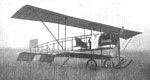
The 1911 Jezzi No. 2 Sesquiplane was designed and built by Leo Jezzi in the UK.
Span: top 28′
Length: 24’6″
Speed: 65 mph
The 1911 Jezzi No. 2 Sesquiplane was designed and built by Leo Jezzi in the UK.
Span: top 28′
Length: 24’6″
Speed: 65 mph
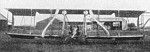
The 1910 Jezzi No. 1 tractor Biplane was designed and built by Leo Jezzi in the UK.
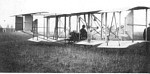
The 1910 Jezzi No. 1 pusher biplane was designed and built by Leo Jezzi in the UK.
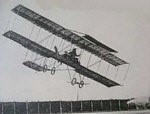
The 1910 Jeannin biplane was designed and built by Emil Jeannin in Germany.
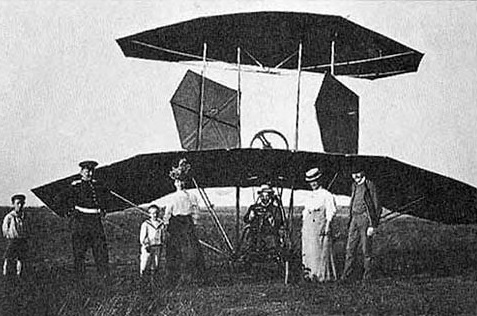
Rebuilt from Karl Jatho’s earlier Dreidecker, which had been damaged on August 21, 1903, the Jatho Doppeldecker “Motordrachen” of 1903 was powered by a 9-12 hp Buchet motor, belt-drive pusher propeller.
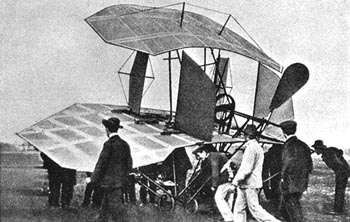
Two Germans, Gustav Weisskopf and Karl Jatho, made the first motorized flight on August 14, 1901 with a 21-horsepower monoplane with 12 horses, a flight of 850 meters. The second was a similar performance on August 18, 1903.
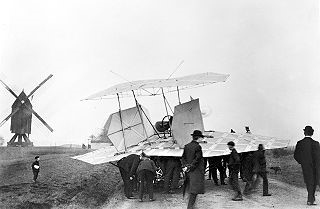
It is on the moor of Vahrenfelder, that Karl Jatho flew 18 meters, rising to 1 meter of height, with his biplane type “Zweidecker I”. The propulsion was from a two-bladed propeller and single-cylinder Buchet engine of 9 horses.
Engine: Buchet, 9-12 hp
Wingspan: 8 m
Wing area: 36 sq.m
Length: 3.6 m
Height: 1.78 m
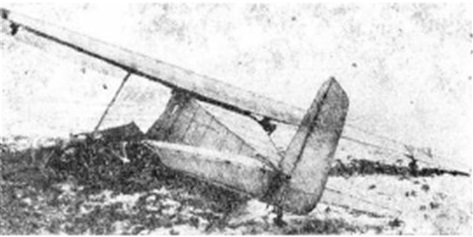
In 1930 Antoni Janowski was a designer at Samolot factory in Poznań designed and built a modern sports plane with two seats abreast and enclosed cockpit. Unfortunately the plane crashed during the test flight and second plane, which was also to be built, was never completed.
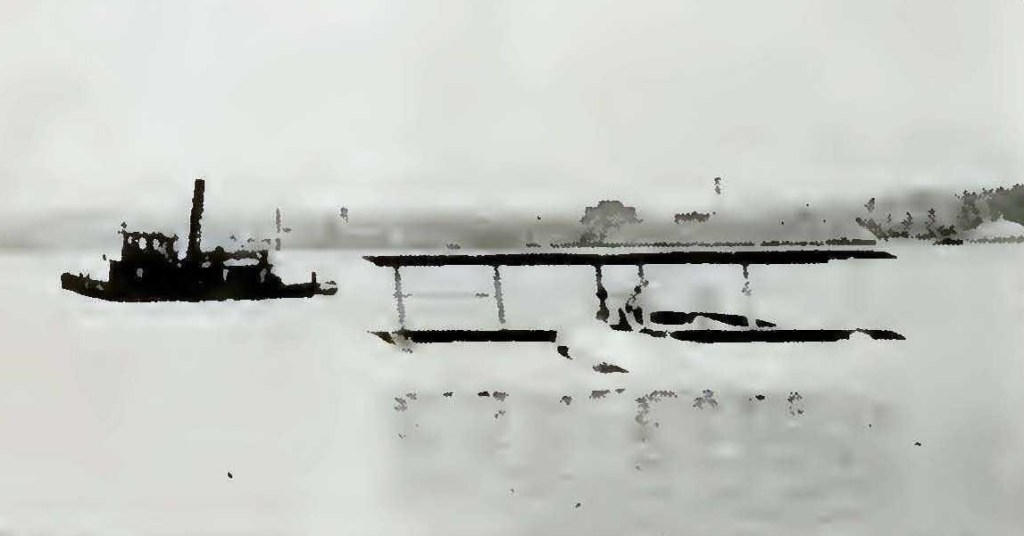
A new and efficient design for rough water, ready assembly and disassembly, inherent stability, wide range of flying speed, waterproof construction of wings, enormous margin of safety, comfort for pilot and three passengers, and a dry, clean place for them to sit, this 1915 model is ideal.
The rough water ability is obtained in two principal ways: first, all the wing attachments are independent of the motor and propeller shaft; and. second, the low centre of gravity. Of special interest are the tapering end floats that never pound or jerk the wings. These taper from three inches wide across the bottom to a foot across the top. The taper has the advantage of reducing the planing surface, which at high speed would be sufficient to pound the wings badly, but when called upon as floats are quickly displacing water at an increased rate, easily combating the heaviest side lurching or listing or yawing tendency.
The removability of the tail for shipment has many advantages in construction and in simplicity of shipment for compactness. The motor remains in the front half of the hull with all controls intact. The control cables going to the tail and rudder all pass through individual leads in a conduit that is made of heavy steel as a protection against the propeller breaking or throwing anything with sufficient force to sever them.
Between the conduit and the controls the cables are supplied with the Jannus type sister hook, which locks the cables together in a permanent fashion quickly, and without additional safety wire or other auxiliary being necessary.
The wings are assembled in their entirety before being attached to the hull and, when on, cannot fail to align properly if reasonable care is taken. Where desirable they can he put on half at a time. To April 1915 the best record showed a total load of 2.200 lbs. carried in flight at 22-55 mph with an indicated 60 h.p.
Tests in the lee of large vessels, along windward shores and in other extreme conditions of gusty wind and treacherous obstacles prove that the new struts and the staggered planes are serious contenders for the inherent stability honors. The pilots reported that in no case was there any rapid inequality developed nor did the machine make any appreciable variation from its course due to these unfavourable conditions.
The tests have been conducted by Mr. Fritz G. Ericson and Mr. Antony Jannus.
The designers did not stagger the planes in this model for other than structural advantage.
The internal construction of the wing is free from ordinary glue and is amply strong without any adhesives, although liquid marine glue is used in all joints to maintain rigidity under severe stress and to prevent rotting. All bolts go on each side of the beams, through end grain blocks that are brass covered outside of the fabric.
The pilot is seated in front, leaving a seat behind for three large passengers. The ample foot space is well above the ribs of the bottom and made in the form of a grating that is removable for cleaning the bilge scuppers or any other purpose.
The motor compartment is segregated from all other parts of the boat, so that no oil or grease can be distributed.
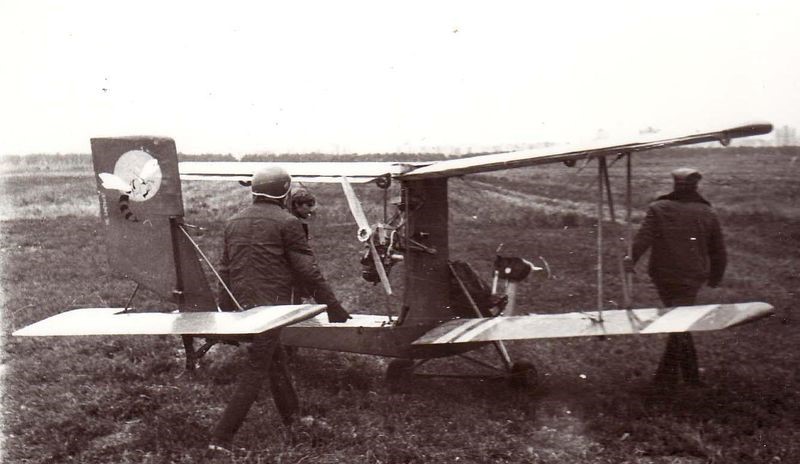
In 1980 a group of JAI students led by S. Shevko built the JAI-34 (Russian: ХАИ-34) biplane.
This model was designed as a biplane training aircraft and its design was influenced by the North American publication of the plans for the Wing-Ding ultralight aircraft.
The construction was led by students S. Shevchenko and V. Mielnik.
The JAI-34 was designed as a single-seater light aircraft with a biplane wing structure. The entire construction was made of wood, with the use of some metal structural elements. The wing featured an R-IIIA profile.
The control surfaces had a wooden frame with a percale coating and several layers of enamel.
The landing gear was tricycle, with steerable front wheel.
Originally the JAI-34 was equipped with a Jupiter engine, but it would not fly, limiting its use to ground running. Later an Izh-PZ engine was installed with which only a few jumps were made, due to the lack of power. With this engine the climb speed was only 0.5 m / s and flying in a circle was a real feat.
Finally, a Vijr-30 motor with an angle reducer would be installed, which gave it about 28 hp. The fuel system included a tank in the flat center with gravity feed from the engine. The type of fuel used was A-76 and MS-20 oil.
The pilot sat in a forward seat in the open cockpit. Behind, under the wing, was the engine. The instrument panel equipment included US-250 speedometer, VD-1 altimeter, VR-10 barometer, KI-13 compass, 2TTsT-47 thermometer.
The JAI-34’s first flight took place in July 1984 with student N. Krikunienko at the controls.
The JAI-34 successfully participated in the first SLA-85 light aviation competition. The JHA command, led by B.Virski, received the “OK Antonov” grand prize awarded by this event for solving complex problems in the independent creation, professional orientation and organization of ultralight aircraft flights.
JAI-34 would participate in many other regional and national events.
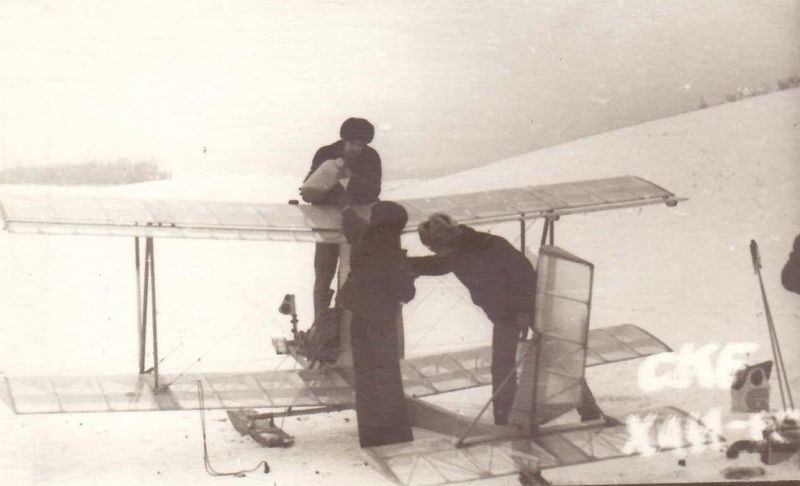
The JAI-34M was built by the JAI SKB “Experiment”, led by VA Mielnik and made its maiden flight in September 1985.
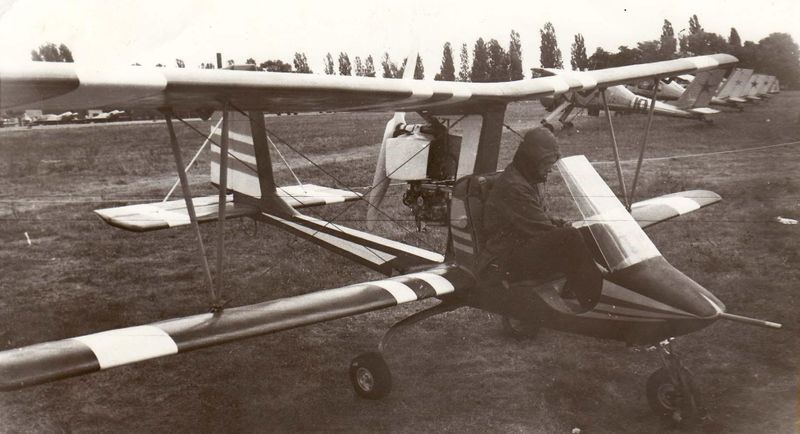
The JAI-34M received flight approval in May 1991 and by June 1992, when it was destroyed, it accumulated 26 hours and 19 minutes of flight time. This specimen was entered in the register of the Federation of Aviation Lovers of the Kharkov Oblast on May 23, 1991, receiving registration number 16009.
This example was originally designed to use an MT-9 engine, but later it was re-powered by an RMZ-640 air-cooled piston engine capable of developing 28 hp at takeoff, moving a 1.6 meter diameter propeller. Unlike the original model, the wing consoles were designed with a D-16T duralumin light tube structure.
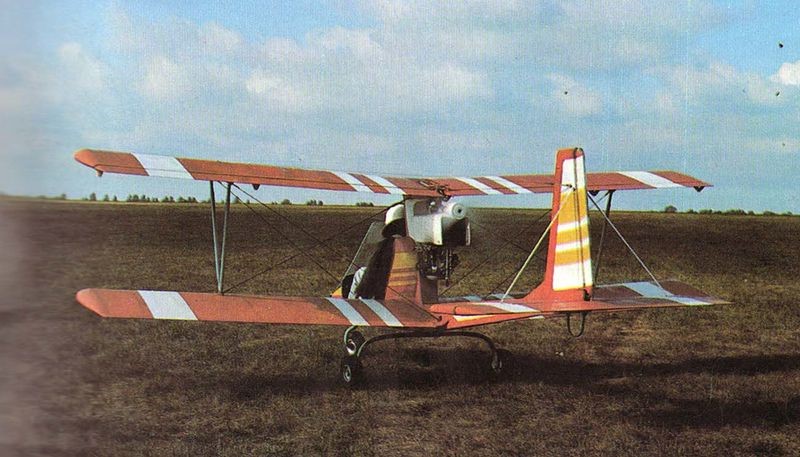
The JAI-34M was delivered to the “Vzliet” Sports-Technical Center, directed by Vladimir Leontievich Goryunov.
On 7 June 1992 at 12:08 pm the plane was destroyed in a crash at the airfield Tomarovka, Goryunov losing his life.
During a flight in good weather and during a third turn, at a speed of about 80 km / h, the aircraft lost speed and entered a circular spin. After making 1.5 turns, the plane hit the ground.
According to the people who were at the scene, the engine never stopped working. The impact was made at about 100-120 km / h and the pilot died.
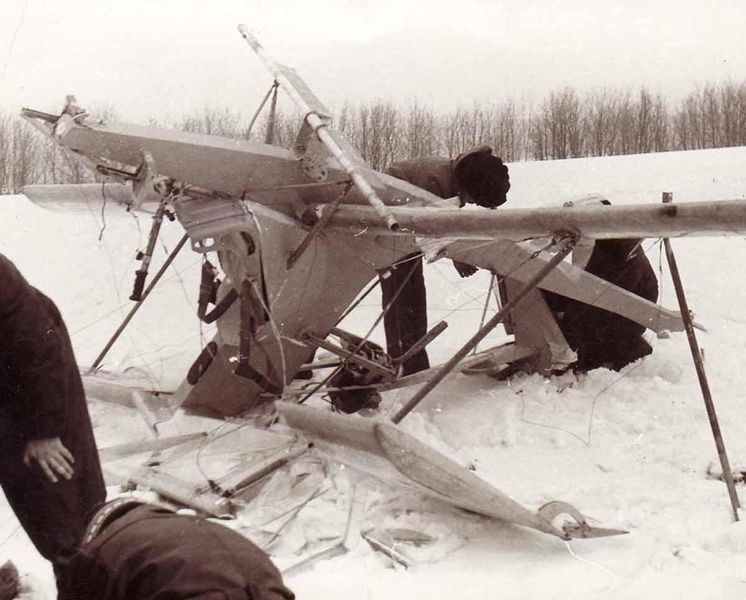
The commission that investigated the accident determined that the cause was attributable to the pilot, but prohibited the Federation of Aviation Lovers from allowing flights in this model until the spin tests were carried out.
JAI-34
Powerplant: 1 x 28 hp Vijr-30
Propeller Diameter: 1.3m
Propeller pitch: 600mm
Wingspan: 5.81 m
Wing area: 8.8 m²
Length: 4.8 m
Empty weight: 172 kg
Maximum takeoff weight: 237 kg
Maximum speed: 120 km / h
Cruising speed: 90 km / h
Crash speed: 62 km / h
Range: 100 km
Seats: 1

The 1910 Jacquelin tractor biplane was designed and modified by E.Jacquelin and built by Voisin in France.
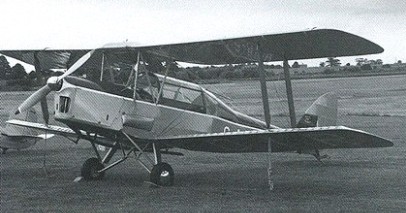
In the early 1950s Sqn Ldr J. E. Doran-Webb, managing director of the Wiltshire School of Flying at Thruxton, considered building a highwing four to five-seat touring aircraft using only Tiger Moth components. Contacts at the Royal Aero Club introduced him to Ronald Prizeman, who schemed a four-seater using the same biplane layout as a Tiger Moth but with a revised fuselage. This was accepted and formed the basis for certification as the D.H.82A (Mod) Jackaroo.
The front side frames of the Tiger Moth fuselage were moved apart by 12.5in within which four seats were installed, with the starboard pair staggered slightly forward. The basic structure and rigging of wings, tail and rear fuselage were not altered but it was necessary to increase the undercarriage track by designing a new W-shaped centre strut.
Two prototypes were built at Thruxton in 1956; G-AOEX was finished as a standard four-seater with cabin and known as a Series 1. It was test flown by Lt-Cdr Pat Shea-Simonds on March 2, 1957. The Series 2, G-AOEY, was conceived as a cargo carrier/cropduster. The cabin could be converted to carry a load of 5501b and a new low-profile superstructure neatly converted the Series 2 into a single-seater with open cockpit.
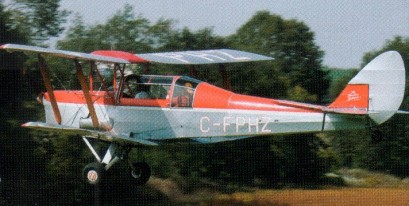
Jackaroo Aircraft Ltd was formed late 1950s at Thruxton, Hampshire, to produce the Thruxton Jackaroo widened-fuselage four-seat version of the de Havilland Tiger Moth. First “production” conversion flew on April 15, 1957, and quite a number of Tiger Moths were converted subsequently to Jackaroos. Company also designed a four-seat low-wing lightplane called the Paragon, being re-formed in early 1960s as Paragon Aircraft Ltd. to produce it under new name of Paladin.
Paragon was formed at Thruxton Aerodrome near Andover, Hampshire, from the earlier Jackaroo Aircraft Ltd., for conversion of standard two-seat Tiger Moth biplanes to four-seat configuration by inserting a new wider center fuselage and extending the top wing centre section. 18 Jackaroo conversions were carried out by the company.
By July 1957 the manufacturer was anticipating that production would reach at least six aircraft per month. An agricultural conversion kit was available at £150. Overseas owners were encouraged to convert their own Tiger Moths by purchasing a packaged kit at £600. Tiger Moths flown into Thruxton could be converted in ten days for £700.
Jackaroo Aircraft Thruxton Memories
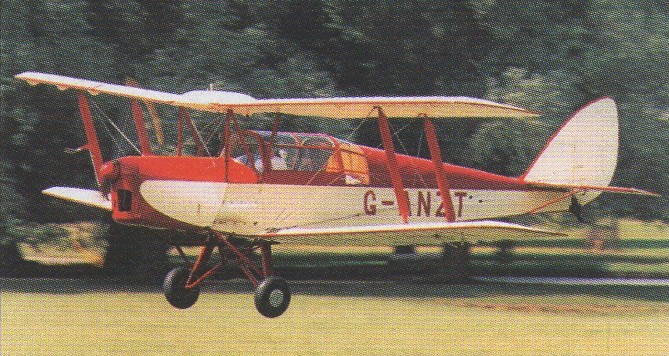
Rollason Aircraft at Croydon acquired Jackaroo G-ANZT in 1957, and incorporated a number of improvements. In April 1960 Rollason cornpleted a Jackaroo of its own, G-APOV, in which the rear fuselage faired smoothly from the wide cabin to the tail.
Although never certificated as aerobatic, the aircraft was spun on at least one occasion with all four seats occupied, an experience none of those on board ever wished to repeat.
The big prospective orders never came and import permits for five other Jackaroos already on the line at Thruxton were refused. Each was broken up for spare parts. Designer Ron Prizeman never complained however, despite never receiving his agreed royalty of £2 per aircraft
Assets acquired 1964 by Hampshire School of Flying.
 All Aero