Charles Dickenson successfully tendered for the Twin Cities-Chicago mail contract in 1926 with three Wright J-4 Lairds, an open cockpit biplane built by Henry C. Keller, and a cabin biplane built by Elmer Partridge.
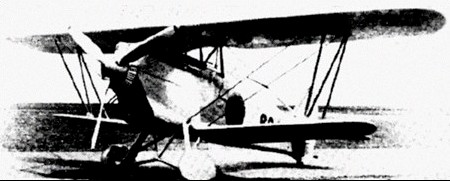
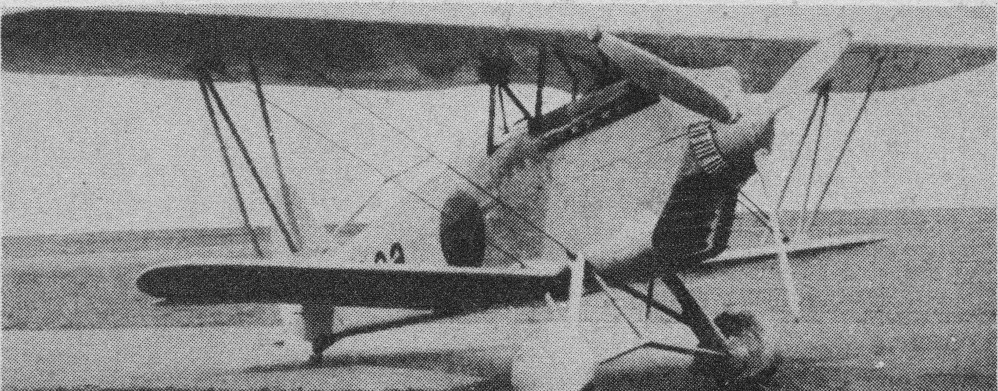
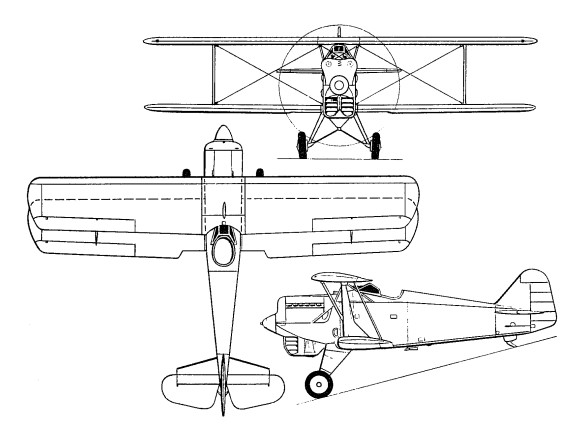
The single seat Ki-10 was Kawasaki’s second attempt to evolve a replacement for the Japanese army air force’s Type 92 Intercepter Fighter. The first had been the Ki 5 monoplane which proved to have a performance and manoeuvrability below that specified by the army air force. A fighter competition was held in 1934 to evaluate new designs from Kawasaki, Mitsubishi and Nakajima, designated Ki 10, Ki-8 and Ki 11 respectively. This time the manoeuvrability of the Kawasaki design won the day, and it was ordered into production as the Army Type 95 Fighter. It proved to be the last biplane combat aircraft to serve with the army air force.
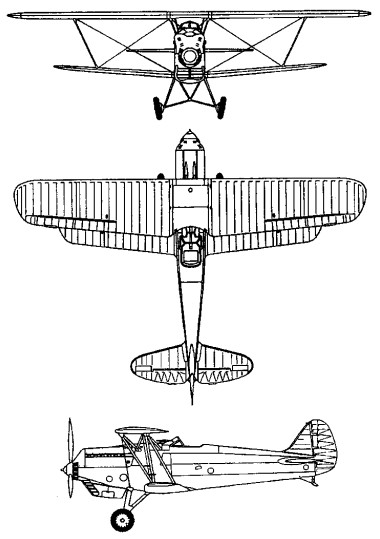
Designed by Takeo Doi (who had succeeded Richard Vogt as Kawasaki’s chief designer), the Ki 10 closely resembled the earlier Type 92 in appearance, but powered by an 850 hp Kawasaki Ha 9 11a 12 cylinder V type engine. The first of four prototypes was flown in the spring of 1935, and production aircraft were based on the third prototype which had a three blade metal propeller, and a flush riveted light alloy skin over the forward fuselage. The Ki-10 was selected in competition with Nakajima’s Ki-11 low-wing monoplane, the Japanese Army preferring the Ki-10 biplane’s manoeuvrability to its opponent’s slightly superior speed.
Production Ki-10-1 aircraft were powered by the 633kW Kawasaki Ha-9-IIa liquid-cooled engines, and 300 built between December 1935 and October 1937 went into service as the Army Type 95 Fighter. The biplane wings of unequal span were braced by N-struts and with ailerons on the upper wing only. The divided undercarriage had wheel spats. The all-metal structure was alloy sheet and fabric-covered. Armament was two synchronised 7.7mm Type 89 machine-guns.
The improved Type 95 Model 2, flown in prototype form in May 1936, differed primarily in having slightly larger wings of 10.02 m (32 ft 10 in) span, a fuselage lengthened to 7.55 m (24 ft 9 in), and a gross weight increased to 1740 kg (3836 lb), and vertical tail surfaces of greater area. The powerplant and performance remained es¬sentially unchanged, but stability was greatly improved and the service ceiling was increased from 10 000 m (32,810 ft) to 11500 m (37,730 ft). This version was built between June 1937 and December 1938, 280 completed.
Standard armament of both models was a pair of 7.7 mm (0.303 in) Type 89 machine guns mounted in the upper engine decking.
Over the period in which they were in service Ki 10s equipped seven, different Rentais (wings) and six other Sentais (corps) of the army air force. They operated in China, Formosa, Korea, and Manchuria, as well as at home bases, before and during the Second World War. By the time that conflict began, however, most Ki 10s (codenamed Perry by the Allies) had been reallocated to training or other second line duties.
One Ki-¬10 1 Kai and two Ki 10 11 Kai prototypes appeared in 1936 and 1937 respectively, embodying aerodynamic, structural and powerplant improvements, but neither of these models entered production.
Ki¬-10 Prototype Engine: 850 hp Kawasaki Ha 9 11a Seats: 1 No built: 4
Ki¬-10 Type 95 Fighter 1 Engine: 633kW Kawasaki Ha-9-IIa Span: 9.55 m (31 ft 4 in) Length: 7.2 m (23 ft 7 in) Gross weight: 1650 kg (3638 1b) Maximum speed: 400 km/h (249 mph) Service ceiling: 10 000 m (32,810 ft) Seats: 1 Armament: 2 x 7.7mm Type 89 machine-guns No built: 300
Ki¬-10 Type 95 Fighter 2 Engine: 633kW Kawasaki Ha-9-IIa Wingspan: 10.02 m (32 ft 10 in) Length: 7.55 m (24 ft 9 in), Height: 3.0 m / 9 ft 10 in Wing area: 23.0 sq.m / 247.57 sq ft Empty weight: 1360 kg / 2998 lb Max take-off weight: 1740 kg (3836 lb) Max. speed: 400 km/h / 249 mph Service ceiling 11500 m (37,730 ft) Range: 1100 km / 684 miles Seats: 1 Armament: 2 x 7.7mm Type 89 machine-guns No built: 280
A single engined biplane light bomber, the Ki 3 was designed by Dr Richard Vogt. Developed from the experimental KDA 6 reconnaissance biplane, the Ki 3 first flew in March 1933, going into service with the Imperial Japanese Army early in 1934. These prototypes were followed by 200 series aircraft built by Kawasaki between January 1934 and March 1935, and a further 40 machines being manufactured under licence by Tachikawa. The first prototype had a BMW VI in line engine with nose radiator and annular cowling, while series machines had more conventional chin radiators for their 800 hp Ha 2 engines (BMW IXs built under licence by Mitsubishi and Kawasaki). The Ki 3 carried up to 500 kg (1100 lb) of bombs on ten underwing racks. Defensive armament comprised one fixed forward firing synchronized 7.7 mm (0.303 in) machine gun in the cowling and another on a Scarff type mounting over the observer’s cockpit. The metal structured, fabric covered Ki 3 had a pointed spinner for its two bladed propeller, con¬toured single I type wing struts, and spatted main undercarriage wheels. It was also fitted with a tail wheel while most contemporaries had a tail skid. Ki 3s served with the 3rd, 5th, 7th and 9th Army Hiko Daitai (air battalions) when hostilities between Japan and China were renewed in summer 1937. Heavily engaged in bombing attacks and troop support until replaced by monoplanes in 1939, they were subsequently widely employed for dropping supplies to isolated troop positions. A number were still in service at the time of the heavy air fighting between the Soviet Union and Japan at Nomonhan in summer 1939 but were used only in supporting roles.
Span: 13 m (42 ft 8 in) Length: 10 m (32 ft 10 in) Gross weight, 3100 kg (6830 lb) Maximum speed: 260 km/h (162 mph)
A designer of Kawasaki landplanes was German Dr. Richard Vogt, with the company 1923-1933. Vogt designed the Type 92 single-seat biplane fighter. The first prototype flew in 1932. 380 built.
Type 92 Engine: 1 x BMW VI, 440kW Max take-off weight: 1700 kg / 3748 lb Empty weight: 1280 kg / 2822 lb Wingspan: 9.6 m / 31 ft 6 in Length: 7.2 m / 23 ft 7 in Height: 3.1 m / 10 ft 2 in Wing area: 24.0 sq.m / 258.33 sq ft Max. Speed: 330 km/h / 205 mph Cruise speed: 280 km/h / 174 mph Ceiling: 9500 m / 31150 ft Range w/max.fuel: 850 km / 528 miles Range w/max.payload: 600 km / 373 miles Crew: 1 Armament: 2 x 7.7mm machine-guns
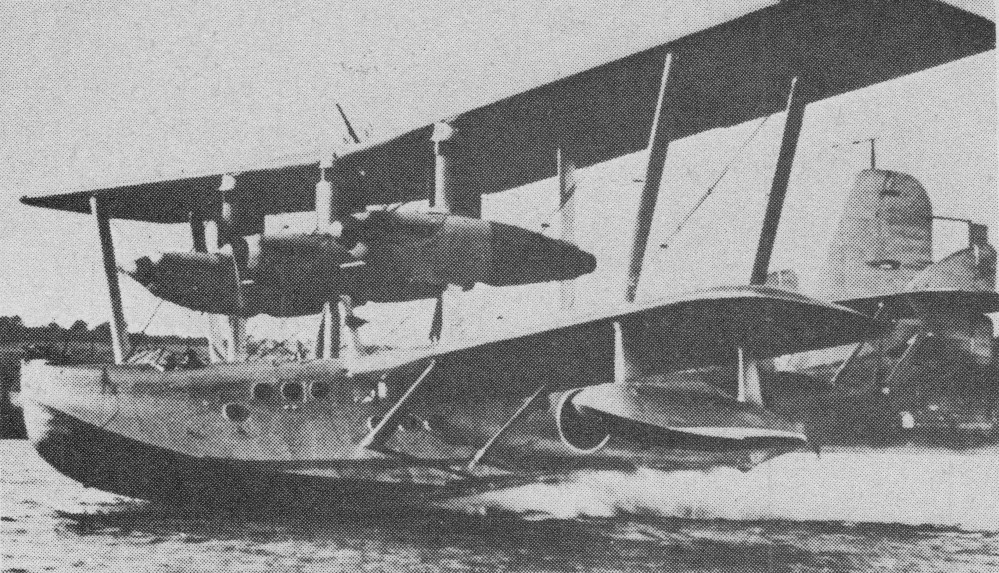
Designed by Short as the KF.1, the prototype was built by Short and delivered to the Japanese Naval Air Force.
Five were built in Japan and at least one saw service in World War II as the Kawanishi H3K1 Type 90-2, a troop and supply transport assigned the code name Belle.
Later models produced by Kawanishi versions had enclosed cockpits and remained active until replaced by H6K2 Type 97 flying boats in 1938-39.

 All Aero