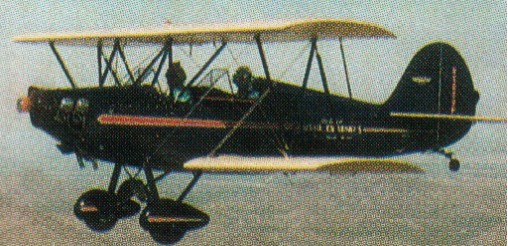
Keystone LB-10 / B-3 / B-5

A number of the Keystone aircraft became one off flying testbeds for various newly developed geared or direct drive versions of the Hornet and Cyclone engines. This pro¬gramme gave rise to the new designations LB 8, LB 9, LB 10, LB 11, LB 11A and LB¬-12. Most of these were conversions from existing LB 6 or LB 7 bombers.
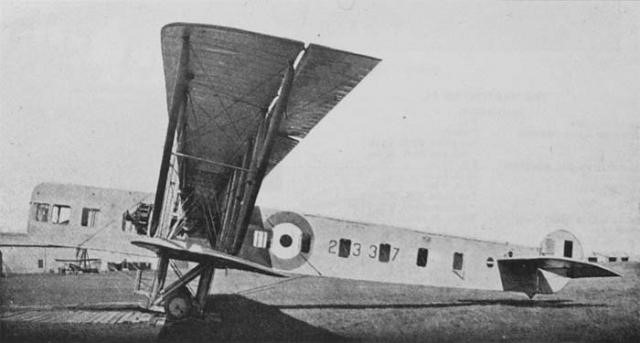
The major production model which follow¬ed was the single tailed LB 10A, powered originally by 525 hp R 1690 3 Hornets, of which 63 were built. These were delivered under the new designation B 3A, the USAAC having adopted a single ‘B’ category for all types of bomber in 1930. Later, 27 of them were refitted with R 1750 3 Cyclones in place of the Hornets and were redesignated B 5A.

LB 10A
Engine: 525 hp R 1690 3 Hornet
Span: 22.78 m (74 ft 9 in)
Length: 14.88 m (48 ft 10 in)
Gross weight: 5875 kg (12 952 1 b)
Maximum speed: 183 km/h (114 mph).

Keystone LB-6 / LB-7

LB-6

The Keystone LB series had been characterized by tapered wings, but the XLB 6 of 1927 (converted from the tenth LB 5) introduced constant chord wings with new powerplant (two 525 hp Wright R 1750 1 Cyclone radials) mounted between the wings, and a lengthened fuselage. Thus modified, this became the standard configuration for the remaining Keystone LB types, beginning with 17 production LB 6s and continuing with 18 LB 7s, which were identical except for their 525 hp Pratt & Whitney R 1690 3 Hornet engines.

Keystone LB-5

Prior to the com¬pany reorganization, Huff Daland had com¬pleted a prototype XLB 5, with triple rudders and two 420 hp Liberty engines mounted on the lower wings, and this was adopted as the initial production configuration. Ten similar LB 5s were delivered in 1927 28, followed by 25 twin tailed Keystone LB 5As delivered in 1928.
Standard armament consisted of five 0.30 in (7.62 mm) machine guns and the maximum bombload was 910 kg (2000 lb).

LB 5A
Span: 20.42 m (67 ft)
Length: 13.61 m (44 ft 8 in)
Gross weight: 5526 kg (12184 1b)
Maximum speed: 172 km/h (107 mph).

Keystone LB-1 / LB-3

The XLB-1 three-seat, single-engine light bomber was tested in 1923.
The single engined configuration, mounting an 800 hp Packard, proved unsuitable and the basic LB 1 airframe was redesigned by Keystone in 1927 as the twin engined XLB-3A, with two 410 hp Pratt & Whitney R 1340-1 Wasp nine cylinder radials mounted midway between the equal span wings. The complement was increased from three to five (pilot, copilot, bombardier, and front and rear gunners) and the bombardier was located more conventionally in the nose, instead of amidships as in the LB 1.
In 1924 Huff-Daland was reorganized as Keystone Aircraft Corporation and the production bomber aircraft was known by this latter company name.

Kennedy Giant

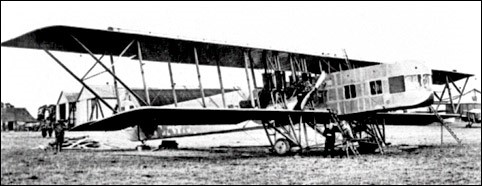
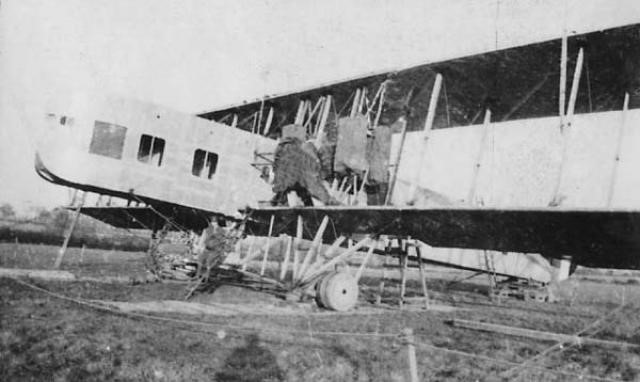
The Kennedy Giant was a British biplane heavy bomber designed by Kennedy Aeroplanes Ltd. during the First World War. The design was an imitation of works by Igor Sikorsky, with whom the owner of Kennedy Aeroplanes Ltd., Chessborough J. H. Mackenzie-Kennedy, had ostensibly worked prior to setting up the company.

The four-bay, unstaggered wings spanned 142 feet; ailerons were fitted to the upper wings only, their control rods extending along the top of the leading edge, and the wing overhang being braced by pairs of outraked struts. The four engines, mounted in tandem pairs in nacelles on the lower wings, were very early British-built examples of the Canton-Unne/Salmson Z9 nine-cylinder water-cooled radials, each of which was provided with a pair of large vertical radiators on the sides of the nacelles.

The fuselage was of rectangular section over its entire length and tapered towards the tail only in plan. It provided fully-enclosed accommodation for the crew, the pilot being situated in the extreme nose, with individual compartmented cabins aft. The tail surfaces were of inadequate area, the tiny rudder (later enlarged) being unbalanced and without a fixed fin. The undercarriage was a complicated structure of multiple V-struts and skids.

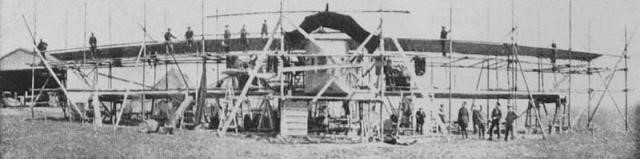
The aeroplane was a notorious failure; its size meant that construction had to take place in an open field at the Fairey factory at Heston as none of the hangars near Hayes, Middlesex, where the prototype was assembled, were large enough to house it.

Supply of the Sunbeam engines, manufactured under licence by the Dudbridge Iron Works Ltd of Stroud, were afforded very low priority (and were not subject of official trials until May 1919). Early examples were rated at only 200hp and, with these, the Giant was made ready for flight at Hendon late in 1917.

Movement needed two trucks and seventy men, but these efforts broke the tail of the aircraft. It was repaired, but the fuselage shortened by 10 feet (3,048 m).

This power proved insufficient to gain true flight, and despite being taxied at full throttle downhill, the pilot, Lieut Frank T Courtney, only managed to lift the mainwheels off the ground for a short hop with the tailskid still dragging along the ground. The prototype was left derelict at Northolt Aerodrome for a number of years.

Engines: Canton-Unne Salmson Z9, 200hp / 150 kW
Propellers: two tractor and two pusher two-blade
Wingspan: 142 ft 0 in / 43.28 m
Length: 80 ft 0 in / 24.38 m
Height: 23 ft 6 in / 7.16 m
Empty weight: 19017 lb / 8626 kg
Crew: 3

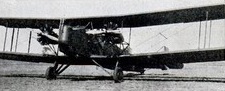
Kelly & Ghan KG Special

The second, and last, plane constructed by the Cabool R-4 school students was a Cabin Biplane named the KG Special. The plane was designed by Dr. Harry B. Kelly, DDS and Bill Ghan. During the class, students drew the plans and constructed the plane. This project continued on into a second school year as both drawing and building the plane took more time. The completed plane was taken to the West Plains airport, assembled and flown. Bill Ghan was the first to fly this plane

Kelly Hatz CB-1

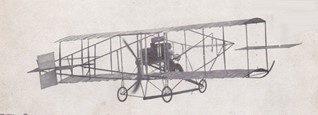
Began as a parasol monoplane, N8670E, the first flight of this tandem-seater, open-cockpit biplane took place in 1968.

The wings are a fabric-covered spruce spars with truss rib structure, while the fuselage and tail are built from welded steel tubing. Bungee shocks for the gear; 6 x 6 wheels with brakes; dual controls; space for overnight bag on shelf in front cockpit; fuel capacity 33 gallons in two tanks, or 20 gallons in one tank (center section).

The design weight of the Hatz (850 pounds) makes it perform well with the 85-hp Continental and it is stressed to take engines up to 150 hp. The Hatz can be trimmed to fly hands-off (more or less), which helps out when trying to read a map in an open cockpit. Control response is slow enough to give a feeling of a much larger aircraft, and it is capable of all aerobatic maneuvers in the power range.

The Hatz CB-1 Biplane is a two place with a 90 mph cruise.

A straight-forward design with simple details and a minimum of time consuming jig work is the result of many hours of planning and testing.

First produced by John D Hatz, Schofield and Merril WI, USA, and circa 1980, Dudley R Kelly of Versailles KY., USA, plans were marketed to home-builders at $125 and kits were available from commercial sources.

Wingspan 25’4”
Height: 7.83 ft
Length 19’
Wing area: 178 sq.ft
Range: 200 sm
Height: 7.8 ft
Seats: 2
Landing gear: tail wheel

CB-1
Engine: Continental O-200, 100 hp.
HP range: 85-150.
Span: 25 ft 4 in
Length: 19 ft
Height: 7 ft 10 in
Chord: 50″ Clark Y Airfoil
Area: 178 sq. ft
Weight empty: 850 lbs.
Gross: 1400 lbs.
Fuel cap: 18 USG.
Useful load: 550 lb
Speed max: 105 mph.
Cruise: 80 mph.
Range: 200 sm (20 min res)
Stall: 55 mph.
ROC: 750 fpm.
Take-off dist: 400 ft.
Landing dist: 600 ft.
Wing loading: 7.8 lbs per sq. ft.
Allowable G forces: +5 / -3
Landing speed: 40 to 45 mph

Classic
Engine: Lycoming O-320, 160 hp.
HP range: 100-160.
Speed max: 150 mph.
Cruise: 105 mph.
Stall: 42 mph.
ROC: 1000 fpm.
Take-off dist: 600 ft.
Landing dist: 600 ft.
Service ceiling: 10,000 ft.
Fuel cap: 25 USG.
Weight empty: 1000 lbs.
Gross: 1600 lbs.
Range: 350 nm
Length: 19.1 ft
Wingspan: 25 ft
Wing area: 180 sq.ft
Seats: 2