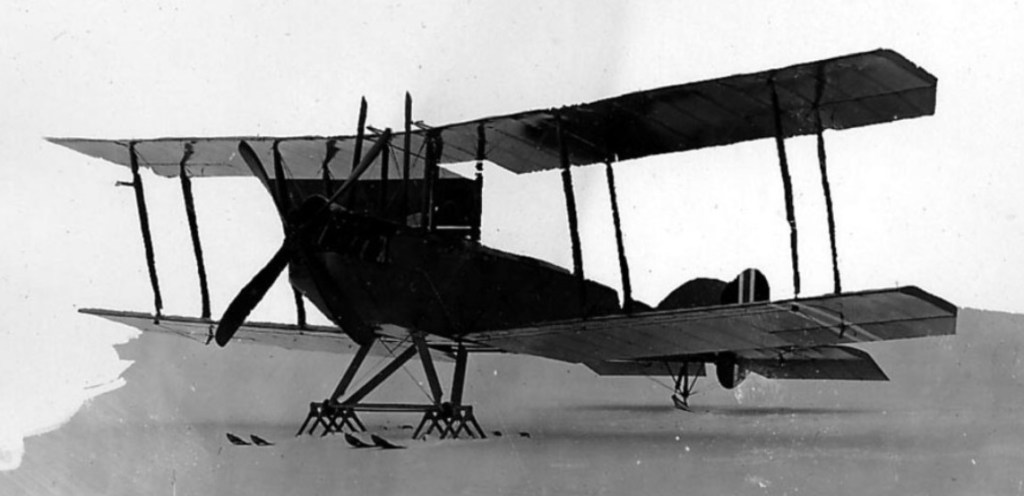
The Kjeller Aircraft Factory FF.5 was a reconnaissance biplane in two variants, The T.1 was based on R.A.F BE.2e, and the second was T.1B, which based on Avro-504.
The FF.5 was intended to replace F.F.1 and F.F.2 trainers in Norway. The one F.F.5/T.1 built, in 1918, was unsuccessful.
NB: T.1B and T.1C were unrelated Avro 504-based designs
John Kitchen’s annular biplane was built in 1910. It was sold to Cedric Lee, who also had visions of revolutionary annular designs. Together with George Tilghman Richards, he tested the aeroplane at Famine Point near Heysham, Lancashire during 1911 without any success. Finally it was destroyed when it’s hangar was blown down in a gale.
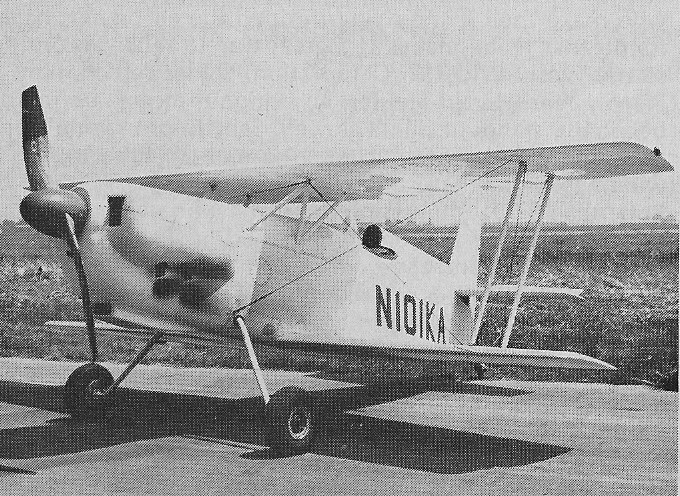
W.B.Kinner, son of the Kinner Fleet designer and a Captain with Saturn Airways, completed a fifteen year homebuilt project designed so it could be built in his garage.
The wings are metal and plywood, and the fuselage is plywood with fibreglass cowl and turtledeck.
Kin Air Engine: Lycoming O-290-G4, 125 hp Wingspan: 16 ft 6 in Length: 14 ft 6 in Height: 5 ft Empty weight: 705 lb
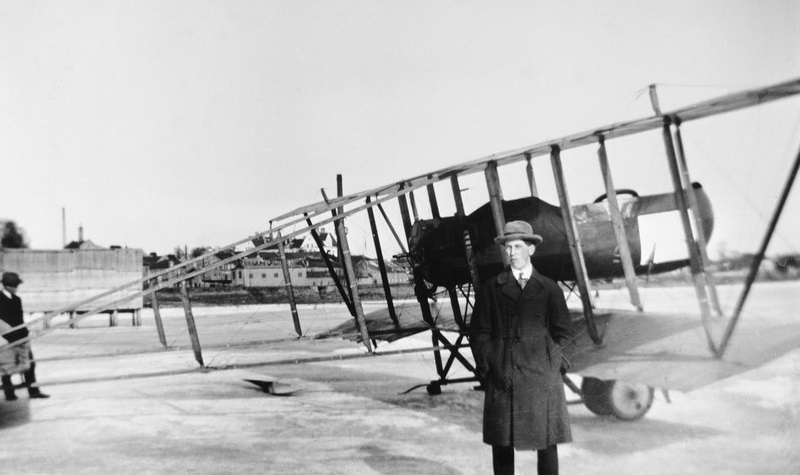
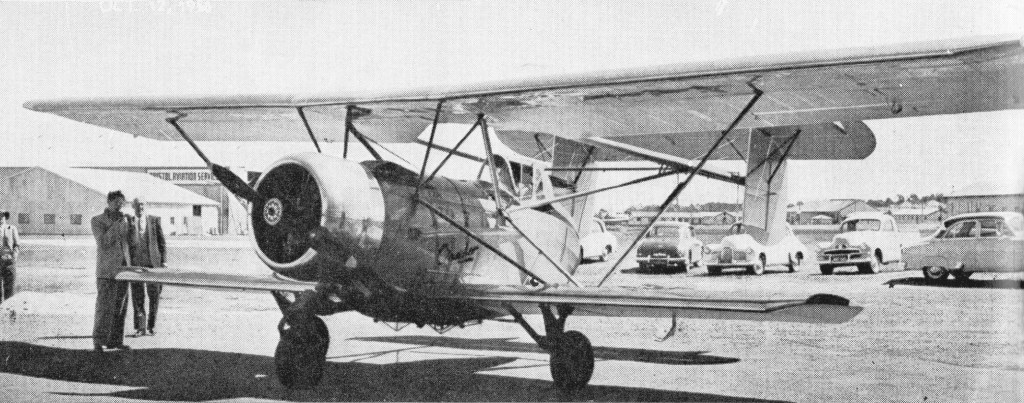
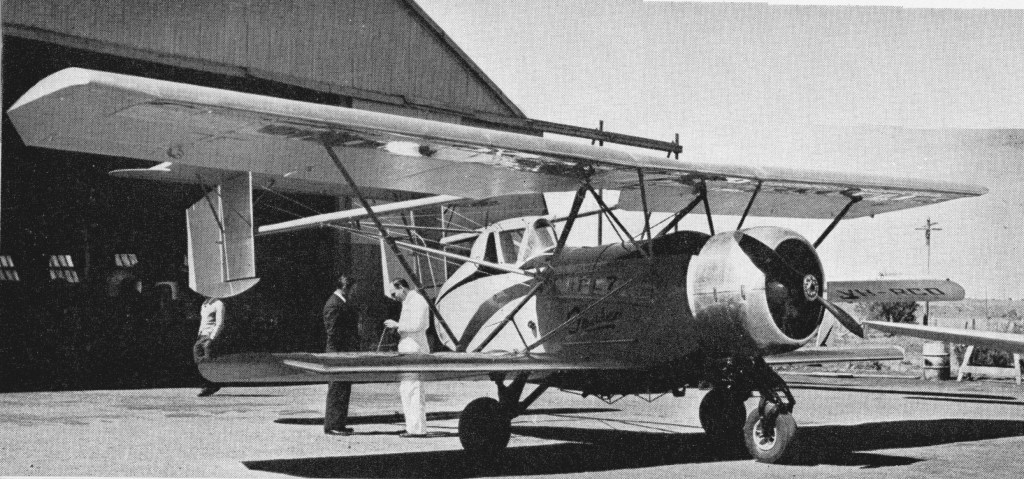
In 1955 Kingsford Smith began design of special agricultural type which materialised as the PL-7 Tanker biplane. Fuselage was mild-steel tank, tail carried on tubular booms, tricycle landing gear. Flew September 1956.
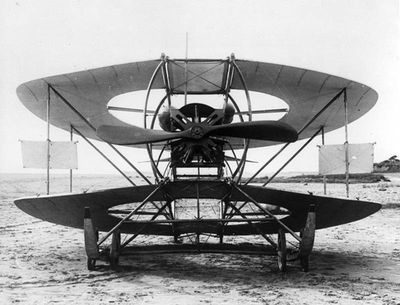
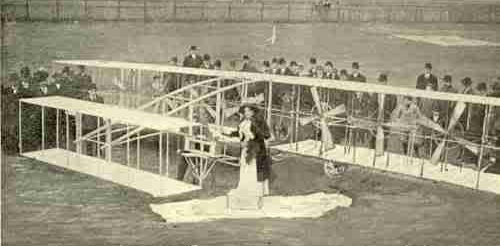
Wilbur R. Kimball’s 1909 aeroplane “New York No.1” at Morris Park, New York, during its christening by the well-known Ziegfield Follies showgirl Anna Held on March 12, 1909. With eight 4-bladed propellers driven by one engine; the machine was built at Morris Park under the direction of the American Aeronautic Society but appears not to have flown with any great success.
The Keystone K-55 Pronto was a mail plane developed in the United States in the late 1920s. It was a conventional single-bay, unequal-span biplane design with slightly staggered wings. The pilot sat in an open cockpit, in tandem with a forward cockpit that could carry two passengers side-by-side. The fixed, tailskid undercarriage had divided main units.
Pronto was the first aircraft Keystone made for the civil market. However, like many aircraft manufacturers of the late 1920s – early 1930s, this attempt was not successful. A number of these aircraft were purchased by the government of Peru. Operated by the aviation arm of the Peruvian Navy, these aircraft initiated the first airmail service into the Peruvian Amazon. The first flight of this service was made by two Prontos, piloted by Leonardo Alvariño Herr and Harold B. Grow from Lima to San Ramón on 26 October 1927.
At least one Peruvian Pronto was fitted with pontoons and used to survey the Amazon River for locations suitable for seaplane operations.
In the Colombia-Peru War one Peruvian K-55 flow by Lieutenant Suero was captured by the Colombian Army.
Engine: 1 × Wright J-5, 220 hp (160 kW) Wingspan: 39 ft 11 in (12.17 m) Length: 26 ft 9 in (8.15 m) Empty weight: 594 kg Maximum take-off weight: 1100 kg Maximum speed: 112 mph (180 km/h) Cruising speed: 160 km / h Range: 500 miles (800 km) Crew: One pilot Capacity: 2 passengers
The last two LB designations covered seven LB 13s with 525 hp Hornets (redesignated in 1930 as five Y1B 4s and two Y1B 6s) and three LB 14s with 575 hp Hornets (redesignated as Y1B 5s).
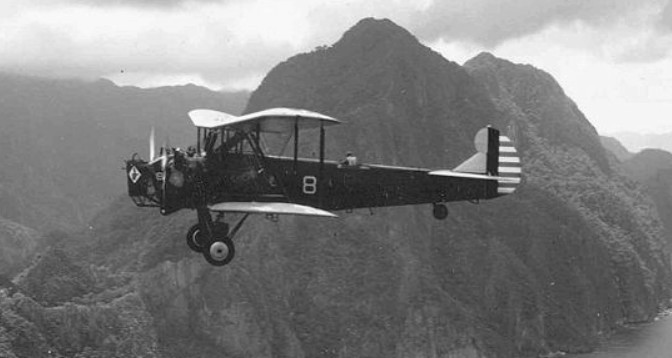
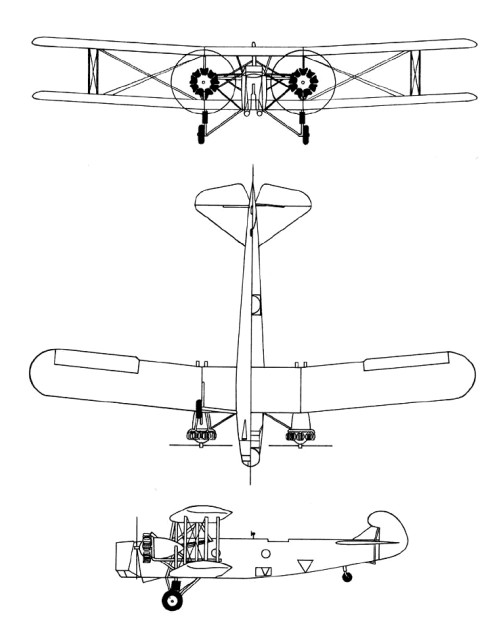
Developed from the Keystone B-3, the Keystone B-4 was a biplane bomber produced for the United States Army Air Corps in 1930. Originally seven were ordered by the United States Army Air Corps as the LB-13 light bomber. They were to be equipped with single vertical tails and were to be powered by a pair of 525 hp Pratt & Whitney GR-1690 radials. Serials were 30-344/353. When the LB- designation was dropped in 1930, the first five planes were redesignated Y1B-4. (The Y1B- designation indicates that funds for the design did not come from the normal annual funds.) Of seven LB-13s ordered, five were completed as Y1B-4s with 575 hp R-1860-7 engines (30-344/348). The Y1B-4 had a slightly better performance than the B-3A because of the more powerful engines, but was otherwise almost exactly the same.
The first B-3A (S/N 30-281) was converted to Y1B-4 configuration with the addition of R-1860-7 radial engines and low pressure tires. Because of more powerful engines, the performance of the Y1B-4 was a slight improvement on the B-3, but the only difference between the two planes was their engines.
On April 28, 1931, the army ordered 25 improved Y1B-4s as the Keystone B-4A. Serials were 32-117/141. This production version was part of the last biplane bomber order made by the Army Air Corps (along with 39 B-6As, identical in all respects except their make of engine), and the B-4As, delivered between January and April 1932, were the last biplane bombers delivered to the Air Corps.
Like the B-3A, the B-4A carried five crew members; two pilots, a bombardier, and a front and rear gunner. The B-4A was externally almost identical to the B-3A which preceded it (as well as to the B-5 and B-6 which followed it).
B-4 was the last of the Keystone biplane bombers ordered by the U.S. Army in late 1931. These aircraft were used primarily as observation and reconnaissance aircraft as early as 1934 when the Martin B-10B went into operational service. Some remained in service into the early 1940s.
In 1932, Keystone produced 25 B 4As (575 hp R 1860 7 Hornets) and 39 B 6As (575 hp R 1820 1 Cyclones). Like the B 3A, these also had single tails; their armament was reduced to three 0.30 in (7.62 mm) guns, and bombload increased to 1130 kg (2500 lb).


 All Aero