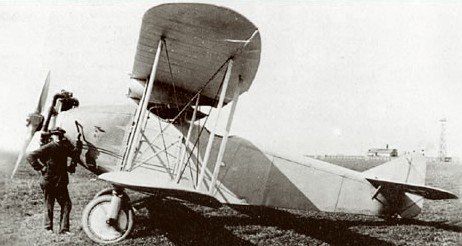
Passenger plane for two passengers, 1923
Passenger plane for two passengers, 1923
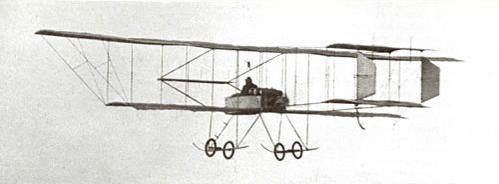
The 1910 Koolhoven FK01 Heidevogel biplane was designed and built by Koolhaven in Holland.
A single-seat fighter biplane of 1918
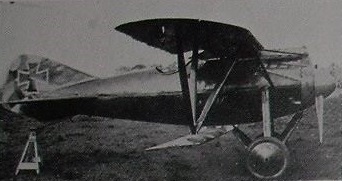
The Kondor Dreidekker, first flown in October 1917, was not a success. Instead, Kondor used the fuselage, empennage and lower wing of the Dreidekker to produce over the winter of 1917-18 a biplane or sesquiplane called the D.7 designed by Walter Rethel.
The common fuselage was a tube steel internal structure with plywood skin, rounded in cross-section. At the front the fuselage reduced smoothly in diameter to a large spinner with a two blade propeller driven by a 160 hp (120 kW) six-cylinder, liquid-cooled upright inline Mercedes D.III engine, though there are hints in the records suggesting an earlier, different engine. The upper part of the engine protruded above the fuselage, enclosed in its own cowling. At the rear the tailplane was mounted at mid-fuselage under a long chord fin with a strongly swept leading edge, carrying a deep rudder. There was a shallow ventral fin. The D.7 had a fixed conventional undercarriage, with each mainwheel’s leg placed vertically and mounted at mid-fuselage, assisted by a forward leaning strut attached under the nose. A long tailskid reached rearwards from the forward edge of the ventral fin.
The wings of the D.7 had constant chord and the upper one was supported just above the fuselage on a cabane. The cockpit was aft of its trailing edge, where there was a central rounded cut-out to assist the pilot’s upward and forward view. The lower wing, narrower in chord, was not directly attached to the fuselage but supported centrally by rear leaning struts from the undercarriage structure. The interplane struts were also unusual; three struts were attached at the same point on the lower wing, spreading out upwards into an inverted tripod or pair of Vs.
The date of the D.7’s first flight is not known though it must have been after October 1917, when the Dreidekker was flying, and before May 1918 when a report from the Idflieg said the D.7 was about to recommence testing with the Mercedes engine. It was not entered into the second D-type (fighter) competition of June 1918, suggesting Kondor were beginning to concentrate on the monoplane designs suggested by the success of the Fokker D.VIII, a process that led to the Kondor E.III.
The D.7 remained a prototype and its development was soon abandoned.
Engine: 1 × Mercedes D.III, 120 kW (160 hp)
Propeller: 2-blade
Wingspan: 8.50 m (27 ft 11 in)
Wing area: 15.70 m2 (169.0 sq ft)
Length: 6.20 m (20 ft 4 in)
Height: 2.30 m (7 ft 7 in)
Empty weight: 590 kg (1,301 lb)
Gross weight: 785 kg (1,731 lb)
Maximum speed: 180 km/h (112 mph; 97 kn)
Endurance: 1.45 hr
Crew: One
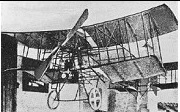
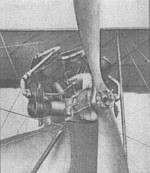
The 1910 Kolbanyi I biplane was designed and built by Geza Kolbanyi in Hungary, who together with Sylvester Golcsek designed and built an innovative 6 cylinder engine producing 60 HP and weighing only 230 lb.
It took to the air, but crashed due to the inexperienced pilot
Span: 33’5″
Length: 26’3″
Take-off Weight: 880 lb
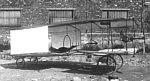
In France in 1907, Paul Koechling designed and built the Koechling No. 1 biplane.
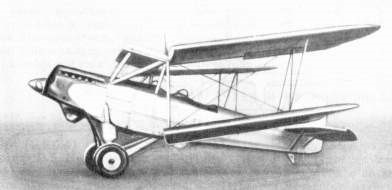
It was thought that an attack aircraft would be useful not only as a land aircraft, but that it could be used on board the Soviet aircraft carriers that were just beginning to be projected in the early 1930s. In particular, it was planned to convert the training ship “Konsomoliets” into an aircraft Carrier, for training with a crew of 26 fighters and 16 attack aircraft.
In parallel with the works on the Grigorovich TSh-2 and based on the LSh-1 attack aircraft, the ShON (Russian: ЦКБ ШОН) light two-seat attack aircraft was created. The initials of its name correspond to Attack Plane for Special Missions (ШОН – Ш турмовик О собого Н азначения) and number 23 corresponded to it in the TsKB production plan (TsKB-23). In its development, apart from SA Kochierigin and NN Polikarpov, DP Grigorovich participated.
A development of the Polikarpov R-5 the ShON was to be armed with a four PV-1 machine gun installation located in the lower part of the gunner’s cabin and capable of firing forwards, downwards and backwards, in addition to a capacity of 400 kg of bombs. The defensive armament was made up of a PV-1 machine gun to defend the rear hemisphere.
The aim was achieving a cheap and simple production aircraft. A feature of the design was the use of armor only on the underside of the engine and cockpit.
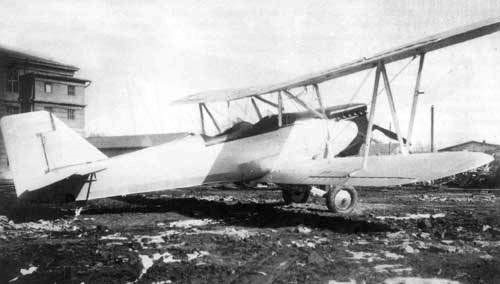
The motor mount was made of welded steel tubes and was fixed to the rest of the structure by means of four screws. The fuselage was made with welded carbon steel tubes and from the cabin to the end of the tail was covered with fabric.
The wings were designed in wood. Its structure included two stringers and had a textile covering. To facilitate the operation and the location of the ShON on the deck of the aircraft carrier, the wings were retracted to the rear. Modifications were made to the landing gear, which was reinforced to allow embarked operations.
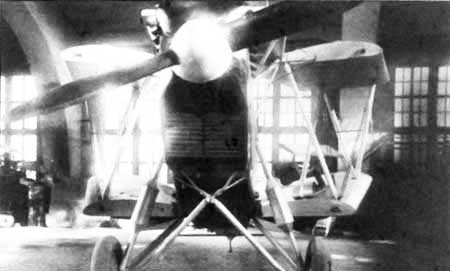
The prototype was built in 1931 and on April 1 of that year it was ready for testing, which lasted until the summer of 1932.
During the first test flights it was found that at an outside temperature of 21°C the water in the cooling system soon began to boil. For this reason it was decided to replace the cooling liquid with one based on alcohol-glycol. The oil temperature would also get quite high.
Despite the fact that the evaluations of the model were generally positive, the ShON did not go to the stage of serial production, since the need for this type of aircraft disappeared with the decision not to produce aircraft carriers.
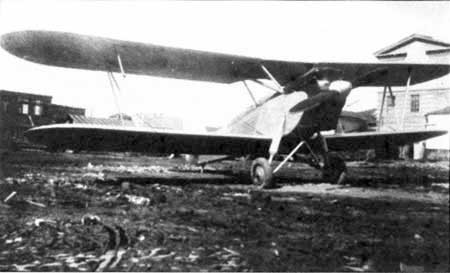
ShON
Powerplant: 1 x 680 hp BMW-VI
Wingspan of upper plane: 14.20 m
Wingspan of lower plane: 13.00 m
Wing area: 36.52 m²
Length: 8.64m
Empty weight: 1820 kg
Normal takeoff weight: 2670 kg
Wing loading: 66 kg/m²
Power load: 6.4 kg/hp
Top speed: 226 km/h
Cruising speed: 194 km/h
Practical range: 500 km
Practical ceiling: 4000 m
Armament: Five 7.62 mm PV-1 machine guns
Bombload: 400 kg
Accommodation: 2 crew
In the summer of 1940 S.A. Kochierigin developed a new assault aircraft project called MMSh, short for Small Modification of the Sh (ММШ – М алая М одификация Ш турмовика) based on a Shvetsov M-81 powerplant.
The Kochierigin MMSh (Russian: Кочеригин ММШ) development of the Kochierigin Sh-2 appeared in 1940 in order to improve performance and lower construction costs.
The basis for the development of the MMSh was the Kochierigin Sh-2, but with the replacement of the M-87A engine by the 1,280 hp M-81. In an installation under the hood some enlarged oil radiators were located. The fuel was regrouped in 4 protected tanks.
The wings were wood and with a reduction in area to 18 m² (instead of the 24.15 of the Sh-2). There was the same ratio of decrease to the area of the tailplanes and the empennage.
The planned armament included only four ShKAS machine guns and a bomb capacity of 200 kg (which could reach 400 kg in overloaded version).
The preliminary drawings were analyzed in the NII VVS and generally received a positive evaluation. The project was approved by Ya. V. Smuskievich on June 27, 1940. In the analysis report of the preliminary drawings it was verified: – ” taking into account that the aircraft is practically built, it is necessary to prepare and test it… “.
The MMSh was actually completed, tested and recommended for series production as a light bomber. With the designation BB-21 it was assigned to Factory No. 292 for serial production. Soon the preparation was stopped to guarantee the Yatsenko I-28 and later the Yakovlev I-26.
Powerplant: One 1,280 hp M-81
Wingspan: 12.00 m
Wing area: 18 m²
Length: 10.00m
Take off weight: 3800 kg
Wing loading: 211 kg/m²
Power load: 2.97 kg/hp
Speed at sea level: 450 km/h
Speed at 5000 m: 520 km/h
Landing speed: 140 km/h
Time 6000 m: 11 min
Take-off run: 400 m
Landing run: 300 m
Range at top speed: 685 km
Maximum range at economic speed: 905 km/h
Accommodation: 2 crew
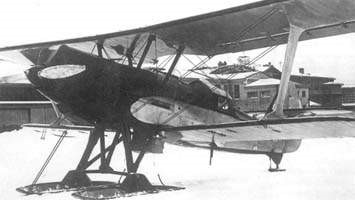
In 1932 the Kochierigin and Tupolev collectives were ordered to work on a light reconnaissance aircraft intended to replace the Polikarpov R-5. Tupolev was immersed in the development of large bombers and his project was not finished.
In 1933 the collective led by SA Kochierigin developed a light reconnaissance aircraft which received the designation LR. Being the first aircraft built after Kochierigin ‘s designation as TsKB brigade director at Factory No.39, the model was designated TsKB-1 (Russian: Кочеригин ЛР (ЦКБ- 1)). The Polikarpov R-5 itself had been taken as the basis for its development.
The LR was designed as a traditional single-engine sesquiplane of mixed construction, and powered by a 650-hp Mikulin M-34.
The fuselage was of welded tubes. The front portion was covered in aluminum. The rest of the fuselage and the tail consisted of a lightweight fabric-covered duralumin structure.
The wings were made of wood. The empennage was made of duralumin with a textile covering. The stabilizer trim angle could be changed in flight.
The construction was very light. Without the motor the structure weighed only 640 kg.
The landing gear was of the conventional type with a tail skid, quite similar to that of the R-5, but with hydro-pneumatic shock absorbers. The wheels featured disc brakes, a first for the USSR.
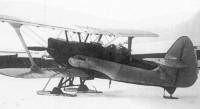
The cockpit was open with the left side folding to allow access to the cockpit. The gunner’s cabin was closed and covered with a protective screen that rotated 360º. On the left side there was a small door for access.
The powerplant was installed on a casing that was fixed to the airframe by four bolts. The radiator was located in the lower part of the fuselage.
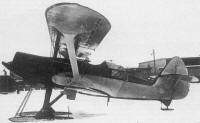
Using a more powerful engine, more refined aerodynamics, and lower flying weight, the LR outperformed the R-5, and even the I-5 fighter. With a flying weight of 2426 kg the maximum speed of the LR at sea level reached 271 km/h and at 5000 m it was 247 km/h. The height of 3000 m could be reached in just 7.3 minutes and the sharp turn was made in 17 seconds.
Armament consisted of a pilot-operated PV-1 synchronized machine gun and a gunner-operated ShKAS from the second cockpit. The aircraft could also carry up to 200 kg of bombs in 8×25 kg or 2×100 kg configuration.
The first prototype was ready in July 1933. During a test flight on January 27, 1934 with the pilot Yu.I. Piontkovsky at the controls, there were problems because the operators had interchanged the aileron control cables. No one was injured and the plane received light damage.
A second prototype was developed in 1934 with a more powerful Mikulin M-34N powerplant with turbo-charger (hence the N – Nagnitatiel) and a nominal power of 752 hp, which brought about a noticeable increase in performance.
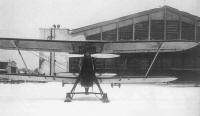
With a takeoff weight of 2,590 kg, the LR M-34N had a speed of 282 km/h at sea level and at 4,000 m it was 319 km/h. Climb time to 3,000 was 6 minutes and turn time to 1,000 m was 17 seconds. The take-off and landing runs were 210 and 250 meters respectively and the range was 340 km.
With a normal bomb load the flight weight reached 2800 kg and the maximum speed at sea level decreased to 273 km/h and at 3700 m it was 303 km/h.
State tests of the M-34N-powered LR were rated as very positive. The aircraft could easily be used as a light attack aircraft by reinforcing the armament. During the tests, refinements were made that allowed the weight to be reduced by about 100 kg.
The report of the state tests, signed by the head of the VVS RKKA Yákov I. Álksnis on October 3, 1934. In it, some deficiencies were pointed out, among which the poor visibility from the second cabin, the tendency to deviate to the left during the takeoff run and the poor completion of the prototype developed in Factory No. 39.
The report also requested to prepare on the basis of the LR M-34N and after solving the problems presented, the serial production of the model as a light reconnaissance and attack aircraft.
It was also proposed to improve the installation of the gunner, increasing the range of the aircraft to 400 km and achieving a speed at 4000 meters of 360 km/h.
However, this machine did not go into series production either. The industry rejected new welding and metal working technologies. Priority was given to the Polikarpov RZ light attack aircraft, obtained as a development of the R-5, but with reduced dimensions and an M-34RN engine (with reducer and compressor) with a nominal power of 750 hp. For the factories that produced the R-5, it was easier to transfer to this model.
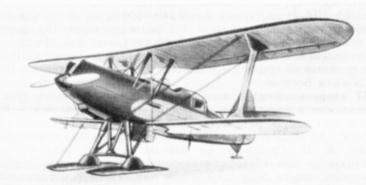
LR M-34
Powerplant: 1 x 650/750 hp M-34
Wingspan upper plane: 13.00 m
Wingspan lower plane: 10.80 m
Wing area: 36.52 m²
Length: 8.64m
Empty weight: 1,734 kg
Normal takeoff weight: 2,426 kg
Wing loading: 66.5kg/m²
Power load: 3.7kg/hp
Maximum speed at sea level: 271 km/h
Maximum speed at altitude: 247 km/h
Landing speed: 93 km/h
ROC: 455 m/min
Time to 1000m: 2.2min
Time to 2000m: 4.6min
Time to 3000m: 7.3min
Time to 5000m: 15.6min
Practical ceiling: 7,400 m
Practical range: 700 km
Armament: One pilot-operated PV-1 synchronized machine gun and one ShKAS in the second cockpit.
Bombload: 200 kg (8 х 25, 4 х 50, 2 х 100 kg)
Accommodation: 2 (pilot and gunner)
LR M-34
Powerplant: 1 x 750/815hp M-34N
Wingspan upper plane: 13.00 m
Wingspan lower plane: 10.80 m
Wing area: 36.52 m²
Length: 8.64m
Empty weight: 1,812 kg
Normal takeoff weight: 2,626 kg
Wing loading: 72.5kg/m²
Power load: 3.5kg/m²
Maximum speed at sea level: 282 km/h
Maximum speed at altitude: 314 km/h
Landing speed: 94km/h
Ascent speed: 455 m/min
Time to 1000m: 2.0min
Time to 2000m: 4.6min
Time to 3000m: 6.0min
Time to 5000m: 10.7min
Practical ceiling: 9,100 m
Practical range: 800 km
Take-off run: 250 m
Landing run: 210 m)
Armament: One pilot-operated PV-1 synchronized machine gun and one ShKAS in the second cockpit.
Bombload: 200 kg (8 х 25, 4 х 50, 2 х 100 kg)
Accommodation: 2 (pilot and gunner)
 All Aero