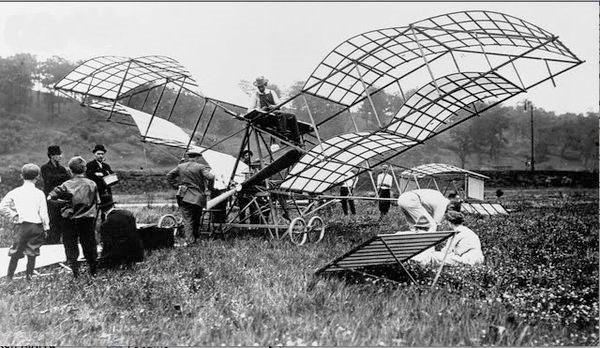
Built by mechanic Stefan Kozłowski, it was the first aircraft built on polish territory. The machine was wrecked during the first flying trials in May 1910. The engine is a three-cylinder W-type engine, possibly a 45hp Anzani.
A machine built by Polish emigrant John Kowalski in Aspinwall, Pennsylvania, USA in 1910. This biplane is recognized to be the first Pittsburgh-built aeroplane flown, when on October 9, 1910, Kowalski, a marine engine builder with a great interest in aviation, crashed just after take-off.
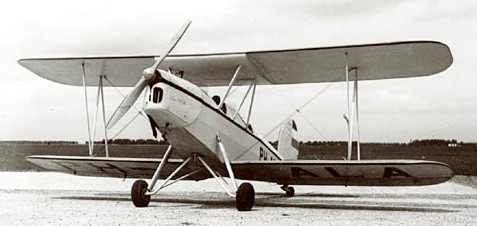
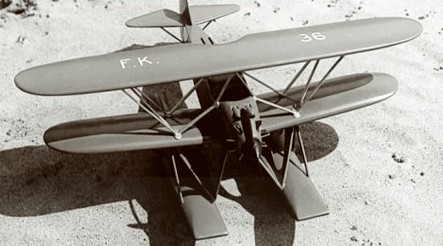
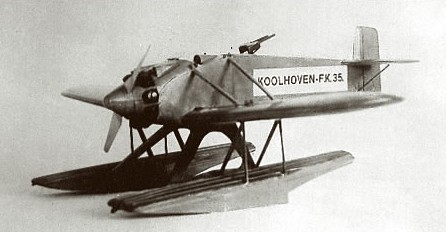
The type number F.K.59 has been used for three Koolhoven designs: a two-engined float plane, an open two-seat sports plane and a single engined military biplane developed from the F.K.52. Of these three aircraft it was the single engined biplane that made it to production as Koolhoven F.K.59, first flown in 1940. It was the last Koolhoven design in production. Other sources mostly show a photo of the two-engined float plane as F.K.59, but this was just a mock-up, not an actual aircraft, neither a prototype.
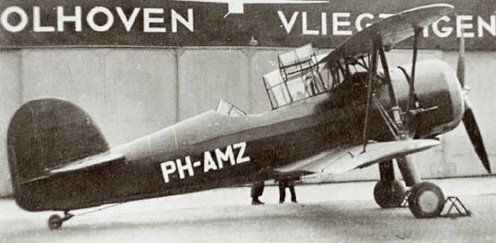
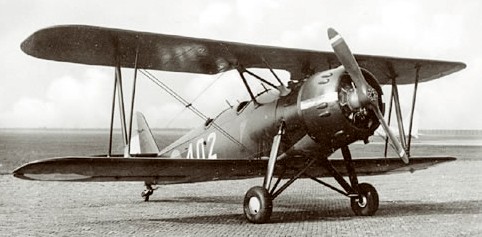
Dutch two-seat fighter bomber/reconnaissance air¬craft. Of similar appearance to the British Gladiator, the F.K.52 biplane had a fully¬ transparent framed canopy over the two cockpits, and a Bristol Mercury radial engine driving a three blade wooden propeller, and cantilever undercarriage. It was intended as a multi purpose successor to the Fokker C.V D, but no Dutch production orders were forthcoming.
The prototype flew on February 9, 1937, with a 645 hp Mercury VIS, but subsequent aircraft (four or five others were built) had an 840 hp Mercury VIII. Two 20 mm (0.79 in) cannon were mounted in the upper wing, one or two 7.7 mm (0.303 in) machine guns could be fired from the openable rear cockpit win¬dows, and up to 115 kg (253.5 lb) of bombs could be carried under the fuselage.
With a speed of 230 mph in the reconnaissance fighter role, the Republicans ordered five of the type in 1939, but none was delivered.
Four F.K.52s were in Holland when the country was invaded on May 10, 1940, of which two were broken up during that year. The other two were supplied to the Finnish air force in January 1940, with whose TLeLv 36 (Ground Liaison Squadron 36) they served as trainer/observation aircraft during the Winter War of 1940 41 and its ‘continuation’ in 1941 43.
FK.52 Engine: Bristol Mercury VIII, 619-kW (830-hp). Span: 9.80m(32ft 1¾ in) Length: 8.35m(27 ft 4¾ in) Gross weight: 2500 kg (5510 1b) Maximum speed: 370 km/h (230 mph).
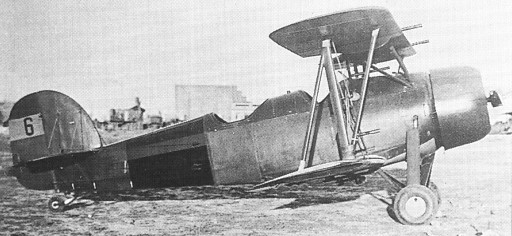
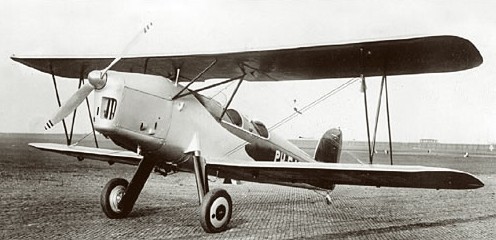
This two seat biplane had tandem open cockpits, with dual controls; it was armed with two 7.7 mm (0.303 in) for¬ward firing machine guns in the upper wing, a third movable 7.7 mm (0.303 in) gun in the rear cockpit, and provision for under¬fuselage bomb racks. A vertical camera was mounted in the floor of the rear cockpit. Usual powerplant was a 350 hp Armstrong Siddeley Cheetah IX radial engine, but some F.K.51s had 270 hp Cheetah V, 450 hp Pratt & Whitney Wasp, or (those for Spain) 400 hp Armstrong Siddeley Jaguar engines; the F.K.51 bis (for Spain) had a 450 hp Wright Whirlwind.
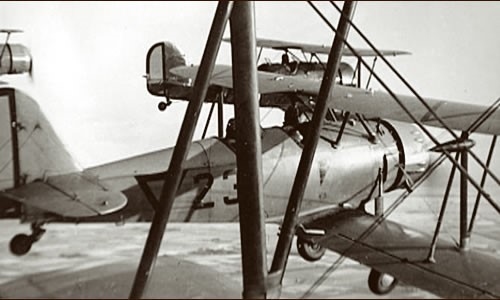
The LVA (Dutch army air service) ordered 53 in 1937, later increasing its order. In all, some 130 140 F.K.51s were built, of which 28 F.K.51/51bis were supplied to Spain during the civil war. When Holland was invaded in May 1940, the 2nd Air Regiment possessed 16 observation F.K.51s. Others were used by the Dutch East Indies army air service for reconnaissance and coastal/maritime patrol during 1941 42.
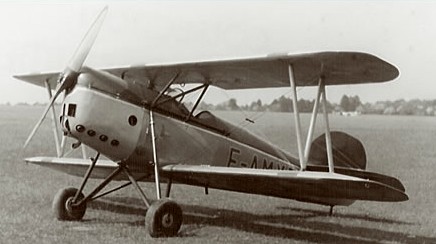
The FK.51 basic trainer first flew in May 1935. The type was ordered for the Dutch and Netherlands East Indian air forces. With a more powerful engine the type offered a combination of advanced training and limited combat capabilities, and during 1936 was ordered to the extent of 28 aircraft by the Republicans. These were delivered as 11 FK.51 aircraft with the 298-kW (400-hp) Armstrong Siddeley Jaguar VA radial and 17 FK.51bis aircraft with the 336-kW (450-hp) Wright R-975-E radial: some were used as night-flying trainers, but most served as night-fighters and reconnaissance aircraft with two fixed and one trainable machine-guns.
FK.51 Span: 9m (29ft 6.25 in). Length: 7.85m (25 ft 9in). Engine: 1 x Armstrong Siddeley Jaguar VA, 298kW (400 hp). Armament: provision for 3 x 7.7-mm (0.303-in) mg. Max T/O weight: 1450kg (3,197 lb). Max speed: 155 mph at 7,545ft. Operational range: 513 miles.


 All Aero