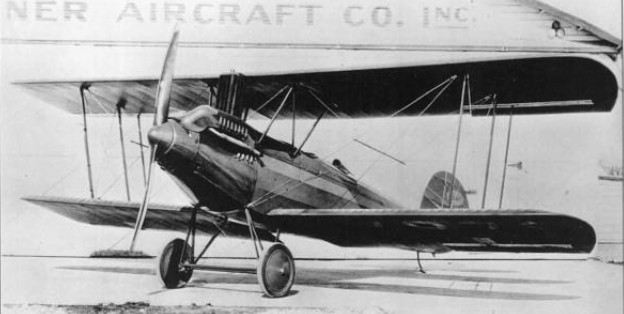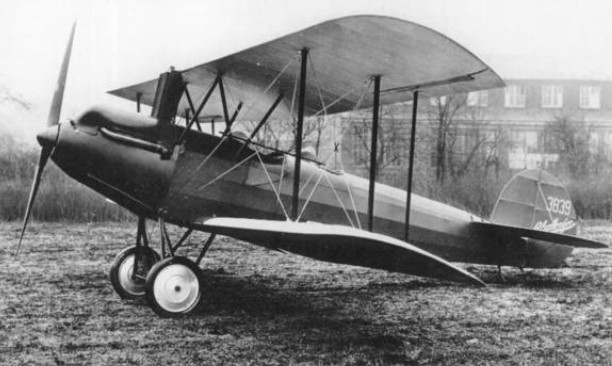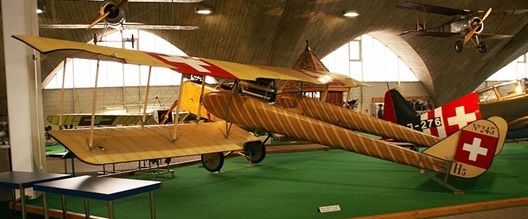
K+W Häfeli DH-1

In 1915 the Federal Construction Works (Eidgenoessische Konstruktionswerkstaette, K+W) set up their aircraft department at Thun, Switzerland and employed August Häfeli as chief engineer. Häfeli had previously designed the AGO C.I and AGO C.II, German reconnaissance biplanes. His first design was the Häfeli DH-1, similar in concept to his designs for AGO Flugzeugwerke.

The DH-1 reconnaissance biplane was a three-bay biplane of wood and fabric construction, it had a fuselage pod with tandem seating for the two-man crew and twin booms mounting the tail. The DH-1 was powered by an Argus As II engine built under licence by Buhler Brothers Limited. Six aircraft were built for the Swiss Air Force.

Six DH-1s were built during 1916 but within a year three had been destroyed in accidents. The survivors were withdrawn from service in 1919 and scrapped.

Engine: 1 × Argus As II, 120 hp (89 kW)
Wingspan: 42 ft 0 in (12.80 m)
Wing area: 409.04 ft² (38 m²)
Length: 28 ft 11¼in (8.82 m)
Height: 9 ft 10 in (3 m)
Empty weight: 1,653 lb (750 kg)
Max. takeoff weight: 2,480 lb (1125 kg)
Maximum speed: 78mph (126 km/h)
Range: 155 miles (250 km)
Service ceiling: 9,840 ft (3000 m)
Crew: two
Armament: one 0.293 in (7.45 mm) machine-gun

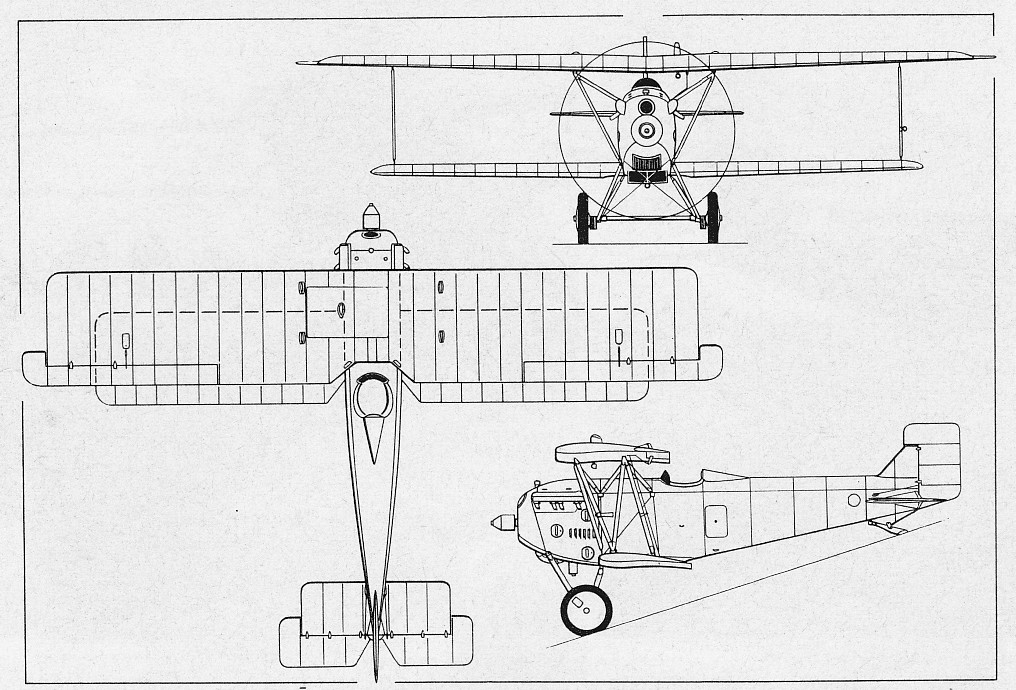
K+W MA-7 Militar-Apparat / Häfeli MA-7

The Militär-Apparat MA-7, also known as the Häfeli MA-7 and K & W MA-7, was a prototype fighter designed by August Häfeli in Switzerland. It flew in two different engine configurations, neither of which were deemed satisfactory and so the type did not enter series production. However, on 23 April 1926, test pilot Max Cartier did achieve a Swiss record for flying at an altitude of 9,800 metres (32,200 feet) above sea level.

Designed by August Häfeli in response to a Swiss Air Force requirement for an indigenous fighter design, the MA-7 was a biplane of fabric-covered wood construction with N-shaped wing struts like its predecessor the Fokker D.VI of 1918. Ailerons were installed only on the upper wing, which also contained an auxiliary gravity fuel tank. Power was provided by a 300 hp (220 kW) Hispano-Suiza 8Fb HS42 V-8 liquid-cooled engine manufactured in Switzerland under license. The aircraft was built by K & W in 1925 and handed over for trials in February 1926.

The prototype was returned to the manufacturer in April 1926 due to unsatisfactory flight characteristics and performance. K & W responded with the installation of an indigenous 400 hp (300 kW) LFW-12 X-1 engine. This, however, proved too large and heavy for the frame and entire MA-7 project was subsequently discontinued. The Swiss Air Force procured the French Dewoitine D.1 as their replacement fighter instead.

Powerplant: 1 × Hispano-Suiza 8Fb HS-42 V8, , 220 kW (300 hp)
Wingspan: 9.91 m (32 ft 6 in)
Wing area: 23.75 m2 (255.6 sq ft)
Length: 6.61 m (21 ft 8 in)
Height: 2.79 m (9 ft 2 in)
Empty weight: 843 kg (1,858 lb)
Gross weight: 1,213 kg (2,674 lb)
Maximum speed: 235 km/h (146 mph, 127 kn)
Cruise speed: 255 km/h (158 mph, 138 kn) (econ cruise)
Range: 300 km (190 mi, 160 nmi)
Service ceiling: 7,600 m (24,900 ft)
Rate of climb: 9.2 m/s (1,810 ft/min)
Crew: One

Kuhnert Ferryboat

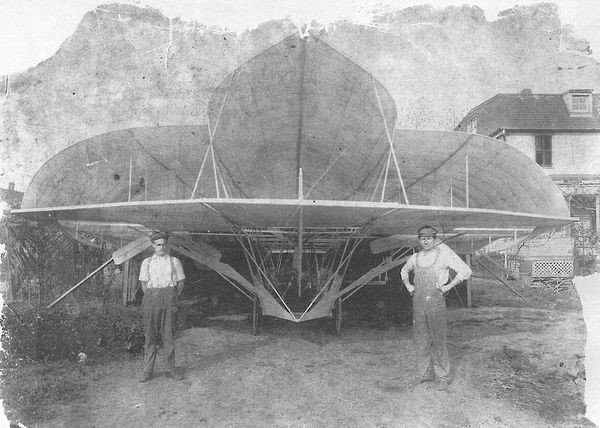
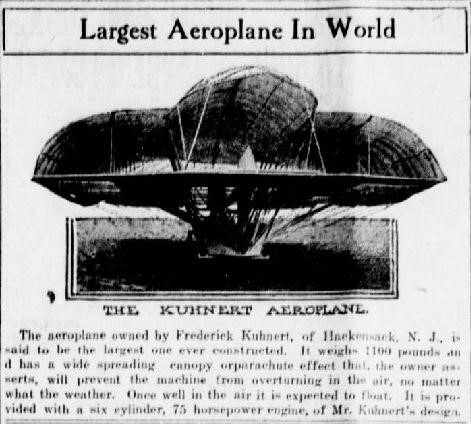
The creation of Frederick Kuhnert of New Jersey, and at the time was said to be to the largest aeroplane in the world, though no doubt it was just one of several claimants to that title. He established the Kuhnert Aerial Construction Company in order to “manufacture flying machines”. In 1910, Kuhnert bought 20 acres of land in the Hackensack Meadowlands to use as an aerodrome where he built a passenger airplane that could hold 14 people. Called Kuhnert’s Ferryboat, it, along with his aerodrome, was destroyed by a tornado in 1912 before it could make its first flight.

Engine: 75 hp

Kudashev 1910 Biplane / Кудашев 1

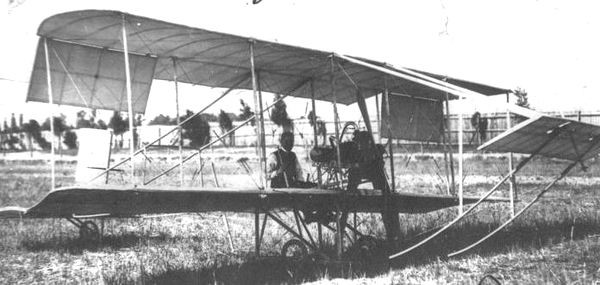
Kudashev’s biplane (Кудашев) Biplane of 1910, sometimes designated Кудашев 1, was, reportedly, the first aeroplane of Russian design flown. On May 23, 1910 it flew about half the length of a football pitch at a height of a couple of feet at Kiev. The flight was not advertised and went unnoticed by the general public. Kudashev was a civil engineer and associate professor at Kiev Polytechnics.

Span: 29’6″
Length: 32’10”
Weight loaded: 926 lb

K & S Jungster I

The Jungster I was developed as an 8/10 scale version of the famous Bunker Jungsmeister aerobatic airplane. The intention was to capture many of the flying qualities of the Jungmeister in a smaller size. This all-wood, fabric-covered biplane has a swept-back wing design of about 11 degrees to keep the center of lift close to the center of gravi¬ty. It can handle engines rated from 85 to 150 hp and is a frisky single place aerobatic plane.

Gross Wt, 1000 lb
Empty Wt. 605 lb
Fuel capacity 16 USG
Wingspan 16’5”.
Length 16’.
Wing area: 80 sq.ft.
Top 200 mph.
Cruise 150 mph
Stall 52 mph
Climb rate 2500+ fpm
Takeoff run 300 ft
Landing roll 800 ft
Range 300 miles
Seats: 1.

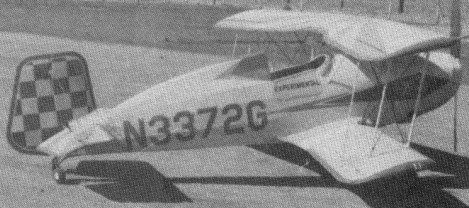
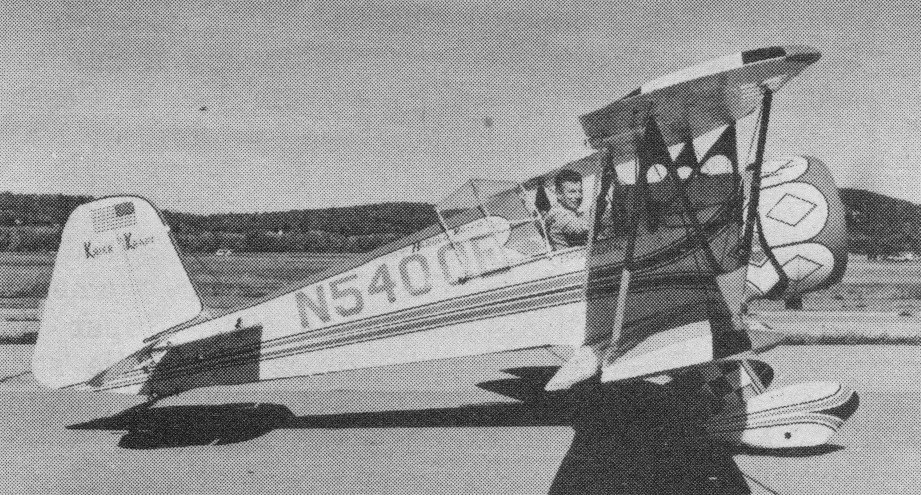
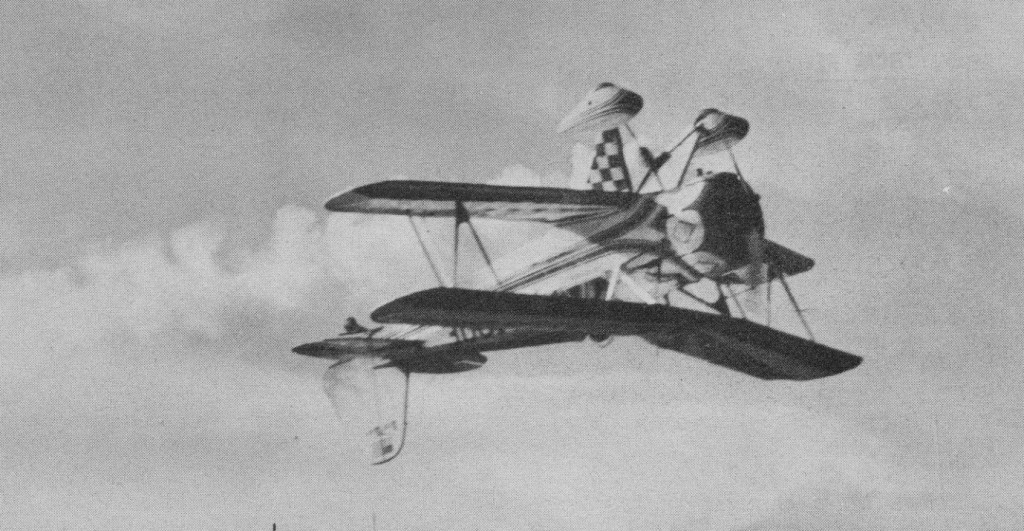
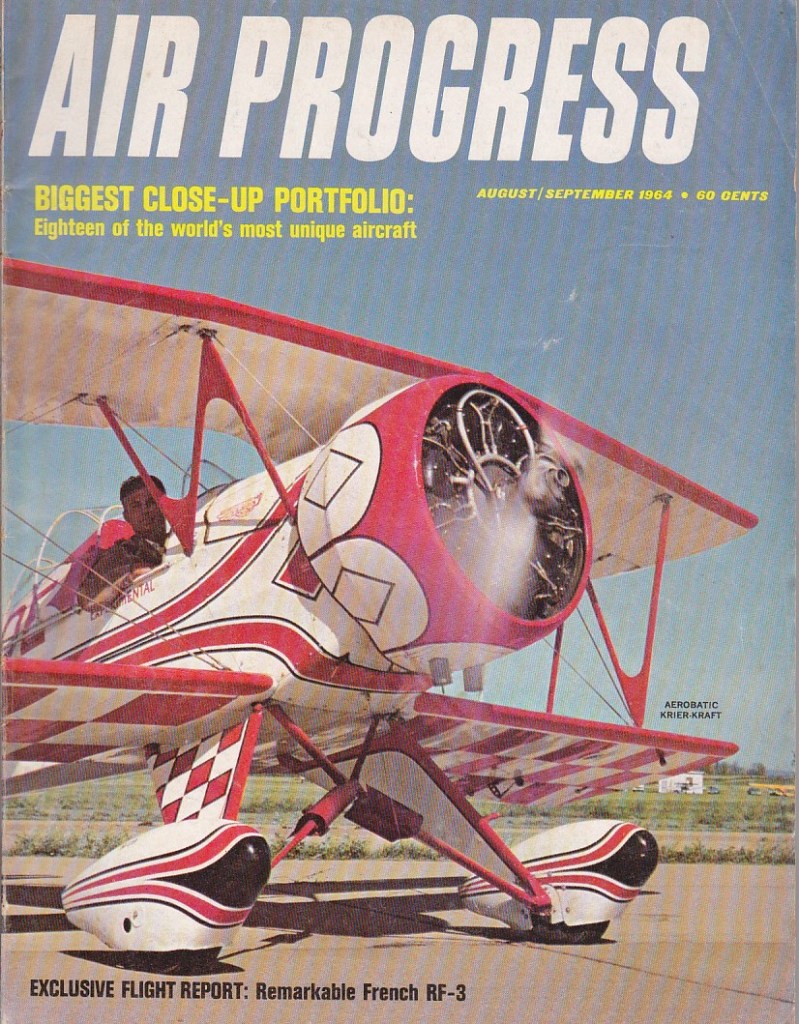
Krier-Kraft Acromaster

The 1964 Krier-Kraft Acromaster was an original aerobatic biplane built by Harold Krier, Wichita, Kansas, USA.

A performer for National Airshows, the Acromaster has a number of features to Bucker Jungmeister and Great Lakes and fully inverted engine and took nine months to build.

Engine: Warner 185J, 185 hp
Prop: Aeromatic 220-085
Wingspan both: 23 ft 8 in
Sweepback: 10.5 deg
Chord: 43 in
Length: 19 ft 8 in
Empty weight: 875 lb
Aerobatic weight: 1198 lb
Cruise: 120-125 mph