The 1926 American Eagle Aircraft Corp Trimotor “Taloga” was a four-place open cockpit biplane conversion of A-1, ordered by Wichita oilman H H Patton, but never finished. Power was to be three 125hp Quick engines.
Biplane
Aeromod Loadstar Model 100
In 1966 Aeromod Inc was providing conversions of Piper PA-18 Super Cub or J-3 Cub to biplane. Designed by William G Dorsch, the first flew in August 1966.
Bonnet-Labranche No. 1 1908 biplane
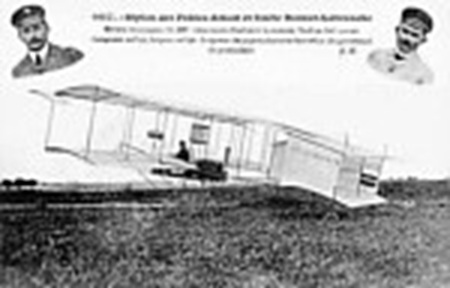
The 1908 Bonnet-Labranche No. 1 pusher biplane was designed and built by Brothers Bonnet-Labranche in France
Span: 41′
American Eagle 251 Phaeton / A-139
The 1929 American Eagle 251 Phaeton (ATC 282) open-cockpit biplane was designed by Robert T McCrum for the sportsman-pilot audience. Priced at $5,995, eight were built with 1 as A-139 clipped-wing racer. ATC 2-123 was superseded by ATC 282.
The 1930 251 Phaeton (ATC 282) was refitted with 220hp J-5 engine, priced at $7,795. Two were built; NX516H and NX/C872E, both of which were refitted with Wright J-6 under (2-121). (2-166) approved 150hp Hisso A or 180hp Hisso B installation.
1929 American Eagle 251 Phaeton
Engine: 165hp Wright J-6
Wingspan: 31’0″
Length: 24’5″
Useful load: 801 lb
Max speed: 120 mph
Cruise: 100 mph
Stall: 42 mph
Range: 500 mi
Seats: 3
1930 251 Phaeton
Engine: 220hp J-5 / 150hp Hisso A or 180hp Hisso B
Wingspan: 31’0″
Length: 23’6″
Useful load: 907 lb
Max speed: 130 mph
Cruise: 110 mph
Stall: 47 mph
Seats: 4
American Eagle 201 / A-201
The 1929 American Eagle 201 (ATC 293) designed by Jack Foster as a successor to the Phaeton and the last of the American Eagle biplanes, the first one of which was converted in 1935 by Porterfield into the only biplane ever produced by that company; NC582H.
An open-cockpit biplane, forty-four were built, priced at $3,995.
Engine: 100hp Kinner K-5
Wingspan: 31’1″
Length: 22’11”
Useful load: 782 lb
Max speed: 115 mph
Cruise: 95 mph
Stall: 30 mph
Range: 475 mi
Seats: 3
Delagrange No. 2 biplane
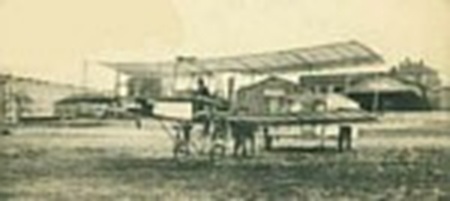
The 1908 Delagrange No. 2 biplane was designed and built by Delagrange in France
Euler No. 3 biplane
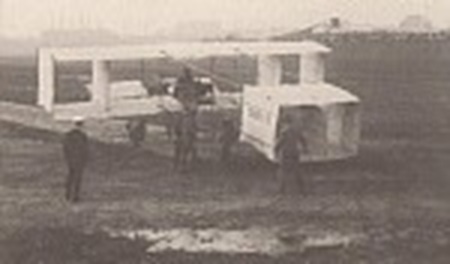
The 1908 Euler No. 3 biplane was designed and built by August Euler in Germany
Aircraft Engineers B-2
The 1930 Aircraft Engineers B-2 was an open cockpit biplane powered by a Lambert R-266 engine,
The registration for the one built, N10285 c/n 3, was cancelled on 21 November 1932.
Avicar BF-8
The 1949 BF-8 was a two-place cabin biplane “plane-car” with 85hp pusher motor had no registration, but painted on its side was a large “PAT PEND” to indicate that Mr Bailey had some ambitious plans for his creation. Positive-staggered 8’0″ wings, and twin tails on a short-coupled fuselage.
Lee-Richards Annular Biplane
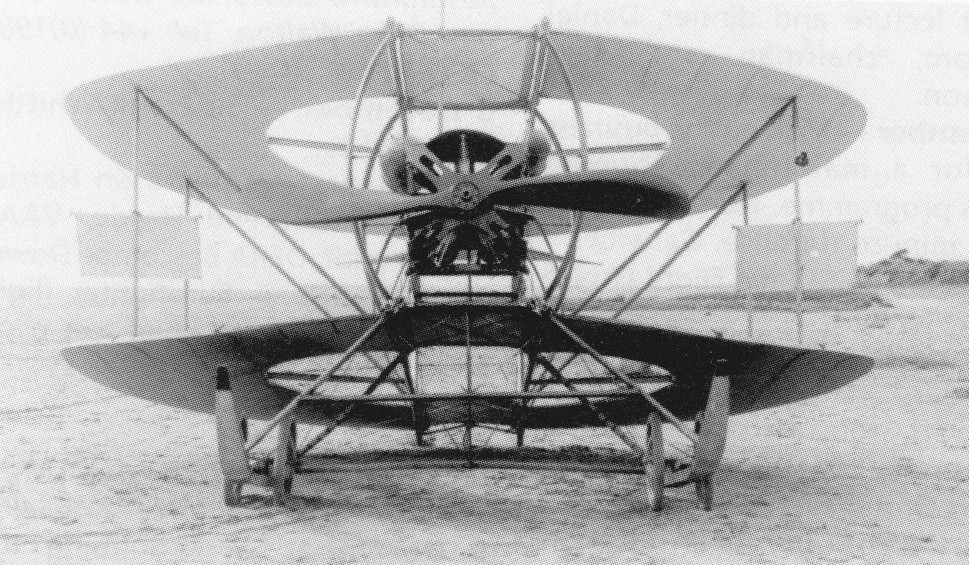
Following a series of patents on circular-wing aircraft taken out by Williband Franz Zelger and Isaac Henry Storey, the boiler engineer John George Aulsebrook Kitchen built an annular-wing biplane but was unable to fly it. He later took out his own patent, while he and Storey also jointly patent an entirely different type of multiplane. Kitchen subsequently sold both the patent and the machine to Cedric Lee, who would also later acquire Zelger’s patent. Tilghman Richards joined Lee in 1910 and together they finished the aeroplane, fitting a 50 hp (37 kW) Gnome Omega engine in the front. The machine is known variously as the Kitchen annular biplane and the Lee-Richards annular biplane. Flight tests in 1911 were disappointing and that Autumn the biplane was destroyed on the ground by high winds, when its hangar collapsed.
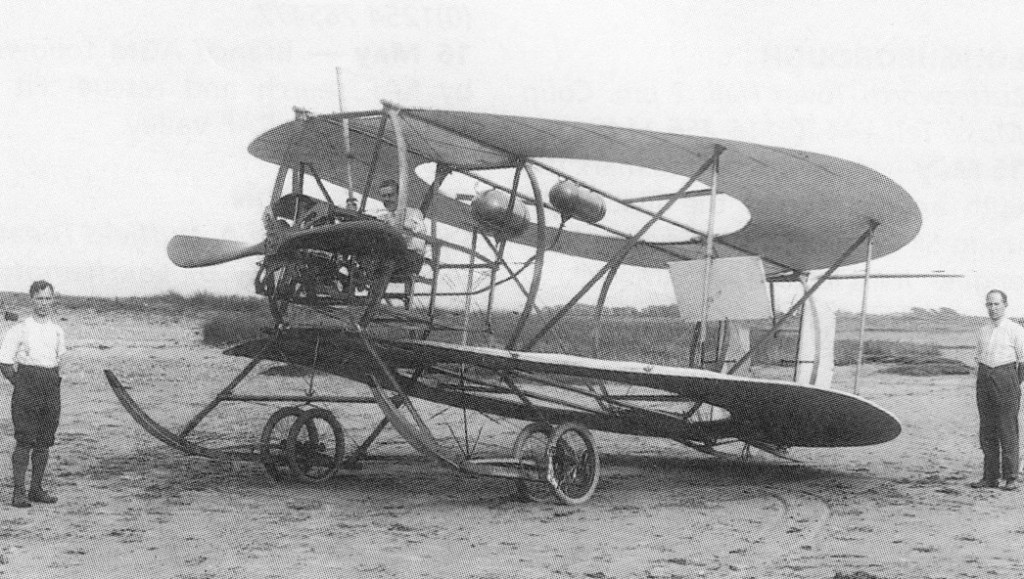
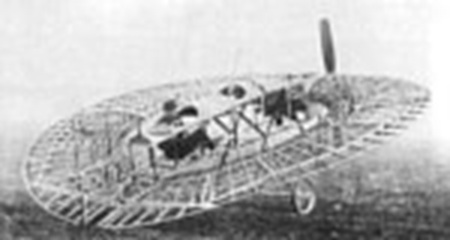
Span: 22′
Length: 23’6″
Weight allup: 1500 lb
Speed: 83-85 mph
 All Aero