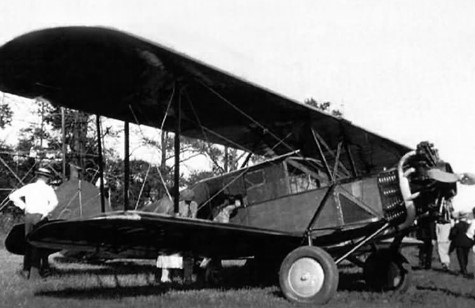
Laird LC-AA

In the Super Solution, Doolittle had won the 1931 Bendix and gone on to set a transcontinental speed record of 2,882 miles in 11 hours, 16 minutes, and 10 seconds, while averaging 217 mph. But in the seventh lap of the Thompson, the plane’s 525-hp Pratt & Whitney Wasp Junior radial engine blew a piston, forcing Doolittle to drop out.
Less than two weeks remained before Labor Day weekend and the 1932 National Air Races at Cleveland, Ohio. The main events—the Burbank-to-Cleveland Bendix Trophy endurance race and the closed-course, 100-mile Thompson Trophy dash—demanded two very different types of aircraft, but Doolittle believed he had a plane capable of winning both.
The pace of innovation meant that not even the Super Solution could age a year without the threat of obsolescence. Figuring the decreased drag would more than offset the increased weight, Doolittle replaced its fixed, spatted wheels with a retractable landing gear. He was about to regret the decision. As he attempted to winch down the hand-cranked gear, which had functioned according to plan in ground tests, the pressure of the slipstream prevented the wheels from deploying.
“I spent two hours trying to jar the gear loose…nothing worked,” recalled Doolittle. Finally he resigned himself to bellying in the LC-DW-500. He emerged unhurt, but with the plane’s prop blades bent and fuselage crumpled, the Super Solution would never make the Nationals.
The Laird LC-DW-300 Solution, had been the only biplane ever to win the Thompson Trophy.
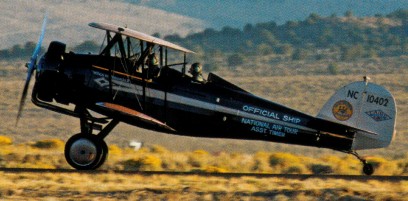
1930
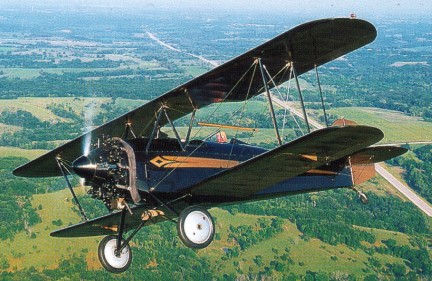
Top speed: 130 mph
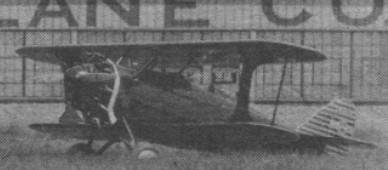
The Laird Speed Wing was built with a wire-cinched, riveted, steel tube fuselage. Laird offered this aircraft for sale to those who wanted a custom-built airplane.
Engine: Wright, 220 hp.
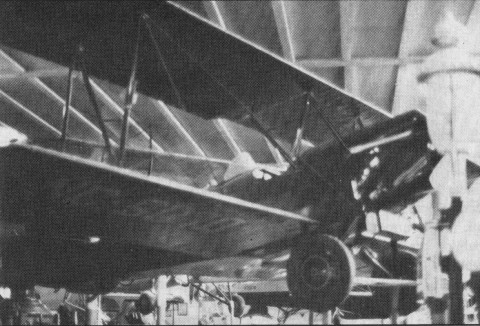
The Burke Moellendick Laird partnership of Wichita began work, and in April 1920 the first Laird Swal-low rolled out of the hangar. In April 1920, Matty Laird (builder of the Swallow) first tested his three place OX 5 biplane built in a shed in Wichita. The plane earned the nickname “Swallow” from one of the Wichita hotel men who witnessed the flight, commenting, “It flies like a swal¬low:’ The Laird Swallow became the first commercial, not military, plane offered for sale in the United States.
The company that became United Airlines began its early air operations fly¬ing a Laird Swallow.
Production went from two planes a month to four. After 43 Laird Swallows had been sold, Matty Laird quit and went back to Chi¬cago to resume business as the E.M. Laird Airplane Company.
Jake Moellendick re¬named his plant the Swallow Airplane Manufacturing Company.
First product of the Swallow Aircraft Co was Model 1924 Swallow Commercial three seater (a refined Laird Swallow). Type was successful, especially in Middle West, and improved progressively.
On April 6,1926 a Swallow biplane (modified New Swallow type, called Swallow Mail plane) made inaugural flight for Varney Air Lines (later part of United Air Lines) marking significant advance in U.S. air transport.
The 1927 Swallow featured a 90 hp Curtiss OX-5 engine, an adjustable stabiliser, 2.5in trim via a cockpit lever and carried ATC 21.
Swallow Commercial of 1928 offered with various engines; Swallow Special 3-seater had Axelson engine. In 1930s company developed Swallow Coupe light cabin monoplane.
Engine: Curtiss OX-5, 90 hp
Prop: Brewster 8 ft 4 in
Wingspan: 32 ft 8 in
Length: 23 ft
Wing chord: 5 ft
Height: 8 ft 4 in
Empty weight: 1469 lb
Useful load: 731 lb
Top speed: 100 mph
Cruise speed: 60 mph
Landing speed: 35 mph
ROC: 600 fpm
Ceiling: 12,000 ft
A 1928 five place cabin biplane. One was built, N6792, c/n C-7.
Engine: Menasco-Salmson
Wingspan: 33’4″
Length: 20’6″
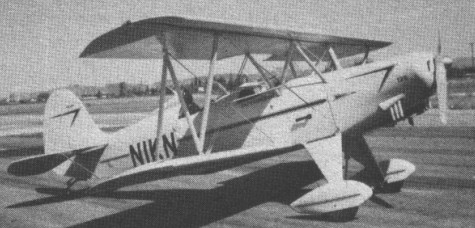
The LACO-125 is a sturdy two-seat biplane that is easy to fly yet very agile. To aid the builder, there are no castings, forgings or other difficult-to-build or obtain parts. The fuselage is a Warren truss type of chrome-moly tubing with wood formers and stringers. The wings are conventional two-spar construction with wood ribs and chrome-moly fittings for strength. This homebuilt derives its designation from the use of a 125-hp Continental in the prototype which is interchangeable with the 145-hp engine. The weight distribution of the LACO-125 is such that larger four-cylinder powerplants can be substituted.
The first, N1KN, was flown on 29 May 1977.
LACO-125
Engine Continental C-125, 125-hp
Wingspan: 22’9”
Length: 19’6”
Gross Wt: 1400 lb
Empty Wt: 860 lb
Fuel capacity: 24 USG
Top speed: 124 mph
Cruise: 113 mph
Stall: 56 mph
Climb rate: 900 fpm
Range: 325 miles
Seats: 2
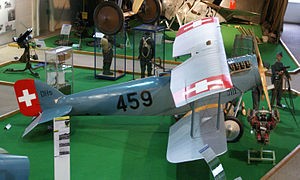
The Häfeli DH-5 was a two-seat reconnaissance aircraft designed by August Häfeli. It was a single-bay biplane of wood and fabric construction. The aircraft was powered by a 180 hp (134 kW) LFW I engine produced by the Swiss Locomotive and Machine Works.
Built by the aircraft department of the Federal Construction Works (Eidgenoessische Konstruktionswerkstaette, K + W) at Thun, Switzerland, test flying of the prototype commenced in March 1919 and 39 were ordered. Some aircraft were later modified with Handley Page slats.
A second batch of 20 aircraft were powered by a 200 hp (149 kW) LFW II engine. A further batch of 20 aircraft designated the DH-5A used the LFW III engine.
The DH-5 entered service in 1922 with the Swiss Air Force and was not withdrawn from service until 1940.
Variants
DH-5
Initial production version with either the LFW I or LFW II engine.
DH-5A
Version with a 220 hp (164 kw) LFW III engines, survivors were modified at Thun in 1932 with Handley Page slats and changes to allow crew to wear parachutes.
DH-5X
Trials aircraft powered by a Hispano-Suiza HS-42 (8Fb) engine imported from France. The aircraft was not ordered into production due lack of availability of the engines and the DH-5X crashed in 1933.
DH-5A
Engine: 1 × LFW III, 220 hp (164 kW)
Wingspan: 39 ft 4½ in (12 m)
Wing area: 338 ft² (31.40 m²)
Length: 24 ft 11¼ in (7.60 m)
Height: 10 ft 2 in (3.10 m)
Empty weight: 1,894 lb (859 kg)
Max takeoff weight: 2,802 lb (1271 kg)
Maximum speed: 112 mph (180 km/h)
Range: 298 miles (480 km)
Service ceiling: 18,375 ft (5600 m)
Armament:
one fixed forward-facing machine-gun
one pivoted machine-gin in the rear cockpit
Crew: two
 All Aero