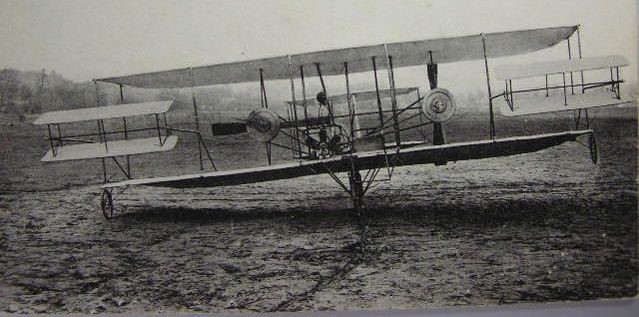
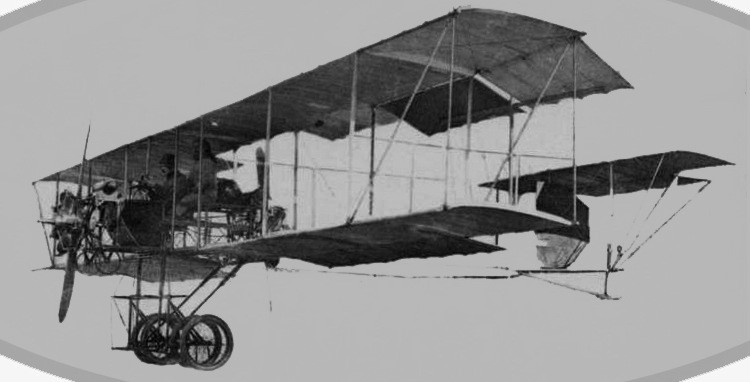
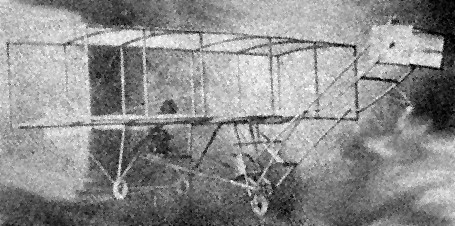
Designed by Louis Lejeune, built by de Pischoff et Koechlin, the 1909 Lejeune biplane was modified with forward extending biplane aileron control; possibly as the Lejeune No.3.
1909 Lejeune modified biplane
Powered with a 10-12 hp 3-cylinder Buchet radial engine chain-driving two 2-bladed pusher propellers and featuring bicycle gear in tandem with wingtip wheels, the Lejeune Biplane weighed 385 lb.
At the Prix de Lagatinerie, held May 23, 1909 – the official opening of Port-Aviation – Lejeune, who was not entered in the race, tried to fly his plane. Despite very long ground runs through the grass the little biplane never took off, managing only to earn itself the nickname “la moissoneuse”, (the harvester).
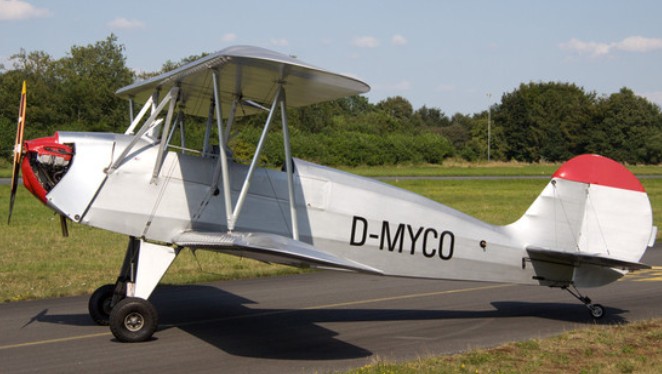
The AV Leichtflugzeuge Vagabund (English: Vagabond) is a German ultralight aircraft that was designed by Birk Meier, Hans Grannemann and Robert Kaps and produced by AV Leichtflugzeuge of Haren, Germany. The aircraft is supplied as a kit or plans for amateur construction or as a complete ready-to-fly-aircraft.
The Vagabund was designed to comply with the Fédération Aéronautique Internationale microlight rules. It features a strut-braced biplane layout, a two-seats-in-tandem open cockpit, fixed conventional landing gear and a single engine in tractor configuration. The aircraft closely resembles the 1930s Bücker Bü 131.
The aircraft is made from wood, with its flying surfaces covered in doped aircraft fabric. Its 7.55 m (24.8 ft) span wing employs ailerons on the lower wing only. The aircraft can use engines from 50 to 85 hp (37 to 63 kW) and the 80 hp (60 kW) Rotax 912UL, the 85 hp (63 kW) Jabiru 2200 and the 75 hp (56 kW) Limbach L2000 Volkswagen air-cooled engine have been fitted along with automotive conversions such as the Nissan 1.2 litre engine.
Unit cost assembled in 2011 was €48,900.
Engine: 1 × Jabiru 2200, 63 kW (85 hp) Propellers: 2-bladed wooden Wingspan: 7.55 m (24 ft 9 in) Wing area: 18.2 sq.m (196 sq ft) Empty weight: 114 kg (252 lb) Gross weight: 450 kg (992 lb) Fuel capacity: 50 litres (11 imp gal; 13 US gal) Maximum speed: 140 km/h (87 mph; 76 kn) Cruising speed: 115 km/h (71 mph; 62 kn) Stall speed: 59 km/h (37 mph; 32 kn) Rate of climb: 3 m/s (590 ft/min) Wing loading: 24.73 kg/m2 (5.07 lb/sq ft) Crew: one Capacity: one passenger
Built 1912-13, the tractor/pusher was a three-seater twin-Gnome-engined 100 hp plane built by Jean Legrand and flying by Camille Guillaume. A modification of a standard 1912 Voisin Type Course biplane to a push-pull machine.
Englishman, G.J.A. Kitchen of Lancaster, patented a circular or annular wing and sold the rights to Cedric Lee, who built an annular winged biplane powered by a 50 hp Gnome rotary engine in 1911. This ‘Kitchen Doughnut’ was wrecked by a gale during tests. Lee and his engineer Tilghman Richards continued to experiment with gliders and with wind tunnel test models at the National Physical Laboratory and soon discovered that the circular wing had some very desirable properties. It continued to provide lift at extreme angles of incidence, and had a gentle stall. Furthermore, a round wing could have a span or diameter less than half that of a conventional surface of the same lifting area.
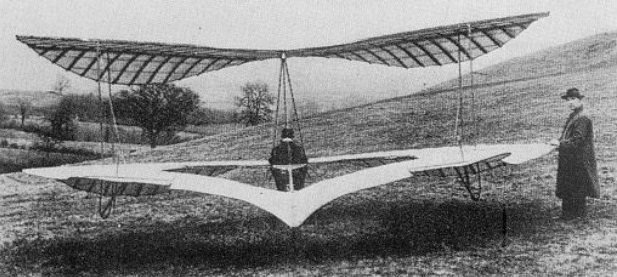
In 1912 the Lee-Richards annular wing was a circular planform with a hole diameter half span. The powered portotype was a biplane, and they tested it at Middleton Sands, Heysham in 1911. This was supposed to be a very stable configuration, and a later version flew for 128 hours, but the prototype had run into a gully, and then been destroyed when the hanger blew down in a gale. They had been changing the leading-edge camber shape, but were unable to decide which was best, so before rebuilding they tried two models, span 4.7 ft, flown indoors. Extra camber seemed to give a flatter glide angle, but the other person said that this was due to better launch technique. So they went full scale.
The glider was a biplane, but the upper wing was only the front half of the circle. Elevators behind the wing were also operated differentially for roll control and a fin and rudder were added later. The pilot’s seat was in the hole, and the breeze.
Launch was by catapult from a track, pulled by a rope tied to a dropping weight within a tall tripod. The site was Sellet Banks, an east-facing slope 117 feet above the River Lune near Kirby Lonsdale.
The glider made many successful glides. It was stable and controllable, was banked into turns, and even taken through the stall to 30 degrees nose up, when it pancaked steadily. They often flew in winds of 20 mph, and even 40 mph.
On the final day of flying at the end of trials in December 1912, Cedric Lee made a soaring flight in a strong wind. Cine film was taken, used in the opening clips of “Those Magnificent Men”, and stored in the Science Museum.
A non-flying replica of the powered version is at the Newark Museum.
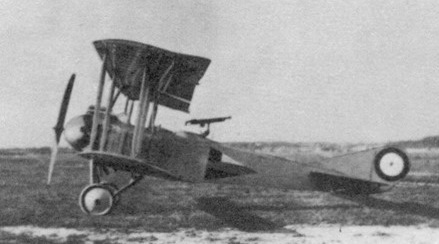
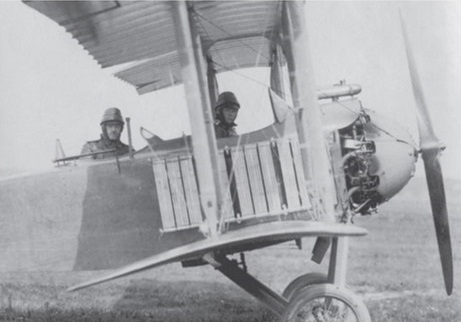
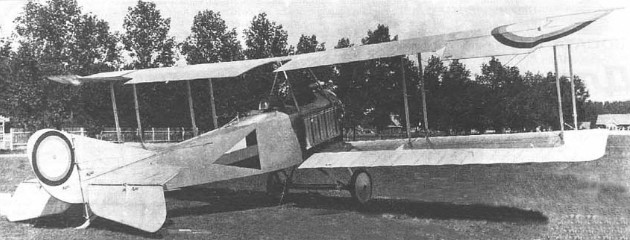
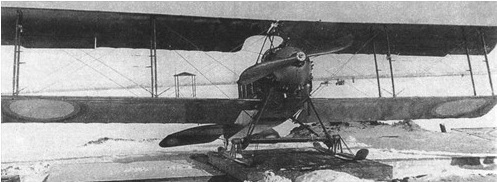
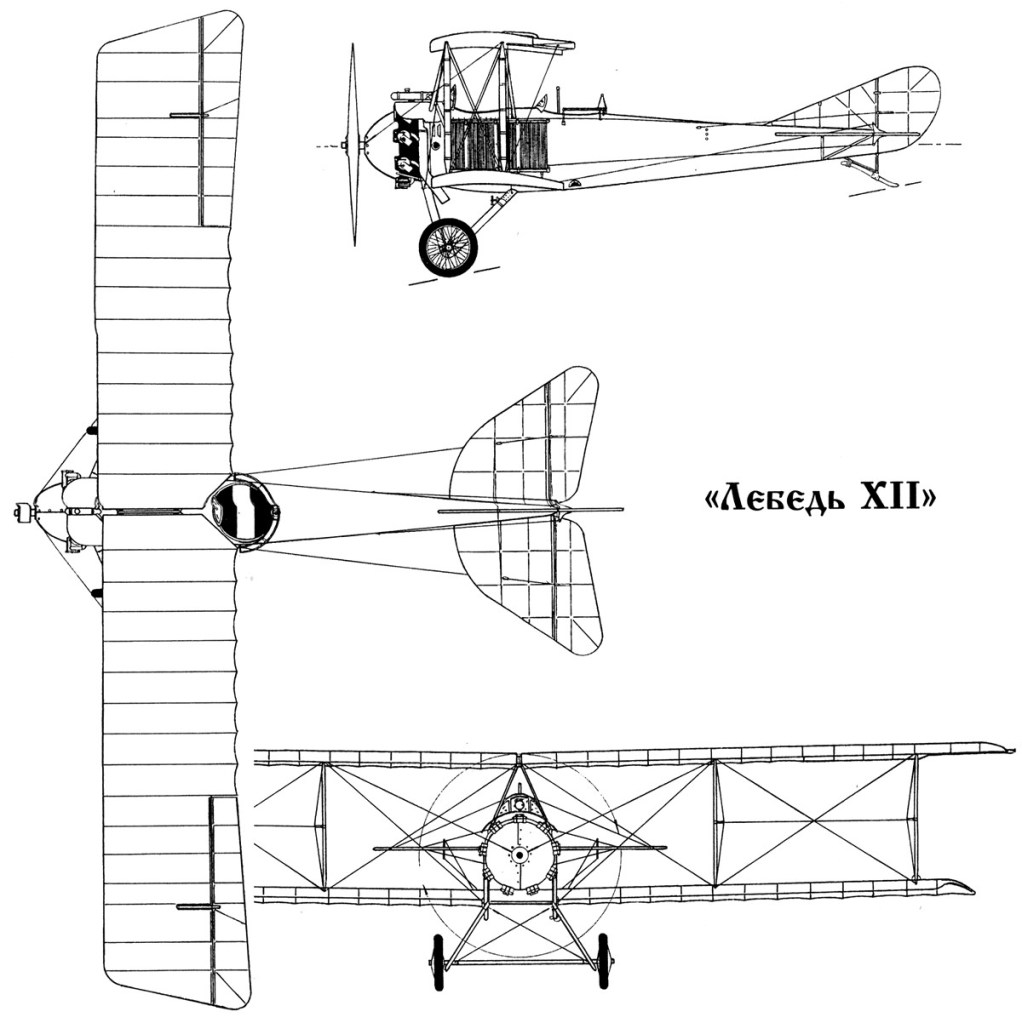
The Lebed XII was a Russian military reconnaissance aircraft produced during the First World War for the Imperial Russian Air Force. It was one of the few domestically designed aircraft to see production in Russia during the war, but was based on designs and techniques learned from Lebed’s rebuilding of captured German types. The fuselage was a plywood structure of rectangular cross-section with seating for the pilot and observer in tandem, open cockpits. The wings were built around a pine spar and covered in fabric, and the empennage (tail assembly) was of welded steel tube with fabric covering.
Test flights commenced on 28 December 1915, but were interrupted by bad weather in St Petersburg, where the Lebed factory was located. Testing was therefore moved to Kiev, and then to the Anatra factory at Odessa on 11–15 February 1916. Grand Duke Alexander Mikhailovich ordered 400 aircraft on February 23, but the final contract on 19 April was for 225 aircraft, 245 sets of spare parts and 10 static airframes for a total of 5,153,500 rubles.
Before production began, a number of handling difficulties noted by the test pilots were being corrected in the design, along with a new set of problems caused by a change in powerplant. The prototypes had been flown with 97 kW (130 hp) engines, but the production contract called mostly for 112 kW (150 hp) engines, plus some machines equipped with 104 kW (140 hp) engines for training. These heavier powerplants shifted the aircraft’s centre of gravity, and the mountings for the engine and cooling system had to be revised before a final round of tests began in October. Serial production finally commenced in November and delivery to squadrons soon afterwards.
The Lebed XII started appearing on the front line in quantity in early 1917, but problems quickly became apparent. In particular, a number of engine fires and crashes due to structural defects led to deliveries of the type being suspended by mid-year while an investigation was held. Army test pilots concluded that the version with the more powerful engine was unfit for frontline service, and recommended that it be relegated to training use only, while the lower-power version was regarded as not even fit for training. Lebed disputed the findings, blaming the poor results on the inexperience of the test pilots and on poor weather while the tests were conducted. The Army therefore held a second inquiry. On 2 October 1917, this panel concluded that the type was obsolete and unfit for service, recommending that production be halted and the type withdrawn altogether. However, due to a shortage of aircraft, production continued into 1918, and eventually 214 of the original order were delivered.
The Lebed XII saw limited frontline service in the North and North-western parts of the front with Germany, equipping four air divisions of the 38th Corps, 5th Army. Aircraft delivered in the second half of 1917 went mostly to training units, however. These included the Imperial aviation school, the Gatchinskoy military flying school, the Odessa flying school, Kiev school for pilots and observers and the flying school of the Caucasus. Over 50 were supplied to the Navy’s school of air combat in Krasnoye Selo alone. Survivors were taken over from the Imperial Russian Air Force by the Soviet Air Force.
The Estonian Air Force operated one aircraft only.
Variants:
Lebed XII Main production type
Lebed XIIbis Two aircraft constructed with alternative engines – one with a Hispano-Suiza engine, the other with a Green
Lebed XIII High-speed version, anticipated to reach 150 km/h (94 mph). Planned for March 1916, but possibly not built.
Engine: 1 × Salmson, 115 kW (150 hp) Wingspan: 13.15 m (43 ft 2 in) Length: 7.96 m (26 ft 1 in) Height: 3.25 m (10 ft 8 in) Wing area: 42.0 m2 (452 ft2) Empty weight: 820 kg (1,800 lb) Gross weight: 1,350 kg (2,970 lb) Maximum speed: 135 km/h (84 mph) Endurance: 3 hours 0 min Service ceiling: 3,500 m (11,500 ft) Crew: Two, pilot and observer Armament: 1 × machine gun on flexible mount for observer Bombload: 220 lb / 90.7 kg
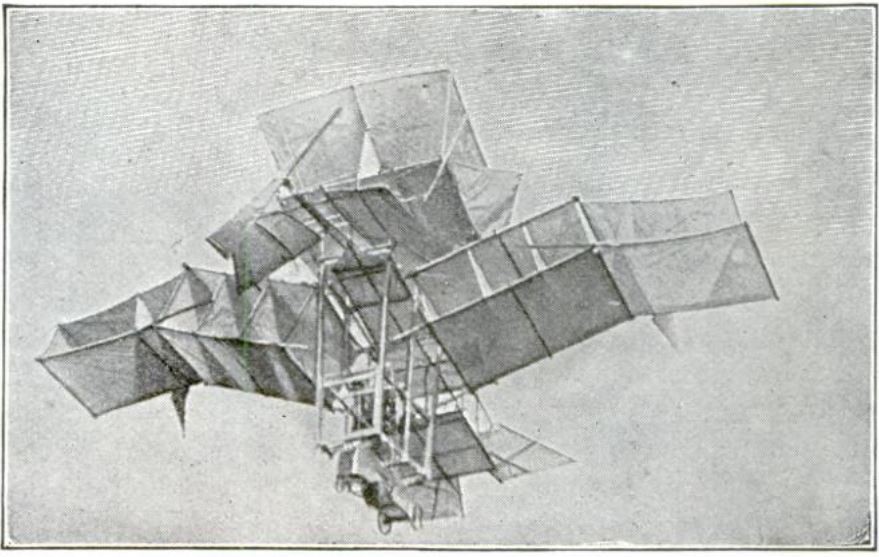
Little is known about this complicated machine, which was designed by George A. Lawrence of Sayre, Pennsylvania. It was claimed to have flown during secret tests, first on 1 October 1907, and then on 11 October. It’s not clear if it was crewed or not, however the inventor said he had plans to build a larger machine, which would be powered by a 60 hp engine and capable of carrying three people. In 1908, Lawrence entered into a business relationship with Gustave Whitehead and formed the Whitehead Motor Works.
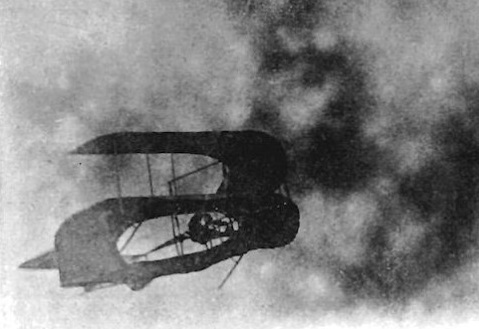
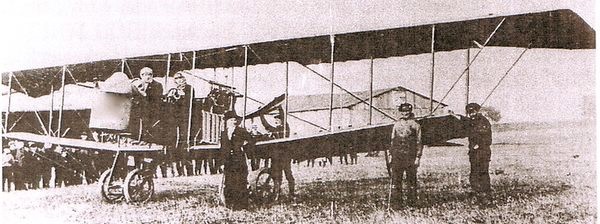
A German school biplane built in spring 1912, powered by a 55 hp Argus, Richard Lauer built this biplane in 1912 and was permitted to test the aircraft at the Exerzierfeld Halle-Beesen, where he managed “some long flights”. He also set up a hangar and wanted to open a flight school that summer but unfortunately he crashed and destroyed the aircraft in June. Lauer suffered severe injuries that presumably prevented him from ever flying again.
 All Aero