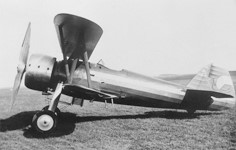
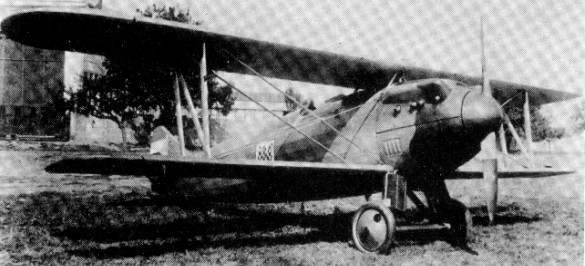
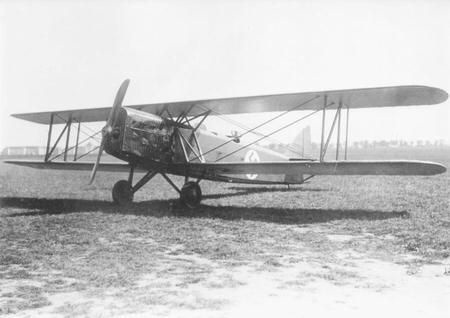
An all-metal single-engine, single-seat, biplane fighter/trainer of 1929. The Š.31 was based on S-20J with a 450 hp 9-cyl Walter Jupiter radial. Thirty-three were built.
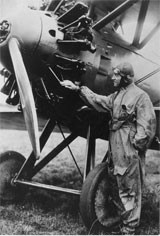
Letov Š.131, Col. Josef Kalla
Variants:
Š.31A, Bristol Mercury (becomes S-231) Š.131, 500 hp 9-cyl BMW Hornet, 3 built. Š.331, prototype fighter, 1935 (sold to Spain), 880 hp 9-cyl Walter K-14 radial Š.431, prototype fighter, 1936 (crashed on trials), 14-cyl AS Tiger III
Specifications:
S-131 Engine: 500 hp 9-cyl BMW Hornet Wingspan: 9.8 m Length: 7.15 m Empty weight: 970 kg Maximum speed: 292 kph Climb to 5000m: 6 min 50 sec Range: 450 km Service ceiling: 10000 m
S-431 Engine: Armstrong Siddeley Tiger, 680 hp Propeller: wooden two-blade Wingspan: 10.06 m Length: 7.9 m Empty weight: 1310 kg Top speed: 370 kph Climb to 5000m: 6 min 58 sec Service ceiling: 9500 m
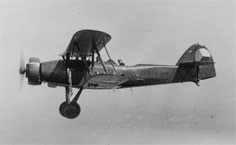
An Letov S-328 multi-role biplane was used for reconnaissance and light bombing, designed in 1932 for a Finnish customer`s demand to fit an strenghtened engine in the airframe of the S-228. The S-328 one was the most numerous in the Czechoslovak Air Force. Range of the recce and observer version was from 700 to 1280 km, service ceiling from 6300 to 7200 m.
S-328
The 108th production S-328 was a bomber version powered by a 580 Walter Pegas II M-2 engine. It could carry a bombload of up to 500 kg, and range of 340 to 1250 km.
An observer of one of seven S-328 biplanes used by the Insurgent Flight during the Slovakian Uprising downed one German recce Focke-Wulf 189 in Sept 1944.
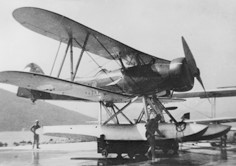
Š.328V
The Š.328V float-version of the S-328 type amounted two machines only, built 1925-1926. These were used for target- tug duties over the Adriatic Sea in the Boka Kotorska Region, where gunnery was practised bby the Czechoslovak artillery. Handling characteristics did not deteriorate by fitting the floats and neither center of gravity nor the fin was in the need of change. Made in the period.
Variants:
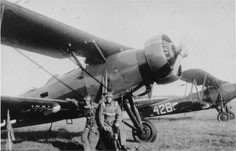
Š.128, 1931, 450 hp 9-cyl Walter Jupiter VI radial Š.128SM with 500 hp 9-cyl Gnome-Rhône Mercure VII radial (became Š.228) Š.228, 1931, as per Š.128SM (demonstrated to Finns with 500 hp 9-cyl P&W Hornet radial) Š.228E, 1932, four export aircraft for Estonia Š.328, reconnaissance aircraft, 1932, 730 hp Walter Pegasus III-M2 Š.328F, engine change prototype, 740 hp V-12 Avia Vr-36 Š.328FM, armaments change (Skoda vz. 30) Š.328V, twin-float seaplane (Short Bros. floats) Š.328W (S-328-2), as per Š.328F, 630 hp V-12 Avia Vr-36 Š.328N (Nachtjäger) Luftwaffe conversions for Störkampfstaffeln Š.428, 1933, S-238W ground attack variant, 650 hp V-12 Avia Vr-36 Š.528, 1934, 800 hp 14-cyl Walter K14 (Gnome-Rhône Mistral Major 14 Krsd)
S-328 Wingspan 13.71 m Length 10.36 Empty weight 1680 kg Top speed 380 kph Climb to 5000m: 17 min
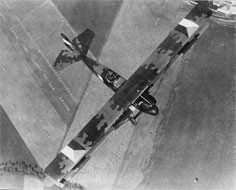
Flown in 1925, the S20 was an unequal-span single-bay biplane of mixed construction with a 300 hp Skoda HS 8Fb water-cooled engine with Lamblin strut-type radiators on the front undercarriage legs, armament comprising two synchro¬nised 7,7-mm Vickers machine guns.
Designed by Alois Smolik, the S-20 had a steel tube framed fuselage as well as fin , rudder and elevator fabric-covered. Wood-framed wings were covered by fabric, and a sheet metal plated cowling. Whereas the upper wing of the first prototype had no gap above the fuselage, the series model introduced a narrow gap and an inverted-vee cabane, the upper fuselage decking being recontoured to improve view from the cockpit.
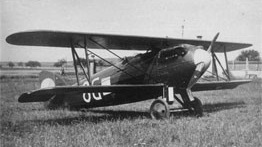
In 1926, the Š 20 was the winning contender in a contest for a new fighter for the Czechoslovak Air Force, and a total of 105 was to be built for that service. The Š 20 took fourth place at the International Air Meeting in Zurich in 1927, the type serving with all three air regiments of the CzAF.
S-20 plane of the Olomouc Fighter Regiment
Ten examples were exported to the Latvian Air Force (as the Š 20L) with interchangable ski u/c in 1925, one experimental model was completed with a slimmer fuselage (as the Š 20R, also called S-20M). Another was fitted with a Walter¬built Bristol Jupiter air-cooled radial of 480 hp (as the Š 20J). This led to S-31 fighter. The Š 20J model attaining an altitude of 28,543 ft (8700 m).
S.20 Engine: Hispano Suiza 8 Fb, 300 hp Wingspan: 9.70 m Length 7.44 m Empty weight: 728 kg Maximum speed: 256 kph Service ceiling: 7200 m Range: 528 km
S.20 Engine: Skoda HS 8 Fb, 300 hp Wingspan: 9.70 m Length: 7.44 m Empty weight: 728 kg Climb to 5 00 m: 13 min 50 sec Service ceiling: 7200 m Range: 528 km
Š.20 Engine: 1 x 300 hp kW V-8 Skoda HS 8 Fb Max speed, 160 mph (257 km/h) Range, 328 mls (528 km) Empty weight, 1,631 lb (740 kg) Loaded weight, 2,315 lb (1 050 kg) Span, 31 ft 6 in (9,60 m) Length, 24 ft 4 9/10in (7,44 m) Height, 8 ft 4.75 in (2,56 m) Wing area, 198.06 sq.ft (l8,40 sq.m). Armament: two synchro¬nised 7,7-mm Vickers machine guns
Š.20J Engine: Walter¬built Bristol Jupiter, 480 hp Max altitude: 28,543 ft (8700 m)
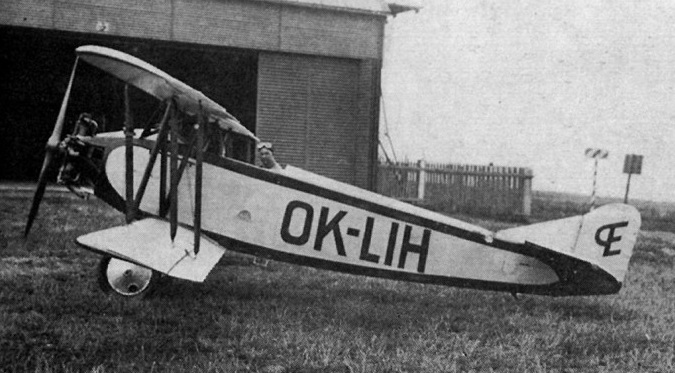
The Letov Š-18 was a Czechoslovak single-engined, two-seat biplane trainer. It was designed by Alois Smolík at Letov Kbely. Š-18 first flew in 1925.
The aircraft was quite successful and sold well both to private pilots and to flight clubs. Apart from the basic variant there was also the Š-118, which was equipped with a Walter NZ-85 engine (85 hp, 63 KW). Some machines were exported to Bulgaria. The Czechoslovakian Air Force used the type 1925 to 1930 as a beginner trainer aircraft.
S-118
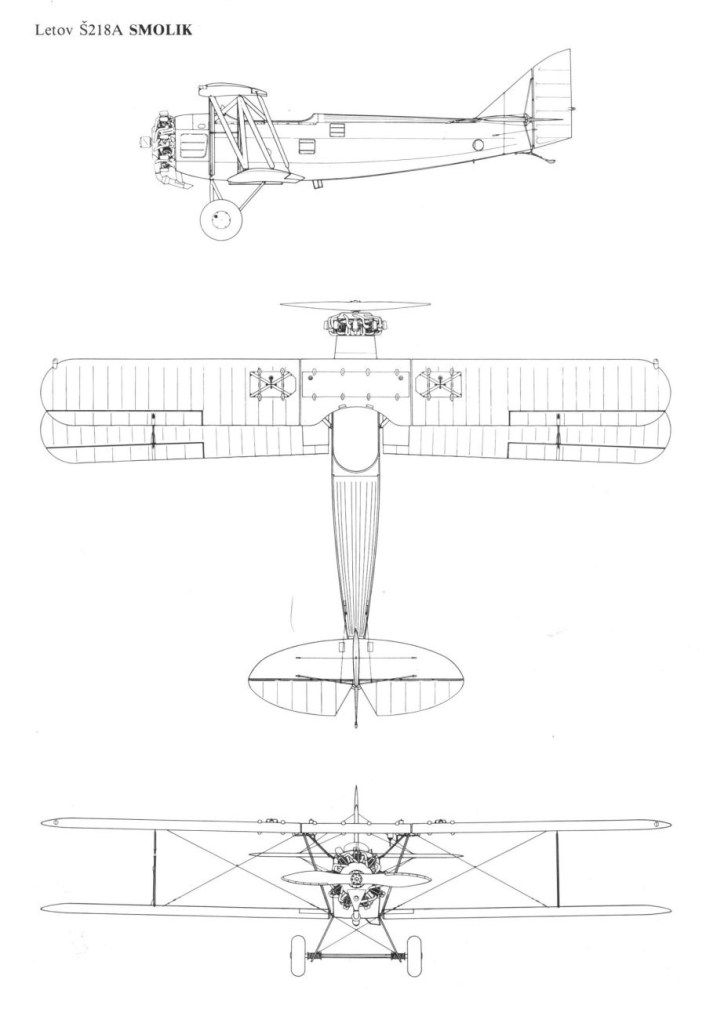
A complete reconstruction of the fuselage led to the Š-218, which had a steel tube frame, metal wing struts, and was equipped with a Walter NZ-120 engine (120 hp, 88 KW). The first flight of this type took place in 1926.
Letov Š-218
In 1929, one Š-218 Smolik was presented at Helsinki International Air Show. The Finnish Air Force showed interest in the type and purchased it in March, 1930, in order to test it. Nine more were soon ordered along with the manufacturing license. The nine aircraft ordered from Czechoslovakia arrived to Kauhava Aviation School in May–June, 1931. The Finnish State Aircraft Factory manufactured 29 slightly modified aircraft in three series. The first ten were ready in 1933, the second series of ten aircraft were ready in 1935, and nine more in 1936. The Finnish version, which was equipped with a Bramo radial engine of 145 hp (110 kW) could develop a maximum speed of 155 km/h (83 knots, 96 mph). The type was in service with the Finnish Air Force as a primary trainer between 1930 – 1945. One aircraft is still preserved at the Finnish Aviation museum in Vantaa and one replica is being built in Finland (as of 2005).
The Letov Š.6 two-seat biplane bomber, 1923, 1 x 255 kW 6-cyl Maybach IVa, 35 built (led to Š-16 and civil Š-19). An all metal- and welded steel-tube-airframe, fabric-covered, metal sheet plate cowling.
S-6
The Letov S-6 biplane began production in 1923.
The S-16 was in production from 1926.
W/Cdr Jaroslav Skalka made a Tokyo-bound long-distance flight via Moscow, Kazan, Omsk, Chita and Hedzhu in 1927 in an S-16. Heading for Czechoslovakia, he and his flight mechanic Taufer crashed in Siberia and took the plane`s rudder home.
The Š.16 long-range reconnaissance and light bomber biplane, built from 1927 to 1929 for Czechoslavakia, Latvia and Turkey. Power was by a 450 hp W-12 Lorraine Dietrich 12E.
Variants included: Š.16B (or SB-16), bomber variant, lowered rear fuselage decking, 1928 Š.16L (22 for Latvia as the ‘C1’, HS 8Fb) Š.16J (floatplane version for Yugoslavia) Š.16T (16 for Turkey, to be followed by unrealized licenced S-616)
Š.116 bomber, 1928, 1 x 500 hp 6-cyl Skoda L, Handley-Page slots on wings Š.216 bomber, 1928, 1 x 480 hp 9-cyl Walter Jupiter (or Gnome-Rhone Jupiter VIII), 3 built Š.316 bomber, 1931, SB-16 conversions with 1 x V-12 Hispano Suiza 12Lb, 3 built Š.416 bomber, 1929, a S-16 conversion with 1 x 515 hp [?]-cyl Breitfeld & Danek DL Š.516 bomber, 1930, 1 x 800 hp W-12 Praga Asso 9-W, 2 built (failed competitior to Aero A-100, later record attempt aircraft with spats fitted) Š.616 bomber, 1 x 650 hp V-12 Hispano-Suiza 12Nbr (4-bladed propeller), 12 built Š.716 bomber Š.816 bomber, 1932, V-12 Praga ESV engine Š.916 attack aircraft
The Letov Š.17 was the third prototype S-16 fitted with a V-12 Breitfeld-Danek (Praga) BD-500 engine in 1929.
These aircraft were the first Latvian air force aircraft of metal construction, and some of them continued in service right up to the Soviet occupation. In September, 1939 the Letovs appeared on the rosters of the the 5th Recon Squadron (Riga) and the 7th Recon Squadron (Krustpils).
When the aircraft first arrived in Latvia they bore the manufacturer’s assigned numbers L1 – L22 (L16 was, mysteriously, skipped). The latvians renumbered them according to the air force serial number system. The aircraft were accepted, in Czechoslovakia, by Basko and Trejs, and they were sent in two batches – nine of them on Sept.10, 1927 and twelve on Jan.15, 1929. One of the first to fly the newly purchased aircraft was Sgt. Launics, who subsequently became a specialized instructor on this type of aircraft. When used as a light bomber, the S.16 was capable of carrying 300-600 kg of bombs. In 1930 parachutes come into use in the Latvian Air Force, but pilots flying the Letovs tend not to wear them because the cockpits did not easily accommodate the extra bulk. In 1935, when the Aviation Division tried to standardize the description of aircraft types by assigning codes according to their function, the Letovs were coded as “C1”. February 1, 1928 – one of the Letovs (pilot: Arvids Kibers) makes a forced landing near Krustpils. February 25, 1928 – one of the Letovs makes a forced landing near Dzerbene. During 1940 (Soviet occupation), the surviving Letovs (which had been evacuated to Ramava and Bisumuiza) are gathered together and stored at the Provodnik warehouse, where they remained throughout the first Soviet occupation and the German occupation as well. August 12, 1931 – fatal crash at Daugavpils (Janis Zeile, Nikolajs Ritenbergs) August 26, 1928 – fatal crash near Cesis. Three aviators (Arvids Kiberis, Sergejs Bloms, Julijs Metums) lost.
Latvian service:
17K (17)
Taken on charge in late 1927 or early 1928. Assigned to the 6th Squadron where it remained until at least Oct.1938, probably longer.
18K
Taken on charge in late 1927 or early 1928. Assigned to the 6th Squadron. Sept. 1929 – Participated in the goodwill flight to Lithuania and Poland. (Basko and Eglitis) 1936 – appears on the roster of the 7th Squadron. June 15, 1937 – crash 1938 – appears on the roster of the 5th Squadron.
19K (19)
Taken on charge in late 1927 or early 1928. June, 1930 – on the roster of the 7th (Long-range Reconnaissance) Squadron. November 26, 1936 – crash 1937, 1938 – appears on the roster of a training unit. June 1, 1940 – appears on the roster of the 2nd Squadron.
21
Taken on charge in late 1927 or early 1928. Dec.1936 – appears on the roster of the 4th Squadron. May 10, 1937 – undergoes repairs (5th Squadron) Dec.1937 – appears on the roster of the 5th Squadron.
23
Taken on charge in late 1927 or early 1928. 1930 – on the roster of the 7th (Long-range Reconnaissance) Squadron. 1936, 1937 and 1938 – appears on the roster of the 6th Squadron.
24
Taken on charge in late 1927 or early 1928.
25
Taken on charge in late 1927 or early 1928. April 1930 – on the roster of the 7th (Long-range Reconnaissance) Squadron. Jan – July 1937 – appears on the roster of a training unit, then returned to the 7th Squadron. Oct.1938 – appears on the roster of the 7th Squadron.
27
Taken on charge in late 1927 or early 1928. April 1930 – appears on the roster of a training unit. June 1934 – undergoes an overhaul. June 1935 – appears on the roster of a training unit. Dec. 1936 – appears on the roster of the 4th Squadron. May 1937 – appears on the roster of the 5th Squadron.
28
Taken on charge in late 1927 or early 1928. Jan.1936 – undergoes an overhaul. June 1937 – appears on the roster of the 5th Squadron. July, August 1937 – appears on the roster of a training unit.
42
Taken on charge in late 1927 or early 1928. May 1935 – undergoes an overhaul. April 1930 – on the roster of the 7th (Long-range Reconnaissance) Squadron. Dec.1936 – appears on the roster of the 7th Squadron.
48
Taken on charge in late 1927 or early 1928. July 18, 1929 – flown by Nikolajs Bulmanis. 1936, 1937 – appears on the roster of the 7th Squadron. June 1940 – appears on the 2nd Squadron roster.
51
Taken on charge in late 1927 or early 1928. March 1936 – appears on the roster of the 6th Squadron.
52
Taken on charge in late 1927 or early 1928. December 13, 1929 – fatal crash near Krustpils (Pauls Rucelis, Egons Jirgensons) In June of 1937 Letov #52 reappears, now on the roster of the 6th Squadron. Considering the total destruction in the 1929 crash this must be either a reporting error or the serial number was reassigned.
53
Taken on charge in late 1927 or early 1928. 1936, 1937, 1938 – appears on the roster of the 6th (Reconnaissance) Squadron.
54
Taken on charge in late 1927 or early 1928. Sept 11, 1937 – repaired Oct. 1938 – appears on the roster of the 5th (Reconnaissance) Squadron.
55K (55)
Taken on charge in late 1927 or early 1928. August 30 – Sept. 7, 1930 – Participated in the goodwill flight around Europe (Vilis Munters, Alfreds Linins) June 1937 – appears on the roster of the 5th Squadron. April, 1938 – undergoes an overhaul.
56
Taken on charge in late 1927 or early 1928. June 1937 – appears on the roster of the 5th Squadron. October 1938 – appears on the roster of the 5th (Reconnaissance) Squadron. March 1940 – appears on the roster of the 7th Squadron.
57 / #57K
Taken on charge in late 1927 or early 1928. Sept. 1929 – Participated in the goodwill flight to Lithuania and Poland. (Kandis and Ritenbergs) April 1930 – appears on the roster of the 7th (Long-Range Reconnaissance) Squadron. August 30 – Sept. 7, 1930 – Participated in the goodwill flight around Europe (Janis Pagrods, Nikolajs Kaneps) December 1936 – appears on the roster of the 6th Squadron. December 1937 – appears on the roster of the 5th Squadron March 1940 – appears on the roster of the 7th Squadron.
58 / #58K
Taken on charge in late 1927 or early 1928. April 1930 – appears on the roster of the 7th (Long-Range Reconnaissance) Squadron. 1936, 1937, 1938 – appears on the roster of the 7th Squadron. June 1940 – appears on the roster of the 2nd Squadron.
59 / #59K
Taken on charge in late 1927 or early 1928. Sept. 1929 – Participated in the goodwill flight to Lithuania and Poland. (Trejs and Jere) April 1930 – appears on the roster of the 7th (Long-Range Reconnaissance) Squadron. August 30 – Sept. 7, 1930 – Participated in the goodwill flight around Europe (Eriks Mellups, J.Indans) June 1937 – appears on the roster of the 7th Squadron. June 1940 – appears on the roster of the 2nd Squadron.
Specifications:
S-6 Engine: Maybach Mb-IV, 240 hp Wingspan: 15.69 m Length: 8.85 m Wing area: 42.97 sqm Maximum speed: 186 kph Climb to 5000m: 31 min 30 sec. Range: 780 km
S-16 Engine: Lorraine Dietrich, 450 hp Wingspan: 15.30 m Length: 10.22 m Empty weight: 1400 kg Max. speed: 230 kph Service ceiling: 6500 m Endurance: 5 hrs 30 min Armament: one synchronized and a twin-one firing rearwards for an observer. Payload: up to 1000 kg,
Š.16B (or SB-16)
Š.16J
Š.16L Engine: 450-hp Hispano Suiza HS 8Fb. Length: 10.22 m Wing Span: 15.3 m Height: Max Speed: 230 km/hr Range: 900 km Maximum Ceiling: 7,000 m Known Serial Numbers: 8, 8K, 10, 15K, 17K, 18K, 21, 23, 23K, 24, 25, 27, 28, 42, 47, 48, 51, 52, 53, 54, 57K, 58K, 59K (a total of 21 aircraft)
Š.16J Undercarriage: floats
Š.16T
Š.17 Engine: V-12 Breitfeld-Danek (Praga) BD-500
Š.116 Engine: 1 x 500 hp 6-cyl Skoda L
Š.216 Engine: 1 x 480 hp 9-cyl Walter Jupiter (or Gnome-Rhone Jupiter VIII)
Š.316 Engine: 1 x V-12 Hispano Suiza 12Lb
Š.416 Engine: 1 x 515 hp Breitfeld & Danek DL
Š.516 Engine: 1 x 800 hp W-12 Praga Asso 9-W
Š.616 Engine: 1 x 650 hp V-12 Hispano-Suiza 12Nbr Prop: 4-bladed
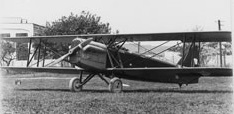
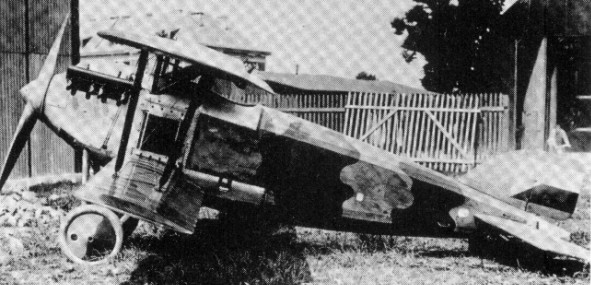
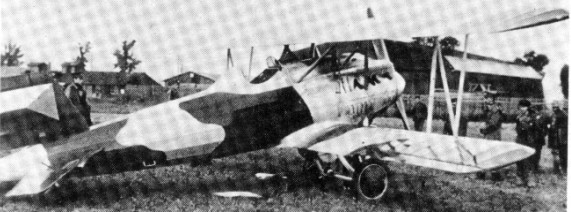
Built in parallel with the Š 13 and employing a similar Skoda HS 8Fb engine, the Š 14 single-seat single-bay biplane fighter employed a more conventional wing profile. Of mixed construction, with wooden wings and metal fuselage, the Š 14 was discontinued in favour of the Š 20, the prototype being rebuilt as a cantilever monoplane to participate in the 3rd Speed Contest of 1924, during which it recorded a speed of 153.13 mph (246,44 km/h).
Š 14 (biplane) Engine: 1 x 295 hp V-8 Skoda 8Fb Max speed, 148 mph (238 km/h) Time to 16,405 ft (5000 m), 18.5 min Range, 308 mls (495 km) Empty weight, 1,464 lb (664 kg) Loaded weight, 1,975 lb (896 kg) Span, 26 ft 6 9/10 in (8,10 m) Length, 21 ft 1 1/8 in (6,43 m).
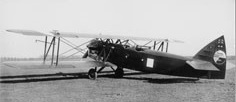
The single-seat S 13 was built in 1924 as an equi-span biplane with cantilever wings utilising a thick Zhukovsky section. During the initial flight test programme, test pilots were nervous of the cantilever wing arrangement and, in consequence, N-type (later replaced by Vee-type) steel-tube interplane struts were added. The S 13 was fitted with a Skoda HS 8 water-cooled engine of 295 hp originally intended to have a ring-type frontal radiator, but fitted, as a result of difficulties experienced with this cooling arrangement on other fighters, with a ventral radiator. Although the S 13 demonstrated good flying characteristics, some problems were experienced with stability and development was abandoned.
Engine: 1 x 295 hp V-8 Skoda 8Fb Max speed, 143 mph (230 km/h) Time to 16,405 ft (5000 m): 18.15 min Range, 342 mls (550 km) Empty weight, 1,742 lb (790 kg) Loaded weight, 2570 lb (1 166 kg) Span, 26ft 2 9/10 in (8.0m) Length, 22ft 10 3/8 in (6.97m) Height, 9ft 4.5in (2.86m) Wing area, 215.29 sq ft (20sq m).
 All Aero