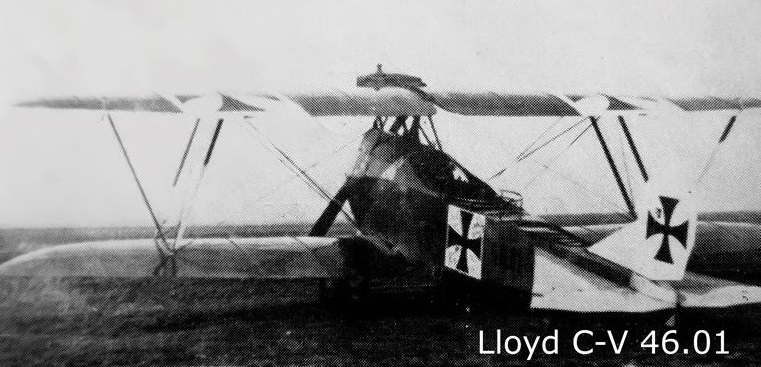
Lloyd C.V
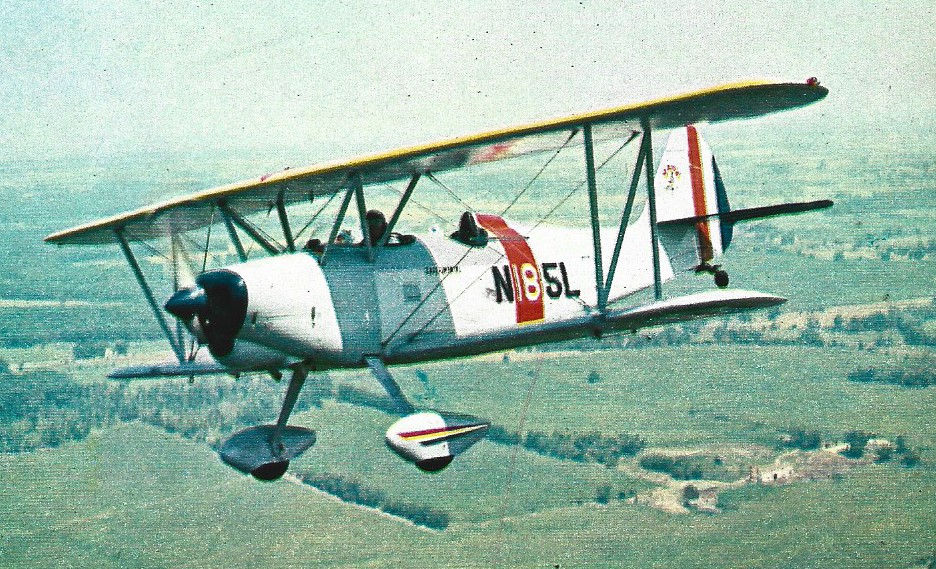
An original design of O.N. Lloyd, a 47 yr old construction engineer of Mesa, Arizona, USA, the two-seat Liberty Sport A, registered N185L, has wing with spruce spars and metal ribs. The fuselage and tail surfaces are 4130 tubing, and Ceconite covering is used throughout. Ailerons are fitted to the top wing only.
Cost of construction was about $4000 over four years.
Engine: Lycoming O-320, 150 hp
Wingspan: 28 ft / 8.53 m
Length: 22 ft 4 in / 8.81 m
Height: 8 ft / 2.44 m
Wing chord: 4 ft / 1.22 m
Empty weight: 1325 lb / 601 kg
MAUW: 2000 lb / 907 kg
Max speed: 120 mph / 193 kph
Cruise: 105 mph / 169 kph
Landing speed: 50 mph / 80 kph
ROC: 900 fpm / 4.58 m/sec
TO to 50 ft / 15.2m: 1000 ft / 304 m
Service ceiling: 15,000 ft / 4572 m
Range: 375 mi / 604 km
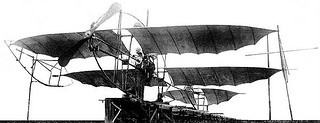
The first Swiss airplane to leave the ground, a tandem-wing monoplane designed by the Estonian-born inventor Alexandre Liwentaal of Vernier, near Geneva, Switzerland. It was tested in September 1909, but it was underpowered and only managed jumps of 25 meters.
Wing surface: 29 sq.yards
Weight all up: 551 lbs
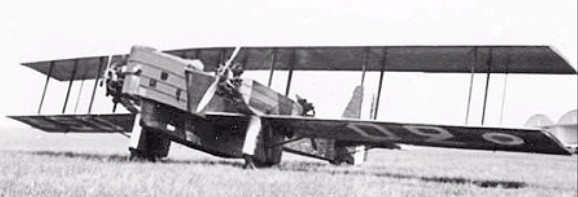
In search of a more powerful night-bomber, the Liore-et-Olivier design team developed a large four-engined machine, the Liore-et-Olivier LeO 203. This was first flown in May 1930, and was powered by four 224kW Gnome-Rhone 7Kb radials mounted in pairs on the lower wings. Soon afterwards a floatplane version was flown under the designation LeO 204.
A 1931 order for 40 LeO 203s was transferred to the LeO 206, the first of which made it maiden flight in June 1932. This had a redesigned nose, a ventral balcony which housed the bomb-bay and, at the rear, a defensive gun position, and was powered by four 261kW Gnome-Rhone 7Kd radials. The LeO 206 equipped Groupe de Bombardement III/12 at Reims and then GB I/22 at Chartres. Three aircraft of the original order for 40 were completed as LeO 207 machines with a nose section similar to that of the LeO 203 and a smaller ventral balcony than that of the LeO 206. Performance was improved by the installation of Gnome-Rhone Titan Kds supercharged engines.
The ability of the LeO 206 to remain aloft on only three or even two engines gave it an extended life. Nicknamed Caravelle, 29 were still in flying condition in September 1939, the majority of them stationed in Morocco.
LeO 206
Engine: 4 x Gnome-Rhone 7Kd Titan radial, 261kW
Max take-off weight: 8450 kg / 18629 lb
Loaded weight: 4230 kg / 9326 lb
Wingspan: 24.54 m / 80 ft 6 in
Length: 14.77 m / 48 ft 5 in
Height: 6.28 m / 20 ft 7 in
Wing area: 118 sq.m / 1270.14 sq ft
Max. speed: 215 km/h / 134 mph
Ceiling: 7250 m / 23800 ft
Range: 2000 km / 1243 miles
Armament: 6 x 7.7mm machine-guns, 1500kg of bombs
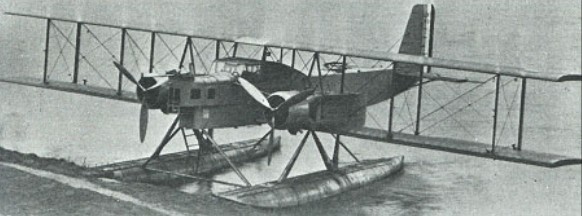
Powered by two 429kW Hispano-Suiza 12Hb engines, the Liore-et-Olivier LeO 25 prototype four-seat night-bomber was delivered in 1928 as part of the second series batch of LeO 20s. It showed little improvement over the LeO 20, from which it could be distinguished by its redesigned fin. The next year it was redesignated LeO 252.01 after being re-engined with Hispano 12Mbr engines, and in 1931 it was fitted with two large wooden floats for evaluation by the French navy. The second LeO 252, slightly modified, appeared in 1932 and was bought by Romania.
Three landplane developments of the LeO 252 were delivered to Brazil as LeO 253 aircraft in 1931, but were not assembled until the following year when they took part in the civil war in that country. The LeO 253 had a maximum speed of 215km/h.
The LeO H-254 flew for the first time in the summer of 1932, and was a refined version of the H-252 intended for production, but only two examples were built and these were used at Berre to familiarise Farman F.168 crews with the more advanced aircraft to come.
The LeO H-255 was a version of the H-254 with 515kW Hispano-Suiza 12Xbrs engines. Flown first as a landplane, then as a seaplane, it gained several world height with load records for seaplanes.
The LeO H-256 appeared in late 1932, introducing increased wing area.
The LeO H-257 was a considerable advance over the previous prototypes, powered by the Gnome-Rhone 14Kbrs Mistral Major radial engines preferred by the French navy, and with an enclosed cabin for the pilot. It first flew in March 1933 and was sufficiently impressive to earn an order for 60 LeO H-257bis series seaplanes with more powerful Gnome-Rhone 14Kirs/Kjrs engines, a strengthened structure, and the nose gun position enclosed in a glazed rotating cupola.
The LeO H-258 was delivered before the H-257bis, 26 going into service, initially with Escadrilles 3B1 and 3B2, from June 1935 onwards. The H-258 had two 484kW Hispano-Suiza 12Nbr engines and attained a maximum speed of 240km/h. The H-257bis went into service from June 1936, equipping seaplane Escadrilles 3B1, 3B2, then B-1, B-2, B-3 and finally E.7 and 3S4. The Armee de I’Air used the landplane version with fixed independent mainwheels in Groupe de Bombardement II/25.
After neutrality patrols during the Spanish Civil War, the LeO floatplanes were used as convoy escorts and for submarine patrols from September 1939, seeing action in the English Channel, and on the Atlantic and Mediterranean coasts. Some were flung into action on bombing raids against the German Blitzkrieg in the summer of 1940, suffering heavy losses. At the outbreak of war 19 landplane LeO H-257bis aircraft were still in service in North Africa, and in August 1940 the Vichy regime had 53 floatplanes on strength. The last examples were withdrawn from training and target towing duties at the end of 1944.
The solitary H-259, the last of the H-25 series, had 641kW Hispano-Suiza 12Ydrs/Yfrs engines and disappointing performance, and, after test flights in 1935, no orders were received.
H-257bis
Engine: 2 x Hispano-Suiza 12Xgrs/Xhrs V-12, 537kW
Max take-off weight: 9560 kg / 21076 lb
Loaded weight: 5300 kg / 11685 lb
Wingspan: 25.5 m / 83 ft 8 in
Length: 17.54 m / 57 ft 7 in
Height: 6.8 m / 22 ft 4 in
Wing area: 133.5 sq.m / 1436.98 sq ft
Max. speed: 230 km/h / 143 mph
Ceiling: 8000 m / 26250 ft
Range: 1500 km / 932 miles
Armament: 3 x 7.5mm machine-guns, one 670kg torpedo or 600kg of bombs
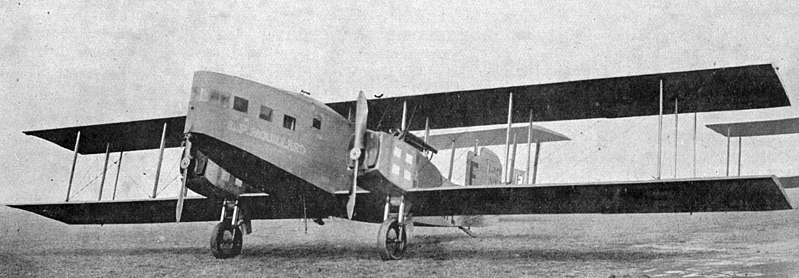
The Lioré et Olivier LéO 21 was based on the earlier LéO 20 night bomber. First flown in August 1929 the LéO 21 was a twin-engined biplane airliner with a fixed tailskid landing gear. It retained the basic structure of the LéO 20 night bomber but with a new wider fuselage. It had room for six passengers in a nose cabin and a further 12 passengers in the main cabin with an open cockpit for the pilot.
The second LéO 21 was fitted with two 450 hp (336 kW) Renault 12Ja engines and re-designated as a LéO 212. It was converted by the Wagons-Lits company as a dining aircraft. The first LéO 21 became an avion-bar in 1929 and was re-designated LéO 211; it was later modified in 1931 with Renault engines as the LéO 213.
One aircraft was produced as the LéO 21S fitted as a 10-stretcher ambulance.
The first production LéO 213 was built in 1928 and a total of eleven were built and operated by Air Union on routes from Paris to London, Lyons, Marseilles and Geneva. The LéO 213 had an increased wingspan, improved sound proofing and three baggage holds. When modified for night services they were re-designated as LéO 213N.
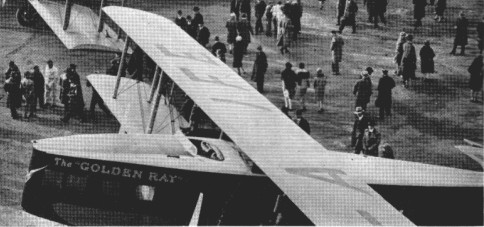
Operated by Air Union circa 1929. Air France replaced its LeO 21 biplanes with a fleet of Wibault 282s, which in turn gave way to Bloch 220s.
On 25 July 1930, LeO 21 F-AIZO Golden Ray/Rayon d’Or of Air Union made a forced landing at Snave, Kent following an engine failure. The aircraft was subsequently dismantled and removed to Hythe, Kent.
The Spanish Republican Air Force operated Lioré et Olivier 213.
Liore & Olivier LeO 213 Article
In 1934 all the surviving LéO 213s were bought by the Armée de l’Air (French Air Force) and were converted to transports for 14-troops on bench seats and re-designated LéO 214.
Variants:
LeO 21
Prototype
Engines: 2 x 310 kW (420 hp) Gnome & Rhône 9Ab Jupiter
LeO 211
First prototype modified
LeO 212
Second prototype
Engines: 2 x 340 kW (450 hp) Renault 12Ja
LeO 213 / LéO 213N
Production version
Engine: Renault 12Ja
LeO 214
Armée de l’Air conversions from LéO 213
Powerplant: 2 × Renault 12Ja, 336 kW (450 hp)
Wingspan: 23.03 m (75 ft 6.75 in)
Wing area: 108 m2 (1,162.54 sq ft)
Length: 15.55 m (51 ft 0.25 in)
Height: 4.50 m (14 ft 9.25 in)
Empty weight: 3,440 kg (7,584 lb)
Gross weight: 5,700 kg (12,566 lb)
Maximum speed: 190 km/h (118 mph, 103 kn)
Range: 560 km (348 mi, 302 nmi)
Service ceiling: 4,500 m (14,765 ft)
Crew: 1
Capacity: 14 troops
LeO 21S
Air ambulance, one built.
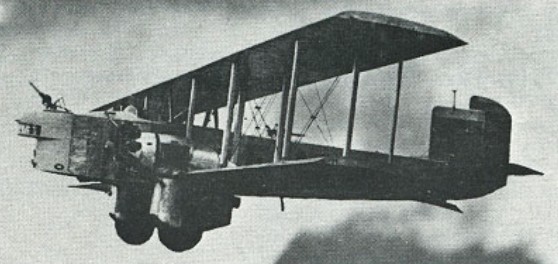
A three-seat version of the LeO 122 prototype, the Liore-et-Olivier 20 won the 1926 French ministry of war competition for a new night bomber, and in September of that year the prototype established world distance records with a 2000kg payload.
The first order for 50 aircraft, for the French Aeronautique Militaire, was received at the end of 1926, the first LeO 20s being flight-tested at Villacoublay in 1927. Further orders followed, and the last of the 311 machines taken on charge by the French air arm was accepted in December 1932. The LeO 20s equipped the 12 escadrilles of the 21e and 22e Regiments d’Aviation based at Nancy and Chartres respectively. A considerable number went to the multi-engined training school of the Aeronautique Militaire at Etampes. LeO 20s were supplied later to the 12e Regiment d’Aviation at Reims and to the 34e Regiment d’Aviation at Le Bourget. The type remained the backbone of the French night-bomber force for a decade.
Nine LeO 20s were exported in 1928-29, seven to Romania and two to Brazil, as a result of demonstration flights abroad by a LeO 20 registered F-AIFI, which was later delivered to the Armee de I’Air. At the beginning of 1937 224 LeO 20s were still in French service, although by that time its relatively low speed meant that the type was obsolete. On the eve of World War II, 92 LeO 20s were still in flying condition, many as target tugs or trainers with flying schools in France and North Africa, and a further 23 were in storage. Earlier, a number had been re-designated LeO 201 when adapted for parachute training.
Engine: 2 x Gnome-Rhone 9Ady (Jupiter) radial, 313kW
Max take-off weight: 5460 kg / 12037 lb
Empty weight: 2725 kg / 6008 lb
Wingspan: 22.25 m / 72 ft 12 in
Length: 13.81 m / 45 ft 4 in
Height: 4.26 m / 13 ft 12 in
Wing area: 105 sq.m / 1130.21 sq ft
Max. speed: 198 km/h / 123 mph
Ceiling: 5760 m / 18900 ft
Range: 1000 km / 621 miles
Armament: 5 x 7.7mm machine-guns, 1000kg of bombs
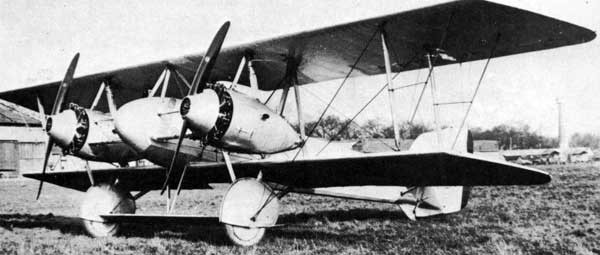
The Lioré-et-Olivier LeO-5 twin-engine three seat armored infantry support aircraft was built only in 1919. Equipped with two Le Rhône 9 Rs of 170 hp the aircraft traveled at 200 km / h.
 All Aero