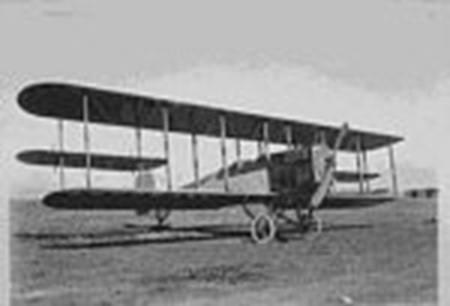
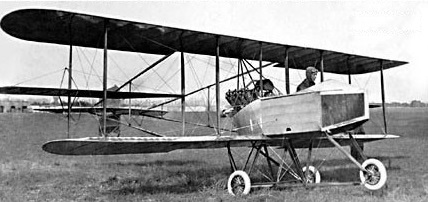
In 1913, Martin won an army contract to produce training aircraft and developed the famed Martin Model TT a tractor biplane with an enclosed fuselage and dual controls, much advanced for its time. With increasing capital at his disposal, Martin moved to Cleveland. The Glenn L. Martin Company was on its way.
The Glenn L. Martin Company produced the first successful twin-engined aeroplane of American design, as the W. F. Night Bomber or “Seven Ton” bomber (first flown on 15 April 1918). As it is generally accepted that the first bomber built for the USAAS was the MB-1, the view can be taken that the W.F. and MB-1 are one and the same.
The MB-1 bomber first flown 17 August 1918. Contemporary reports state that the W.F. was converted into the passenger and cargo-carrying Commercial type. Again it is known that one of the ten MB-1 was so converted, although a drawing of the Commercial made in 1921 shows a rounded-nose aircraft with folding outer-wing sections, single-wheel landing-gear units and open cockpit for the pilots, while the MB-1-type Commercial was actually produced with an enclosed cockpit. Nevertheless as features of the Commercial were subsequently to be found on the improved MB-2 bombers, including the revised single- instead of double-wheel landing gear units, it can be taken that the W.F. Commercial and MB-1-type Commercial or T-1 were the same aircraft. All but one of the remaining MB-1 were produced as bombers or observation aircraft, followed by four more military MB-1 for US Government air mail services. A further two were produced as torpedo bombers for the US Navy, which designated them MTB-1.
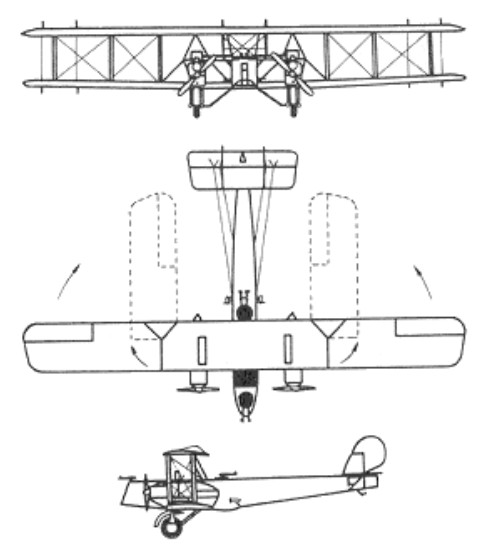
In 1921, Martin produced its KG.1 variant of the MB-1, designed as an antiship torpedo bomber under the designation MBT. As an interim stage between the MB-1 and the later MB-2, Martin produced the MT-1 extended-wing torpedo bomber, eight of which were operated by the US Marine Corps. The MB-2 itself was powered by 313kW instead of 298kW Liberty engines and had the wing span of the MT-1 and the landing gear of the Commercial. The NBS-1 was a wood-and-canvas biplane without staggered wings, employing twin rudders on a twin vertical tail.
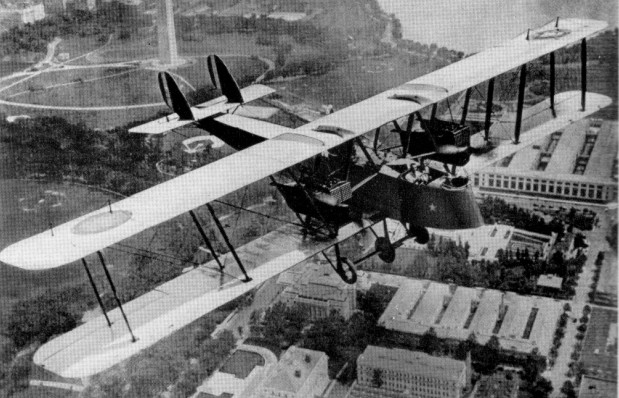
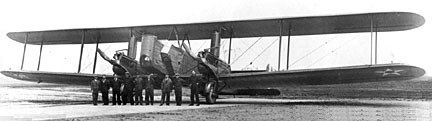
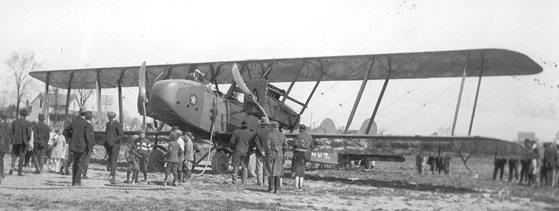
The first 20 (five MB-2 and 15 NBS-1) were ordered from the Martin Company by the USAAS in June of 1920. In the MB-1, the Liberty engines were suspended between the wings by a system of struts, but on the MB-2, the twin Liberty engines were lowered to sit inside nacelles attached to the lower wing. As compared to the MB-1, the landing gear was simplified to only two wheels. The non-staggered wings were hinged at the rear spars just outboard of the engines, and could be folded aft for storage. The armament consisted of five Lewis 0.50-in machine guns, two in the front cockpit, two in the rear, and one aimed downwards and to the rear. Bombs were carried in racks in a compartment in the fuselage, or, in the case of large bombs, on special racks or chocks directly under the fuselage. A crew of four could be carried. The NBS-1 also had a unique folding-wings system, hinged outside the engine nacelles to fold backwards for storage in small hangars.
The first flight of the MB-2 (serial number AS 64195) took place on September 3, 1920. The MB-2 was designed specifically as a night bomber, and sacrificed the high speed and maneuverability of the MB-1 for a greater bombload. Ten MB-2s were built by the Glenn L. Martin company in Cleveland, and were redesignated NBS-1 when the new Army designation scheme was introduced. Their serials were 64195/64214. These planes are best remembered today as being the aircraft which participated in the famous Billy Mitchell demonstration of aerial bombardment.
The NBS-1 was the primary bomber used by Brigadier General Billy Mitchell during Project B, the demonstration bombing of naval ships in July 1921. Six NBS-1 bombers, led by Captain Walter Lawson of the 96th Squadron operating out of Langley Field, bombed and sank the captured German battleship SMS Ostfriesland on 21 July 1921, using specially-developed 2,000 lb (907 kg) demolition bombs externally mounted beneath the fuselage. Other MB bombers and flying-boats destroyed a submarine, cruiser and destroyer.
Martin proposed to the Army that 50 more NBS-1 bombers be built. However, under the prevailing policy of the time, the rights to the NBS-1 design were owned by the Army rather than by Martin. Consequently, the Army had the right to ask for competitive bids on the project from other manufacturers. In 1921, Curtiss underbid the Glenn L. Martin Co. for the production of 50 examples of the NBS-1. One XNBS-1 was built in 1921 with two 400hp Liberty 12 engines.
In order to spread scarce military procurements among as many manufacturers as possible, contracts for 35 other NBS-1s were granted to the L.W.F. (Lowe, Willard, and Fowler) Engineering Company of College Point, New York and a contract for 25 more was granted to the Aeromarine Plane and Motor Co. of Keyport, New Jersey, in 1921.
Aeromarine contract-built twenty-five Martin MB-2 in 1921 as NBS-1; 22-201 to 22-225.
The 50 NBS-1 built by Curtiss (AS68478 to 68527) were powered by two 400hp Liberty 12 engines. The last 20 Curtiss-built NBS-1 bombers were equipped with General Electric turbosuperchargers. These were the first airplanes to use turbosuperchargers in production quantities. With these turbosuperchargers, the NBS-1 could reach a service ceiling of 25,341 feet. However, the use of turbosuperchargers in bombers proved to be premature, the early superchargers being notoriously unreliable.
Curtiss built two XNBS-4 (Model 36: AS68571/68572) in 1924, powered by two 435hp Liberty 12A. These evolved into the B-2.
Curtiss XNBS-4
One MB-2, fitted with super-chargers, attained an altitude of about 8,077m while carrying a pilot and three observers. A contemporary report states that, had it not been for the extreme cold and lack of fuel, a still greater altitude could have been reached.
The NBS-1 were built with a unit cost of US$23,485 (1920).
The first two Martin MB-2s, Air Service s/n AS64195 and AS64196, were retained at McCook Field in Dayton, Ohio, for R&D flight testing, marked with project numbers P162 and P227 respectively, as was the second NBS-1 (AS64201), marked as P222. Four Curtiss NBS-1s were also assigned to McCook.
Eight Army bombing squadrons used the NBS-1, the 11th, 20th, 49th and 96th Squadrons with the 2nd Bomb Group based at Langley Field in Virginia, the 23rd and 72nd Squadrons with the 5th Composite Group in Hawaii, and the 28th Squadron with the 4th Composite Group in the Philippines. They remained in service until replaced by Keystone bombers in 1928-29.
The Martin MP was a 1919-20 version of the bomber built for the Post Office Dept. Only six were built.
United States Army Air Corps 1st Day Bombardment Group, Kelly Field, Texas (2nd Bombardment Group, Langley Field, Virginia) 11th Bomb Squadron – operated MB-2 1920-1927 20th Bomb Squadron – operated NBS-1 1920-1929 49th Bomb Squadron – operated NBS-1 1920-1929 96th Bomb Squadron – operated NBS-1 1920-1928 4th Composite Group, Nichols Field, Luzon, Philippines 28th Bomb Squadron – operated NBS-1 1924-1929 5th Composite Group, Luke Field, Territory of Hawaii 23d Bomb Squadron – operated NBS-1 1922-1929 72d Bomb Squadron – operated NBS-1 1923-1929 6th Composite Group, Albrook Field, Panama Canal Zone 25th Bomb Squadron – operated NBS-1 1922-1929
Martin MB Engines: 2 x Liberty, 295kW Max take-off weight: 5477 kg / 12075 lb Empty weight: 3322 kg / 7324 lb Wingspan: 21.8 m / 71 ft 6 in Length: 14.1 m / 46 ft 3 in Height: 4.3 m / 14 ft 1 in Wing area: 99.4 sq.m / 1069.93 sq ft Max. speed: 172 km/h / 107 mph Range w/max.fuel: 2400 km / 1491 miles Range w/max.payload: 772 km / 480 miles Armament: 4-5 machine-guns, 750kg of bombs or torpedos Crew: 2 Passengers: 12
NBS-1 Engines: 2 x Liberty 12-A, 420 hp (325 kW) each Length: 42 ft 8 in (13.0 m) Wingspan: 74 ft 2 in (22.7 m) Height: 14 ft 8 in (4.8 m) Wing area: 1,121 sq.ft (104.2 sq.m) Empty weight: 7,232 lb (3,280 kg) Loaded weight: 12,027 lb (5,460 kg) Maximum speed: 99 mph (85 kn, 160 km/h) at sea level Cruise speed: 92 mph (80 kn, 150 km/h) Landing speed 59 mph Range: 400 mi (345 nmi, 650 km) with 2000 lb bomb Maximum range: 558 miles Service ceiling: 7,700 ft (2,350 m) Maximum ceiling: 9900 ft Rate of climb: 391 ft/min (2.0 m/s) Armament: 5 x .30 in (7.62 mm) Lewis machine guns Bombload: 1,800 lb (820 kg) internal; 2,000 lb (907 kg) external Crew: 4
Curtiss XNBS-1 Engine: 2 x 400hp Liberty 12
Curtiss NBS-1 Engines: 420hp Liberty 12 Wingspan: 74’2″ Length: 42’8″ Useful load: 4795 lb Max speed: 99 mph Cruise speed: 91 mph Stall: 62 mph Range: 430 mi Ceiling: 8,500′
Curtiss XNBS-4 / Model 36 Engines: 2 x 435hp Liberty 12A Wingspan: 90’2″ Length: 46’6″ Useful load: 5951 lb Max speed: 100 mph Cruise speed: 95 mph Stall: 53 mph Range: 620 mi Ceiling: 13,000′
In 1905, young Martin founded an automobile repair shop. Like many other early aero pioneers, he used the profits from this practical endeavour to support his addiction to the airplane. In 1908, he rented an abandoned Methodist church in Santa Ana, California and built a pusher biplane powered by a Ford engine with which he taught himself to fly. In August 1909 Glenn L. Martin flew the Curtiss-type plane at Santa Ana, California. One year and $3,000 later, this budding high priest of aviation became the first to fly in California. Glenn continued flying, making fund raising exhibition hops.
In 1905, young Martin founded an automobile repair shop. Like many other early aero pioneers, he used the profits from this practical endeavour to support his addiction to the airplane. In 1908, he rented an abandoned Methodist church in Santa Ana, California and built a pusher biplane.
The two place Pusher was powered by a 60-100hp Hall-Scott and featured tricycle gear and twin tail booms. Cost was $5,000.
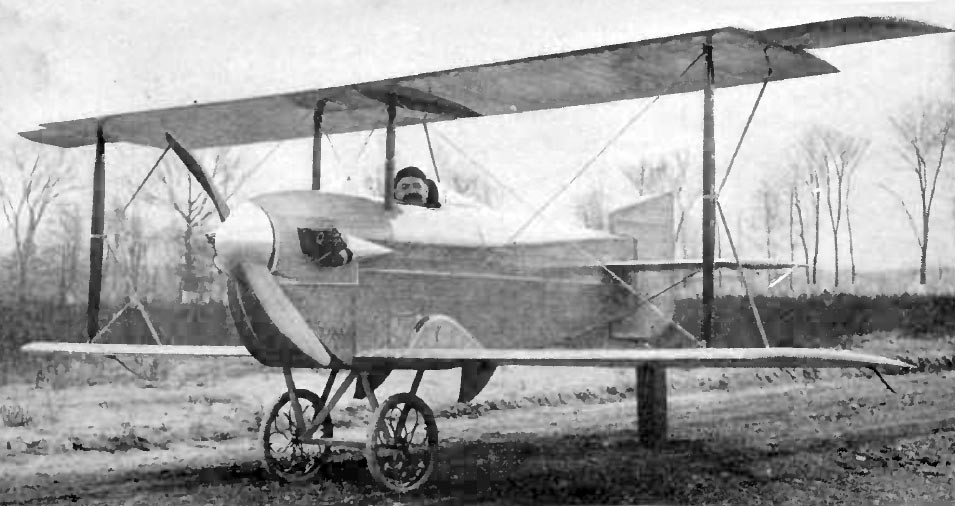
James and Lilly Martin—both aviators—shipped their Martin Tractor Aeroplane from Seattle to Fairbanks, and on July 3, 1913, they introduced Alaska to the spectacle of powered flight. Onlookers watched as the biplane sped past at 45 mph and an altitude of 200 feet.
James V. Martin was a consultant to the U.S. Air service, and an associate to General Billy Mitchell. He held patents on aerospace technologies including the retractable landing gear and once held the World’s speed record of 70 mph in an airplane.
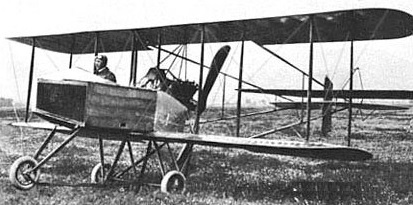
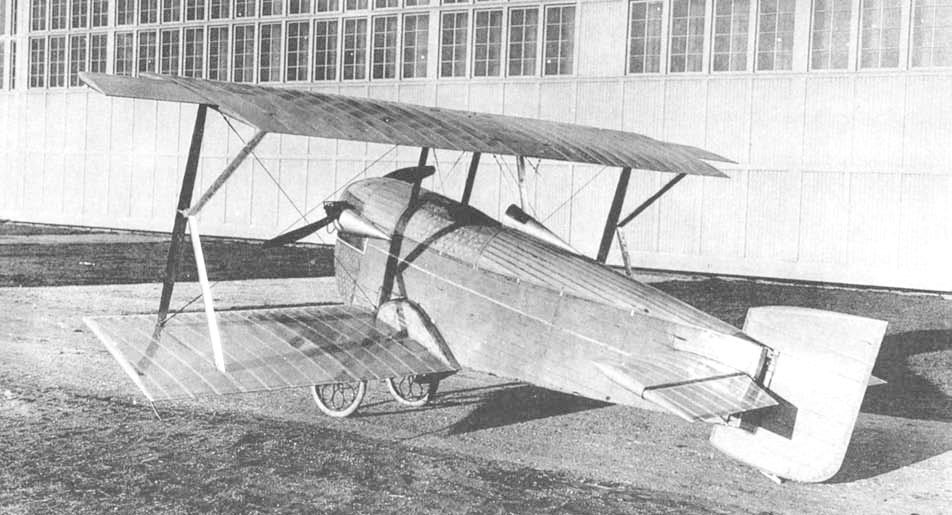
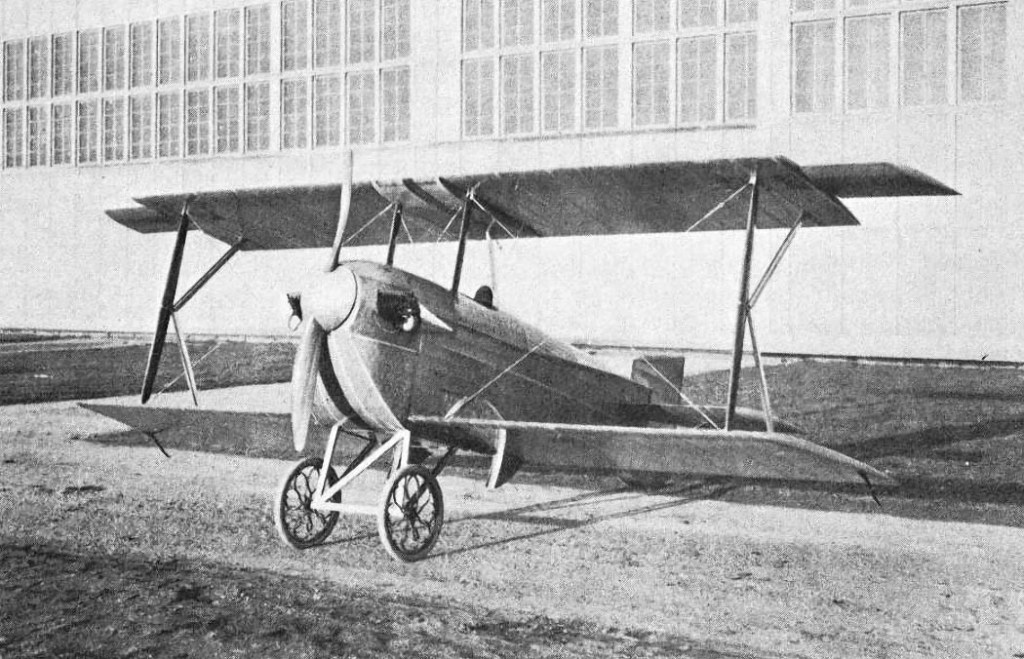
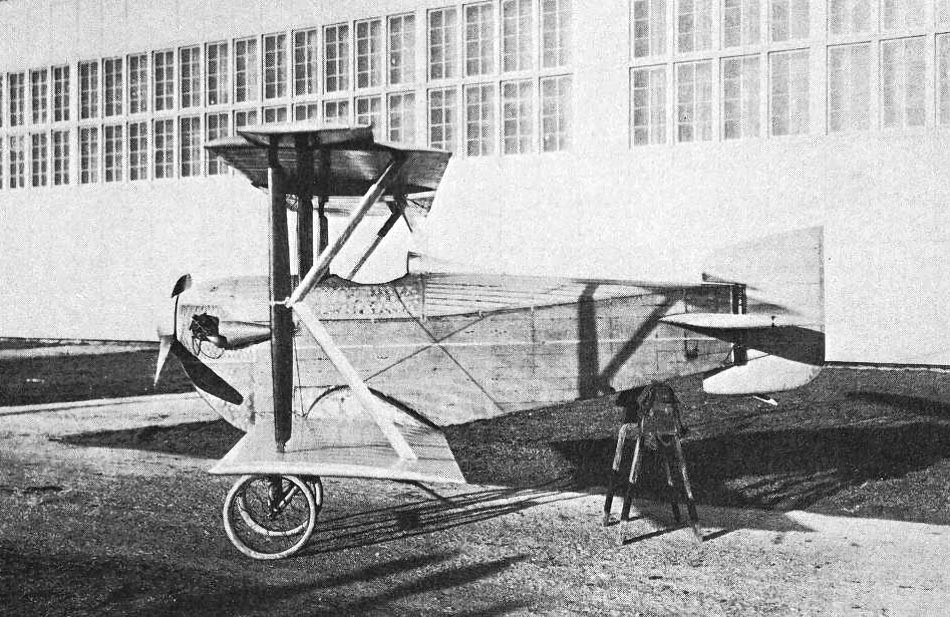
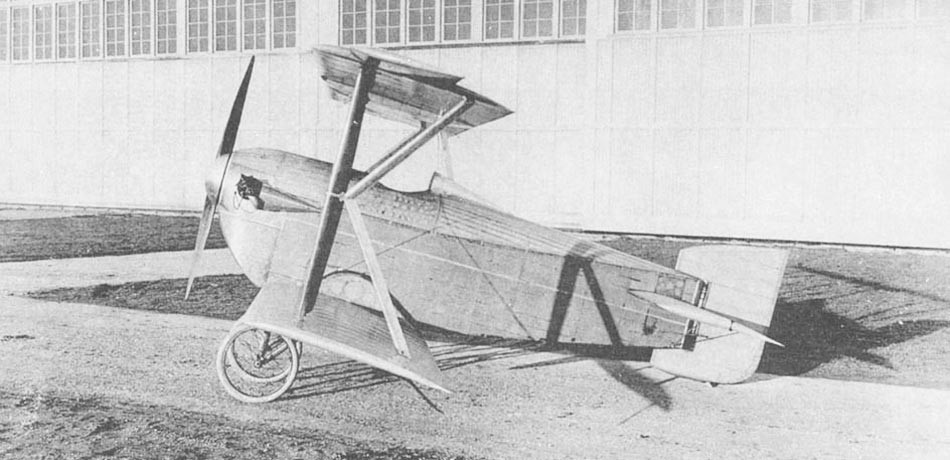
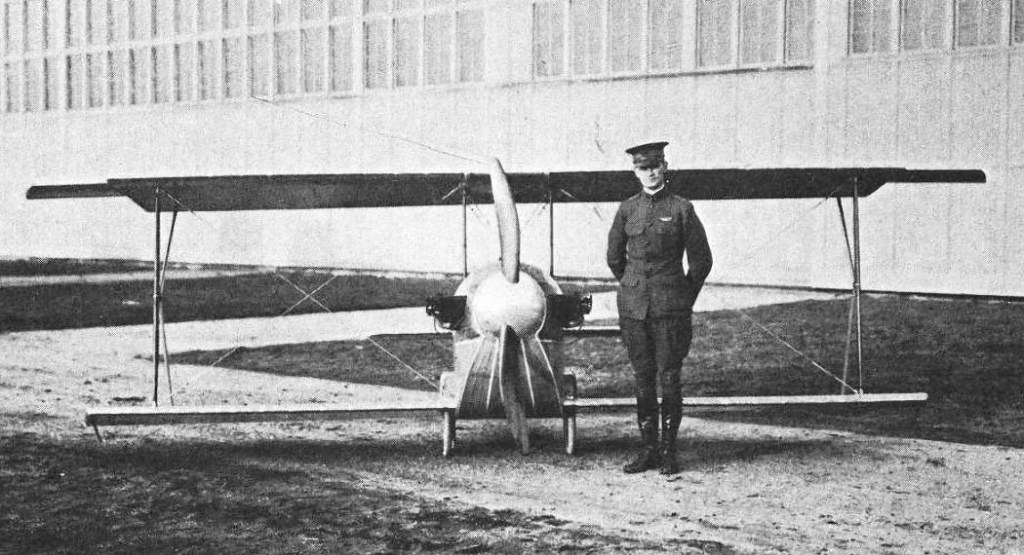
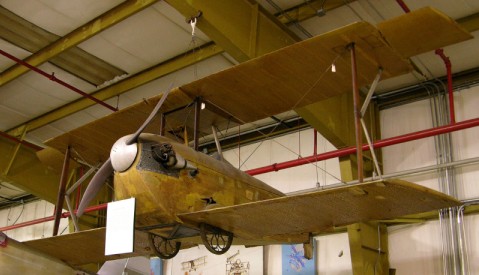
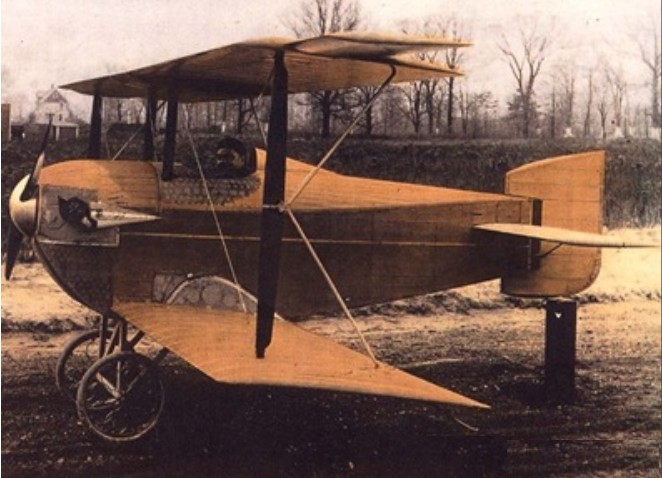
The Martin K-3 was brought out in 1911 as a scout. It was a biplane with a span of 18 ft and overall length of 13 ft 4 in. The Martin landing gear was manually retractable, the wheels folding backward and up between the wing spars into streamlined housings built against the sides of the fuselage.
The wheels used Ackermann flexible spokes for shock absorption. It was powered by an ABC Gnat 40 hp engine and weighed 350 lb. Its high speed was 185 mph. The 9-gallon fuel tank was supposed to provide a flight time of two hours.
When viewed from the side, the wing supports formed a letter “K” shape. The fuselage was all wood with plywood and fabric covering. The aircraft featured air tanks, and electrical power for flightsuit heating. The design included floating ailerons, wing trusses, K-struts and controlled vertical empennage.
Since J.V. Martin did not have a manufacturing facility of his own, building of the K-III and K-IV were contracted out to the Gallaudet Aircraft Corporation, though the J.V. Martin name is the one that applies.
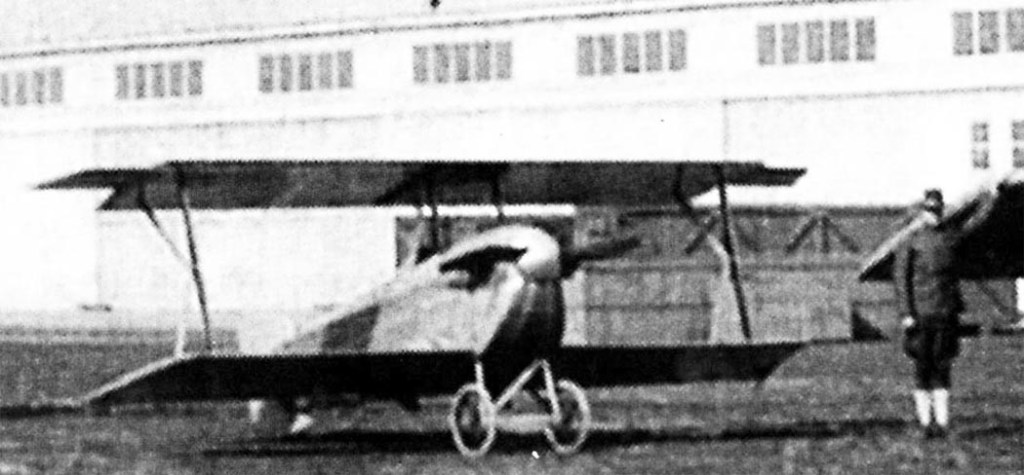
The K.III Kitten was marketed as an “altitude fighter” for the U.S. Army. It is considered the first aircraft in the United States with retractable landing gear.
In December 1918, the aircraft was delivered to McCook Field where it was considered structurally unsound. Martin appealed to Congress in 1920 to no avail. The military refused to fly on it and returned Kitten to the inventor. Only in the spring of next year the plane was tested by a civilian pilot. In 60 test flights at Dayton, Ohio, the high altitude aircraft could only reach 295 ft of altitude.
The prototype K.III Kitten was donated to the National Air and Space Museum in 1924 and survives in the collection.
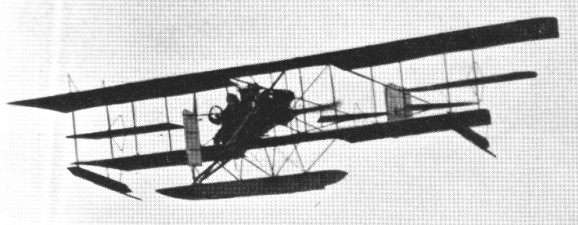
The 1921 J.V. Martin K.IV was a model III with a more powerful 60 hp Lawrance engine and floats. In 1921 3 with float landing gear were built and sold to the U.S. Navy as Navy KF-1.
Martin K-3 Kitten Engine: ABC Gnat, 45 hp (34 kW) Wingspan: 20 ft 2 in (6.15 m) Wing area: 105 sq ft (9.8 m2) Length: 13 ft 3 in (4.04 m) Height: 7 ft 4 in (2.24 m) Empty weight: 350 lb (159 kg) Normal takeoff weight: 300 kg Fuel capacity: 9 US gallons (34 litres) Maximum speed: 117 kn (135 mph, 217 km/h) Cruising speed: 175km / h Practical range: 335km Practical ceiling: 7620 m Capacity: 1 Undercarriage: retract tail
The Philippines can claim south-east Asia’s earliest encounter with manned powered flight, when American aviator James C. “Bud” Mars thrilled spectators in his Skylark pusher biplane (a modified Curtiss design) at the Manila Carnival on February 21, 1911. Mars was part of a Pacific Aviation Exhibition tour organised by fellow American Capt Thomas Baldwin, who followed Mars’s Skylark display at the Carnival with a demonstration of his own Baldwin Red Devil, the pair having arrived with their dismantled aircraft aboard a steamer from Hawaii ten days previously. The exhibition had not gone so well in Hawaii, where the locals had quickly established a principle that has caused headaches for airshow organisers ever since; why pay for a ticket to enter the showground when you can see an air display from any nearby vantage point? The Manila Carnival organisers must have found a way to sidestep this issue, as the pair of aviators made numerous flights during the week-long festival. Baldwin sold his machine before the duo moved on to complete the Pacific tour with visits to Thailand, Hong Kong and Japan.
A replica of the Mars Skylark built by students at the Philippine Air Transport & Training Services College of Aeronautics in 2011 now hangs in the Philippine Air Force Museum at Villamor Air Base near Manila.
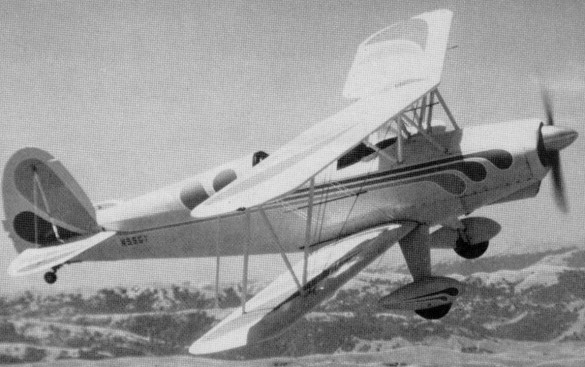
Designed by Ed Marquart and built with Dan Fielder, the Charger first flew in 1970, stressed for +6 to -4.5G’s. Gear tread is 6.5ft, making for easy ground handling. Wings are built around solid spruce spars and trussed spruce ribs, covered with ceconite. Engine 115-116 hp.
Engine: Lycoming O-290 125hp @ 2600rpm. HP range: 125-180. Length: 19ft 6in. Wing area: 176 sq.ft. Wing span: 24 ft. Height: 7 ft. Empty wt: 1000 lbs. Payload (less std fuel): 438 lbs. Wheel base: 14ft. Wheel track: 6 ft. Baggage cap: 25lbs. Max level speed: 120mph (approx). Cruise: 116 mph. Stall: 45mph. Best climb rate: 1100 fpm. Range: 400 sm. Take-off dist: 600 ft. Landing dist: 700 ft. Service ceiling: 13,000 ft. Gross: 1550 lbs. Seats: 2. Landing gear: tail wheel. Fuel cap: 27 US Gal.
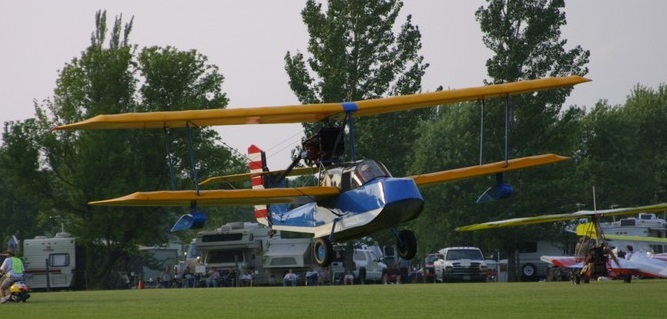
In 1989 designer and manufacturer Larry Seifert introduced the Mariner. The Mariner is a two-place tandem seating amphibious bi-plane. It was being offered in kit form, which would take the average builder between 300 and 600 hours to build, and required no special tools, or jigging. It was also offered as a ready to fly plane under the new Light Sport Aircraft category.
The Mariner is set up to take a number of different engines, from the Rotax 503 and 582 on up to the Subaru auto conversion. Depending on engine power cruise comes in between 55 and 75 mph, top speed 95 mph, climb rate 1,000 feet per minute and stall 28 mph. Take off from land or water requires 150 to 200 feet.
Horsepower: 40 hp Wingspan: 28.5 ft / 8.69 m Length: 18.75 ft / 5.72 m Height: 8 ft / 2.44 m Empty Weight: 304 lb / 138 kg Gross Weight: 950 lb / 431 kg Useful Load: 646 lb / 293 kg Fuel Capacity: 5 USgal / 19 L Cruise: 48 kts / 89 kmh / 55 mph Stall: 26 kts / 48 kmh / 30 mph Range: 65 nm / 120 km / 75 mi ROC: 800 ft/min / 4.1 m/sec Ceiling: 12,000 ft / 3,658 m Takeoff Distance: 150 ft / 46 m Landing Distance: 225 ft / 69 m


 All Aero