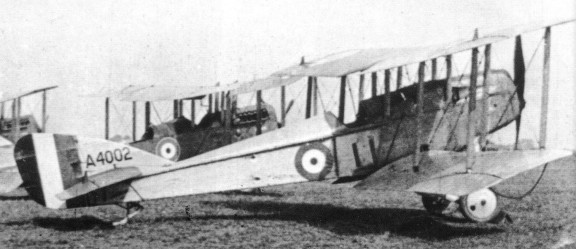
The F.5 was virtually a demilitarised F.4.
Biplane
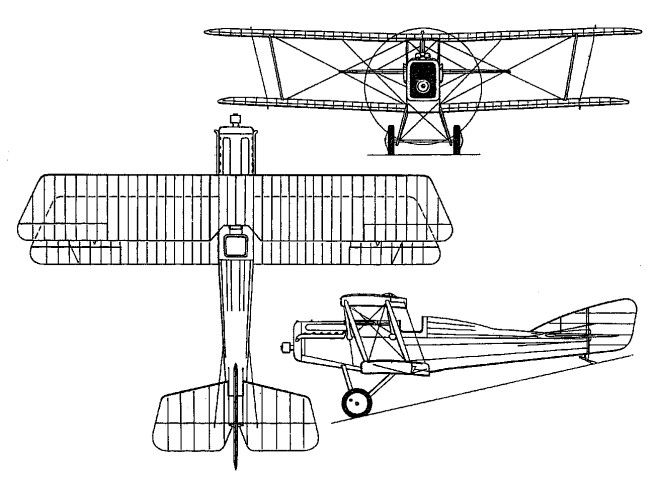
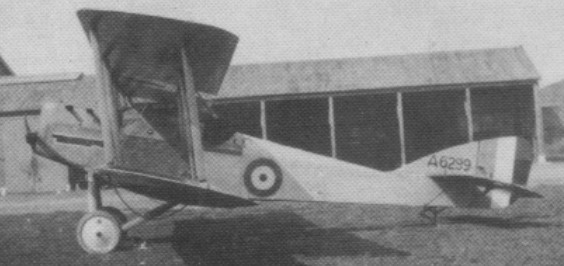
Martin & Handasyde F.4 Buzzard
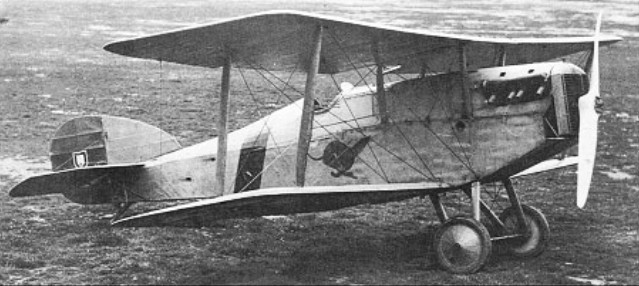
The Buzzard began life as a private venture design by G H Handasyde designated F.3. The, F.3 was powered by the 275hp Falcon III engine, but priorities in Falcon engine supplies enjoyed by the Bristol Fighter led to the reworking of the F.3 for the 300hp Hispano-Suiza 8Fb. With this it was redesignated F.4 and (from September 1918) officially named Buzzard. It is uncertain just how many of the original batch of 150 aircraft were completed as Falcon-engined F.3s, but most were certainly finished as HS 8Fb-engined F.4s, the first of the latter being tested at Martlesham Heath in June 1918.
Additional contracts for the F.4 were placed with the parent company (300), Boulton & Paul (500), Hooper (200) and Standard Motor (300). Armed with two synchronised 7.7mm Vickers guns, the F.4 differed from the F.3, apart from power plant, in having revised fuselage decking contours and more extensive plywood skinning. Belated engine deliveries and other factors delayed production, only seven having been handed over by November 1918, and, in the event, no RAF squadron was to be equipped with the type.
Contracts for some 2500 were cancelled after the Armistice, including 1500 which were to have been built in the US.

Production of the F.4 by the parent company continued for a time after the Armistice (no other contractor apparently producing any complete Buzzards) and more than 370 airframes were built, some being fitted with Falcon engines. A number of F.4 Buzzards was sold abroad by the Aircraft Disposal Company, the principal recipients being Finland (15), Portugal (4), Spain (20) and the USSR, the last-mentioned procuring 100 aircraft of this type. One 290-hp M-6 eight-cylinder water-cooled engine in Russian-built F.4s. One F.4, along with an S.E.5A, were supplied to the Imperial Japanese Navy in 1921 22 as examples of single seat fighters with stationary engines.
A two-seat variant, the F.4A, was produced in 1920, a much-modified derivative with two-bay wings of increased span appearing in the following year. This had a Lewis gun in the rear cockpit and several were supplied to Spain in June 1921, both single- and two-seat Buzzards being referred to as F.4As in Spanish service.
The Aircraft Disposal Company developed the F.4 into the less successful ADC 1.
Bruce Murdin
Email: murdin@btinternet.com
I have an original 1919 propeller from an F4 Buzzard that was owned by my father for the last 50+ years. If anyone is interested in buyimg it, please contact me on the above email address
March 2016
Engine: 300hp Hispano-Suiza 8Fb
Prop: Lang L.P.5270A or 5270B two-blade wooden, diameter 2690 mm (8 ft 9.9 in), pitch 2000 mm (6 ft 6.7 in), or Lang L.P.5420 two-blade wooden airscrew, diameter 2660mm (8 ft 8.7 in), pitch 1 980mm (6 ft 5.95 in); Wing span, upper, 32 ft 9.4 in (10,99 m), lower, 31 ft 2.4 in (10,51 m)
Length: 7.76 m / 25 ft 6 in
Height: 2.69 m / 8 ft 10 in
Wing area: 29.73 sq.m / 320.01 sq ft
Loaded weight: 2,398 lb (1 088 kg)
Empty weight: 821 kg / 1810 lb
Normal fuel capacity, (Buzzard Mk I, Hispano¬Suiza): petrol, 38 Imp gal (172,71); oil, 4 gal (18,21) later 75 gal (341); water 9 gal (40,91). Buzzard Mk Ia: petrol 56 gal (254,61), oil 75 gal (341).
Max speed, 132mph (212 km/h) at 15,000 ft (4 570 m)
Time to 10,000 ft (3 050 m), 7.9 min
Armament: Two fixed 0303-in (7,7-mm) Vickers Mark 1* machine-guns synchronized by Constantinesco C.C. Gear Type B with (ultimately) 770 rpg; 1 8-in (45,72-mm) Aldis optical sight and 5-in (127-mm) ring-and-bead sight.

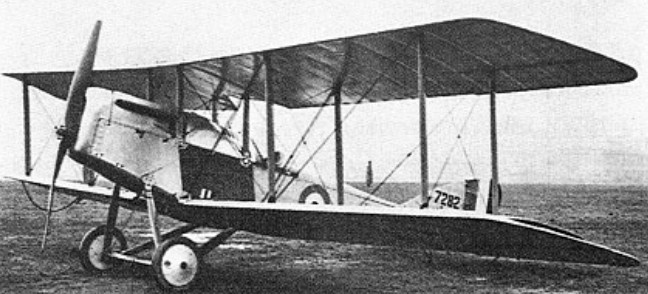
Martin & Handasyde F.3 Buzzard
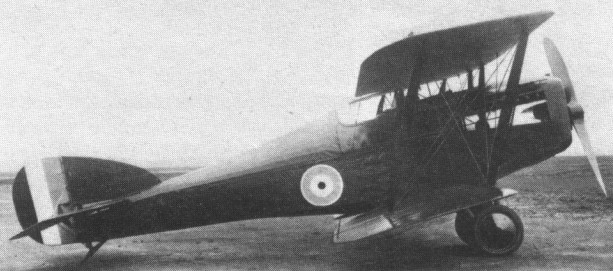
The Buzzard began life as a private venture design by G H Handasyde designated F.3. A single-bay staggered biplane of conventional wooden con¬struction with fabric skinning and powered by a Rolls-Royce Falcon engine of 285 hp.
The F.3 appeared in the autumn of 1917 and underwent its first official trials on 3 October, six further prototypes being ordered and a decision to manufac¬ture the F.3 in quantity being taken before the end of 1917.
The F.3 was powered by the 275 hp Falcon III engine, but priorities enjoyed by the Bristol Fighter in Falcon engine supplies led to the reworking of the fighter for the 300 hp Hispano-Suiza 8Fb with which it was redesignated F.4 and (from September 1918) officially named Buzzard. It is uncertain as to how many of the original batch of 150 aircraft were completed as Falcon-engined F.3s, but the bulk was certainly finished as HS 8Fb-engined F.4s.
An installation for the 240-hp Lorraine 8Bb eight-cylinder water-cooled engine was designed and may have been made.
On the F.3 the armament could be supplemented by one 0303-in (7,7-mm) Lewis machine-gun mounted on the rear spar of the centre section. The first Buzzard Mk 1a, H6540, at one time had two supplementary Lewis guns partly let into the upper surface of the lower mainplanes, one on each side.
Engine: One 285-hp Rolls-Royce Falcon experimental
Prop: Lang L.P.3770A two-blade wooden airscrew, diameter 2850 mm (9 ft 42 in), pitch 3 050 mm (10 ft)
Normal fuel capacity: petrol 32 Imp gal (145,5 lt), oil 3 gal (13,6 lt), water 6 gal (27,3 lt)
Span, upper, 32 ft l0in (11,0 m), lower 31 ft 6 in (10,6 m)
Length, 25 ft 8 in (7,8 m)
Height, 8 ft 8 in (2,85 m)
Wing area, 337 sq ft (31,34 sq.m)
Armament: Two fixed 0303-in (7,7-mm) Vickers Mark 1* machine-guns synchronized by Constantinesco C.C. Gear Type B with (ultimately) 770 rpg; 1 8-in (45,72-mm) Aldis optical sight and 5-in (127-mm) ring-and-bead sight.
Engine: one 275-hp Rolls-Royce Falcon III 12-cylinder water-cooled
Prop: Lang L.P.3770A two-blade wooden airscrew, diameter 2850 mm (9 ft 42 in), pitch 3 050 mm (10 ft)
Normal fuel capacity: (B1490), petrol 39 Imp gal (177,31), oil 435 gal (19,81)
Span, upper, 32 ft l0in (11,0 m), lower 31 ft 6 in (10,6 m)
Length 25 ft 6 in (7,8 m)
Height, 8 ft 8 in (2,85 m)
Wing area, 337 sq ft (31,34 sq.m)
Armament: Two fixed 0303-in (7,7-mm) Vickers Mark 1* machine-guns synchronized by Constantinesco C.C. Gear Type B with (ultimately) 770 rpg; 1 8-in (45,72-mm) Aldis optical sight and 5-in (127-mm) ring-and-bead sight.
Martin & Handasyde F.2

Of more modern concept that the F.1, the F.2 two-seat fighter was, like its predecessors, of wooden construction with fabric skinning, apart from the sides and top decking of the fuselage which were plywood covered.
Designed and built while the F.1 was under construction, the F.2 underwent official testing two months prior to its predecessor, in May 1917. The F.2 was powered by a 200hp Hispano-Suiza 8Bd eight-cylinder water-cooled engine and carried an armament of one fixed and synchronised 7.7mm Vickers gun and one Lewis gun on a Scarff ring. Shortcomings revealed during official trials ruled out a production order, and the prototype was utilised as a test-bed for the then-new Sunbeam Arab engine.
Max speed, 120 mph (193 km/h) at sea level
Time to 10,000 ft (3 050 m), 13.5 min
Endurance, 2.5 hrs
Empty weight, 1,547 lb (702 kg)
Loaded weight, 2,355 lb (1 068 kg)
Span, 32 ft 0 in (9,75 m)
Length, 25 ft 0 in (7,62 m)
Height, 8 ft 2 in (2,49 m)
Wing area, 334 sq ft (31,03 sq.m)
Martin & Handasyde F.1
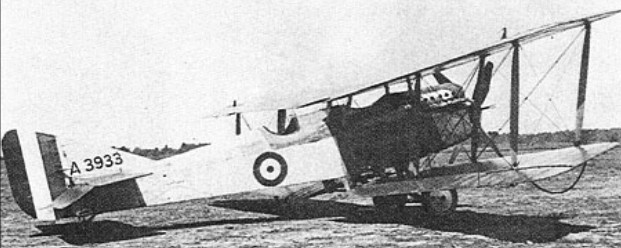
The F.1 two-seat fighter was conceived late in 1915 as a tractor biplane in which the gunner occupied the forward cockpit and stood upright to fire a 7.7mm Lewis gun on a mount built into the upper wing centre section.
Two prototypes were ordered on 16 September 1916 under WO Contract No87/A/435, Serial Numbers A3933 & A3934.
A3933 was tested at CFS Upavon 11.6.17 to 22.7.17 Exp Stn Orfordness, HD Patrol 22.8.17; HD Patrol from Rochford 29.9.17; AP Hendon by April 1918; Hendon 9.4.18; Orfordness 12.4.18; Hendon 1918; RAE Farnborough 21.6.18 last mention 18.3.19 (Petrol system tests)
Powered by a 250hp Rolls-Royce Mk III engine (later to become known as the Eagle III), the F.1 suffered a somewhat protracted development and, by the time that it was officially tested in July 1917, it was already obsolete. Obviously not acceptable for operational use, the F.1 was not further developed.
Max speed, 109 mph (175 km/h) at 6,500 ft (1 980 m)
Time to 10,000 ft (3 050 m), 13.66 min
Endurance, 3.75 hrs
Empty weight, 2,198 lb (997 kg)
Loaded weight, 3,260 lb (1 479 kg)
Span, 44 ft 6 in (13,56 m)
Length, 29 ft 1 in (8,86 m)
Height, 8 ft 6 in (2,59 m)
Wing area, 467 sq ft (43,38 sq.m)
Martin & Handasyde RG
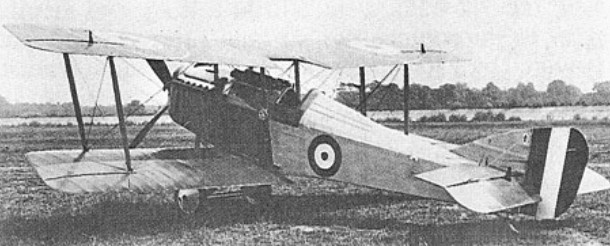
Derived from the Elephant via a single-bay experimental variant of the earlier design by A A Fletcher, the R.G. bore a close resemblance to its predecessor and was initially flown late in 1916 with a 190 hp Rolls-Royce Falcon I 12-cylinder water-cooled engine. Armament comprised a fixed 0303-in (7,7-mm) Vickers gun on the port upper longeron, outside the cabane struts, and a Lewis gun on the starboard side of the cockpit. After official trials in February 1917, the R.G. was revised in a number of respects. The cockpit was moved aft and the centre section cut-out was enlarged, the span of the lower wing was reduced, the rear top decking was raised, armament was revised and consisted of two 0303-in (7,7-mm) Vickers guns immediately in front of the cockpit, and a 275 hp Falcon III engine was fitted. In this form, the R.G. had, according to the official report, a “performance … far and away better than any other machine manufactured”. However, develop¬ment was discontinued in favour of the superior F.3.
Span, 32 ft 0 in (9,75 m)
Length, 25 ft 10 in (7,87 m)
Height, 9 ft 10 in (2,30 m)
Wing area, 310 sq ft (28,80 sq.m).
Empty weight, 1,740 lb (789 kg)
Loaded weight, 2,261 lb (1 026 kg)
Max speed, 132 mph (212 km/h) at 6,500 ft (1 980 m)
Time to 10,000 ft (3 050 m), 7.33 min
Endurance, 2 hrs
Martin & Handasyde G.100 / G.102 Elephant
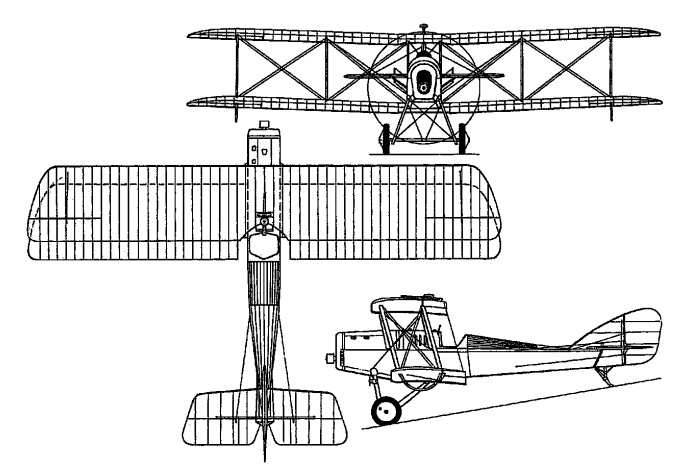
An unusually large aircraft by contemporary standards for a single-seater, the Elephant two-bay equi-span staggered biplane was designed by A A Fletcher of the Martinsyde Company, a prototype powered by a 120 hp Austro-Daimler engine entering test in the autumn of 1915. The G.100 featured two spar wings and wooden fuselage. The entire airframe is fabric covered, except for plywood side panels on the fuselage between the wings. Conventional control surfaces with ailerons on all four wings.
The initial production version, the G.100, was powered by a 120 hp six cylinder Beardmore engine and was armed with a single 0.303-in (7,7-mm) Lewis gun mounted above the centre section (this later being augmented by a similar weapon bracket-mounted to port behind the cockpit), deliveries to the RFC commencing in 1916.
The G.100 was succeeded by the G.102 version which differed in having a 160 hp Beardmore engine doubling the bombload and replaced the lower-powered model progressively.
The G.100 and G.102 Elephant was used in both France and the Middle East, although only 27 Squadron RFC squadron was completely equipped with this type, a total of 271 being manufactured. They flew G.100/102s from March 1916 until December 1917 on operations in France, and the squadron’s unique equipment is per¬petuated today in 27 Squadron’s official badge motif of an elephant. Many other individual ‘Elephants’ saw active service in Palestine and Macedonia with 14, 30, 63, 67 and 72 Squadrons of the RFC. Larger than most contemporary single seaters, the ‘Elephant’ was renowned for good flying characteristics, while its endurance of approximately 4.5 hours, fully loaded, was considered excellent for what were then regarded as reconnaissance and bombing sorties. Although not particularly successful as a fighter owing to its poor agility by comparison with its smaller contemporaries, the Elephant performed a useful service as a bomber, carrying up to 230 lb (104 kg).
The Martinsyde G.100 was operated as bomber and escort machine by the Australian 1 AFC in the Middle East, and was the type flown by Lt F.H. McNamara when he was awarded the VC.
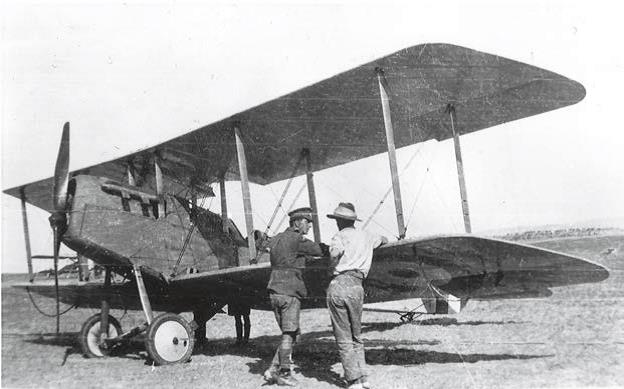
Only a very few survived beyond 1918.
G.100
Engine: Beardmore, 120 hp
Wingspan: 38 ft
Wingbarea: 410 sq.ft
Length: 26 ft 6 in
Height: 9 ft 8 in
Empty weight: 1759 lb
MTOW: 2424 lb
Max speed: 95 mph at 6000 ft
Service ceiling: 14,000 ft
Endurance: 5 hr 30 min
Armament: 2 x Lewis mg
Bombload: 112 lb
G. 102
Max speed, 103 mph (166 km/h) at sea level
Time to 3,000 ft (915 m), 3.5 min.
Endurance 4.5 hrs
Empty weight, 1,793 lb (813 kg)
Loaded weight, 2,458 lb (1115 kg)
Span, 38 ft 0 in (11,58 m)
Length, 26 ft 6 in (8,08 m)
Height, 9 ft 8 in (2,95 m)
Wing area, 410 sq ft (38,09 sq.m)
Armament: 2 machine-guns, 118kg of bombs
Martin & Handasyde S.1

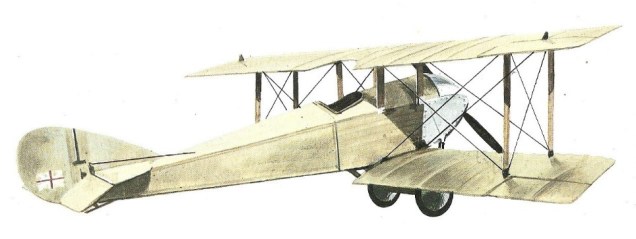
The first original wartime design was S.1 single-seat scout, built October 1914.
Engine: Gnome, 80 hp
Wingspan: 27 ft 8 in / 8.43 m
Length: 21 ft / 6.40 m
Height: 8 ft 2 in / 2.49 m
Max speed: 84 mph / 135 kph
Armament: 1 x mg
Crew: 1
Martin 1913 Tractor / Scout / Special
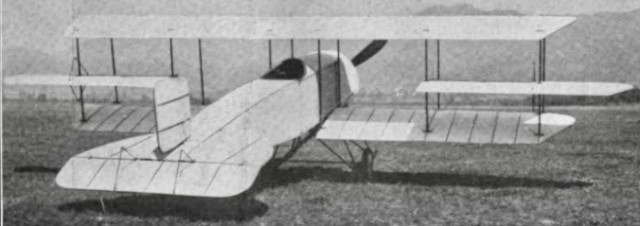
A single-seat biplane with a 90 hp Gnôme rotary engine. It was built for daredevil pilot Lincoln Beachey, but he rejected it on the grounds that it lacked necessary performance.
Martin 1910 Biplane
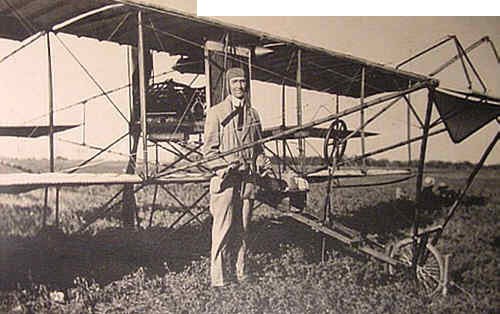
In 1910 Glenn L. Martin built another biplane machine with a slightly larger upper wing, interplane ailerons, a triangular stabilizer at the front rudder and a 50 hp Hall-Scott engine with which he set a few flight records of distance, duration and altitude in 1910 with flights from Newport-Beach to Catalina Island.
 All Aero