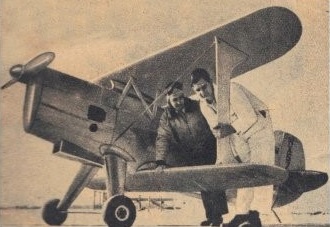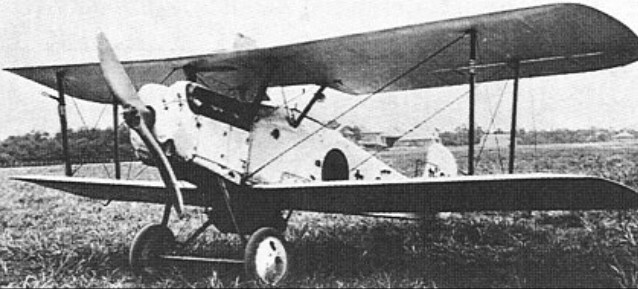
Mitsubishi 1MF / Type 10

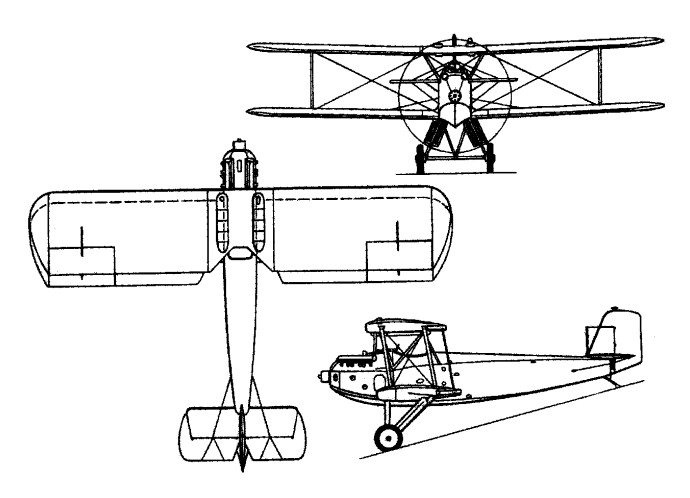
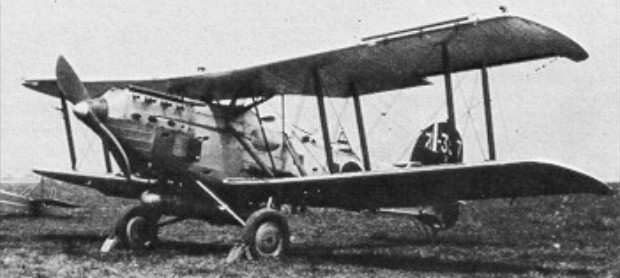
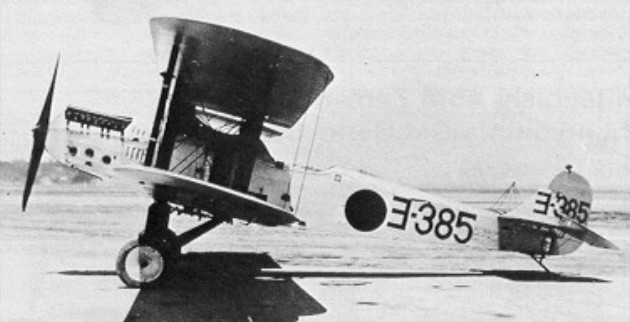
The Mitsubishi 1MF was among the first designs produced for the Mitsubishi Internal Combustion Engine Co. Ltd, set up by the Mitsubishi industrial concern in 1920. The 1MF was one of three types designed by Herbert Smith, formerly of the British Sopwith company to meet requirements issued by the Imperial Japanese Navy for aircraft to equip its first aircraft-carrier (the Hosho). The 1MF1 initial version was an unequal-span single-seat carrier-based fighter biplane, powered by a 223kW Hispano-Suiza 8 engine, which entered production in 1921 as the Navy Type 10-1 Carrier Fighter.

It was followed by the 1MF2, an experimental variant with modified upper-wing ailerons. The series Type 10-2 or 1MF3 had twin Lamblin radiators fitted between the landing gear legs, the Type 10-3 (1MF4) had the pilot’s cockpit relocated farther forward and a redesigned tailplane, while the 1MF5A was a version of the 1MF4 with experimental flotation gear. Production of the 1MF series ended in 1928 with the 138th example. The Type 10 proved a tough, reliable fighter and remained in service for a number of years, latterly as an advanced trainer.

1MF5
Engine: 223kW Hispano-Suiza 8
Max take-off weight: 1279 kg / 2820 lb
Empty weight: 936 kg / 2064 lb
Wingspan: 8.84 m / 29 ft 0 in
Length: 6.93 m / 22 ft 9 in
Height: 3.13 m / 10 ft 3 in
Max. speed: 213 km/h / 132 mph
Armament: 2 x 7.7mm machine-guns
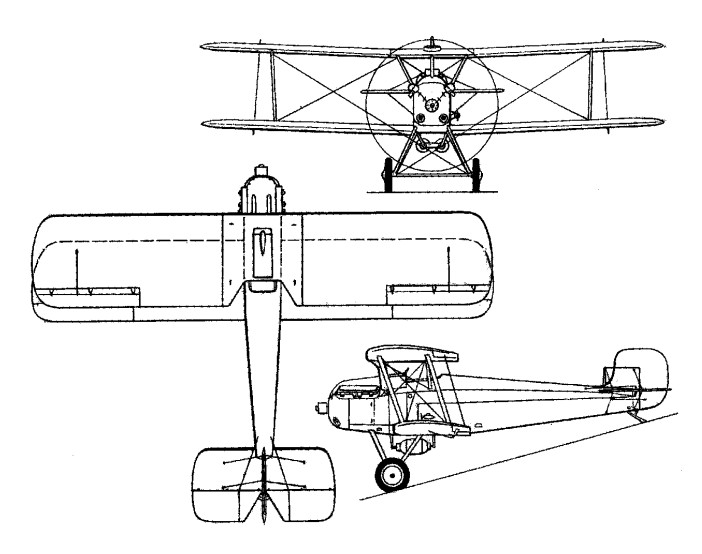
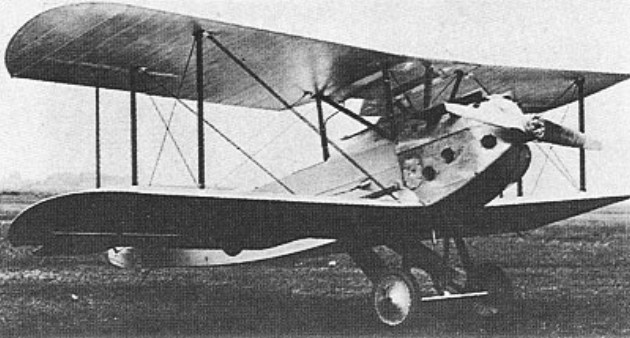
Mitsubishi 1MF / Type 9 Taka

Seeking a second-generation fighter as a successor to the Type 10, in April 1926, the Imperial Navy solicited proposals from Aichi, Mitsubishi and Nakajima for an aircraft embodying a watertight fuselage, watertight wing leading edge and jettisonable undercarriage for emergency alighting on water.

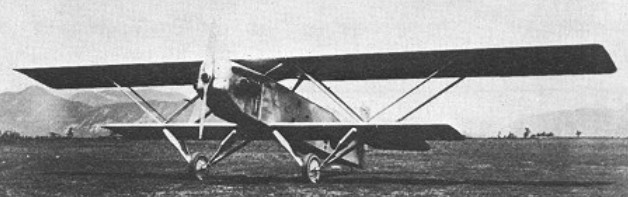
In 1928, to meet the requirement, a team led by Joji Hattori developed the 1MF9 Taka (Hawk) equi-span biplane of wooden construction which featured a Vee-shaped fuselage planing bottom. Powered by a 600hp 12-cylinder water-cooled Hispano-Suiza engine and carrying an armament of two 7.7mm guns, with provision for two 30kg bombs.

The first prototype Taka was delivered in July 1927, and was the first aircraft of Japanese design to feature wing flaps, these being discarded by the second prototype delivered in the following September. The water-proofing demanded by the Navy resulted in some weight penalty, and the competition was won by the Nakajima-submitted Gloster Gambet (Nakajima A1N1), the 1MF9 Taka being abandoned.

Engine: 600hp 12-cylinder Hispano-Suiza
Wingspan: 10.80 m / 35 ft 5 in
Length: 8.44 m / 27 ft 8 in
Height: 3.40 m / 11 ft 2 in
Wing area: 41.50 sq.m / 446.70 sq ft
Max take-off weight: 1855 kg / 4090 lb
Empty weight: 1272 kg / 2804 lb
Max. speed: 245 km/h / 152 mph
Armament: two 7.7mm guns, two 30kg bombs

Mitsubishi 3MR4 / B2M1 / Type 89-1 / B2M2 / Type 89-2

In 1928 Mitsubishi presented to the Imperial Japanese Navy three new types: the Mitsubishi 1MF9 Taka carrier fighter biplane, which featured a French-type avion marin keel; the Type R experimental twin-engine monoplane flying-boat, built also in a civil transport version, both of them based on Rohrbach designs; and the 3MR4 carrier reconnaissance biplane. This last was in reality designed by G. E. Petty, chief designer of the British Blackburn Aeroplane Company, and had been built in the UK. Three development prototypes were constructed subsequently by Mitsubishi, and it was decided that the aircraft would be used primarily as a carrier-based torpedo-bomber. Prolonged difficulties prevented naval adoption of the 3MR4 until March 1932, when it went into service as the Navy Type 89-1 Carrier Attacker or Mitsubishi B2M1.

Powered by a 485kW Hispano-Suiza 12Lb engine, the B2M1 had a maximum speed of 213km/h, and was an equal-span biplane with wide-track landing gear, its crew of three carried in tandem cockpits. Defensive armament comprised one fixed and one movably-mounted 7.7mm machine-gun; and for offensive purposes an 800kg torpedo carried between the main landing gear legs could be supplemented by six light bombs on underwing racks. An improved B2M2 or Type 89-2 appeared in 1934, this having a wing span of 14.98m and a maximum take-off weight of 3600kg, but its overall performance showed little advantage over the B2M1. Production of both versions totalled 204, and they were used extensively for medium- and low-level bombing attacks against Chinese troops during the Shanghai Incident.

B2M1 / Type 89-1
Crew: 3
Engine: 1 x Hispano-Suiza 12Lb, 485kW
Max. speed: 213 km/h / 132 mph
Armament: 2 x 7.7mm machine-guns, 800-kg torpedo, 6 bombs

B2M2 / Type 89-2
Wing span: 14.98m
Maximum take-off weight: 3600kg

Mitsubishi 2MB1 / Type 87

Mitsubishi submitted the experimental 2MB2 Washi two-seat light bomber biplane designed by Alexander Baumann in 1925. This was rejected for production, the Imperial Army preferring Herbert Smith’s more conventional 2MB1, a large two-seat biplane with wide-track divided landing gear.

This entered service in 1927 as the Army Type 87 Light Bomber, 48 being built, and each was powered by a 336kW Hispano-Suiza engine. Armament comprised one fixed forward-firing 7.7mm machine-gun, twin guns of the same calibre on a ring mounting for the observer, and provision for a fourth gun firing through a ventral trap; maximum bomb load was 500kg.

2MB1 / Army Type 87
Engine: 336kW Hispano-Suiza
Wing span: 14.80m / 48 ft 7 in
Maximum take-off weight: 3300kg / 7275 lb
Maximum speed: 185km/h / 115 mph
Armament: 3-4 x 7.7mm machine-gun
Maximum bomb load: 500kg

Mitsubishi 2MT / Type 12 / B1M / Type 13 / 3MT

Still with the Mitsubishi company, Herbert Smith designed the 2MT1 two-seat biplane torpedo bomber which flew for the first time in January 1923. It went into Japanese Navy service as the Type 12 carrier-borne attack aircraft and was followed by the 2MT2 and 2MT3 variants.

The redesigned Type 13-2 was designated B1M2. The final version, the Type 13-3 or B1M3, had the firm’s designation 3MT2 and was a three-seater.

Total production was 354 and the type served into the 1930s, 32 flying from the aircraft carriers Kaga and Hosho during the Shanghai Incident in 1932. An aircraft from Kaga was lost during the famous air encounter when American volunteer pilot Robert Short lost his life while flying for the Chinese. The B1M was powered by a 335kW Napier Lion or Hispano-Suiza engine according to version.

2MT2
Engine: 1 x Napier Lion, 373kW
Max take-off weight: 2697 kg / 5946 lb
Empty weight: 1442 kg / 3179 lb
Wingspan: 14.77 m / 48 ft 5 in
Length: 9.77 m / 32 ft 1 in
Height: 3.5 m / 11 ft 6 in
Wing area: 59 sq.m / 635.07 sq ft
Max. speed: 210 km/h / 130 mph
Ceiling: 4500 m / 14750 ft
Armament: 4 x 7.7mm machine-guns, one torpedo or 2 x 240-kg bombs
Crew: 2

Mines Dot Biplane 1909

This Edward Mines curiosity was entered in the Doncaster (UK) Flying Meet, and made its debut there on the fifth day of the event (Wednesday, October 20, 1909). It attracted some media attention, unfortunately most of it negative. Promptly nicknamed the “coffee-stall”, its planes had a span of only fourteen feet and a chord of six feet. There was no tail, and the ruddering was by means of square ‘flaps’ fitted between the wings. This machine had an elevator in front of the top plane, and the bottom plane’s extremities were adjustable. Needless to say, it never flew. A photo exists of the Mines biplane in an earlier version, without the flaps between the wings.

Miller Lil’ Rascal

The “Lil’ Rascal” by Merle B. Miller began flight testing in early 1978. This biplane makes use of a steel-tube fuselage and tail section covered with Stits Poly-Fibre Dacron. The wings are constructed of spruce and plywood and are covered with same fabric. The landing gear is the nonretractable tailwheel type, and seating is for two persons in a side-by-side open cockpit. The standard 85-hp engine turns a fixed-pitch prop.

Gross Wt. 1100 lb
Empty Wt. 600 lb
Fuel capacity 12 USG
Wingspan 20 ft 8 in
Length 15 ft 3 in
Engine 85-hp Continental
Top speed est: 110 mph
Cruise est: 90 mph
Stall est: 58 mph

Miller Biplane

Miller biplane NC575W

This apparently undesignated Miller biplane entirely made of plywood was built in Milwaukee in the after-war years. It took 850 hours of work on its inventor’s spare time and 500 dollars’ worth of material to get it completed. It had a wingspan of 4.6 m and a length of 4.1 m, and was powered by a Henderson engine. Miller, a licensed mechanic and student-pilot, claimed a speed of 230 km/h and a range of 640 km for his diminutive biplane.