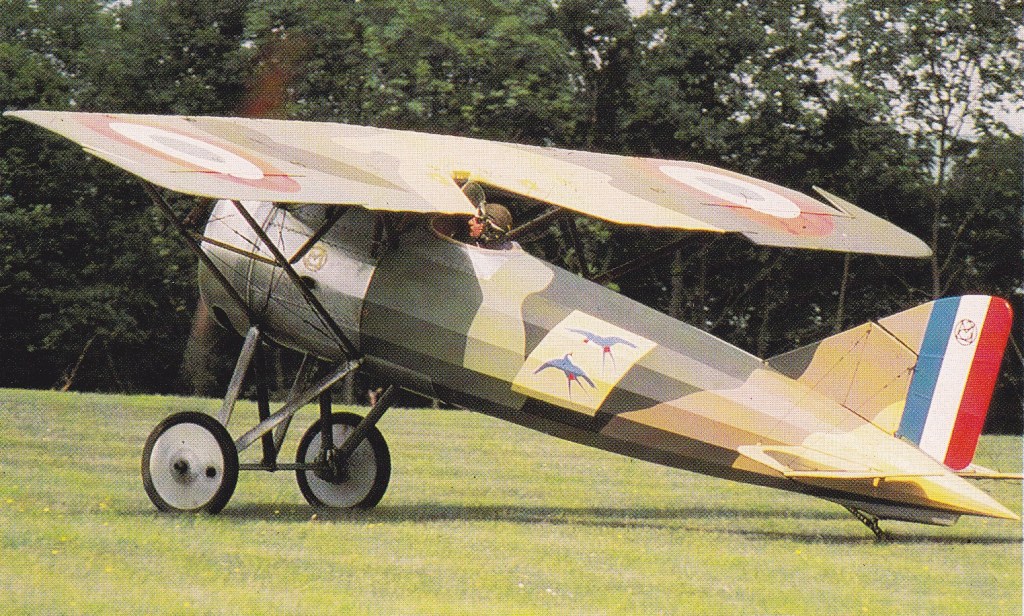
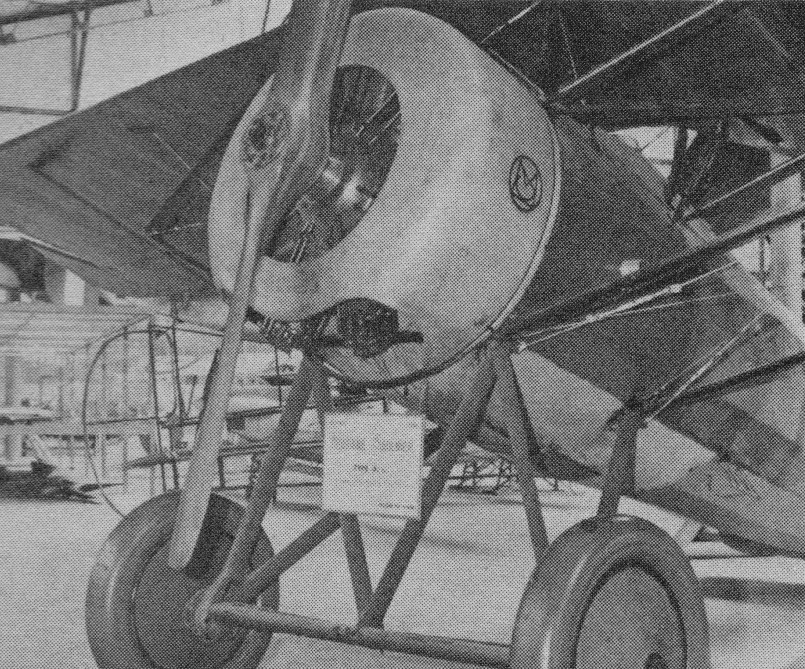
Differing from earlier single-seat Morane-Saulnier shoulder-wing monoplanes essentially in having ailerons for lateral control rather than utilising wing warping and in employing rigid wing bracing, the Type AC appeared in the autumn of 1916. Powered by either the 110 hp Le Rhóne 9J or 120 hp Le Rhóne 9JB nine-cylinder rotary engine and carrying a single synchronised 7,7-mm gun, the Type AC was aerodynamically clean by contemporary standards, its fuselage being faired to a circular cross section. Thirty production aircraft were ordered for the Aviation Militaire, deliveries commencing late 1916. Although of advanced design and possessing a good perfor¬mance, the Type AC was considered inferior to the SPAD 7, and, in consequence, was not adopted in quantity. Two examples were supplied to the UK for RFC evaluation.
Max speed, 111 mph (178 km/h) at sea level Time to 6,560 ft (2 000 m), 5.92 min Endurance, 2.5 hrs Empty weight, 959 lb (435 kg) Loaded weight, 1,451 lb (658 kg) Span, 32 ft 1 4/5 in (9,80 m) Length, 23 ft 1½ in (7,05 m) Height, 8 ft 11½ in (2,73 m) Wing area, 161.46 sq ft (15,00 sq.m)
The type AI was a parasol monoplane with the wing on cabane struts and braced by parallel struts running from the outer wings to the landing gear attachment points on the lower fuselage.
The first flight was made in the summer of 1917, entering service at the beginning of 1918. Arrmament was one or two machine guns synchronised to fire through the propeller disc.
In May 1918 the type was withdrawn from front-line service after a number of structural failures and engine problems.
Morane-Sualnier tried to revive the fighter with a modified structure and a 150 hp / 112 kW Gnome rotary but further production was concentrated on two advanced trainer models without armament.
Total production exceeded 1200 and the AI was exported to Belgium, Great Britain, Japan, Switzerland, USA, and USSR.
A single-seat advanced trainer was flown by French pilot Alfred Fronval from 1921 through 1928. In August 1927 at the Zurich Meet, Fronval won over Germany’s Gerhard Fieseler in a Raab-Katzenstein with 110 hp Siemens, and Marcel Doret in his 300 hp Hispano-powered Dewoitine D-27.
Alfred Fronval’s A1
In February 1928 Fronval looped an AI 1,111 consecutive times in 4 hours 56 minutes over Villacoublay.
Alfred Fronval’s A1 was donated to the Musee d L’Air by Robert Morane.
A.1
Variants:
MoS.27 Fighter Engine: Gnome Monosoupape 9N, 150 hp / 112 kW Wingspan: 27 ft 11 in / 8.51 m Length: 18 ft 6.5 in / 5.65 m Height: 7 ft 10.5 in / 2.40 m Wing area: 144.13 sq.ft / 13.39 sq.m Empty weight: 928 lb / 421 kg MTOW: 1431 lb / 649 kg Max speed: 141 mph / 225 kph at SL Climb to 13,125 ft / 4000m: 11 min 15 sec Service ceiling: 22,965 ft / 7000m Endurance: 1 hr 45 min Armament: 1 x .303 / 7.7mm mg Seats: 1
A-1 Engine: Clerget 9B-A, 120 hp Wingspan: 27.91 ft Length: 18.53 ft
MoS.29 Fighter Armament: 2 mg
MoS.30 Trainer Engine: Le Rhone 9Jb, 120hp/89 kW or Le Rhone 9Jby, 135hp/101 kW
MoS.30bis Trainer Engine: Le Rhone 9Jby, 90hp/67 kW
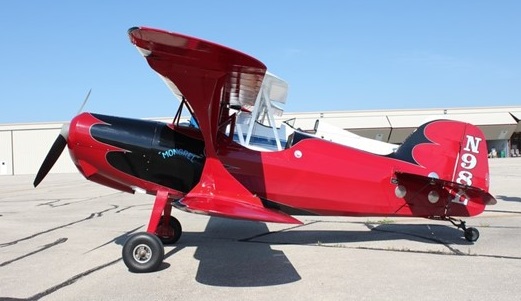
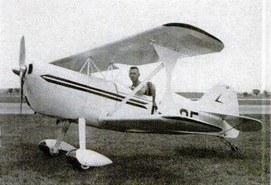
The first Mong Sport was built as a personal aircraft by the designer Ralph Mong, Jr, first flown on May 1, 1953 and plans for homebuilding were provided afterward, due to demand.
Mong Sport
The original Mong MS1 Sport biplane was built around a Continental A65 65 hp (48 kW) engine. The biplane has an A frame shaped centre wing support. The biplane did not require expensive, drag producing support wires, using steel tubing instead. All Mong models use lift struts connected to the outer sections of the wings instead of flying and landing wires. Some builders installed the centre pylon support as an alteration to the design. But this alteration is not supported, recommended or condoned by Mong Aircraft. The fuselage is steel tube with aircraft fabric covering.
Costing approximately $1750 to build in 1971, original plans were still available for $100.00, plus shipping, out of the USA. Over 400 sets of plans for the aircraft had been sold.
Ed Fisher of Raceair Designs purchased the design rights in 1993 and designed a new set of wings that have 12 square feet more wing area, aimed at lower stall speeds. A new MS-3 airframe puts the control column under the longerons, which lowers the seat about 2″.
By 2019 Michael Stewart was owner of Mong Aircraft.
A Mong is a loop/roll/spin positive maneuver sport Biplane. For a sportplane Mong, recommended is the O-200 Continental for power.
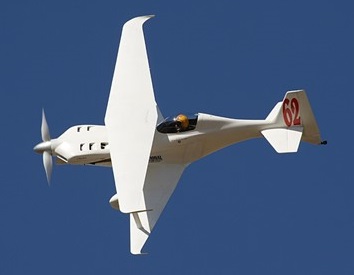
In the mid-1960s, a biplane class was added to the Reno Air Races. The Mong Sport met the basic qualifications, and has been extensively modified over the years by builders to be used as a biplane racer. In 1965, Bill Boland won with his “Boland Mong” at 148 mph and again in 1967 and 1970 with speeds of 151 mph and 177 mph respectively. The Mongster won the 1968 Biplane class of the Reno National Championship. Long Gone Mong won in 1987 and 1989.
A highly modified Mong Phantom of Andrew Buehler and Tom Aberle with carbon fibre wings won in 2005 piloted by Andrew Buehler with 230,8 mph ( a 10 mph lead to the second place), and in 2006 with a speed of 251.958 mph, and has since raised the record to 284.454mph.
The Mong is the basis of the Micro Mong that Ed Fisher designed.
Mong MS1 Sport Engine: 1 × Continental A65, 65 hp (48 kW) Length: 14 ft 1 in (4.29 m) Wingspan: 16 ft 10 in (5.13 m) Height: 5 ft 6 in (1.68 m) Wing area: 80 sq ft (7.4 m2) Empty weight: 550 lb (249 kg) Gross weight: 970 lb (440 kg) Fuel capacity: 16 US gallons (61 litres) Maximum speed: 100 kn; 185 km/h (115 mph) Cruise speed: 96 kn; 177 km/h (110 mph) Stall speed: 43 kn; 80 km/h (50 mph) Service ceiling: 13,000 ft (4,000 m) Rate of climb: 1,000 ft/min (5.1 m/s) Crew: 1
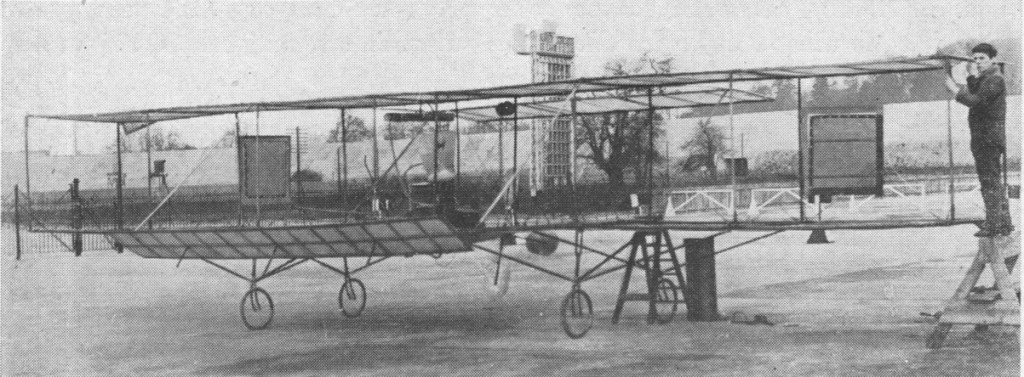
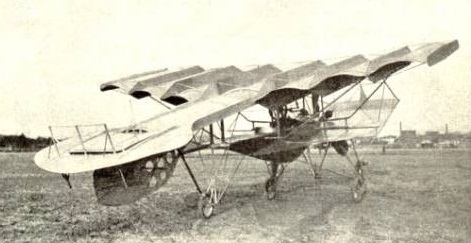
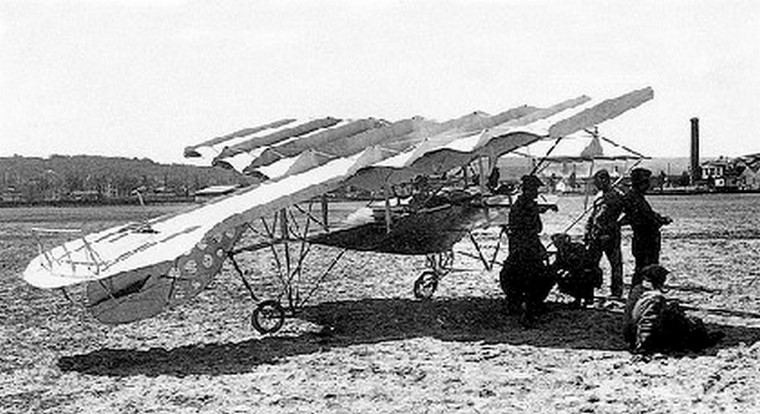
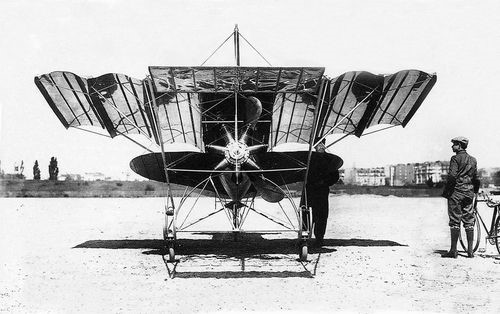
John Bevins Moisant designed and built two aircraft between August 1909 and 1910, before he became an officially licensed pilot. His first was the Moisant Biplane. This experimental aircraft became the first all-metal aircraft in the world, being constructed entirely from aluminium and steel. Also known as the “aluminio-plane”, an all-metal sesquiplane built at Issy-les-Moulineaux by American aviator John Benjamin Moisant entirely of steel and aluminium; constructed by workmen hired from the Clément-Bayard airship hangar and completed in February 1910.
Revolutionary in the construction of its wing – patented by John Moisant (a US citizen) in France as 414,748 – described as aiming to make the machine automatically stable laterally without any form of ailerons or wing warping.
The Moisant biplane’s inaugural flight, and Moisant first flight, ultimately resulted in a crash after ascending only 90 feet.
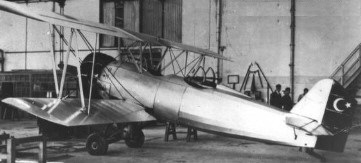
MMV-1 at the Eskisehir Aircraft-Repair-Center.(1932)
The aircraft designer Selahattin Resit Alan worked after studying in France at the Aircraft-Repair-Center, Eskisehir. Apart from his official activities at the center, he constructed, with the help of the carpenter master Mehmet and a small team, the two-seat training and reconnaissance aircraft MMV-1. The aircraft was ready for flight in October 1932. Except the fact that the aircraft was flown on 29 October 1935 for the ceremonies for the establishment of the Turkish Republic, there is no further indication it was ever flown again. Since the Ministry of Defence did not have any interest in the aircraft, Alan quit his position and began to work with Nuri Demirag in 1935.
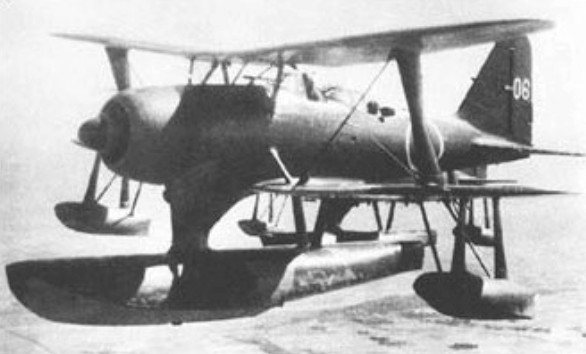
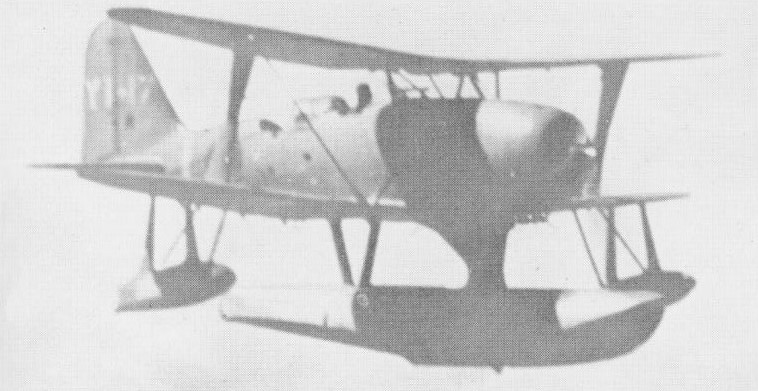
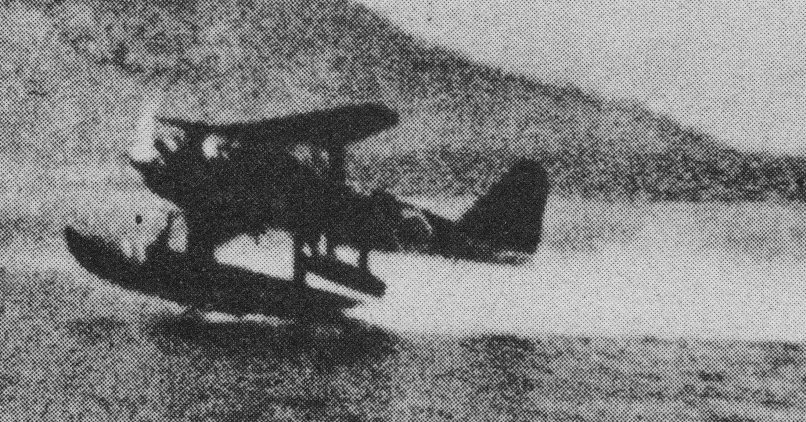
The Mitsubishi F1M development started in 1934, and first flown in June 1936. The F1M1 embodied all the efforts of its designers to achieve an exceptionally clean aerodynamic shape, including low-drag float mountings, single interplane struts and all-metal construction, only the control surfaces being fabric-covered. The early aircraft displayed poor water handling and a lack of in-flight directional stability but after fairly extensive alterations the production F1M2 emerged as a thoroughly efficient aircraft, acceptable in all respects. Initial production by Mitsubishi, begun in 1938, amounted to 524 aircraft before it was transferred to the 21st Naval Air Arsenal (Dai-Nijuichi Kaigun Kokusho) at Sasebo, where a further 590 were built.
The F1M2 equipped all but one of the K-Maru (6,900-ton) and S-Maru (7,200/8,300-ton) classes of converted merchant seaplane tenders, as well as numerous battleships and cruisers of the Imperial Japanese Navy.
Codenamed ‘Pete’ by the Allies, F1M2s were present at the Battle of Midway, two aircraft being launched from the battleship Kirishima (but being lost when the Japanese scuttled the crippled ship at the end of the Battle of the Solomons). The battleships Musashi and Yamato each carried several ‘Petes’ to spot for their 460mm main gun armament at the time of the Marianas battles, but none was used in earnest. The Musashi succumbed to American bombs and torpedoes in the Sibuyan Sea; the Yamato followed her to the bottom on 7 April 1945. ‘Pete’ seaplanes were widely used throughout the Pacific war, accompanying every seaborne landing by Japanese forces, providing gunnery spotting during preliminary bombardment by supporting warships and subsequently serving as covering fighters (and even dive-bombers) once the assault forces were ashore. It was also flown on convoy escort duties with the many supply convoys sailed by the Japanese during the mid-war period.
In the last stages of the war, the type was committed to the unequal task of defending the Japanese homeland from the devastating American raids, serving alongside ‘Rex’ and ‘Rufe’ seaplane fighters with the Otsu Kokutai in 1945.
F1M2 Crew: 2 Engine: 1 x Mitsubishi Tsuisei-13, 655kW Max take-off weight: 2550 kg / 5622 lb Empty weight: 1928 kg / 4251 lb Wingspan: 11 m / 36 ft 1 in Length: 9.5 m / 31 ft 2 in Height: 4 m / 13 ft 1 in Wing area: 29.54 sq.m / 317.97 sq ft Max. speed: 365 km/h / 227 mph Ceiling: 9440 m / 30950 ft Range: 730 km / 454 miles Armament: 3 x 7.7mm machine-guns, 120kg of bombs
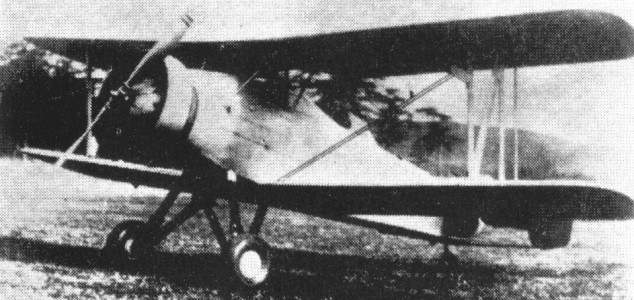
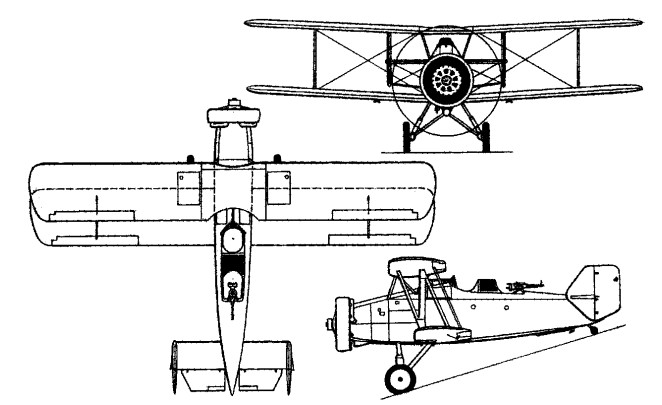
In 1933, the Imperial Navy, influenced by trends in Western Europe and the USA, issued both Mitsubishi and Nakajima with a request for proposals for a two-seat shipboard fighter. The Mitsubishi contender, the Ka-8 designed by Jojo Hattori who was assisted by Eitaro Sano and Konosuke Nakainura, was a single-bay equi-span staggered biplane of mixed con¬struction, the fabric-covered wings having duralumin spars and wooden ribs, and the similarly-covered fuselage being of steel tube. An unusual feature of the design was its use of twin endplate fins and rudders. Powered by a 580 hp Nakajima Jupiter II nine-cylinder radial, the Ka-8 carried an armament of two fixed forward-firing 7,7-mm guns and a similar weapon on a rotating mount in the rear cockpit. The first of two prototypes was completed in January 1934, both being delivered to the Navy during the early summer. However, the second prototype broke up in the air over Yokosuka airfield on 16 September, resulting in the suspension of the test programme and the subsequent abandonment of further development.
Engine: Nakajima Jupiter II nine-cylinder radial, 580 hp Max speed, 178 mph (286 km/h) at 9,840 ft (3 000 m) Empty weight, 2,542 lb (1153 kg) Loaded weight, 3,748 lb (1700 kg) Span, 32 ft 9 2/3 in (10,00 m) Length, 24 ft 2 19/20 in (7,39 m) Height, 11 ft 0 in (3,35 m) Wing area, 279.87 sq ft (26,00 sq.m) Armament: 3 x 7,7-mm mg
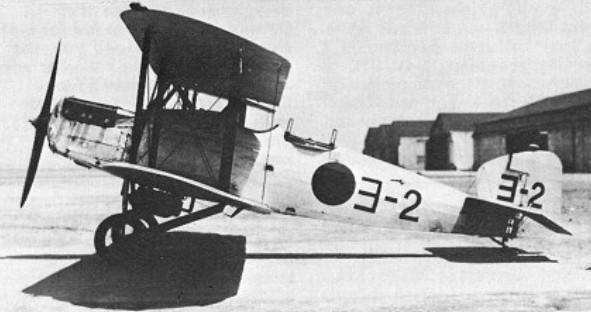
In 1927 Mitubishi enlisted the help of German designer Baumann to meet an Imperial Japanese Army requirement for a new reconnaissance aircraft. The results were the Mitsubishi 2MR1 Tobi, the 1MF2 Hayabusa, and the unsuccessful 2MR7 short-range reconnaissance biplane of 1928.
Designed by Herbert Smith, the first Mitsubishi 2MR two-seat carried-based reconnaissance biplane flew in January 1922. The type entered service as the Type 10 Carrier Reconnaissance Biplane and was built in a number of versions.
The 2MR1 had a 224kW Hispano-Suiza 8 engine with a frontal radiator, while the 2MR2 had twin underslung Lamblin radiators and redesigned tail surfaces. The 2MR4, which was the main production version, had some further revisions of the wing and tail unit, and other variants with minor changes were the 2MRT1, 2MRT2, 2MRT2A, 2MRT3 and 2MRT3A. Total production of all versions was 159, the last completed in 1930. After long carrier service, the 2MR was used as a trainer in the late 1930s.
The 2MR4 version spanned 12.04m, had a maximum take-off weight of 1320kg, and was armed with two fixed forward-firing 7.7mm machine-guns, with twin guns of the same calibre mounted over the observer’s cockpit, and could carry three 30kg bombs.
The R-2.2 and R-4 civil conversions had an enclosed cabin for two passengers replacing the rear cockpit, and a number of ex-army surplus 2MRs were sold on the civil market in the 1930s.
2MR4 Wingspan: 12.04 m / 39 ft 6 in Max take-off weight: 1320 kg / 2910 lb




 All Aero