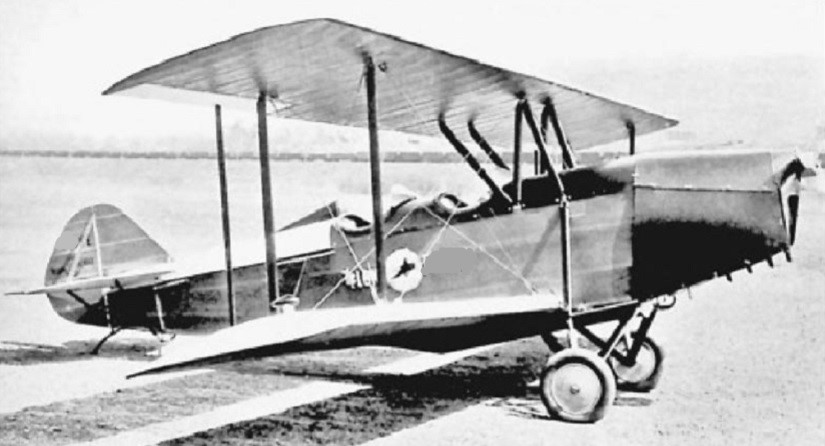
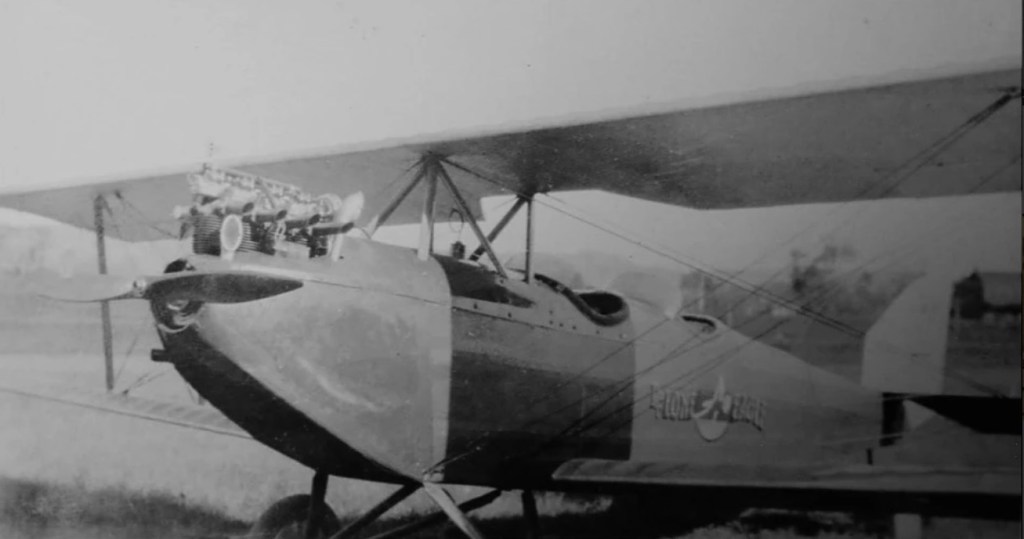
Part of Lindbergh’s 1927 visit to Moundsville included inspecting the Moundsville Airplaine Corporation’s first product– a single-seat bi-plane christened by Jimmy Doolittle as The Lone Eagle, in honor of Charles Lindbergh. Despite Lindbergh’s endorsement, there were not many “Lone Eagles” produced, and the factory went out of business in 1929.
Two English enthusiasts named Mortimer and Vaughan built a biplane with two pairs of semicircular wings which gave it the appearance of a double decker ring doughnut. They called it ‘The Safety’, but the machine crashed and burned during its first trial at Edgware, Middlesex, in 1910. A second version proved safer, if no more successful, for it never flew at all, though Morton and Vaughan did have it photographed suspended on thin wires to give the impression of flight.
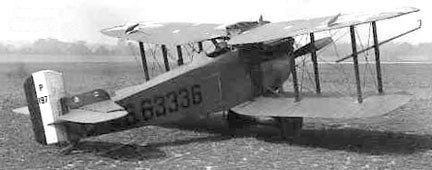
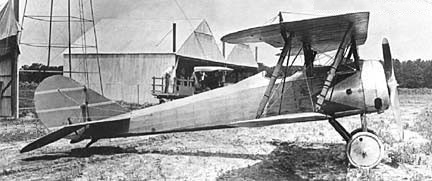
The MB-3 first flew on 2 February 1919. Fifty were for the US Army (AS63331-AS63380), 10 for USMC (A6060 to A6069); plus 1 static and 3 flying prototypes (AS40092 to AS40095), and 4 production for tests at McCook Field (AS63332, and AS63336 and AS63337).
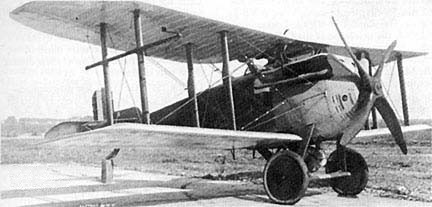
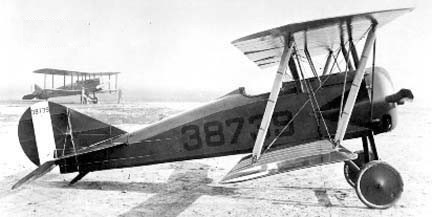
The 1922 MB-3A featured a new cooling system and four-bladed prop. First flying on June 7, 1922, 200 Morse MB-3A fighters (AS68237 to AS68436) were built by Boeing during 1921 -1922, contracted by the government in 1920. Some later became MB-3M advanced trainers. Design elements went into Boeing PW-9. In addition 50 were built by Thomas-Morse.
Thomas-Morse MB-3A
Three clipped-wing models were built in 1921, with one becoming MB-6 / R-2, and 10 for the USMC in 1921.
Boeing factory building MB-3A in 1922
The MB-3B modified Boeing four-aileron design was cancelled.
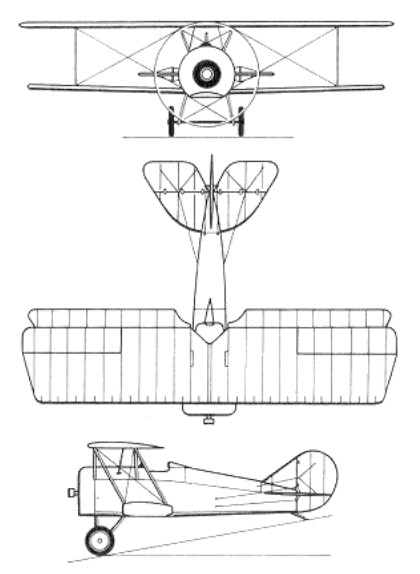
Thomas-Morse MB-3 Engine: 300hp Wright-Hisso H Wingspan: 26’0″ Length: 20’0″ Useful load: 823 lb Max speed: 141 mph Cruise speed: 125 mph Range: 310 mi Ceiling: 23,700′ Seats: 1
Designed by B D Thomas, the S-4 was evaluated for combat, but rejected and used as a trainer. The S-4 civil prototype (possibly still extant as NR66Y) was powered with a 100hp Gnôme and first flew in June 1917, piloted by Paul D Wilson. Twelve went to the USN, A395 to A406.
S-4 prototype
Thomas brothers, backed by Morse Chain Company, built three civil S-4B and 97 S-4B single-seat biplane advanced trainers for the Army, AS4276 to AS4372, plus ten for the USN, A3235 to A3244.
The improved S-4Cs were built powered by 80hp Gnôme B-9 or 80hp LeRhône C-9 engines. Priced at $5400, six civil, 461 for Army (AS38637 to AS38979, AS39882, AS41359 to AS41408, and AS44608 to AS44674), and four with twin floats for USN (A5855 to A5858); 50 with Gnôme and 447 with LeRhône, were built.
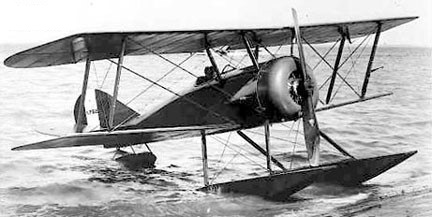
The designation S-5 was applied to S-4B fitted with two short main floats and a tail float. Six, A757 to A762, went to the US Navy in 1917.
Thomas-Morse S-5 A-762
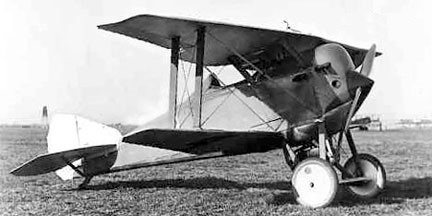
Thomas-Morse S-4E
The 1918 S-4E had a tapered wings and redesigned landing gear and a 110hp LeRhône. One was built for evaluation as an aerobatic trainer but was rejected and used as a racer ‘Space-Eater’ with a 135hp Aeromarine V-8, piloted by Basil Rowe.
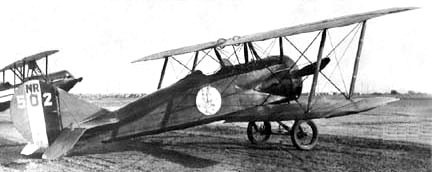
Thomas-Morse S-4C as civil racer NR502
The S-4 was in considerable varied civil use from war surplus with about 60 show on records, with many converted to 90hp Curtiss OX-5.
S-4C Engine: 1 x 80hp Le Rhone 9C or 80hp Gnôme B-9 Max take-off weight: 623 kg / 1373 lb Empty weight: 438 kg / 966 lb Wingspan: 8.08 m / 26 ft 6 in Length: 6.05 m / 19 ft 10 in Height: 2.46 m / 8 ft 1 in Wing area: 21.7 sq.m / 233.58 sq ft Max speed: 83 kt / 153 km/h / 95 mph Ceiling: 4500 m / 14750 ft Initial climb rate: 826.77 ft/min / 4.2 m/s Range: 217 nm / 402 km Armament: 1 x .30CAL 7.62mm machine-gun Crew: 1
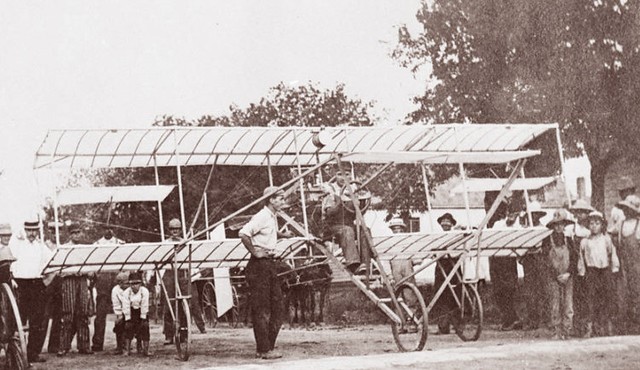
In the summer of 1911 J. A. Morrow and his sons, Everett and Edward, began building an airplane in their Carleton, Nebraska, blacksmith shop. Before it was finished, the Morrows moved to Burwell to ply their trade. It was there that the plane first took flight in the fall of 1912. It was a pusher biplane patterned after the 1909 Curtiss. It proved to be less than successful, though they persevered and built a second machine, used to make exhibition flights throughout Nebraska.
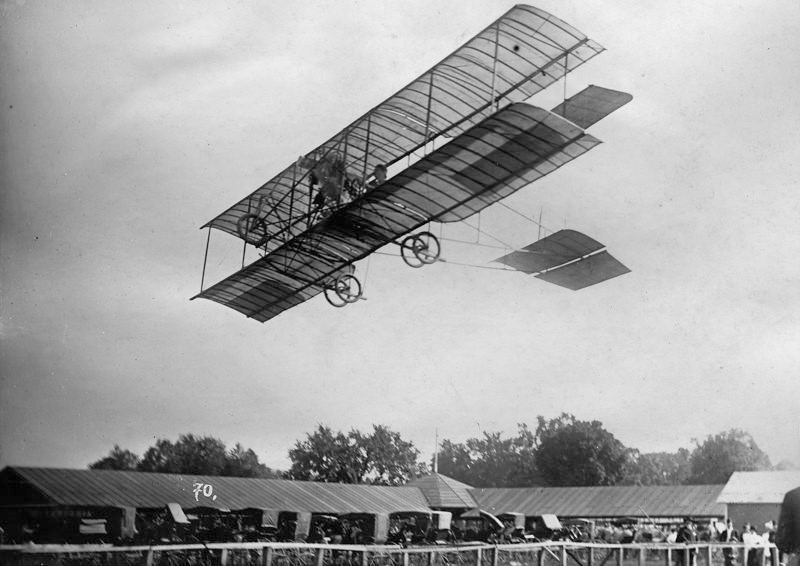
Belgian aviator Charles Frank van der Merrsche, alias Charles F. Morok (the name he used in the USA), flying his biplane over the Sandusky County Fairground at Fremont, Ohio in September 1911. Following the Boston Aero Show in February 1910, Morok was flying for Fred Shneider on Shneider biplanes. He then settled on the Nassau Boulevard Aerodrome of Garden City, formed a flying school and built a biplane of his own in Summer 1911. The machine had a span of 32 feet (9,75 m) and a weight of 500 pounds (227 kg). The engine was a 45 hp Anzani, probably American-built. It has been stated that two of these machines were built for exhibition and training duties.
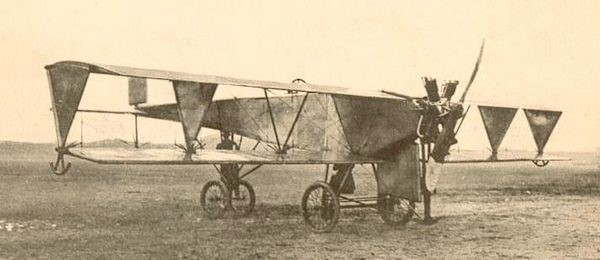
Designed by capitaine Morel de l’infanterie coloniale and built by Pierre Pons – who had formed the SAFA (Société Anonyme Français d’Aviation). Entered in the 1911 Grand Concours Militaire de Reims, as evidenced by the Liste officielle des concurrents du concours militaire 1er janvier 1911; named in the list as Pons (Adresse – Paris). As no further mention of the machine can be found in this concours it is likely that it was not ready in time for the competition.
The Morel (Pons) Canard was evaluated in a French official military report dated March 6, 1912, and, as quoted by Opdycke, did some flying in April 1912 at Issy-les-Moulineux. Constructed of aluminium and steel in its entirety, the design made it possible for it to be disassembled completely by loosening only nine bolts.
Constructed of aluminium and steel in its entirety, this aeroplane was designed and built by Capitaine Morel to carry two passengers in addition to its pilot, was powered with an Anzani 60 hp, 6-cylinder radial.
Engine: Anzani 60 hp Length: 7 m Span: 9 m Wing area: 23 m sq. Weight: 380 kgs
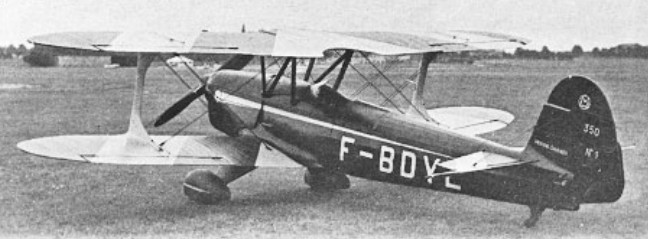
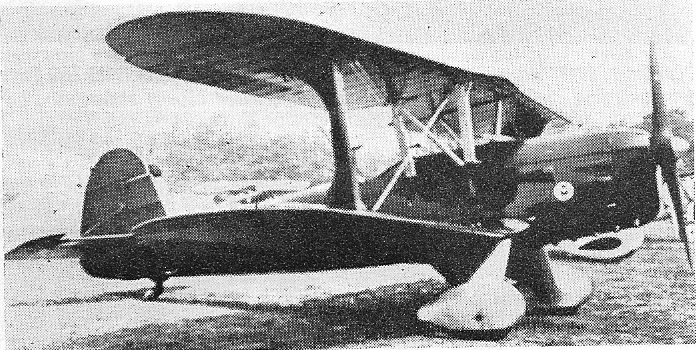
Flown for the first time on 8 February 1936, the Morane-Saulnier M.S.350 was a small single-seat open-cockpit aerobatic biplane with equal-span wings, the independent main legs of the fixed landing gear being fully faired and fitted with streamlined wheel ‘spats’. Powered initially by a Renault 453/01 engine, the prototype was soon fitted with a Renault 478/01 6 Q/01 of 164kW. Despite lack of service orders for the type, the M.S.350 gained a remarkable reputation thanks to a series of breathtaking demonstrations by Detroyat at air shows in France and Switzerland in the period up to September 1939. The aircraft was then much modified and fitted with a new Zenith carburettor to permit prolonged inverted flight. Recovered from storage post-war the M.S.350 saw a limited amount of use until on 8 December 1964 it was damaged beyond repair in Italy and subsequently scrapped.
Engine: Renault 6Q-01, 220 hp Wingspan: 26 ft 3 in Length: 19 ft 8 in Max take-off weight: 990 kg / 2183 lb Max. speed: 255 km/h / 158 mph Cruise: 132.5 mph ROC: 920 fpm Range: 310 mi
A batch of 200 numbers (A116 to A316) allocated in 1916 to General Headquarters of the British Expeditionary Force for allocation to aircraft purchased in France. French manufacturers benefiting from this also included Nieuport and Spad, the series being eventually taken up by an assortment of types from these three manufacturers.



 All Aero