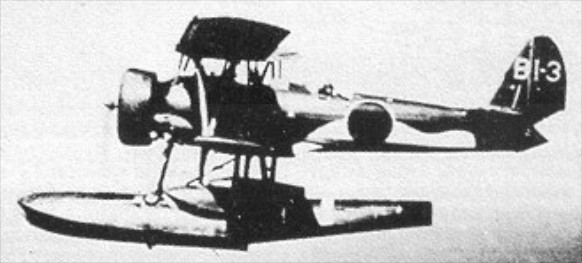
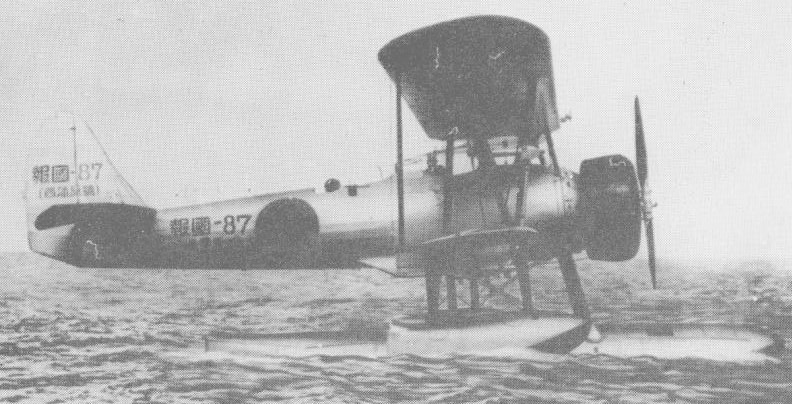
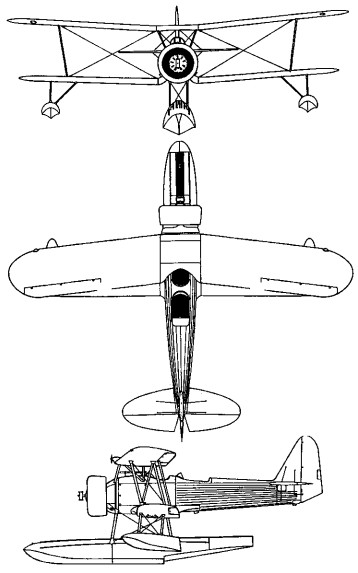
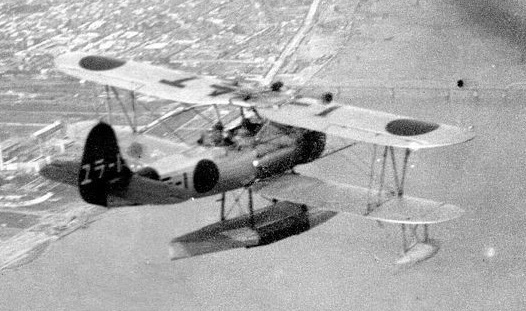
Designed to replace the company’s E4N2 in Navy service, Nakajima’s MS submission was basically an updated version of the E4N2. Of similar biplane configuration, with a central float and underwing stabilising floats, it was powered by a 433kW Kotobuki 2 KAI 1 radial engine, and differed from its predecessor primarily by having revised wings and tail unit.
Seven prototypes were tested from March 1934 and, following evaluation against competing aircraft from Aichi and Kawanishi, the MS was ordered into production in October 1935 as the Navy Type 95 Reconnaissance Seaplane Model 1 (Nakajima E8N1).
An E8N2 with improved equipment and a more powerful engine was introduced before production ended in 1940, when a combined total of 755 had been built by Nakajima (707) and Kawanishi (48).
Used successfully, during the Sino-Japanese War in roles which included artillery spotting and dive-bombing as well as reconnaissance, some were still operating from navy vessels at the beginning of the Pacific war, gaining the Allied codename ‘Dave’. They were soon diverted to second line duties such as communications, liaison and training.
E8N1 Engine: Nakajima Kotobuki II-Kai, 580 hp Wingspan: 33 ft 0.75 in Max speed: 183 mph
E8N2 Engine: 1 x Nakajima “Kotobuki-2” KAI 2 Wingspan: 10.98 m / 36 ft 0 in Length: 8.81 m / 28 ft 11 in Height: 3.84 m / 12 ft 7 in Wing area: 26.5 sq.m / 285.24 sq ft Max take-off weight: 1900 kg / 4189 lb Empty weight: 1320 kg / 2910 lb Max. speed: 300 km/h / 186 mph Ceiling: 7270 m / 23850 ft Range: 900 km / 559 miles Armament: 2 x 7.7mm machine-guns, 2 x 30-kg bombs Crew: 2
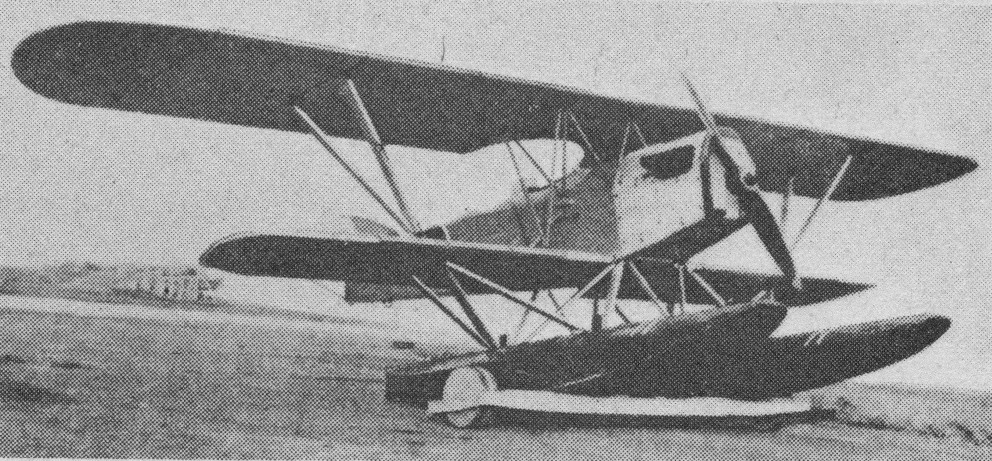
Nakajima’s first attempt to satisfy the Navy requirement was the E4N1 biplane. This aircraft had a welded chromium molybdenum steel tube structure with fabric covering at the rear and aluminium sheet covering at the front. It was a standard biplane, with fabric covered wings with a wooden structure. The E4N1 was a twin float aircraft, but the two floats were very similar to the Vought design. Bombs were carried on the underside of the fuselage. It was powered by a 420-520hp Nakajima Jupiter VI radial engine, and reached 130mph.
The first prototype Type 90-2 Reconnaissance Seaplane, or E4N1, equal-span biplane reconnaissance aircraft first flew in 1930, company designation NZ. Intended for navy service as the Nakajima E4N1, it had twin floats and an uncowled Kotobuki radial engine.
Two prototypes of the E4N1 were built. They were given the official designation Navy Type 90-2-1 Reconnaissance Seaplane – Aichi had already had a reconnaissance seaplane accepted in 1930, and that became the Type 90-1. The E4N1 was tested by the Japanese Navy early in 1931, but the design was rejected because it wasn’t very manoeuvrable.
A stronger version was produced and in December 1941 was accepted as the Type 90-2-2 Reconnaissance Seaplane, E4N2. It could also be used with wheels, when it became the Type 90-2-3 E4N3.
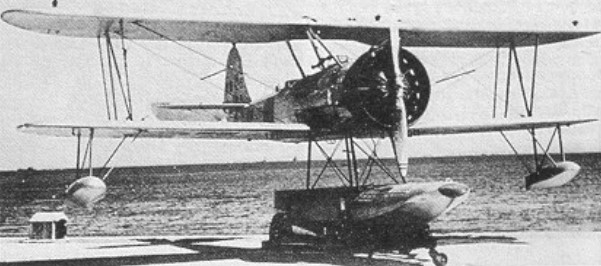
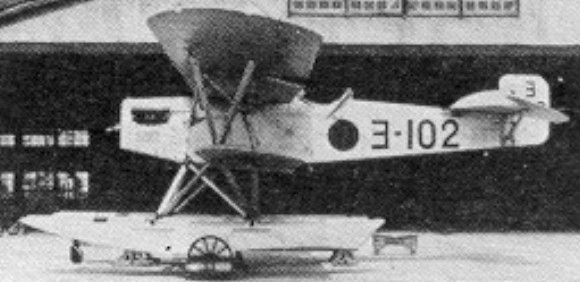
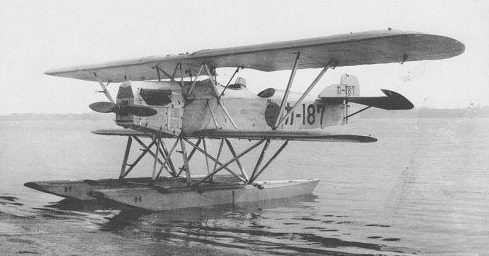
The NJ or Navy Type 90-2-2 or E4N2, Reconnaissance Floatplane was a complete redesign, with a single main float and twin wingtip stabilising floats and introduced a cowled engine. It closely resembles the US Vought O3U-1 Corsair biplane and, like it, was intended for shipboard use and catapult launching. This time the fuselage structure was a mix of wood and metal. Once again the forward fuselage was metal covered but the rest of the fuselage and the wings were fabric covered. The wings had a wooden structure and were rearward folding.
The E4N2 was much more manoeuvrable than the E4N1. The first prototype was tested late in 1930, suggesting that it was already under development before the E4N1 had been rejected.
Powered by a 336kW Nakajima Kotobuki radial engine, the Type 90-2-2 had a maximum speed of 222km/h and 85 went into service with the Japanese navy as the E4N2 between 1931 and 1933, a version with fixed wheel landing gear going into service as the E4N2-C; 67 of the latter were completed.
E4N2
Nakajima produced eighty E4N2s between 1931 and 1936 and Kawanishi produced another 67 aircraft between 1932 and 1934.
Nakajima also produced five of the E4N2-C carrier variant. This had wheels and carrier arrestor gear. They underwent service trials but weren’t accepted.
In total 153 were built.
In 1933 nine of the E4N2-C landplanes were converted as night mail carriers designated P-1 Mail, for use between the main islands of Japan. A single-seater with the pilot accommodated in an enclosed cockpit.
The E4N2 was the Japanese Navy’s main ship-borne reconnaissance aircraft from 1932 until it was replaced by the Nakajima Type 95 Reconnaissance Seaplane (E8N) in the mid 1930s. It was used on battleships and cruisers and was a popular aircraft with a good combination of manoeuvrability and strength. It saw combat during the Shanghai Incident
In January 1933 Nakajima won a contract for eight mailplanes from Nihon Koku Yuso to fly a new night mail service. Their design, the Nakajima P-1, was based on that of the Nakajima E4N3 (Navy Type 90-2-3), a reconnaissance seaplane. The P-1 was a single seat, landplane biplane of mixed wood and metal structure with fabric covering.
It had two spar, single bay wings with N-form interplane struts between the spars aided by wire-bracing. The central upper wing was joined to the fuselage with outward-leaning cabane struts, inverted Vs to the forward spar and single struts to the rear. The lower wing, slightly shorter in span, was joined directly to the lowest fuselage longerons.
The P-1 was powered by a nose-mounted 420–450 hp (310–340 kW) Nakajima Jupiter VI nine cylinder radial engine though some were later re-engined with the 585 hp (436 kW) Nakajima Kotobuki 2-kai-1, a related nine cylinder radial which had powered the Nakajima E4N3. Both had narrow-chord Townend cowlings. Its cockpit, initially open but enclosed on later aircraft with glazing running aft into a turtle back fairing, placed the pilot well behind the wings. Night flight safety was increased by two landing lights under mid-span and parachute flares. It also had a radio receiver and a radio beacon.
The fuselage was circular immediately behind the large radial engine but became more flat-sided rearwards. The tail was conventional with the tailplane mounted on top of the fuselage carrying elevators with rounded tips and cut-outs for rudder movement. The vertical tail was also rounded, with a full rudder that reached down to the keel.
The P-1 had fixed landing gear with wheels on divided axles, their centres hinged on a short, under-fuselage V-strut pylon. Splayed landing struts and rearward drag struts were mounted on the lower fuselage longerons. The wheels were largely enclosed under narrow helmet fairings.
The first of Nihon Koku Yuso’s eight aircraft was completed in May 1933. The standard night mail route connected Tokyo, Osaka and Fukuoka and began operations in August 1933. Though this service was successful in the sense of increasing mail volume it showed that these night flights were stressful for a single pilot in a single-engined aircraft, especially in bad weather. As a result, the P-1s were gradually retired over two pioneering years, replaced by larger, twin-engined aircraft with a larger crew.
A ninth, specially built, P-1 was used by the Ministry of Communications.
E4N1 / Navy Type 90-2-1 / NZ two prototypes twin-float seaplane Engine: Nakajima Jupiter VI, 420-520hp Speed: 130mph
E4N2 / Type 90-2-2 / NJ Engine: 1 x Nakajima “Kotobuki”, 433 kW (580 hp) Wingspan: 10.98 m (36 ft 0 in) Wing area: 29.7 m² (319 ft²) Length: 8.87 m (29 ft 1¼ in) Height: 3.97 m (13 ft 0 in) Empty weight: 1,252 kg (2,760 lb) Loaded weight: 1,800 kg (3,968 lb) Max speed: 222 km/h / 138 mph Cruise speed: 148 km/h (80 kn, 92 mph) Range: 1,019 km (550 nmi, 633 mi) Climb Rate: 10 min 34 sec to 9,843ft Service ceiling: 5,740 m (18,830 ft) Crew: 2 Armament: 1 × fixed 7.7 mm machine gun & 1 × flexible 7.7 mm machine gun Bombload: 2 × 30 kg (66 lb) bombs single-float seaplane 85 built
E4N2-C / Navy Type 90-2-3 / NJ landplane arresting gear and fixed-undercarriage 67 built
E4N3 / Navy Type 90-2-3 / NJ Reconnaissance Seaplane
P-1 Mail 9 converted from E4N2-C airframes Powerplant: 1 × Nakajima Jupiter VI Propeller: Hamilton Standard fixed pitch metal Wingspan: 10.97 m (36 ft 0 in) Wing area: 32.57 m2 (350.6 sq ft) Airfoil: N-22 upper wing, Clark Y lower Length: 7.66 m (25 ft 2 in) Height: 3.70 m (12 ft 2 in) Empty weight: 1,225 kg (2,701 lb) Gross weight: 1,992 kg (4,392 lb) Maximum speed: 243 km/h (151 mph, 131 kn) Cruise speed: 194 km/h (121 mph, 105 kn) Range: 1,000 km (620 mi, 540 nmi) Time to 3,000 m (9,800 ft): 9 m 27 s Crew: one
Giyu-11 One of the two E4N1 seaplanes converted with a cabin for use by Tokyo Koku Yuso Kaisha between Haneda airport, Shimizu and Shimoda.
Built between 1927 and 1929, this two-seat twin-float sesquiplane was powered by a 224kW Hispano-Suiza engine and could attain a maximum speed of 166km/h. It was intended for shipboard reconnaissance and served with the Japanese navy as the Type 15 Reconnaissance Floatplane (Nakajima E2N1 and E2N2).
A total of 80 was built, many being relegated to training or sold to civil users during the 1930s.
Two machines were bought at the outset for civil fishery patrol duties. Converted by Itoh as the Itoh Emi 53, the Navy Type 15 conversions were completed in 1938, intended for use in fishery spotting.
E2N1 Engine: 1 x Hispano-Suiza, 224kW Max. speed: 166 km/h / 103 mph Crew: 2
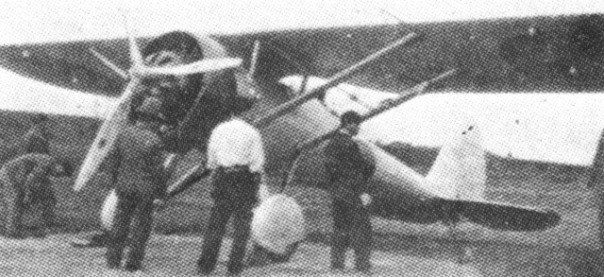
To meet a 7-Shi (1932) requirement for an advanced single-seat shipboard fighter with which the Imperial Navy hoped to replace the A2N1 that had just been adopted, Nakajima was instructed in April 1932 to develop a suitable aircraft in competition with Mitsubishi. Whereas the latter elected to adopt a cantilever low-wing monoplane configuration (1MF10), Nakajima chose to base its contender on the Army’s Type 91 parasol monoplane then entering service. A single prototype of a navalised Type 91 was completed in the autumn of 1932, this differing from the Army fighter essentially in having a 560 hp Nakajima Kotobuki 5 engine driving a three-bladed propeller, wheel spats and an arrester hook. Armament remained the standard two 7,7-mm guns. The 7-Shi fighter was considered to offer an insufficient advance to warrant further development.
Engine: Nakajima Kotobuki 5, 560 hp Max speed: 184 mph (296 km/h). Empty weight: 2,425 lb (1100 kg) Loaded weight: 3,527 lb (1 600 kg). Span: 36 ft 1 in (11,00 m) Length: 23 ft 7.5 in (7,20 m). Height: 10 ft 6 in (3,20 m) Wing area: 215.28 sq ft (20,00 sq.m).
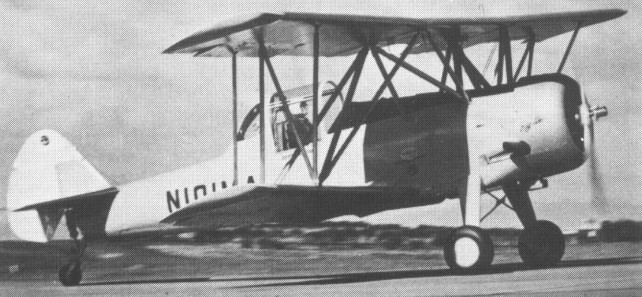
The Murrayair MA-1, a conversion of the Stearman Kaydet, was designed by the technical services section of Air New Zealand at Mangere during 1968 and 1969. The conversion of the Stearman involved the fitting of a 600 hp P & W R-l340 Wasp engine from a Harvard to double the aircraft’s payload to 30 cwt, and the redesigning of the entire centre fuselage using a New Zealand-made integral fibreglass hopper. With a capacity of 62 cu ft it is the largest in the ag aviation industry. Fuselage panels are also of moulded fibreglass and are quickly removable for maintenance. An enclosed cockpit was also fitted. The rear fuselage, tail unit and strengthened undercarriage were from the Stearman. The wooden and fabric wings were increased in area by 35 per cent, and the entire strut system was redesigned to eliminate the flying and landing wires, using steel lift struts to accommodate the increased gross weight (3,495 lbs to 6,250 lbs).
Work on the conversion of the Stearman began towards the end of 1968, and the first aircraft, N101MA, first flew from Mangere on July 27, 1969. The job was carried out for the Honolulu-based aviation service firm, Murrayair Ltd, which operated a fleet of modified Stearmans for spraying pineapple and sugar plantations in the Hawaiian Islands. By mid-1972 N101MA had flown 1,100 hours and production of five more pre-production aircraft, the MA-1, was begun. In 1974 the MA-1 was being produced at Harlingen in Texas by a subsidiary of Murrayair, Emair Ltd, at the rate of one aircraft per month, with completion of 2-3 air¬craft per month planned by the middle of that year.
The Emair MA-1, was offered with a 1,200 hp Wright R-1820 engine derated to 900 hp. The MA-1B, which began its flight tests from Harlingen, Texas, in August, also has a new slower turning propellor with larger diameter and broader blades.
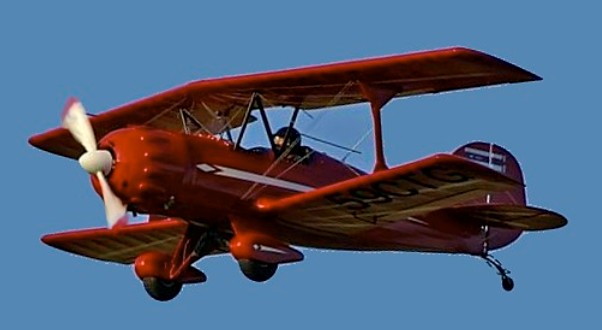
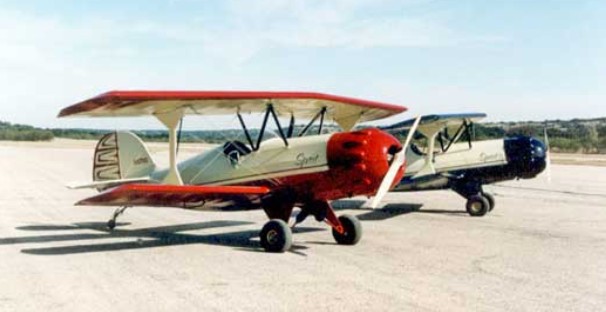
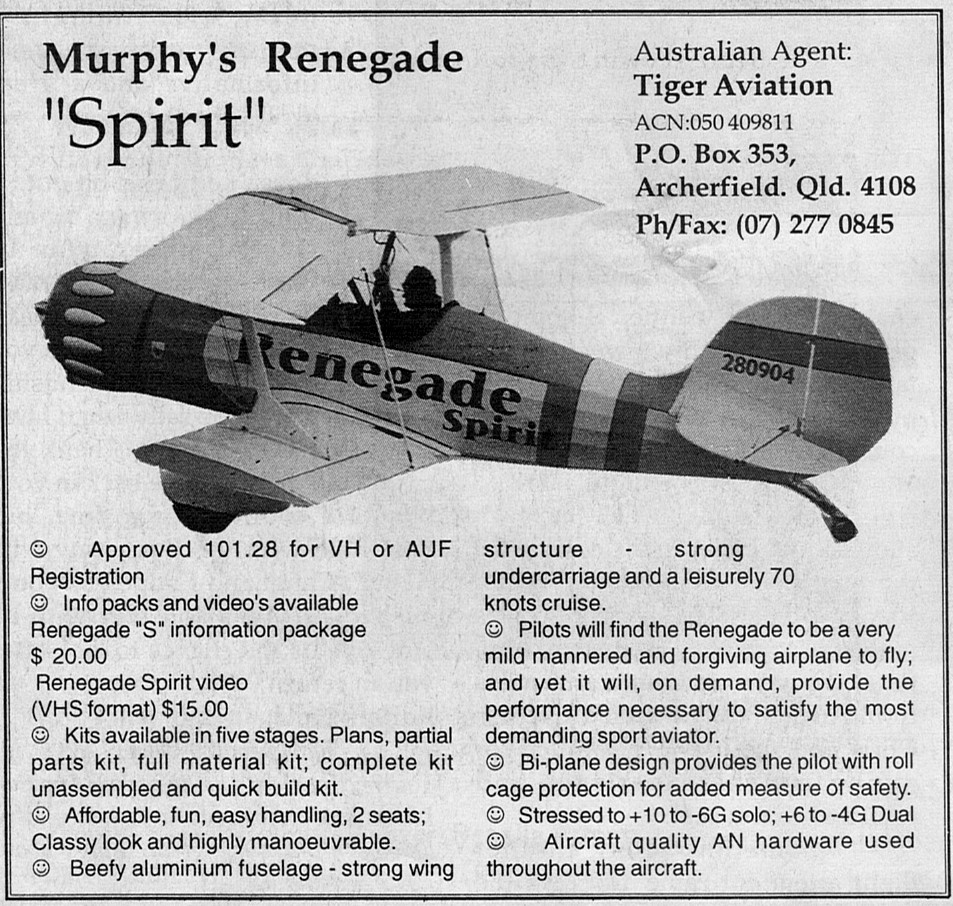
Designed by Daryl Murphy, the Renegade Spirit can be purchased in a quick build kit form. Weights for the Renegade Spirit run 420 to 520 pounds. Forward of the Spirit firewall there can be a Rotax 582 (65 hp.), or if you prefer four cycle, a Rotax 912 (80-100 hp.). The Spirit also features the nostalgic look of the rounded bump cowling that made antique aircraft like the Monocoupe famous. Depending on where you live, the Renegade might qualify for ultralight aircraft status.
To further support the integrity of the Renegade design, a complete structural analysis has been performed by Mr. Richard Hiscocks, a former Chief Engineer of DeHavilland Aircraft of Canada. This analysis has been provided to numerous foreign regulatory agencies to facilitate acceptance of the design in countries including Japan, England and Germany, to name a few.
The Design has been analyzed to the following Codes: Airworthiness Standards, Chapter 522 Subchapter C – Structures Gliders and Powered Gliders issued by Transport Canada, Jan. 1986 The Renegade conforms to Canadian Advanced Ultralight Regulation TP 101.41. European Joint Airworthiness Standards JAR 22 Subpart C – Structure British Civil Airworthiness Requirements Section S, Small Light Aeroplanes (CAP 482) draft, 1983 FAA – CFR – Part 23 Airworthiness Standards, Normal, Utility & Acrobatic Category Airplanes Subpart C-Structure, Jan. 1982 The design described by the basic Drawing List is eligible for certification in the: Utility category at a Gross Weight of 850 lb.to all the above Standards Acrobatic category at a Gross Weight of 700 lb. to Part 23 (9g) Standards With the Drawing List amended to Dec. 1988 the Design is eligible for approval in the: Acrobatic category of JAR 22/522 (10.5)
The ANF les Mureaux series of light observation aircraft first appeared in late 1920’s and developed further into the 1930’s. The Mureaux served as a forward reconnaissance aircraft to the start of World War 2. The aircraft was wholly outclassed in many ways though some 100 were still in operational service.
The design of the Mureaux 4 was with simple static landing gear, a high-monoplane wing on supportive struts and seating for two personnel. With limited armament options, the Mureaux served a more definitive role of reconnaissance and could operate up to 500 miles at altitudes upwards of 26,000 feet.
Only one Mureaux 4 fighter was built, first flying in 1928.
By the time the German Luftwaffe invasion over French airspace in 1940, the Mureaux series was already on its way out. The system was eventually replaced by the more capable Potez series 63.11 aircraft in the same role.
ANF Les Mureaux 4 Engine: 1 x Hispano-Suiza 12-cylinder liquid-cooled V-type, 860hp Length: 33.40ft (10.18m) Wingspan: 50.52ft (15.40m) Height: 11.29ft (3.44m) Maximum Speed: 197mph (317kmh; 171kts) Maximum Range: 500miles (804km) Service Ceiling: 26,247ft (8,000m) Armament: 4 OR 5 x 7.7mm machine guns, Up to 882lbs of ordnance. Accommodation: 2 Maximum Take-Off Weight: 7,606lbs (3,450kg)
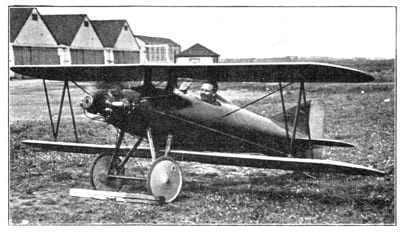
The Mummert biplane was designed and built in 1921 by Harvey Mummert, a Curtiss engineer from Long Island, New York. Powered by a 28-hp Lawrence engine, it featured a laminate-plywood monocoque fuselage, such as those used on the Curtiss Oriole. Only one was built.
Engine: 28-hp Lawrence Wingspan: 18 ft Length: 12 ft Loaded weight: 591 lb Speed: 90 mph
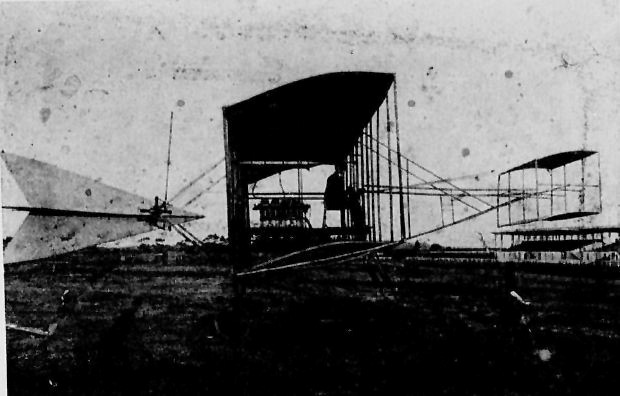
In October of 1910 at the Boufarik Racecourse, Algeria, Leon Mouraret flew his biplane for a distance of 200 meters on his first attempt. On his second attempted at flight the aircraft crashed and was damaged. Boufarik’s flying machine was distinguished by its unusual arrowhead-like tail and by the very high setting of the pilot and frame above the ground. The biplane was powered by a French 60 hp Mutel engine. Mouraret’s biplane was called a “Hydro-aeroplane” and could be fitted with two long floats.
 All Aero