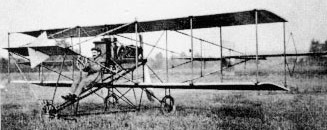
A 1911 Curtiss pusher-type single place, open cockpit biplane.
A 1911 Curtiss pusher-type single place, open cockpit biplane.
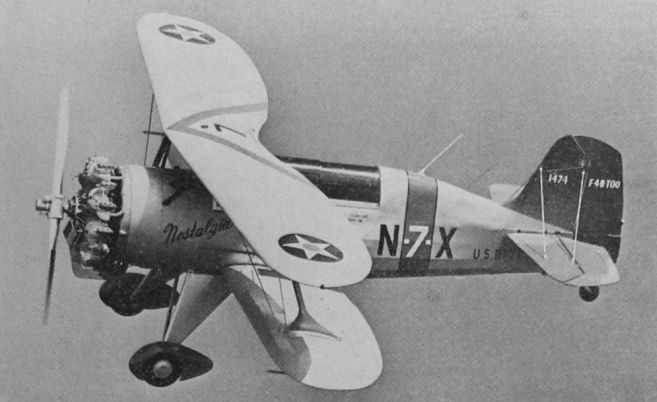
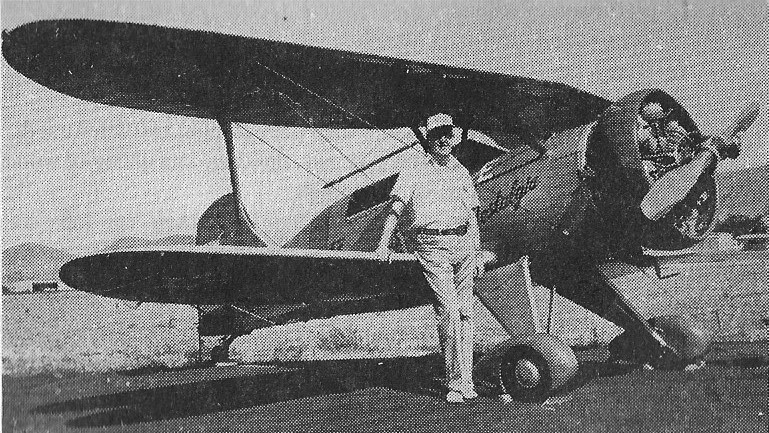
In 1974 Wil Neubert built the Neubert Nostalgia N7X, Stolp Starduster Too variation. A two place cabin biplane powered by a 220hp Continental, it was seriously modified to resemble a USN Boeing F4B.
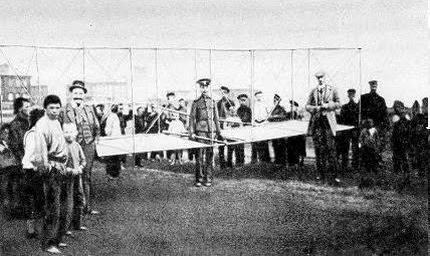
A Russian hang glider built circa 1911 by (later to become well-known aviator) Nesterov, working with Sokolov.
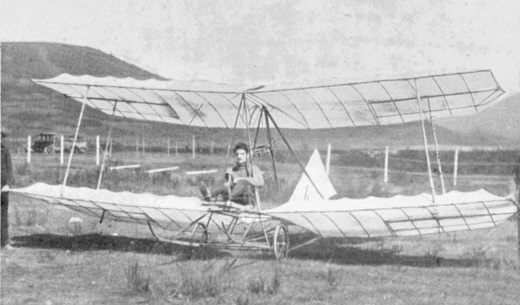
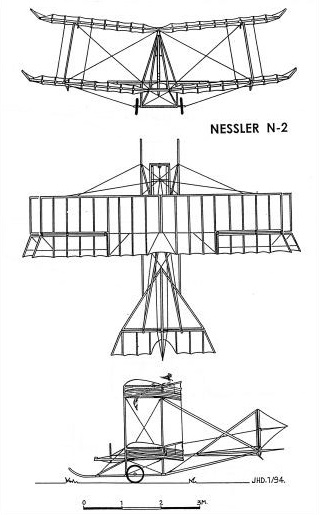
Built in 1922 by Eric Nessler in France, it arrived at Camp Mouillard on August 5, 1922. By August 15, the machine is ready and performs a few small flights on the plain with a maximum duration of 8 seconds. On August 17, it fell on the front, breaking the landing gear, seat and tail. It flew again on August 24 with a flight of 17 seconds over the Toupe plateau but was slightly damaged on landing.
On August 27, departing from the summit of Combegrasse, towards Aydat, in no wind, some jumps on the slope were made before final takeoff but a flight of 1 min 3 sec was made. During this flight, the aircraft succeeded in gaining height.
Span: 6.66 m
Length: 5.6 m
Height: 2.5 m
Aspect: 5
Wing area: 18 m2
Wing profile: R.A.F. 53
Empty weight: 72 kg
Maximum weight: 128 kg
Wing loading: 7.11 kg/m2
No. of seats: 1
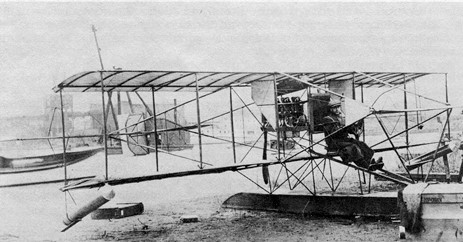
The Nels Nelson No. 4 was built in the winter of 1911-12 as a Kirkham engined landplane and fitted with the float in the summer of 1912 – first flight as a floatplane in August. It was flown in both forms but later in 1912 Nelson made further changes and converted it to a permanent wheeled configuration. It was in this form that it was sold to Prof. Charles Swartz, Mgr. of the Aeroplane Exhibition Co. Humboldt, Tenn., who promptly wrecked it.
Nels J. Nelson, a 22-year-old Swedish immigrant working as an automobile mechanic in his shop on Elm Street in New Britain, began building and flying his own aircraft. On May 1, 1911, young Nelson made his first flight from the new field in Plainville, now known as Robertson Airport and the oldest in Connecticut.
That summer he flew some 40 miles to the ball field that also served as an airfield in Saybrook. Located at the end of Dudley and Coulter Streets, the area remained open fields until housing was built there in the 1940s. After arriving, he tested his biplane but it did not rise more than a few feet from the ground.
That evening a crowd of about 2,000 people gathered to see his flying machine and to watch the Saybrook and Deep River baseball game. When the time came, he took his machine to one end of the field, got good speed on the ground and, it was reported, “glided upward like a bird.”
He skillfully circled around while ascending to the magnificent height of two or three hundred feet. While circling, the engine’s radiator cap flew back and broke the wooden propeller. With the loss of thrust the aircraft came down rapidly and struck a fence as it landed. He was in the air for about five minutes.
Nelson continued to fly and build airplanes but, unable to get government contracts, ultimately lost out to other manufacturers. He died at his home in Yonkers, New York, in 1964.
The 1929 Fleet Wing, N2827 c/n 25, was a three place open cockpit biplane, powered by a 90hp Curtiss OX-5, and with a 32’0″ wingspan and 28’0″ length.
The registration was issued on 26 April 1929, reissued on 17 March 1930, reported in storage Feb 1933, and cancelled 3/15/36.
Apparently brought in as the 1929 Engle T-1 and renamed in 1930, the F-2 N11028 c/n 27 was sold (as forfeiture of mortgage) to Richard D Savage of Brighton MA for $4,000 on 15 November 1930, then to Nina L Armitage of Manville RI on 4 April 1934, who reported to CAA on 16 March 1936, “Aircraft now being dismantled.” The sole example of the F-2 open cockpit biplanes registration was cancelled by CAA 15 April 1936.
The F2-WG of 1929, NX117M c/n 26, was powered by an 85hp Wright-Gypsy. The registration of the one built was cancelled on 26 January 1931.
F-2
Engine: 90hp DH Gypsy
Wingspan: 30’0″
Length: 21’0″
Seats: 2
F2-WG
Engine: 85hp Wright-Gypsy
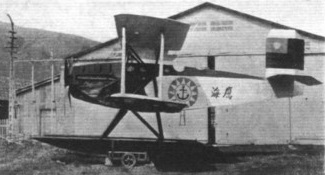
The Ding was a dual-purpose torpedo bomber and passenger seaplane. In a military configuration, the fairly standard tractor biplane had a crew of three – a pilot just under the wing, a gunner behind him, and a bombardier in a compartment in the fuselage between the pilot and engine. Two main floats were placed on either side of the fuselage, providing clearance for a single torpedo or load of conventional bombs. It was powered by the same 360hp 12-cylinder liquid cooled Rolls-Royce engine of the Beeng fighter-bomber. As a passenger aircraft, the bombardier’s cabin provided sufficient room for four people to sit comfortably. The aircraft had a loaded weight of 5,300lb, wingspan of 46ft, and length of 36ft.
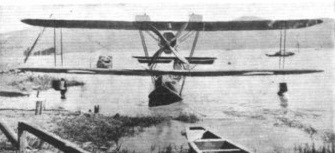
As part of frantic efforts to catch up with aviation in the rest of the world, a variety of design were hastily developed. Among these was the Beeng, quite possibly the first fighter ever designed in China. The Beeng a tractor flying boat, carrying a crew of three – a pilot and two gunners. Free space in the hull could carry either extra ammunition or small bombs to be dropped by hand. As a secondary role, the aircraft could be quickly converted for use as a passenger plane. In the space where ammunition or bombs would be carried, four seats could be installed for passengers. While the design itself was domestic, China couldd not hope to develop suitable engines, so a 360hp Rolls-Royce 12-cylinder liquid cooled engine was used. The aircraft itself was 39 feet long, 16 feet tall, and had a wingspan of 56 feet. Details of its service, however, are unclear.
 All Aero