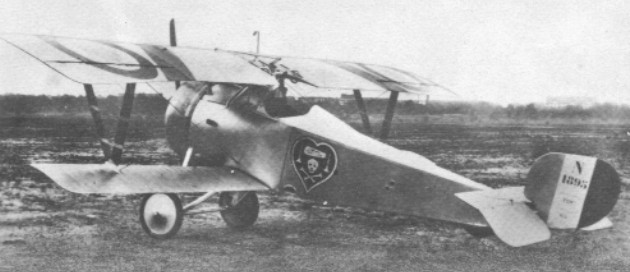
Nieuport 17

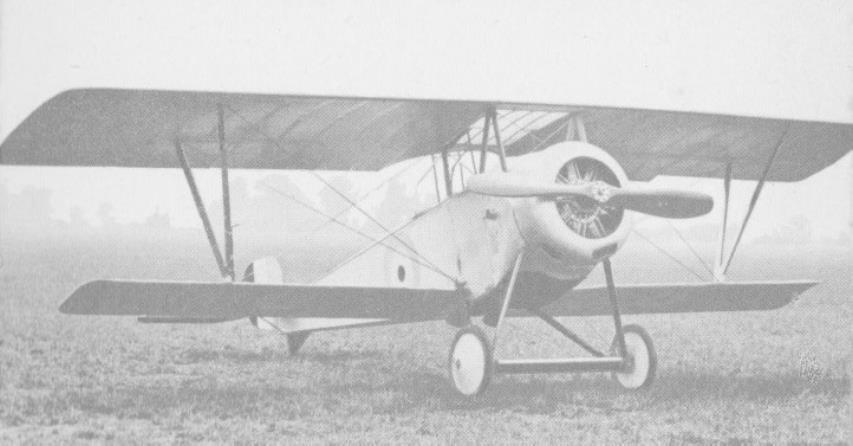
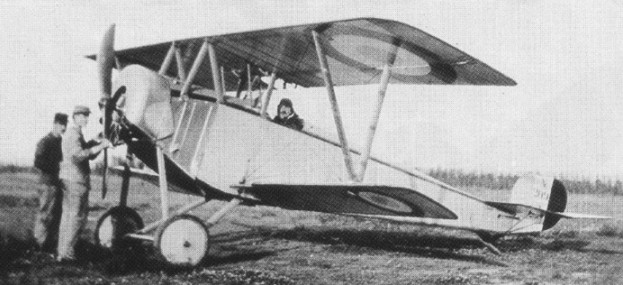
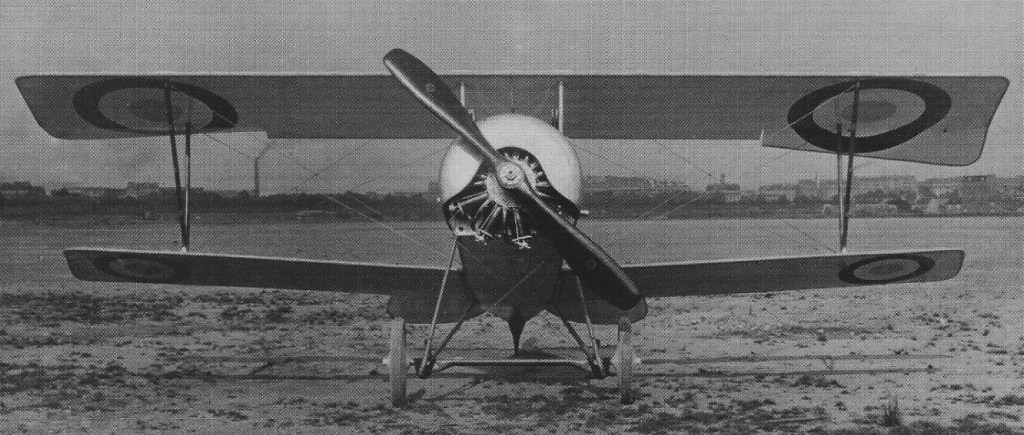
Developed over four months, the improved model 17, stronger than its predecessors, and with a 110 or 120 hp Le Rhone engine, the new model was highly manoeuvrable and had high performance with a particularly good rate of climb. A Lewis gun was mounted on the top wing to fire above the propeller with a sliding mount enabling it to be pulled down by the pilot and aimed upwards, thereby permitting an attack on enemy aircraft in their blind spot, from below.

A single-bay biplane, the wooden wings had two spars in the top wings and only one in the lower wings. Ailerons were in the top wings only. Tail surfaces were steel tube construction and no fixed fin was fitted.

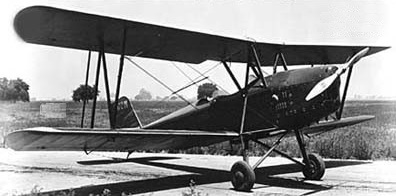
Superseding the Nieuport 11 Bebe, the Nieuport Type 17 single seat fighter entered service in March 1916.
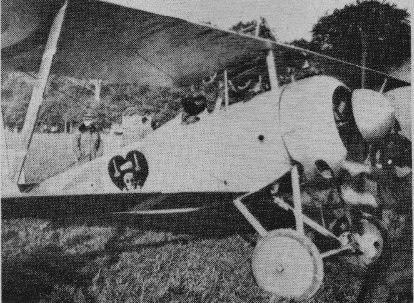
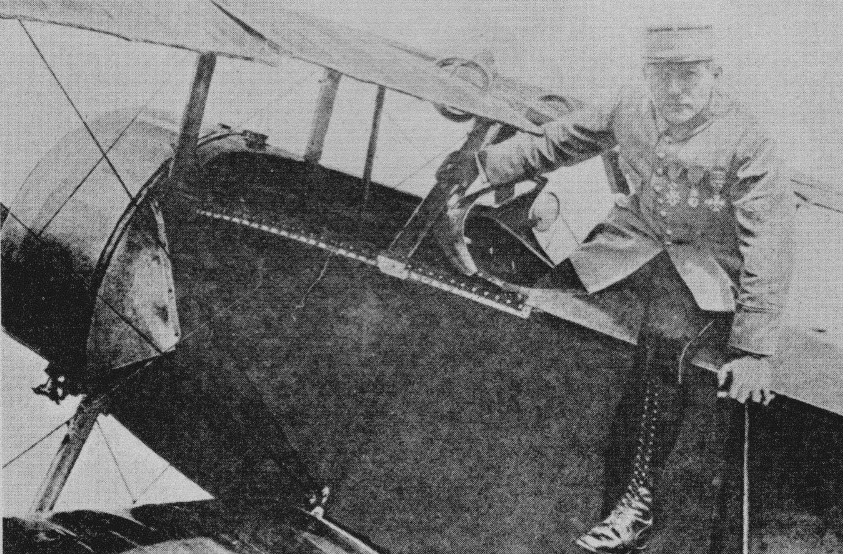
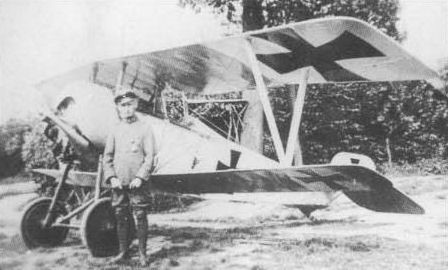
Nungessers Nieuport 17

Later in the Nieuport’s service life, when a synchronising gear had been perfected to allow the gun to fire through the propeller, a Vickers machine gun was substituted. A number of French squadrons re equipped with the Type 17, together with Belgan, Italian, Russian and British RFC units, and the type rapidly made a name for itself with aces who included Nungesser, Ball and Bishop.
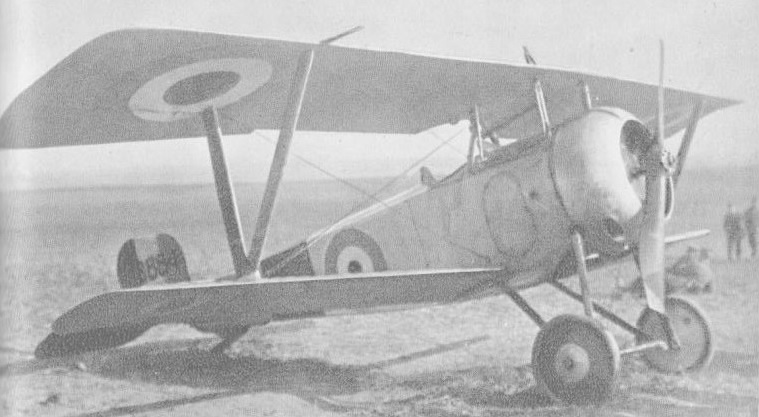
When used for attacks on German observation balloons, four Le Prieur “firework type” rockets were attached to each interplane strut, and were fired electrically.

Capt W A Bishop, 60 Squadron, in Nieuport 17, shot down 3 aircraft in single-handed attack on German aerodrome on 2 June 1917. Awarded the VC.
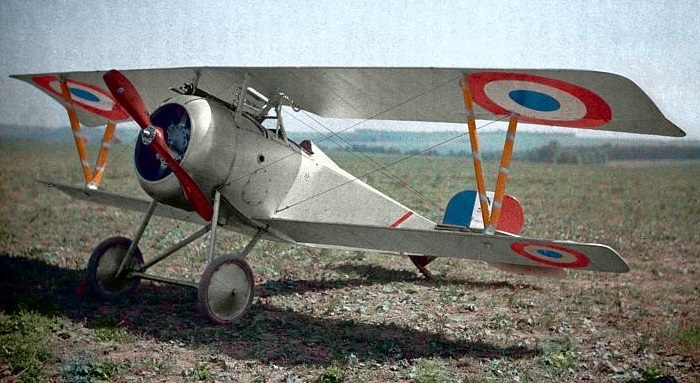
Gallery

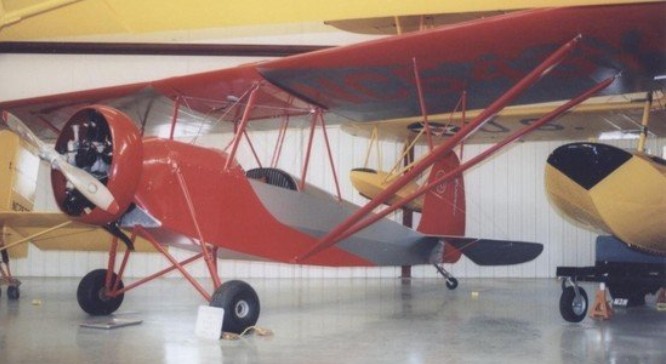
Replica:
Redfern Nieuport 17

Ultralight replica:
Airdrome Airplanes Nieuport 17
Circa Reproductions Nieuport 17

17C
Engine: Le Rhone, 110 hp
Wingspan: 26 ft
Wing area: 158.8 sq.ft
Length: 19 ft
Height: 7 ft
Empty weight: 825 lb
Loaded weight: 1232 lb
Wing loading: 7.7 lb.sq.ft
Max speed: 107 mph at 6500 ft
Service ceiling: 17,400 ft
Time to 10,000ft: 9 min
Endurance: 2 hr
Armament: 1 or 2 Vickers mg
Crew: 1

Nieuport 17
Engine: Le Rhone, 110 hp
Wing span 27.25 ft. (8.3 m)
Length 19.5 ft. (5.9 m)
Height: 8 ft
Weight empty 825 lb (374 kg)
Max wt: 560 kg (1,235 lb)
Max speed 107 mph (172 kph)
Ceiling 17,400 ft (5,300 m) fully loaded
Time to 3280 ft: 3 min
Range: 155 sm (250 km)
Endurance: 2 hr
Seats 1
Armament One machine gun, and eight Le Prieur rockets

Nieuport 17
Engine: Clerget, 130 hp
Nieuport 12

Designed by Gustave Delage, the Nieuport 12 was larger and more powerful the preceding Nieuport 10. A single bay biplane, the wooden wings have two spars in the top wing and only one in the lower wing. Ailerons are on the top wing only. The wooden fuselage and entire airframe are fabric covered. Tail surfaces are steel tube construction and there is no fixed fin.

Engine were either 110 hp or 130 hp Clerget rotary with a two blade propeller.

They were equipped with one Lewis machine gun in the ear cockpit. Some aircraft had a Lewis gun above the wing centre-section or, later, a Vickers gun above the front fuselage.

In addition to machines bought from France, 50 Nieuport 12’s were built in England for the RNAS and FC by the Beardmore company and could be recognised by their completely circular engine cowlings instead of the normal horseshoe type.

Ultralight replica:
Circa Reproductions Nieuport 12

Engine: 110 hp Clerget
Wingspan: 29 ft 7.5 in
Wing area: 236.5 sq.ft
Length: 23 ft 11.255 in
Height: 8 ft 11 in
Empty weight: 1155 lb
MTOW: 1815 lb
Max speed: 98 mpg at SL
Service ceiling: 13.000 ft
Endurance: 3 hr

Engine: 130 hp Clerget
Wingspan: 29 ft 7.5 in
Wing area: 236.5 sq.ft
Length: 23 ft 11.255 in
Height: 8 ft 11 in

Nieuport Nie. 11 Bebe / Scout / Nie. 13

Originally designed for the 1914 Gordon Bennet Cup Contest and reshaped to become the Type 11. A successful fighter of 1916-17, the Nie. 11 (also known as the Nieuport Type 13, based on the wing area in square metres) was a sesquiplane with a half size lower wing. The upper wing with sweepback. Initially the lower wing would warp and sometimes break off in a high speed dive.

The fuselage was rectangular with bulkheads secured by four longerons and diagonally braced with wire. The top of the bulkheads were in the same plane but tapered together toward the rear of the fuselage becoming narrower and shorter. The top of the fuselage was faired into a turtledeck with light formers, longitudinal stringers and covered with plywood, and fitted with a headrest.

Steel tube was used in the cockpit and engine compartment and as needed for wing spar, strut and landing gear mounts. The wood longerons were sometimes made of ash, changing to spruce behind the cockpit. Spruce was also used in the vertical struts and cross members.

The engine bearer/forward bulkhead was heavy-gauge steel plate. There was no front support for the engine. The aluminium engine cowl had strengthening ribs, and sometimes enclosed the entire engine, sometimes had a gap at the bottom. There were two holes at the bottom right for exhaust and ventilation.

Early aircraft were powered by an 80 hp Le Rhone and had a Lewis machine gun mounted atop the wing. Later XIs were powered by 130 hp Clerget and had a synchronised Vickers machine gun firing through the prop arc.

Charles Godfrey’s Nieuport 11

Aluminium fairings merged the circular cowling into the flat-sided fuselage. Behind the cockpit the fuselage was fabric covered with plywood panels reinforcing the structure at the rear. In the front cockpit the fabric was attached with hooks and cord for easy access.

The top wing, rear spar was set directly above the lower wings single spar to optimise the load and eliminate the need for inter-strut drag wires. The bottom wings incidence could be adjusted on the ground for different payloads. The wings ribs had ash flanges and limewood webbing. Spruce strips were on the leading and trailing edges of the wings and trailing edges of the ailerons. Push-pull rods moved the ailerons. The tail was made from steel tube and fabric covered. The elevators and rudder used cables for control. A flat, curved spring steel on a reinforced mount served as a tail skid.

The undercarriage was a pair of streamlined drawn-aluminium tubing cross members in a V. An axle with rubber cord shock absorbers on each end spanned the spoked aluminium wheels, covered with aluminium plate.
They were armed with a single Hotchkiss or Lewis machine gun mounted over the top wing. Reloading was by a Foster mount curved rail that allowed the gun to be slid back and down. There were also a number of stops so the gun could be fired upwards. It could also carry eight Le Pruir rockets on the wing struts for attacking balloons.

First introduced in July 1915, the Nie. 11 gained superiority over the Fokker E.III during the Battle of Verdun, ending the “Fokker Scourge”.

French ace Nungesser and Nieuport 11

They were used by many forces during WW 1, including France, the United States, England, Italy, Belgium, and Russia. At least one captured Nieuport 11 was operated in German markings.

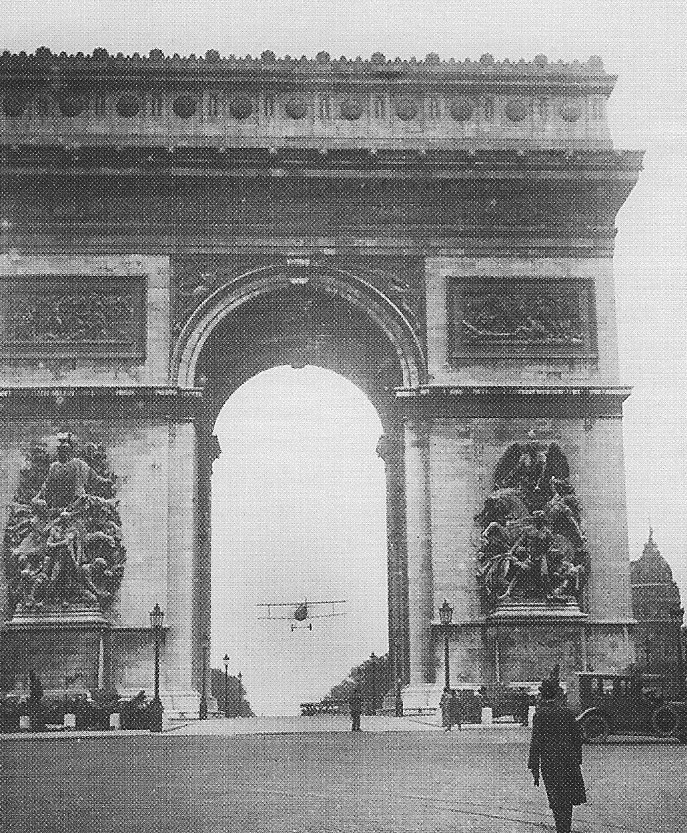
Charles Godfrey passing under the Arc de Triumphe

It was produced in England by Nieuport & General Aircraft Co Ltd, in Italy by Nieuport-Macchi as well as the parent company and many sub-contractors in France.

Gallery

Ultralight replica:
Circa Reproductions Nieuport 11
Airdrome Airplanes Nieuport 11

Replica:
Pfeifer Nieuport 11

Nieuport 11 Bebe
Engine: Gnome, 80 hp
Wingspan: 24 ft 6 in
Length: 19 ft 3 in
Empty weight: 759 lb
Top speed: 97 mph
Landing speed: 30 mph
Take-off dist: 100 ft

Nieuport 10

In Januaray 1914 Gustave Delage started as a new engineer and designed a sesquiplane with two wings a V-struts. This Nieuport 10B (B for biplane) was to be a two-seat observation/fighter with an observer in the front (as a Nie.10 AV (Avant, in front) or, behind the pilot as the Nie. 10 AR (Arriere, behind).

The single seat fighter appeared as the Nie. 10c1 and it is believed many of the two seat models were converted into the Nie. 10c1.

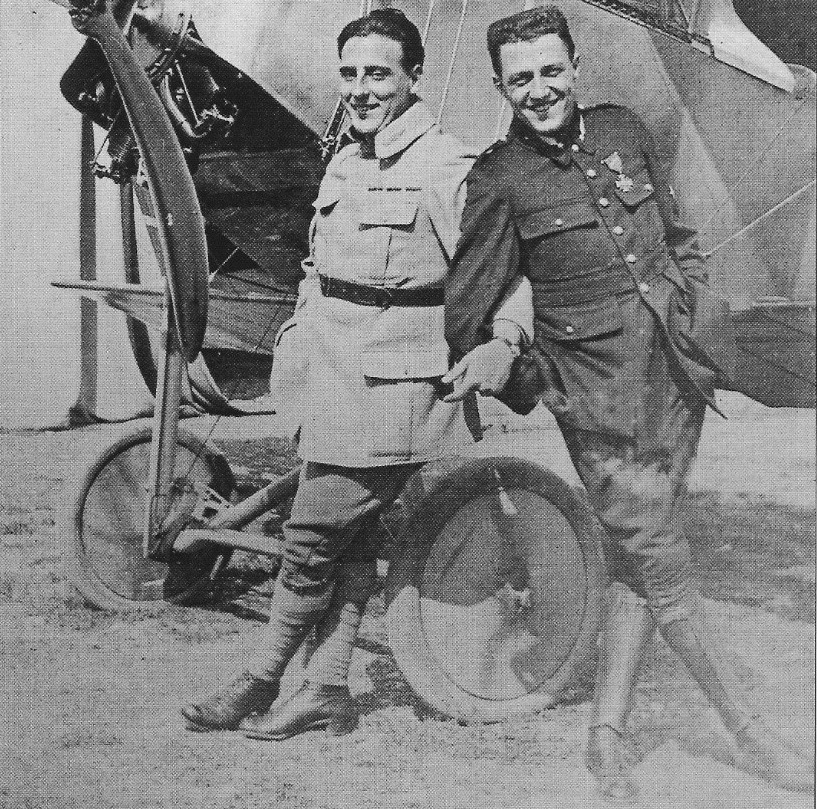
Jean Navarre and friend Sagaret with a Nieuport X

Nieuport 10/83
Engine: Clerget rotary, 130hp.

Nie.10c1
Engine: Gnome, 80 hp or Le Rhone 9C, 80 hp
Wingspan: 24 ft 9 in
Length: 19 ft 1/3 in
Height: 8 ft 0.5 in
Top speed SL: 97 mph
ROC: 550 fpm
Gross weight: 1060 lb
Ceiling: 15,090 ft
Endurance: 2 hr 30 min

Nicholas-Beazley NB-8 / NB-8G / NG-8G / NM-8G

NB-8G

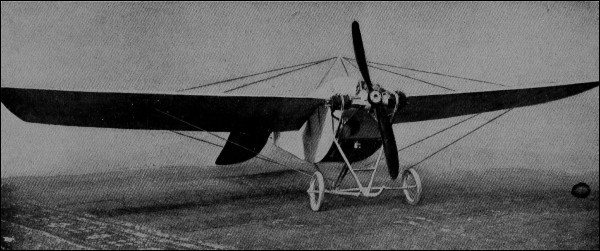
The NB-8 was a light parasol wing monoplane designed by Tom Kirkup and built by the Nicholas-Beazley Airplane Company at its factory in Marshall, Missouri. The first of 58 examples flew in 1931, and most are powered by the Armstrong-Siddeley Genet Mark II engine of 80 hp (60 kW). Initially a 36 hp Aeronca two-cylinder engine powered the aircraft, subsequently a 45 hp Szekely engine was fitted, while the final choice was an 80 hp Armstrong Siddeley Genet Mk.II. Some were later fitted with the 80 hp (60 kW) Lambert engine.

The aircraft has a high strut-mounted parasol wing that can be folded to reduce hangarage space required and to permit towing by road. The two crew seats are arranged side-by-side. Initially the cockpit was open, but some examples later had an enclosure fitted.

The NB-8G was advertised for sale at $1,790. The ‘G’ in the designation originally indicated installation of the A-W Genet radial engine. It was fully aerobatic. 58 examples were purchased, mainly by private pilot owners in the United States. Production ceased in 1935. The 58 aircraft of the type produced were: 1 NB-8, 54 NB-8G’s, 1 NG-8G, and 2 NM-8G’s.

Six examples were still extant in 2009, with at least two being fully airworthy. Examples of these can be viewed at the Old Rhinebeck Aerodrome museum in New York State, and the Historic Aircraft Restoration Museum at Creve Coeur airfield near St Louis Missouri.

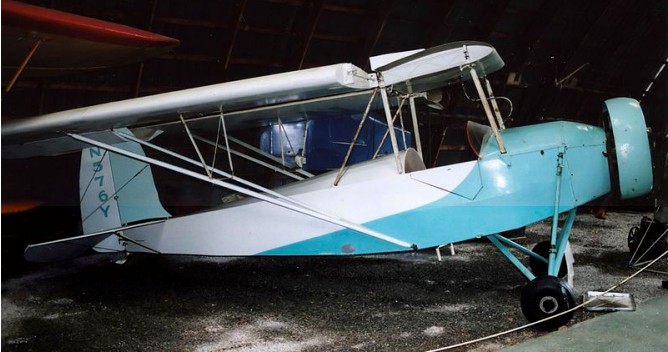
N576Y (cn K-18) 1931-built single-seat parasol-winged light aircraft maintained airworthy at Old Rhinebeck. The aircraft is exhibited with its wings folded.

Gallery

NB-8G
Engine: 1 × Armstrong-Siddeley Genet II, 80 hp (60 kW)
Wingspan: 37 ft 6 in (11.43 m)
Length: 20 ft 3 in (6.17 m)
Useful load: 493 lb (224 kg)
Maximum speed: 110 mph (177 km/h)
Cruise speed: 83 mph
Stall speed: 40 mph (64 km/h)
Range: 400 miles (644 km)
Service ceiling: 18,000 ft (5,486 m)
Seats: 2

Production:
Registr. Type c/n
NC436V NB-8 K-1
NC502Y NB-8G K-2
NC517Y NM-8G K-3
NC525Y NB-8G K-4
NC524Y NB-8G K-5
NC541Y NB-8G K-6
NC542Y NB-8G K-7
NC543Y NB-8G K-8
NC544Y NB-8G K-9
NC545Y NB-8G K-10
NC558Y NB-8G K-11
NC559Y NB-8G K-12
NC560Y NB-8G K-13
NC561Y NB-8G K-14
NC562Y NB-8G K-15
NC574Y NB-8G K-16
NC575Y NB-8G K-17
NC576Y NB-8G K-18
NC577Y NB-8G K-19
NC578Y NB-8G K-20
NC580Y NB-8G K-21
NC581Y NB-8G K-22
NC582Y NB-8G K-23
NC583Y NB-8G K-24
NC584Y NB-8G K-25
NC11063 NB-8G K-26
NC11064 NB-8G K-27
NC11065 NB-8G K-28
NC11066 NB-8G K-29
NC11067 NB-8G K-30
NC11071 NB-8G K-31
NC11072 NB-8G K-32
NC11073 NB-8G K-33
NC11074 NB-8G K-34
NC11075 NB-8G K-35
NC11087 NB-8G K-36
NC11088 NB-8G K-37
NC11089 NB-8G K-38
NC11090 NB-8G K-39
NC11091 NG-8G K-40
NC11095 NB-8G K-41
NC11096 NB-8G K-42
NC11097 NB-8G K-43
NC11098 NB-8G K-44
NC11099 NB-8G K-45
NC12505 NB-8G K-46
NC12506 NB-8G K-47
NC12507 NB-8G K-48
NC12508 NB-8G K-49
NC12509 NB-8G K-50
NC12510 NB-8G K-51
NC12514 NB-8G K-52
NC12515 NB-8G K-53
NC12516 NB-8G K-54
NC12517 NB-8G K-55
NC12518 NM-8G K-56
NC12527 NB-8G K-57
NC15498 NB-8G K-58

New Standard D-29 / NT-1

New Standard D-29A NC155M s/n 1007

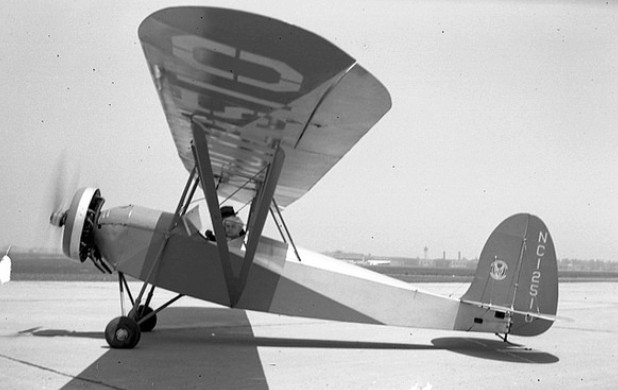
The 1929 New Standard D-29 design (ATC 198) evolved from license-built Belgian Stampe-Vertongen D-29A. Probably only one machine was built, priced at $4,250.

Twenty-six of the 1929 D-29A (ATC 216) were built; NC36K, NC151N/158M, NC164M/172M, NC715Y, NC913V, NC922V/926V, and NC9195, powered by a Kinner K-5 and priced at $4,250.

New Standard D-29 Special NX172M

The D-29 Special of 1929 (2-326) was for 95hp Menasco B-4 installation as D-29 Special in NX172M c/n 1026.

New Standard D-29 Special NX172M

USN version with Kinner B-5 was NT-1.

The D-29S of 1930 (ATC 2-272) was a “Sport” version with coupe-type cockpit priced at $5,000.

One special model built for Charles H Day, NC173M c/n 1020; also appears on registers as D-25C.

D-29
Engine: 85hp Cirrus Mk III
Wingspan: 30’0″
Length: 24’11”
Useful load: 535 lb
Max speed: 88 mph
Cruise: 75 mph
Stall: 37 mph
Range: 300 mi
Seats: 2

D-29A
Engie: 100hp Kinner K-5
Wingspan: 30’0″
Length: 24’8″
Useful load: 625 lb
Max speed:: 98 mph
Cruise: 80 mph
Stall: 42 mph
Range: 250

D-29 Special
Engine: 95hp Menasco B-4 i

NT-1
Engine: Kinner B-5

D-29S
Useful load: 655
Max speed: 102 mph
Cruise: 85 mph
Stall: 45 mph
Range: 340 mi

D-25C
NC173M c/n 1020

New Standard D-24

The 1929 New Standard D-24 (ATC 107) was designed by Charles H Day as a five-place open biplane. Selling for $4,600 with a 180hp Wright-Hisso E or $4,250 with a 150hp Hisso A, four were built, NC442, NC9102, NC9756, and NC9794, and two were converted from Standard GD-24, NC193 and NX7286.

D-24
Engine: 180hp Wright-Hisso E
Wingspan: 45’0″
Length: 26’6″
Useful load: 1334 lb
Max speed: 100 mph
Cruise speed: 95 mph
Stall: 37
Range: 550 mi
Seats: 5