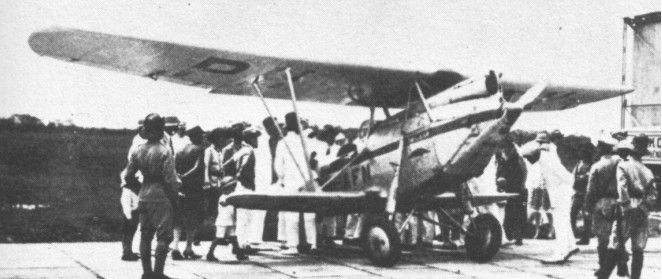
A two-seat sesquiplane.
A two-seat sesquiplane.
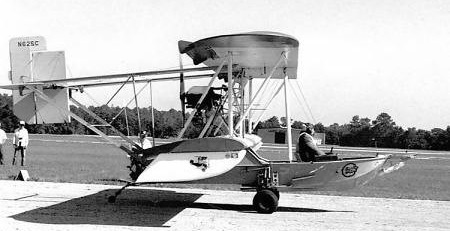
The Sunshine Clipper was a small two-seat amphibious homebuilt aircraft designed and constructed by Henry C. Palmer of St. Petersburg, Florida, USA. The aircraft uses a 14 ft (4.27 m) Orlando Clipper aluminum boat of 1948 vintage as basis for the fuselage, which was then combined with the wings of a Piper J-3 Cub, and parts and components of Piper J-3 Cub, PA-22 Tri-Pacer and PA-25 Pawnee aircraft.
The aircraft (N62SC c/n 1) first flew in November 1987, powered by a 65 hp Continental A65 engine. The aircraft remained a one-of-a-kind design and was registered to the SUN ‘n FUN Aviation Foundation on August 21, 1999 and is on display at the Florida Air Museum.
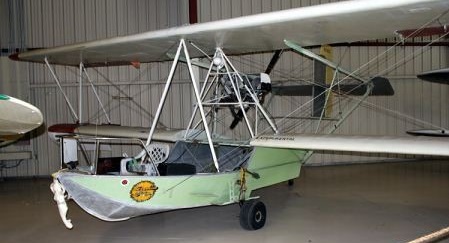
Engine: Continental A65, 65 hp
Span: 33 ft 0 in (7.20 m)
Weight empty: 1,100 lb (360 kg)
Loaded weight: 1,500 lb (572 kg)
Max speed: 65 mph (145 kmh)
Cruise speed: 55 mph (120 kmh)
Climb: 100 ft (1,000 m)/min
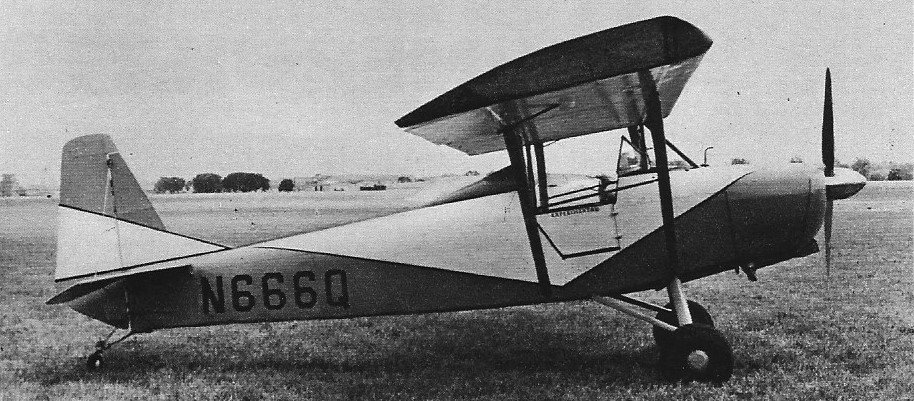
An executive pilot for Eastman Kodak’s Gulfstream, Joseph Palermo built his single-seat P-10 registered N666Q from plans published in Mechanics Illustrated magazine, but changed the tail configuration and skinned the steel tube fuselage with .025 magnesium alloy. The $600 craft took six years to build.
The wing has fabric covered wood structure and is fitted with Palermo’s own designed tips.
Engine: Continental A-65-A8, 65 hp
Wingspan: 26 ft / 7.92 m
Empty weight: 540 lb / 245 kg
MAUW: 740 lb / 335.7 kg
Cruise: 87 mph / 140 kph
Landing speed: 35 mph / 56 kph
ROC: 900 fpm / 4.57 m/sec
Range: 270 mi / 435 km

The Super Sport was a single-seat homebuilt sport biplane attributed to Ivan Painter of Hollister, California, USA. The engine was reported as a 150 hp Lycoming O-320 series and year of manufacture as 1966. The sole example built was deregistered on August 10, 2012.
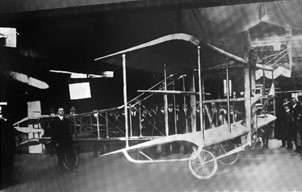
The 1909 single place Pagé-Light Biplane, loosely described as a Blériot XII copy with a lower biplane wing and interplane ailerons, was the work of Victor W Pagé and Oliver Light, both of Farmingdale, New York. At a February 1910 Boston aviation exhibition, the Pagé-Light was exhibited by the L.A.W. (League of American Wheelmen) Motors Company, and it was known under that name as well. The craft was powered by one of the company’s two-cycle Light rotary.
The LUSAC-25 (LUSAC = LePere US Army Combat) of 1919 was a development of the LUSAC-11.
Five are known to have been built: AS40025/40029.
The LUSAC-21 (LUSAC = LePere US Army Combat) of 1919 was LUSAC-11 refitted with the 420hp Bugatti 16 engine. One prototype was converted: AS40023.
Thirty LUSAC-11s with Liberty engines and three LUSAC-21 s with Bugatti engines were built, but contracts for quantity production were cancelled at end of First World War.
Engine: 420hp Bugatti 16
Length: 27’1″
Gross wt: 4485 lb
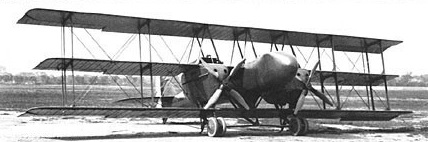
The 1919 LUSAO-11 (LUSAC = LePere US Army Observation) was a high-altitude long-range three seat open cockpit triplane observation aircraft for the Signal Corps.
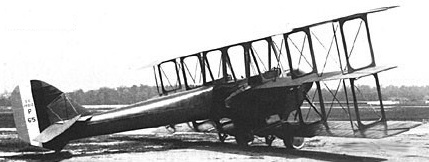
Only one prototype was built, SC40012.
Engines: 2 x Liberty 12, 400hp
Props: four-blade
Wingspan: 54’6″
Length: 38’2
Useful load: 3122 lb
Mas speed: 112 mph
Cruise speed: 106 mph
Stall: 60 mph
Range: 475 m
Ceiling: 17,300′
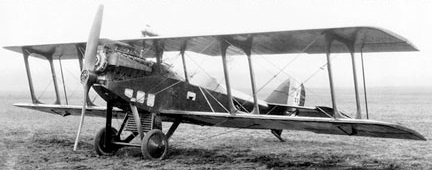
Captain Le Pere of the French Aviation mission to the USA, and Dwight Huntington designed a two-seat fighter, the LUSAC-11 (Le Pere United States Army Combat), which was built by the Packard Motor Car Company in 1918.
First flying in August 1918 piloted by Lt de Marmier, the LUSAC 11 (LUSAC = LePere US Army Combat) featured a plywood fuselage and box-type wing struts. It was the first US aircraft with a turbo-supercharger, and first to leave a vapor trail, on 27 February 1920.
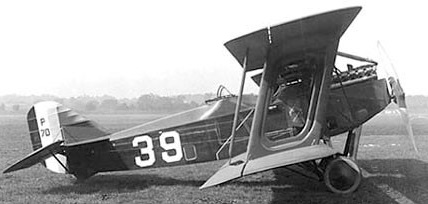
Two prototypes and 24 production LUSAC-11s with Liberty engines [AS40013/40023, AS42129/42142, AS42151] and three LUSAC-21s with Bugatti engines were built, but contracts for nearly 3,500 were cancelled at end of First World War.
AS40021 was modified as a single seat LUSAGH-11 with longer wings and a canopied cockpit at McCook Field. LUSAGH = LePere US Army Ground Harassment.
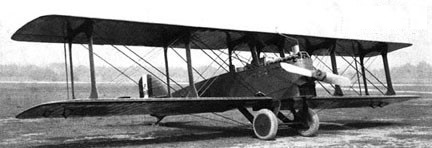
LUSAC-11
Engine: Liberty 12, 425hp
Wingspan: 41’7″ (?>39’0″)
Length: 25’3″ (?>25’5″)
Max speed: 133 mph
Cruise speed: 118 mph
Stall: 50
Range: 320 mi
Ceiling: 20,200′
Seats: 2
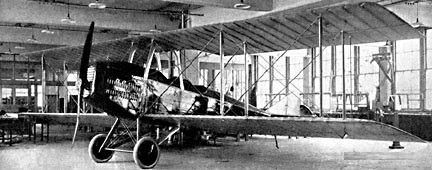
Circa 1919, the two place open cockpit biplane Packard A was Packard’s entry, featuring a self-starter, was planned for a civil market that failed to develop.
Only one was built, registered cn 01, N707.
A two place open cockpit biplane with a 200hp Packard-Liberty 8 found in the registers might be this ship, but it was not specified as actually a Packard Co product. The registry shows several private owners in Mt Clemens and Saginaw.
Engine: 160hp Packard 8
Useful load: 647 lb
Speed: 102 mph
Ceiling: 19,500′
Seats: 2
 All Aero