In 1912 Philip O Parmelee modified a Wright B for tours with the Wright Exhibition group. The single-place, open cockpit biplane first flew on 17 February 1912.
Engine: 60hp Hall-Scott A-2
In 1912 Philip O Parmelee modified a Wright B for tours with the Wright Exhibition group. The single-place, open cockpit biplane first flew on 17 February 1912.
Engine: 60hp Hall-Scott A-2
In 1963 Robert Parks built the sole P-3 open cockpit biplane with a 125hp Lycoming engine. The registration, N2E was transferred from a P-2.
Engine: 125hp Lycoming
Wimg span: 19’0″
Useful load: 263 lb
Max speed: 135 mph
Cruise speed: 125 mph
Stall: 55 mph
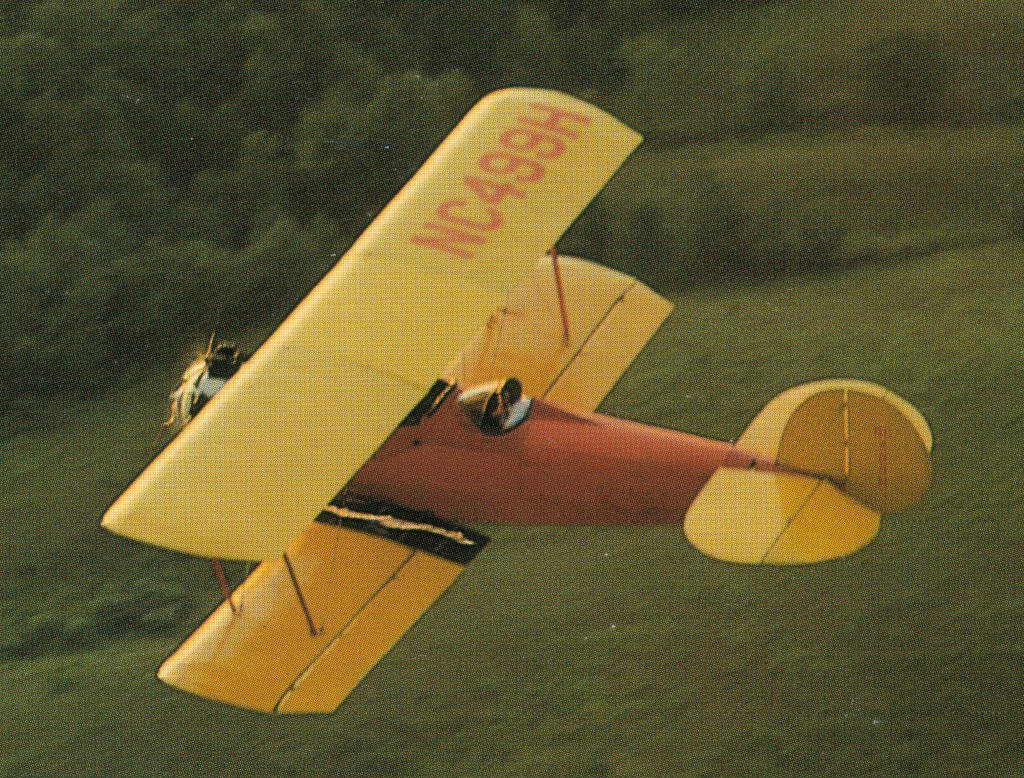
The 1929 Parks Aircraft P-2 (ATC 200) sold for $6,000. Six were built including NC902K and NC965K.
Some were repowered as P-2A. The 1929 P-2A (ATC 276) powered by a 165hp Wright J-6 sold for $6,350. Eleven were built: [NC480M, NC499H, NC502N, NC902K, NC965K, NC8487, NC8490-8492, and NC967K-968K.
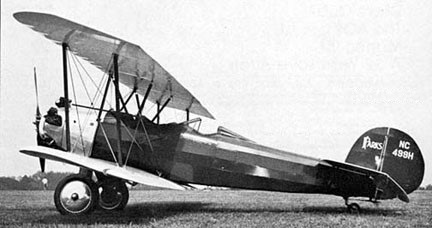
The P-2A was marketed as the Detroit-Parks P-2A after merger with Detroit Corp and, later, as the Ryan Speedster.
The P-2 was also available with a 130hp Comet. (ATC 2-99) superseded by (ATC 200), including NC8487.
P2
Engine: 150hp Axelson-Floco
Wingspan: 30’0″
Length: 22’10”
Useful load: 860 lb
Max speed: 115 mph
Cruise speed: 98 mph
Stall: 42 mph
Range: 490 mi
Seats: 3
P-2A
Engine: 165hp Wright J-6
Winspan: 30’0″
Length: 23’0″
Useful load: 897 lb
Max speed: 120 mph
Cruise speed: 100 mph
Stall: 45 mph
Range: 500 mi
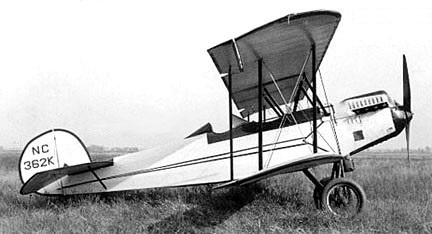
The 1929 P-1 (ATC 179) was a duplicate of the Fairchild KR-31, but with a chin radiator. They were built to replace Travel Airs used at the subsidiary Parks Air College. Selling for $3,165, forty-five were built.
The prototype, cn 10008 NX289W, was used to test the feasibility of a large, built-in “planechute” that could be released in emergencies to float the aircraft to the ground. In operation it had apparent success, but results of testing is unknown.
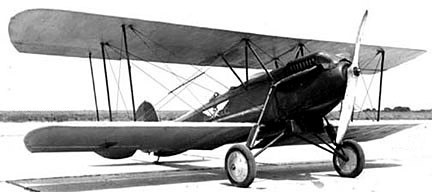
The 1929 P-1T (ATC 2-506) was fitted with a 115hp Milwaukee Tank.
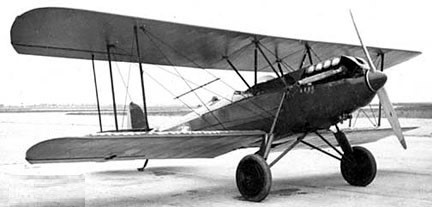
The 1930 P-1X three place open cockpit biplane was fitted with a 90hp Curtiss OX-5, and registered as a Detroit P-1-X N289W c/n 19911.
The 1932 P-1H (ATC 2-428) with a 100hp Kinner K-5 became the Hammond 100. Following Ryan’s demise the Park name was revived for the P- 1H biplane built by Hammond.
P-1
Engine: 90hp Curtiss OX-5
Wingspan: 30’1″
Length: 24’1″
Useful load: 812 lb
Max speed: 100 mph
Cruise speed: 85 mph
Stall: 37 mph
Range: 340 mi
Seats: 2-3
In 1929, Willard Parker built the two place, open cockpit biplane Pal register N571 c/n T-3. Power was by a 65hp LeBlond.
William D “Billy” Parker manufactured personal and exhibition biplanes, stressed for competition and aerobatics, principally powered by 50-80hp LeRhône rotary, during 1912-1914.
NX62E was a personal plane flown by Parker during his years as sales representative for Phillips Petroleum Co (later manager of Aviation Dept), and was active into the 1960s. Rebuilt and upgraded many times over the years, including the mid-wing ailerons were replaced by trailing-edge ailerons.
Parker had other pushers along the way for exhibition flying, as well [NR8Y (90hp OX-5), N66V, N4161K (80hp LeRhône)]. The latter was the most recent addition (c.1955), registered as Parker-Curtiss, with a rebuilt 90hp Curtiss OX-5. While the Curtiss name is often attached to Parker’s products, and he admitted to initial design influence to some degree, he was in fact quite vocal about his planes being his own creations, noting that anyone serious about doing “loops and fancy flying” [his terms] in the ‘teems would never use a Curtiss pusher because of the weakness of its “bamboo outriggers and other frail parts.” Parker was still flying two of his originals in the ’50s and ’60s on tours for Phillips.
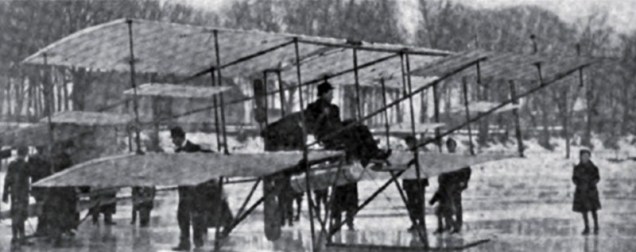
James J. Parker, of Fulton, NY, made the first trial and successful flight with this machine completely of his own construction starting on skids from the ice of Lake Neahtawanta 1910-1911. A flight of a mile and return was reportedly made. The generally Farman-like plane was equipped with a four-cylinder, two-cycle motor of his own make and had a unique tandem-mounted ailerons arranged between the wings.

Léon Parisot was a Frenchman who qualified for a French pilot’s license on a Farman in 1910, before moving to Belgium and starting a flying school at the Liège-Ans airfield. He built the “Tristable” in 1913, a rather Farman-like biplane powered by a 50 hp Gnôme rotary. Parisot was killed in a 1913 crash in this machine during a display in Bombaye in northern Belgium, close to the border of Luxemburg, together with two more on the ground and three injured.
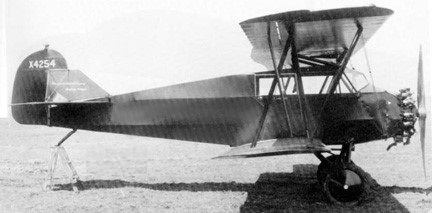
Following the failure of Walter J. Carr’s first aircraft company, the CSC Aircraft Company, Carr worked as a tester for the new Warner Scarab radial engines. Carr flew with Scarabs on a Travel Air 2000, and later cannibalized the test aircraft to produce the first Cabinaire aircraft design.
The prototype Cabinaire was formed around a welded steel tube Travel Air 2000 fuselage modified for an enclosed cabin. A new center section of wing was added and Travel air wings were reinstalled onto the center sections. The biplane aircraft featured a radial engine, and conventional landing gear. The upper wing was mounted several inches above the enclosed cabin. The entire plane was fabric covered with wooden wing spars and ribs. The upscale cabin used two individual upholstered wicker seats in the front and a wicker bench seat for passengers. The interior used velor finishing, nickel plating, mohair rugs, mahogany panels and roll-down windows. It first flew in 1928.
Designed by Walter Carr, the 1929 Cabinaire 110 (ATC 2-164, 2-165) was a four place cabin biplane. The prototype, NX4254 c/n 2, used many Travel Air parts; cabane-mounted upper wing. c/n 1 is generally assumed to have been rebuilt from a Travel Air.
Prototype #2 was made from parts of the first. Each production model differed slightly from each other with choices of engines, and landing gear and aileron improvements.
The Cabinaire was introduced at the 1929 National Aircraft Show.
Only eight were completed before production ceased.
In 1929, Viola Gentry and Jack Ashcroft attempted an endurance record for flight with aerial refueling in a modified Cabinaire SN#5 named ‘The Answer’. The name was chosen in response to the Army aircraft that had completed previous endurance records, the ‘Question Mark’. The aircraft had a 55-gallon cabin tank, and 21 gallon wing tanks installed for the attempt. The Answer crew was unable to refuel after the first ten hours of flight due to fog and crashed 28 June 1929, killing Ashcroft. Carr had been the original choice of co-pilot, but had to pass on the opportunity when struck with pneumonia.
In 1930, a Cabinaire was entered in the 4814 mile long Ford National Reliability Air Tour, placing 15th out of 18. The same aircraft has been restored and was still flown in 2011.
Selling for $6,750 seven were built in total; NC17M, NC387, NC587, NC551V, NC7930/7931. NC587 c/n 6 was repowered with a 150hp Hisso in 1936. (2-164) and (2-165) were 4p and 3p approvals respectively.

Cabinaire 110 NC587 was owned by Universal Engineering of Frankenmuth MI. and the founder of Universal, W.R. Fisher flew the plane for business. It was wrecked and then stored away at the family farm, probably in the early 30’s.
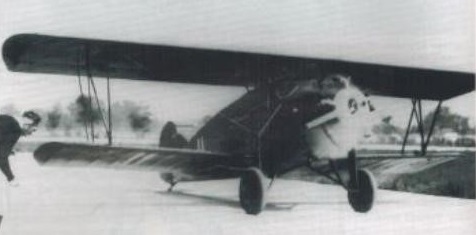
The 1930 Cabinaire 165 (ATC 265) sold for $7,500, and $5,750 in 1931. One was built, NC17M c/n 7, modified from a Cabinaire 110.

NC17M it caught fire during restoration in the ’60s and it was finally restored in the ’90s. Greg Herrick purchased it in 1997, and while flying it from FL to MN, an engine failure stopped the trip near Zebulon GA. The Cabinaire was once again being restored by Nathan Rounds in Zebulon in 2000.
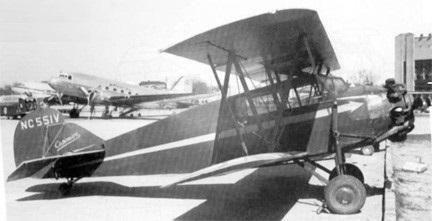
One Cabinaire 110, NC551V c/n 9 was modified to a Cabinaire A-70 in 1930 (ATC 2-233) with a 165hp Continental A-70.
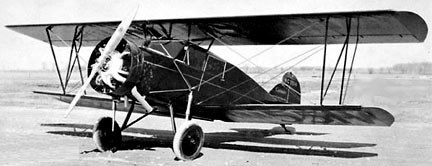
Cabinaire 110
SN#1-6
Engine: Warner Scarab, 110hp (82 kW)
Span (upper): 34’8″
Span (lower): 29’0″
Length: 23’9″
Useful load: 908 lb
Max speed: 103 mph
Cruise speed: 90 mph
Stall: 38 mph
Range: 465 mi
Ceiling: 12,000′
Seats: 4
Cabinaire 165
SN#7
Engine: Wright J-6, 165hp (123 kW) / Wright R-540, 175 hp (130 kW)
Upper wingspan: 33 ft 2 in (10.11 m)
Lower wingspan: 29 ft (8.8 m)
Wing area: 309 sq ft (28.7 m2)
Length: 24’7″ (7.49 m)
Height: 9 ft (2.7 m)
Empty weight: 1,620 lb (735 kg)
Gross weight: 2,630 lb (1,193 kg)
Fuel capacity: 50 U.S. gallons (190 L; 42 imp gal)
Useful load: 1054 lb
Maximum speed: 100 kn (120 mph, 190 km/h)
Cruise speed: 90 kn (103 mph, 166 km/h)
Stall speed: 35 kn (40 mph, 64 km/h)
Range: 350 nmi (400 mi, 640 km)
Service ceiling: 12,000 ft (3,700 m)
Rate of climb: 800 ft/min (4.1 m/s)
Seats: 4
Cabinaire A-70
Originally, SN#3 flown as an aerial survey aircraft, it was rebuilt to meet ATC requirements, with a new engine, becoming SN#9.
Engine: 165hp Continental A-70.
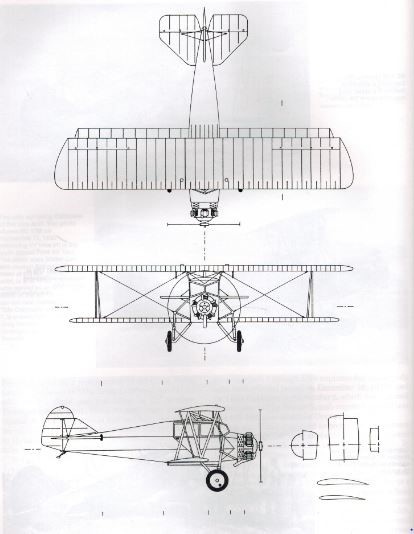
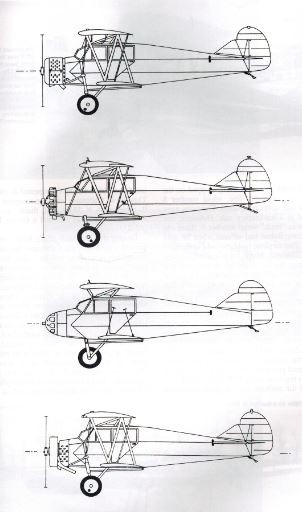
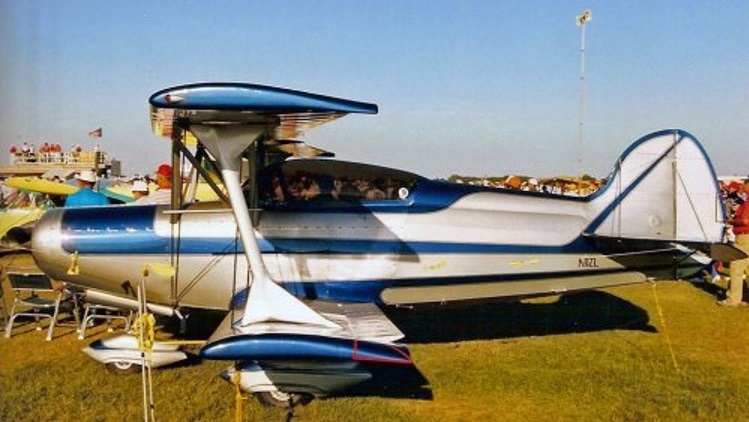
Despite its superficial resemblance to a Pitts S-2, the Panzl Pan 1 N11ZL is an original 1987 homebuilt experimental biplane. It was a two-place cabin biplane, powered by a Franklin 6V-335.
The one built, N11ZL c/n ZL-1, won the EAA Champion Custom-Plans Built award at Oshkosh in 1990.
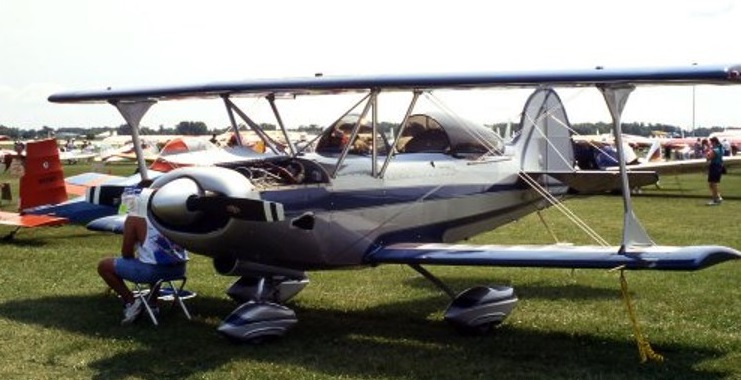
It was substantially damaged on March 18, 2003 during impact with terrain following a forced landing attempt near Vernal, Utah. The commercial pilot, who was the sole occupant on board, received minor injuries.
 All Aero