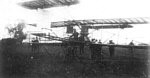
The 1911 Piffard No. 2 biplane was designed and built by H. H. Piffard in the UK.
Span: 34′
Length: 31′
Weight all up: 850 lbs
The 1911 Piffard No. 2 biplane was designed and built by H. H. Piffard in the UK.
Span: 34′
Length: 31′
Weight all up: 850 lbs
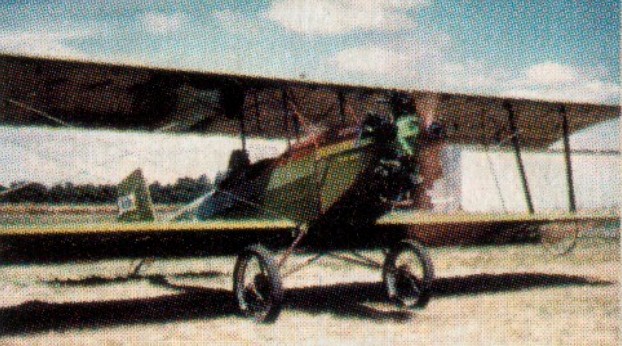
A biplane adaptation of the stock Air Camper. Designed by Chad Wille.
Engine: Continental O-300, 145 hp
HP range: 85-200
Height: 7 ft
Length: 19.5 ft
Wing span: 29.5 ft
Wing area: 250 sq.ft
Weight empty: 900 lb
Gross: 1400 lb
Fuel cap: 15 USG
Speed max: 105 mph
Cruise: 85 mph
Range: 150 sm
Stall: 36 mph
ROC: 1000 fpm
Take-off dist: 250 ft
Landing dist: 200 ft
Seats: 2
Landing gear: tail wheel
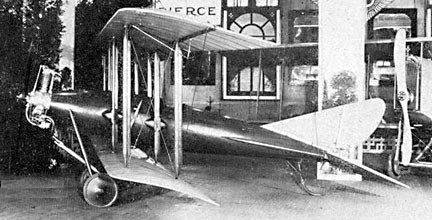
The 1916 Pierce Aeroplane Co Sporting Tractor single seat open cockpit biplane had an underslung lower wing and monocoque fuselage.
Engine: Lawrance L-4, 40hp
Wingspan: 26’0″
Length: 20’0″
Useful load: 250 lb
Seats: 1
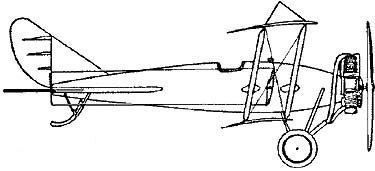

In 1927 two parallel, designs were developed to meet an Italian naval requirement for a two-seat catapult-launched seaplane. One was a small flying-boat, the Piaggio P.6bis powered by a single 194kW Isotta Fraschini V.6 engine mounted between the wings and driving a pusher propeller; the other was the P.6 floatplane with a large central float, two wing-tip stabilising floats, and a 288kW A.20 engine in the nose. The two aircraft had identical wing structure, with rigid strut bracing, and each mounted a single defensive machine-gun, that of the flying-boat in the bow, and the floatplane’s in the rear cockpit.
The P.6ter of 1928 was similar to the P.6, but had an engine boosted to 306kW to provide a maximum speed of 195km/h. Wing span was 13.50m and maximum take-off weight 2360kg. A batch of 15 P.6ter floatplanes was built, and the type was used for a period aboard several Italian capital ships and cruisers.
P.6bis
Engine: 1 x 194kW Isotta Fraschini V.6
P.6
Engine: 1 x 288kW A.20
P.6ter
Engine: 1 x Fiat A.20, 306kW
Max take-off weight: 2360 kg / 5203 lb
Wingspan: 13.5 m / 44 ft 3 in
Max. speed: 195 km/h / 121 mph

The Piaggio P.3 Pegna-designed night bomber of 1923 was a two-bay biplane with the lower wing of greater span than the upper. The biplane tail unit incorporated triple fins and rudders, and four 149kW S.P.A. 6A engines were mounted in tandem pairs on the lower wing, driving two tractor and two pusher propellers. Pilot and co-pilot were seated side-by-side in an open cockpit ahead of the wings, and there were gunner’s cockpits in the nose and amidships, the rear gunner also operating a tunnel gun for ventral defence. At a later stage two 306kW Fiat A.20V engines were installed but the P.3 was not accepted by the Regia Aeronautica for quantity production.

Engine: 4 x S.P.A. 6A, 149kW
Wingspan: 24 m / 79 ft 9 in
Max. speed: 185 km/h / 115 mph
A twin-engined light utility biplane of 1991
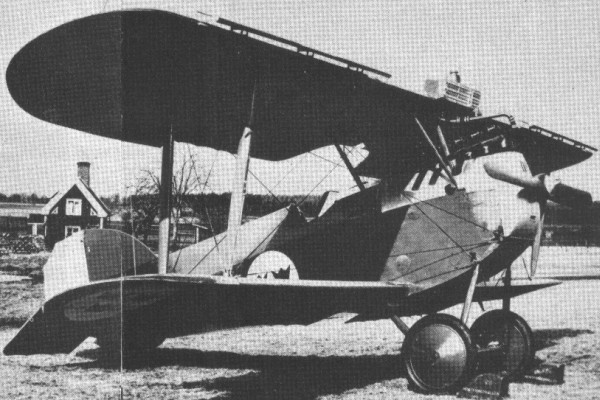
The D.I and D.II were flown during First World War by the Austro-Hungarian Flying Service, a few being fitted with cameras for high-speed aerial photo-reconnaissance work. Seventeen of the final batch of 122 Phonix D.IIs were completed as improved variants and transferred to the Swedish Army Air Service after the war.
Sweden built 15 of the WW1 Phoenix D2 and designated the type J-1.

Powered by a Hiero IV engine and designed by Ing. Hieronymus some were made at Skoda Mlada Boleslav Company in Bohemia.
The aircraft used by the Austrian Air Force for recce duties.
Phoenix C 1
Engine: Hiero, IV 230 hp
Span: 11 m
Length: 7.5 m
Empty weight: 820 kg
Loaded weight: 1240 kg
Maximum speed: 176 km.p.h
Service ceiling: 6 000 m
Endurance: 3 hr
Armament: one synchronized machine gun plus one flanking the cockpit
Seats: Two
The 1936 Phillips P-2 was a single-place, open cockpit biplane built by Howard A Phillips. Powered by a 45hp Szekely engine, it was registered N15775 c/n BB-1.
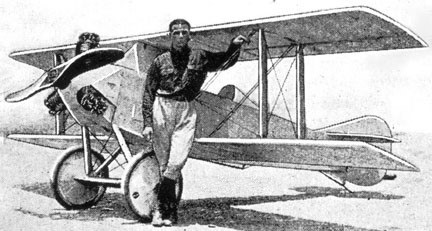
The 1924 single-place Phillips Alouette, or “The Fly”, was a home-built by Lt D B Phillips and members of the Air Service at Kelly Field TX.
Engine: 45hp Lawrance and 60hp Anzani
Wing span: 18’0″
Speed: 115 mph
Range: 500 mi
Seats: 1
 All Aero