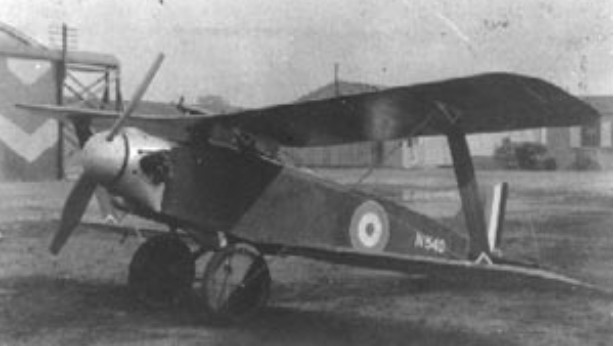
The Eastchurch Kitten was a lightweight biplane fighter with a wingspan of 18 feet, powered by a 35 hp ABC Gnat engine and armed with a Lewis gun. Only one was built.
The Eastchurch Kitten was a lightweight biplane fighter with a wingspan of 18 feet, powered by a 35 hp ABC Gnat engine and armed with a Lewis gun. Only one was built.
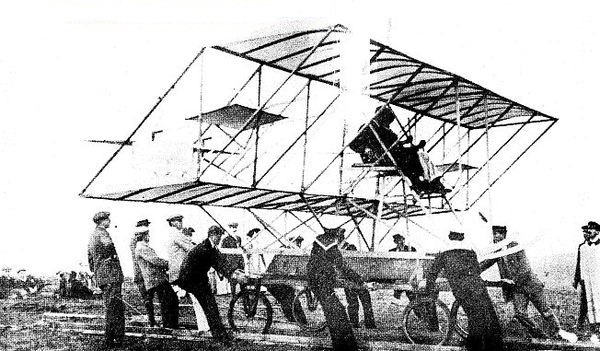
Porte and Pirie were both lieutenants in the Royal Navy when they designed and built this biplane. It was taken to Portsdown Hills, Portsmouth for a trial on 17th September 1909.
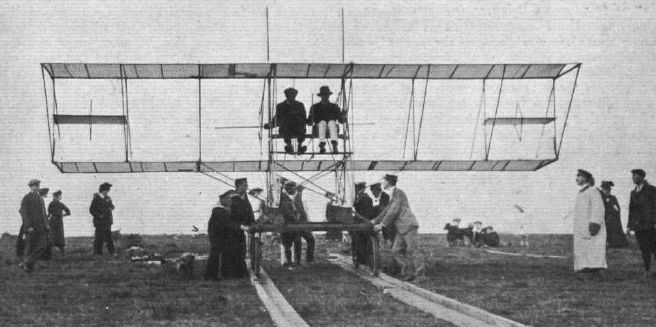
To quote “Flight” magazine for 25th September 1909; “With both officers seated in it the machine was mounted on a trolley and run along a temporary track, but it failed to rise, and eventually pitched forward and collapsed, both officers being thrown out, but escaping unhurt.” One of the designers, John Cyril Porte, who went on to have a successful career within aviation, was closely involved with the Curtiss biplane “America” intended to have made a pre-war trans-Atlantic flight.
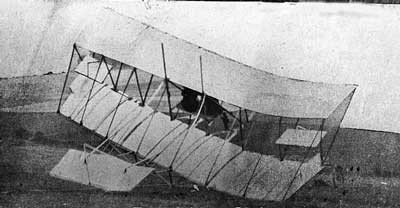
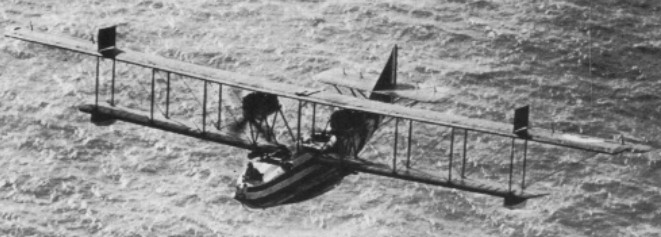
The Admiralty placed orders for Curtiss H.4 and H.12 flying-boats in 1924-15 on the recommendation of Squadron Commander John Porte. When they arrived, Porte fitted some with much improved hulls of his own design, built at the Naval Air Station of Felixstowe and by private manufacturers.
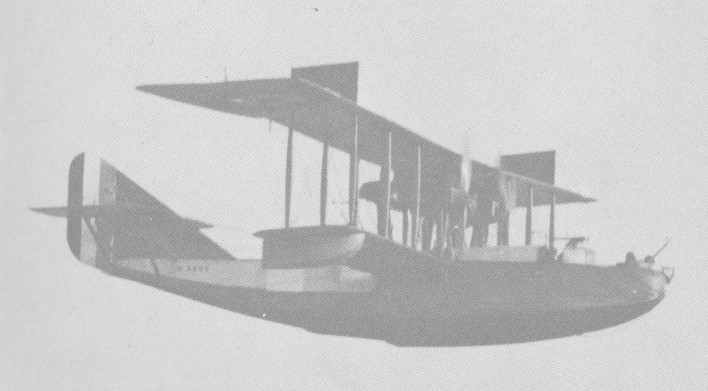
The engines were also replaced by Rolls-Royce Eagles in the H.12’s, which were redesignated F.2A.
They featured three-bay biplane wings with two spar wood construction and fabric covering. The hull was wood with plywood covering. Conventional controls with ailerons on the top wings only. Stabilising floats were under each lower wing tip.
Normal defensive armament was four Lewis machine guns: one in the nose cockpit, one in the rear cockpit aft of the wings and one on each side of the fuselage. Sometimes the nose and rear positions were each fitted with two guns, and an additional gun could be mounted above the pilots’ canopy. Racks for two 230-lb bombs were under the wings.
Best known was the F.2A, which, in the last year of the war, formed the backbone of RNAS/RAF ocean activ¬ity. Carrying up to seven Lewis guns and two 220 lb bombs, it had a maximum weight of 11,000 lb, its two 345 hp Rolls¬Royce Eagles gave it a top speed of 95 mph and it could reach 2,000ft in 3.5min and 10,000ft in 39.5min. Despite its 120ft wingspan it was surprisingly agile. Gradually F.2s replaced H12s.
The F2A was basically a Porte II hull married to the wings and tail unit of the Curtiss H.12. Utilised by Britain during WW 1 and credited with shooting down Zeppelins L.22, L.43 and L.62.
F.2A
Engines: 2 x Rolls-Royce Eagle VIII, 345 hp
Propeller: 4 blade
Wingspan: 95 ft 7.5 in
Wing area: 1133 sq,ft
Length: 46 ft 3 in
Height: 17 ft 6 in
Empty weight: 7549 lb
MTOW: 10,978 lb
Max speed: 95 mph at 2000 ft
Service ceiling: 9600 ft
Endurance: 6 hr
Armament: 4-7 Lewis machine guns
Bombload: 2 x 230 lb
By July 1916 first examples of a larger Curtiss flying boat design began arriving in England. Designated H.8, these were quickly modified to accept more powerful twin 250 hp Rolls Royce engines, and redesignated Curtiss H.12s, or ‘Large Americas’ as the RNAS crews usually referred to them. The Curtiss H.12 hull soon proved to be inadequate for its tasks, so Porte designed a new hull (the Porte II), resulting in all round improvement in performance. With a new tail unit added, the modified craft was designated Felixstowe F.2, and its general structure became a prototype for succeeding F boats.
Large scale production of the F.2 was ordered, and the type began to equip RNAS units in late 1917. Carrying a crew of four, and a bombload of approximately 272 kg (600 lb), the F.2a (its production designation) could achieve a maximum speed of some 145 km/h (90 mph), with an endurance of perhaps six hours. It was cumbersome to handle and slow in manoeuvre, yet gave formidable operational service for the rest of the war. With at least four machine guns in nose, tail, and flank locations, it also gave a good account of itself when engaged by German seaplanes. The F.2a’s main duty was antisubmarine hunting; an air deterrent which undoubtedly proved successful in the protection of Britain’s vital mercantile shipping.
Span: 29 m (95 ft 7.5 in) (upper), 20.8 m (68 ft 5 in) (lower)
Length: 14.1 m (46 ft 3in)
Height: 5.3 m (17 ft 6 in)
Maximum speed: 153.7 km/h (95.5 mph) at 609.5 m (2000 ft)
While the ‘Baby’ began production, Porte designed a new form of flying boat hull, and tested it on a modified Curtiss H4 (No 3850). The resulting aircraft was at first titled the Porte 1, and later officially designated Felixstowe F.1.
Span: 22 m (72 ft) (upper), 14 m (46 ft) (lower)
Length: 11 m (36 ft 2 in) (hull only)
Maximum speed: approx 125.5 km/h (78 mph)
On the outbreak of the First World War, among the Admiralty’s chief responsibilities was the aerial defence of Britain, as well as the more traditional role as guardian of the island’s surrounding sea¬ways. At that time the Royal Naval Air Service was almost wholly equipped with floatplanes of limited range and unreliable performance. The obvious need for a sea¬going aircraft of long range led Captain Murray Sueter, Director of the Naval Air Department, to purchase two Curtiss flying boats.
After some operational use of these initial Curtiss flying boats, Commander John C Porte set out to improve some of the more obvious weaknesses in the design.
In September 1915, Porte was appointed in command of RNAS Felixstowe and while there finally produced his own design of flying boat. It was a large, three engined aircraft, and was allocated the serial number 9800. Quite unofficially, it was titled the ‘Porte Baby’. The largest flying boat design of its day, the ‘Baby’ was put into limited production some 20 machines and most of these saw operational service in 1916 17.
It had three Rolls Royce Eagle engines, two installed as tractors and one as a pusher. One successfully launched a Bristol Scout from its top wing while airborne over Felixstow.
Built by Leon Pope in 1959, the Thunderbird P-2 was a single-place, open cockpit biplane. Registered N379, it looked like a Pitts, but actually was an original design, first flying on 18 June 1959.
Engine: 100hp Lycoming O-235
Wingspan: 18’9″
Length: 15’0″
Useful load: 280 lm
Max speed: 145 mph
Cruise: 115 mph
Stall: 55 mph
Range: 400 mi
Seats: 1
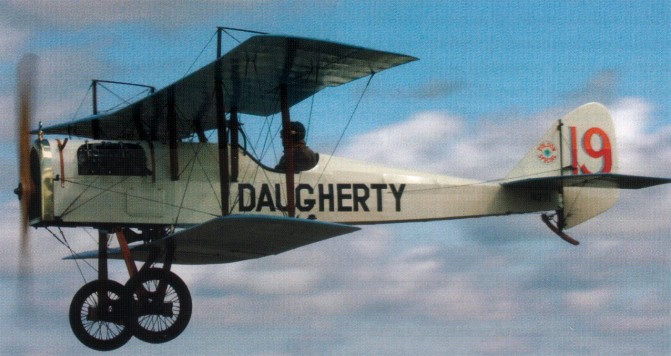
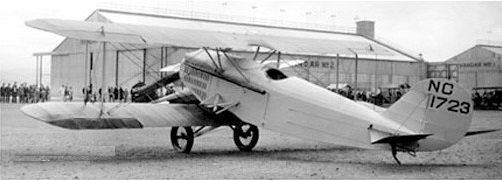
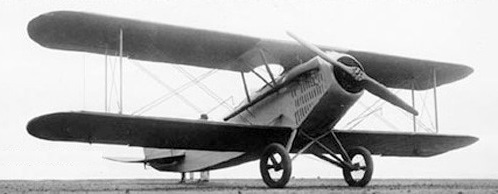
The Polson Special C/NC1723 was built between 1917 and 1925 by Thor Polson of Long Beach, California, for Earl Daugherty who was a regular participant in air shows, stunt displays and air racing post WW 1.
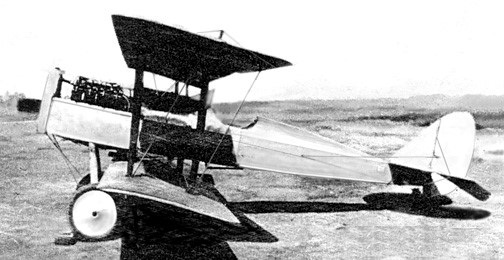
The aircraft was restored by George Jenkins of St. Davids, PA, and flew again from Brodhead, after 83 years.
Engine: OX-5 V-8, 90 hp
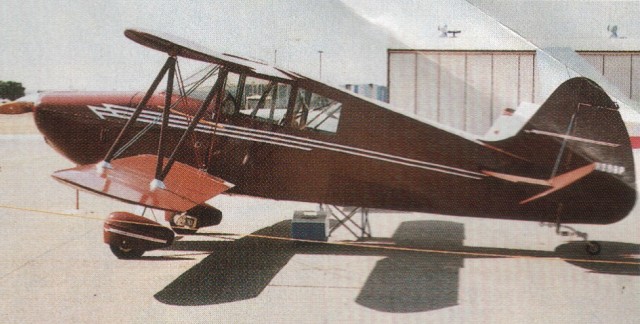
A one-of-a-kind, scratch built homebuilt biplane with reverse staggerwings. First flown in 2002 after eight yeas work, Poping’s Westfall, N99BP, is a side by side two seater fitted with a Lycoming O-320.
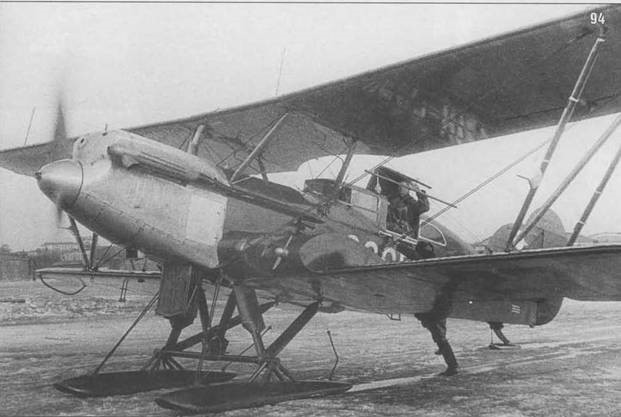
Mikhail Vodopyanov during the salvation of the crew of the steamship Chelyuskin used an R-5 specially prepared for Arctic operations. On these flights Molokov used the containers for people designed by Grojovski, which allowed him to save 39.
In correspondence with the polar exploration plans of the 30s the management of the Glavsievmorputi prepared for 1936 a flight from Moscow to Franz Josef Land. This flight was not intended to break any records, it was only to study the access routes for the conquest of the North Pole, the recognition of flight paths and the conditions of the ice in the Kara and Barents Seas. Pilots were also required to collect information on climate and weather changes.
For this task two examples with closed cabins were modified. The changes in this case were very careful. This modification would be named Polikarpov ARK-5 (Russian: Поликарпов АРК-5) to highlight its Arctic use.
The crew of the ARK-5 was increased to three people. The cabin was modified and equipped with a heating system from hot air from the engine. The overboard containers, previously used on the LP-5s, were enlarged so that spare propellers, skis, tents and an inflatable boat could be stored.
All the equipment was calculated so that in case of a breakdown the crew would be able to return to the mainland by their own means, counting on food reserves for the three crew members for 45 days.
Built at Glavsievmorputi Workshops, both aircraft received registrations of the Glavsievmorputi СССР Н-127 and СССР Н-128 and were painted in intense green and red colors.
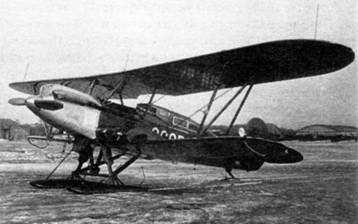
The main aircraft, with number Н-127 was equipped with radio beacon and radio compass, radio station MRK-0.04 with a rigid antenna on the upper plane. The Н-128 received lighter equipment, being equipped with a shortwave radio station for ground contacts and with the Н-127.
As commander of the expedition was appointed M. V. Vodopyanov. Its crew consisted of mechanic F. I. Bassein and radista S. A. Ivanov. The second aircraft was flown by V. M. Majotkin, with V. L. Ivashin as mechanic and V. I. Akkuratov as radio operator.

The planes took off on March 28, 1936 and in general the route did not present problems, which demonstrated the feasibility of flights at high latitudes. This expedition allowed to gain experiences in the preparation of future expeditions and to develop the idea of landing groups at the North Pole, which would be carried out in 1937.
On May 21, only one plane, the Н-127, arrived in Moscow. The second plane was damaged on the way back, near Tijaya Bay.
At the time of the breakdown the crew was in good physical condition. The plane was abandoned and the crew picked up by an icebreaker.
In 1935, two new ARK-35s were prepared at the Repair Factory No.5 in Smolensk.
These aircraft were characterized by the structure of the cabin deck made of steel. Part of the fuselage structure was replaced by duralumin parts.
In the front cockpit was the pilot and in the rear the mechanic, the radista and two passengers. The side containers were enlarged. On the left a compressor was installed with its engine, which allowed the engine to be started from compressed air even after a long stay on land.
At the front of the containers electric current generators were installed using fans. The one on the left for the radio station and the one on the right for lighting. One of these aircraft received a radio compass.
 All Aero