Pyshnov AVF-2 Strizh

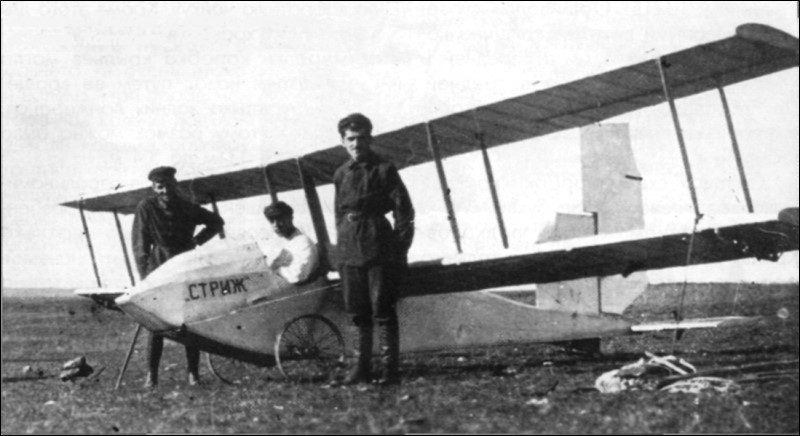
Vladimir Pyshnov at Koktebel during the 1923 competitions alongside the AVF-2 “Strizh” with the modified tail rudder.

In 1923 the Academy of the Air Fleet and the Military Academy of the RKKA leadership allowed students to build gliders and light aircraft using the academy workshops.

Between 1 and 18 of November of 1923 took place in Uzun-Sirt mountains in Crimea First National Competitions Gliding. In these competitions 10 gliders were presented. Among them were three Air Fleet Academy student gliders named AVF-1 Arap , AVF-2 Strizh and AVF-3 Mastyazhart and built by students MK Tijonrarov, VS Pyshnov and SV Ilyushin respectively. The technical commission, chaired by Professor VP Vetchinkin, after reviewing them, allowed the flight of 9 of them.

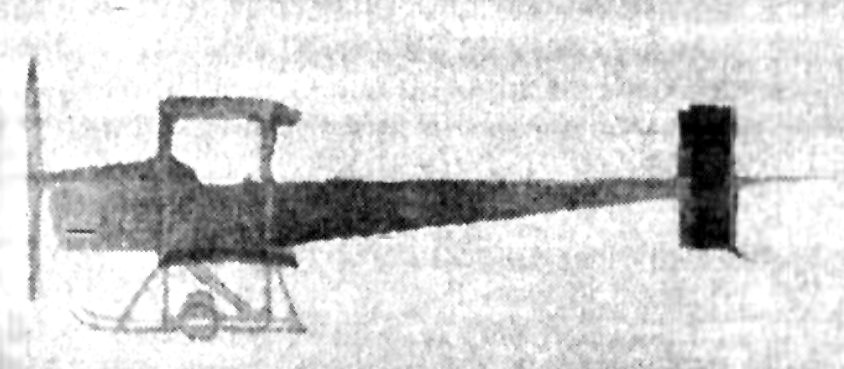
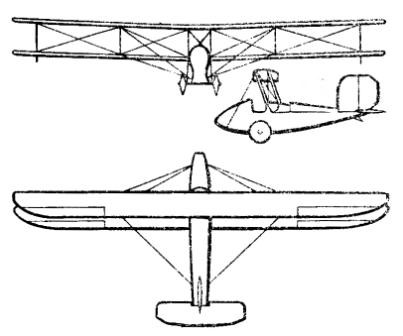
Pyshnovs’ AVF-2 Striz (Russian: Пышнов АВФ-2 «Стриж») glider had a biplane structure with long wings. The fuselage was constructed entirely of wood, with cable ties and featured a rectangular cross-section with a curved top. The fuselage structure ended in a horizontal rib towards the tail. The covering was fabric.

The wing trunk was located above the fuselage. The upper flange had an offset of 0.3 meters and the distance between both planes was 0.9 meters, being joined by means of parallel uprights and braced by cables. The wing construction was also made of wood, with textile covering and corresponded to the Prandtl-387 profile. Roll control was carried out by ailerons located in both planes.

The monoplane tail unit featured a large elevator attached to the rear frame of the fuselage and a large area empennage to which the rudder attached.

The landing gear was of the conventional type with two large spoke bicycle wheels whose axle ran from side to side through the fuselage and was attached to rubber shock absorbers. In the tail it had a fixed skate to the structure.

The pilot was located in a cockpit in front of the wing leading edge.

The Pyshnov glider was the second model designed and produced at the Air Fleet Academy (AVF), for which it received the official designation AVF-2 and the nickname “Strizh.” The Strizh was built in the AVF workshops and assembled at the “Aviarabotnik” factory. Unfortunately by the time the competitions started in November 1923 the AVF-2 had not been finished and was sent to the competitions in that state. All the metallic fixings were already installed in the camp of the participants in the competition.

This situation played a negative role in the fate of the glider. The Strizh was not only incomplete, it had not been tested, so construction defects had not been corrected. During the first tests on November 15 the Strizh on several occasions rotated on its axis before reaching takeoff. To correct this difficulty the builders increased the rudder area considerably but after this the glider refused to rise.

As a consolation, in this competition they also failed to launch their gliders SN Lyushin with their “Maori” and VI Cheranovski with their BICh-1 “Parabola”. Despite the difficulties the 17 of February of 1924, during the conclusions of the first competitions of gliding, the builder VS Pyshnov to the present like other builders, received a special award for its creation.

AVF-2 “Strizh”
Wingspan: 10.2 m
Wing area: 12.5 m²
Length: 4.7 m
Height: 1.8 m
Elevator area: 1.6 m²
Keel rudder area: 0.6 m²
Rudder surface area: 0.5 m²
Ailerons surface: 2.2 m²
Empty weight: 60 kg
Wing loading: 10 kg / m²
Pterodactyl Early Bird Light Flyer

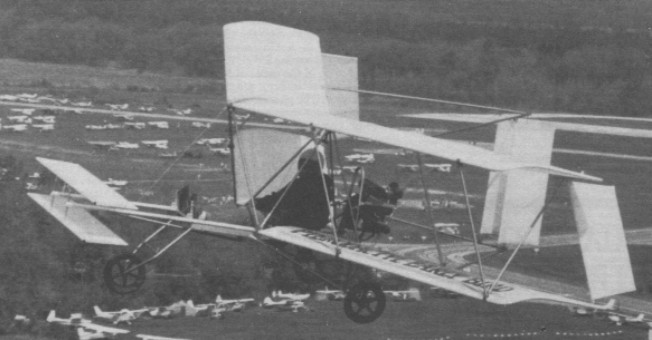
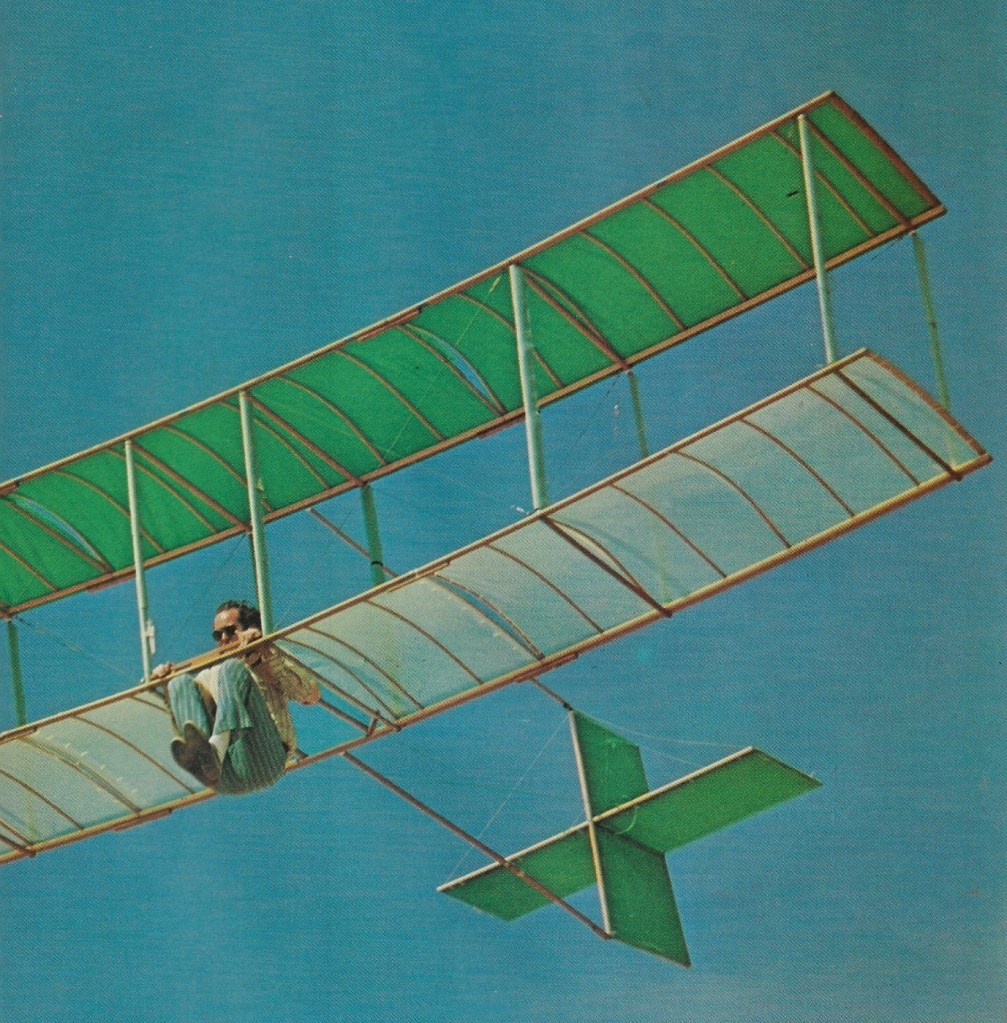
Single seat single engined biplane with con¬ventional three axis control. Wings have swept back leading and trailing edges, and constant chord; two fin tail and canard wing. Pitch control by double fully flying canard; yaw control by tip rudders between wings and twin fully flying tail rudders; roll control by ailerons on lower wings; control inputs through stick for pitch/roll and pedals for yaw. Wing braced from above by struts and transverse X cables; wing profile; double ¬surface. Undercarriage has three wheels in tricycle formation; bungee suspension on nosewheel and glass fibre suspension on main wheels. No ground steering. No brakes. Aluminium tube framework, without pod. Engine mounted between wings driving pusher propeller.

The prototype Pterodactyl caused a sensation at Sun ‘n’ Fun in March 1983 at Lakeland. Florida, where it was shown publicly for the first time. With the Light Flyer, Pter¬odactyl has moved away from their earlier productions. Structurally, the only points in common between them and the new design are the undercarriage construction and the canard configuration.

One of the first photographs of the Light Flyer, showed it with two rudders mounted behind the wings, in the propwash. More recent literature shows that the aircraft now also has tip rudders which are hinged on the interplane struts near the wing tips. The Light Flyer is sold as a kit requiring around 125 h assembly for a price of $5420 in 1983.

Engine: Cuyuna 430R, 30 hp at 5500 rpm
Propeller diameter and pitch 54 x 27 inch, 1.37 x 0.69 m
V belt reduction, ratio 2.0/1
Power per unit area 0.7 hp/sq.ft, 1.9 hp/sq.m
Fuel capacity 5.0 US gal, 4.2 Imp gal, 18.9 litre
Length overall 15.7 ft, 4.78 m
Height overall 7.0 ft, 2.13 m
Wing span 26.0 ft, 7.92 m
Total wing area 174sq.ft, 16.2 sq.m
Empty weight 240 lb, 109kg
Max take off weight 500 lb, 227kg
Payload 260 lb, 118kg
Max wing loading 2.87 lb/sq.ft, 14.0kg/sq.m
Max power loading 16.7 lb/hp, 7.6kg/hp
Max level speed 55 mph, 88 kph
Never exceed speed 55 mph, 88 kph
Max cruising speed 45 mph, 72 kph
Economic cruising speed 35 mph, 56 kph
Stalling speed 24 mph, 39 kph
Max climb rate at sea level 800 ft/min, 4.1 m/s
Take off distance 110ft, 34 m
Landing distance 50 ft, 15 m
Service ceiling 18,000 ft, 5490 m
Range at average cruising speed 100 mile, 160km

Pruitt Sopwith Pup

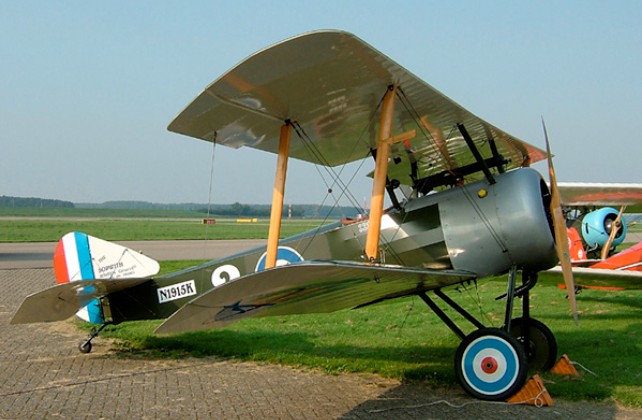
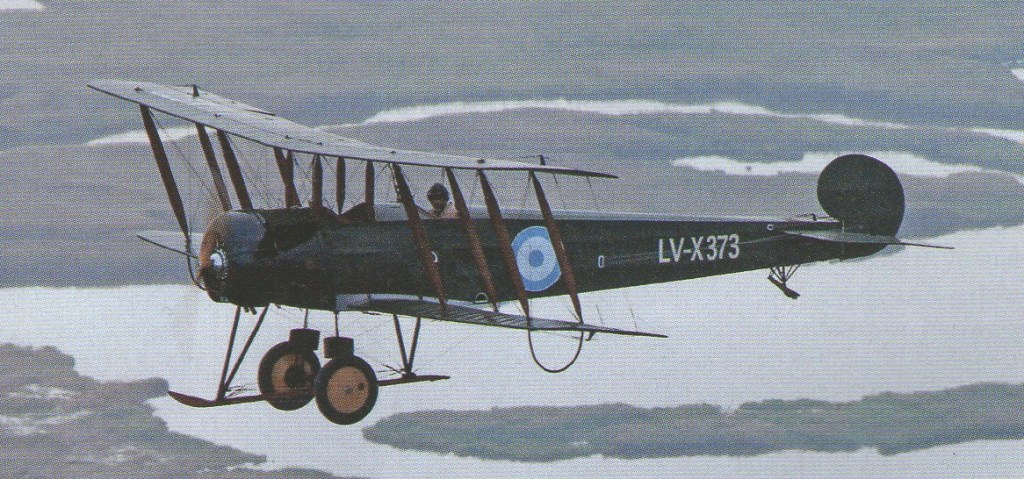
The 1992 Ken Pruitt built Sopwith Pup N1915K c/n 3 is a replica of the original Sopwith Pup which played a major rule in the early years of WWI.

The Pruitt Pup is powered by a Warner scarab engine. Built under Manufacturer/Model code 0561899 by Ken Pruitt in Oklahoma, USA, it was flown first on 9 January 1992.

N1915K was sold to Holland in 1988, and based at Lelystad airport. On 22 February 2005, registration N1915K was cancelled as exported to the Netherlands.

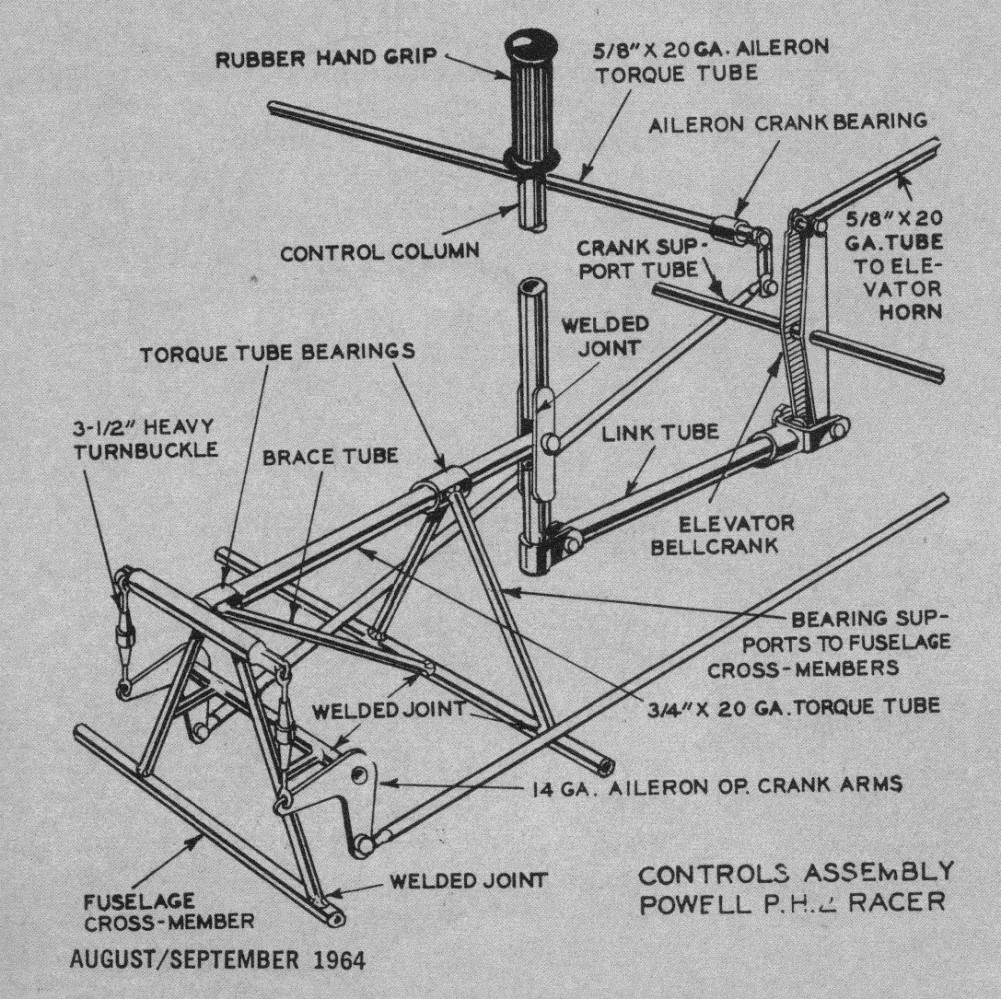
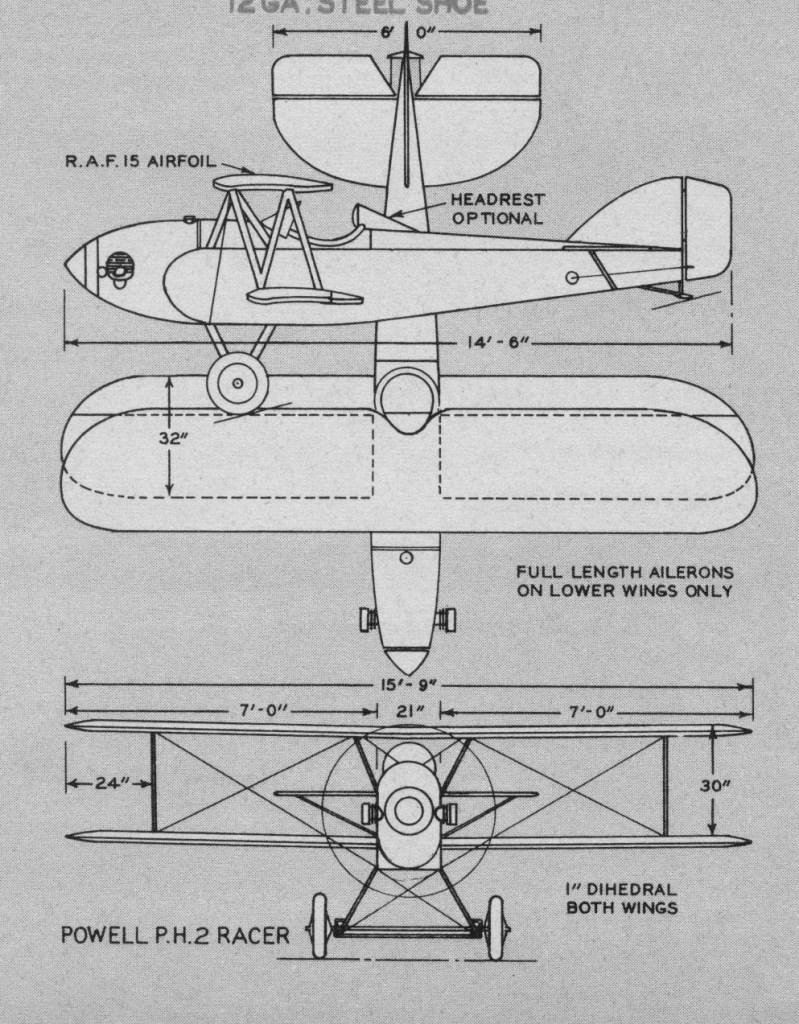
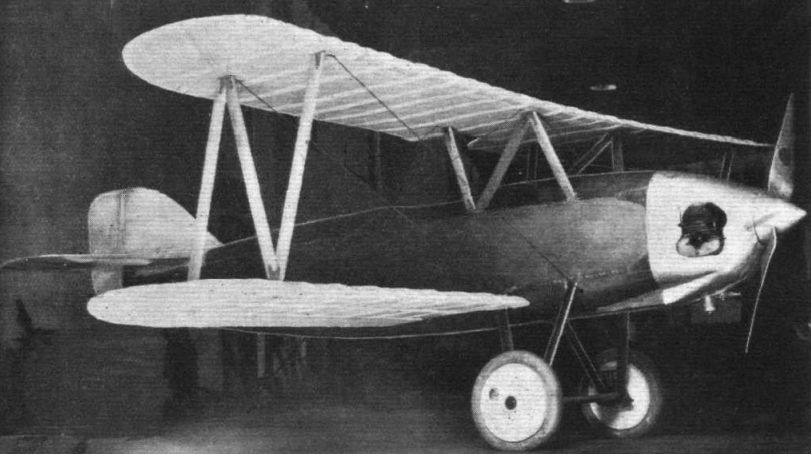
Powell PH.2 Racer

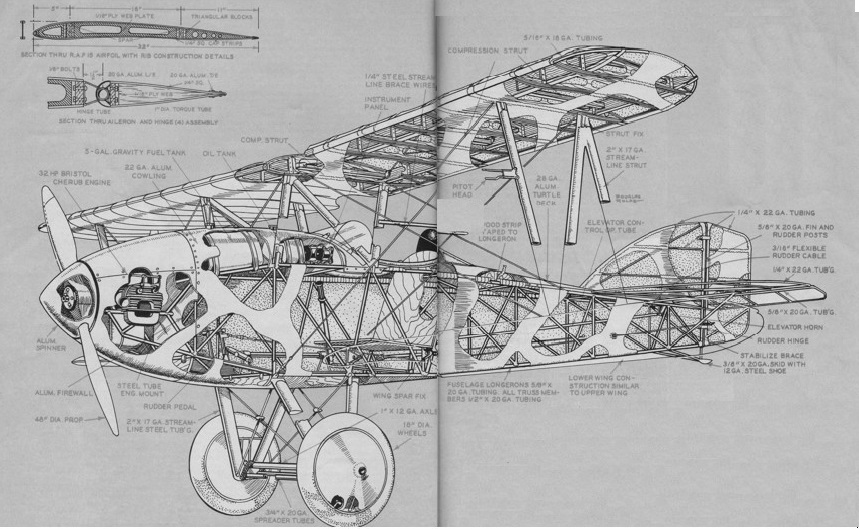
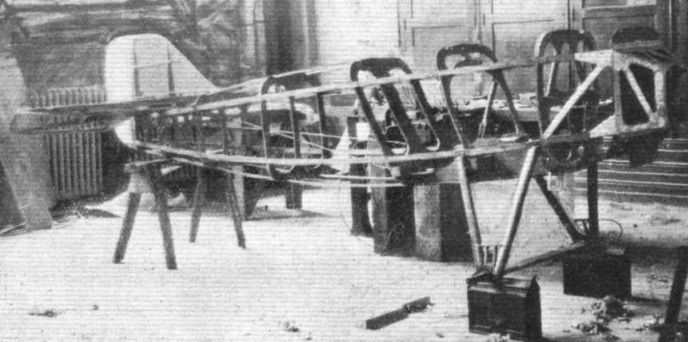
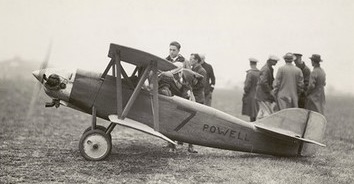
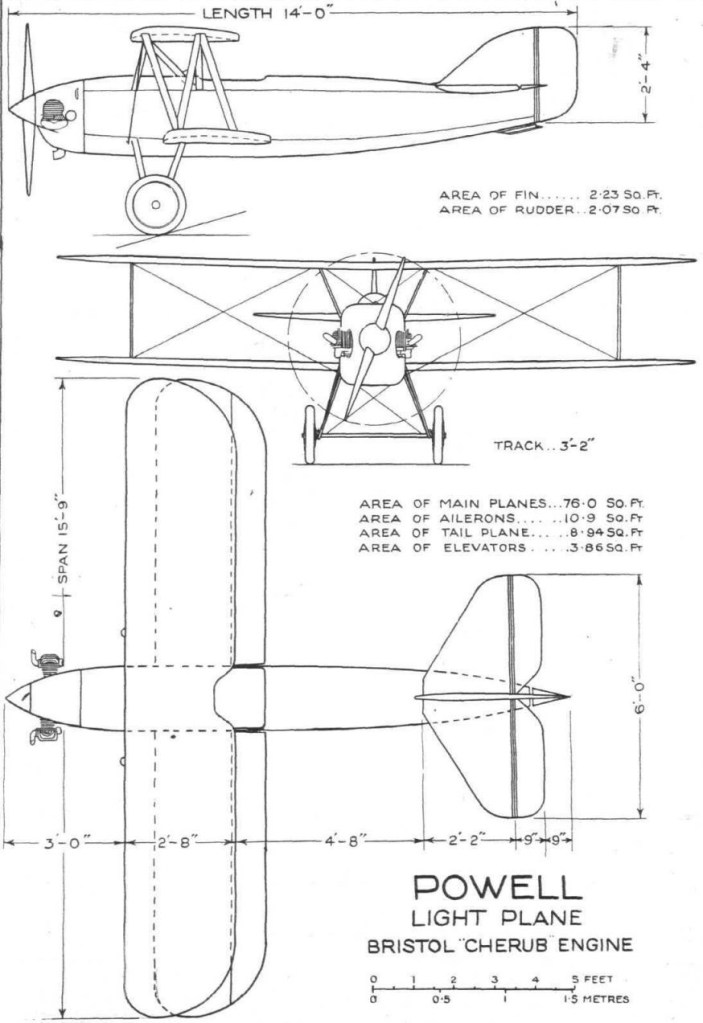
Designed by Professor C.H. Powell, teacher at the Aeronautics Department of the University of Detroit, the PH.2 was an equal span biplane with welded steel tube fuselage and tail surfaces, appearing in 1923.

The wings have routed spruce beams with 1/16in ply ribs and 1/4in square cap strips. Streamline steel tubing was employed fir the interplane struts and the landing gear struts. Wing and landing bracing was 1/4in streamline steel wire. The engine was a Bristol Cherub.

Possibly only two were built although detailed plans were available.

Engine: Bristol Cherub, 32 hp
Wingspan: 15 ft 9 in
Length: 14 ft 6 in
Height: 5 ft 3 in
Stagger: 9.5 in
Chord: 32 in
Incidence: 0 deg
Max speed: 85 mph
Cruise: 75 mph
Landing speed: 32 mph

Powell PH Racer

The Powell PH Racer was designed by Professor C.H. Powell, teacher at the Aeronautics Department of the University of Detroit.

The biplane racer used an all wood fuselage with birch paneling. The wing spars were also wood with fabric covering. Uniquely, the aileron hinges were made of leather.

The Powell PH Racer was a 1920s air racer which holds the distinction of having won all of the races it entered.

Race Winnings:
1925 National Air Races piloted by Jerry V. Dack of Dayton, Ohio
Aero Digest Trophy (Dack)
The Dayton Daily News Trophy
The Scientific American Trophy

The Powell Racer was returned to the University of Detroit where it was destroyed in static load tests.

Variation: Shirlen Big Cootie

Gallery

Powell Racer
Engine: 1 × Bristol Cherub, 32 hp (24 kW)
Propeller: single blade Curtiss-Ried
Wingspan: 15 ft 9 in (4.80 m)
Length: 14 ft (4.3 m)
Wing area: 76 sq ft (7.1 m2)
Airfoil: RAF 15
Empty weight: 310 lb (141 kg)
Gross weight: 475 lb (215 kg)
Fuel capacity: 8 gal (30 litres)
Maximum speed: 74 kn; 137 km/h (85 mph)
Cruise speed: 65 kn; 121 km/h (75 mph)
Stall speed: 43 kn; 80 km/h (50 mph)
Capacity: 1