The Balloon Factory, under the direction of Mervyn O’Gorman, was authorized only to repair a crashed experimental 60 h.p. E.N.V. Bleriot monoplane. In seeking authorization to carry out repair work, he asked that it cover reconstruction as well, and when this was granted the Factory at last had the all clear they wanted to exercise the ideas of their own designers. So far as the Bleriot was concerned, all that remained of it by the time that Green and de Havilland had finished with it was the 60 h.p. E.N.V. engine. By the time the “repair” work was finished it had turned into a tail first biplane classified S.E.1 – the “S” standing for Santos Dumont, in deference to the inventor of the tail first formula. (As the S.E.1 was the only tail first type built by the Factory, the letters S.E. were later taken to mean Scout Experimental.).
20th Century Fox purchased the film rights of Jack D Hunter’s “The Blue Max” and the film was to be a multi-million dollar production, and the stars were to be the full sized reproductions of World War I fighters constructed for the film- two Pfalz D.III biplanes, two Fokker Dr.I triplanes, two S.E.5a scouts and three Fokker D.VII biplanes.
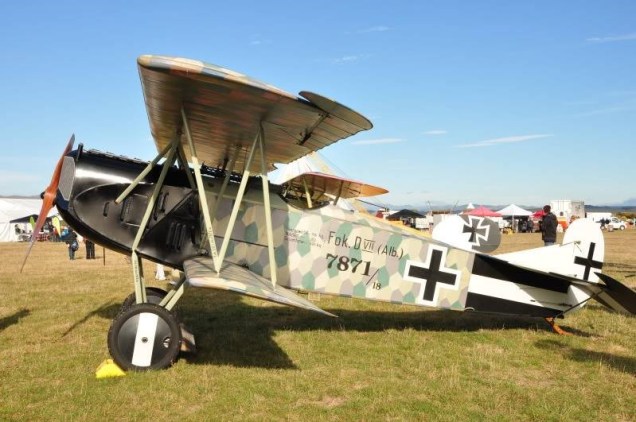
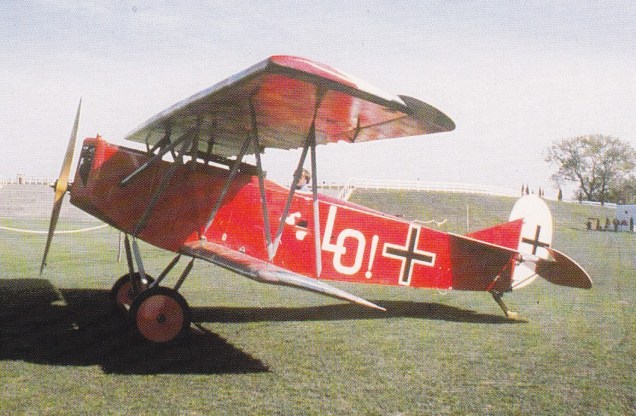
The reproductions had to be built in a hurry to meet the time frame for shooting and were constructed in different locations. At Dinard airport in France, Claude Rousseau constructed three Fokker D.VII fighters (F-BNDF to F-BNDH) in six months. At the time it was stated that the machines were constructed to original plans and dimensions. The two former Federated Fruit Dragon Rapides, G-AKJS and G-ANZP, left Liverpool destined to become part donors for the three Fokker D.VII. The limited choice of engines led to the Gypsy Queen being also installed in the D.VII reproductions. The Gypsy Queen is a six cylinder in-line inverted air-cooled direct-drive engine, as a result the prop emerges through what would be the radiator shell of a true D.VII. Since the Fokkers’ original Mercedes weighed almost twice as much, they required some 200 pounds of nose-ballast for balance. Rousseau Aviation named the reproduction the D.VII-65. They were painted in lozenze camouflage pattern colours.
Rousseau delivered its D.VIIs by actually flying them from France to the set in Exeter-Dublin, Ireland, during August 1965, their German crosses and lozenge camouflage no doubt raising eyebrows below.
The replicas were: F-BNDF, EI-APT painted as 6796/18
Became N902AC / ZK-FOD With The Vintage Aviator, New Zealand
F-BNDG, EI-APU painted as 8520/18
Became N903AC Rendered un-airworthy in a landing accident At Stampe & Vertongen Museum, Antwerp International Airport, Belgium
F-BNDH, EI-APV
Later N904AC On display at Southern Museum of Flight, Birmingham, Alabama, USA
They later appeared in “Darling Lili”.
One Fokker D.VII now belong to New Zealand film director Peter Jackson’s 1914–18 Trust, kept in fully airworthy condition.
Fourth construction of Emmanuel de Rougé; and piloted by Sadi Lecointe (1891-1944) who obtained French civil brevet No. 431 on February 10, 1911. Before this 1911 machine, de Rougé designed and built two helicopters and one biplane. The Aéro-voile is probably his last venture as after this machine little or nothing was heard of de Rougé.
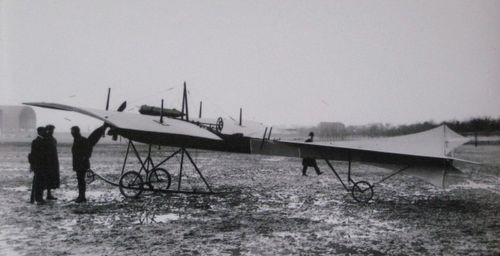
Frédéric Rossel, while already working for Peugeot a few years, and with car sales figures depressed at this time, turned his interests to aviation and convinced the Peugeot Brothers to form the “Société Anonyme des constructions aériennes Rossel-Peugeot”. Built by the Reggy frères, who also furnished the propeller, the monoplane was powered by a 50 hp Gnôme rotary engine. The first flight was piloted by Jules Goux – in 1913 the first Frenchman to win the Indianapolis 500 motorcar race – but just 5 minutes into the air the machine lay wrecked on the ground, with Goux unhurt.
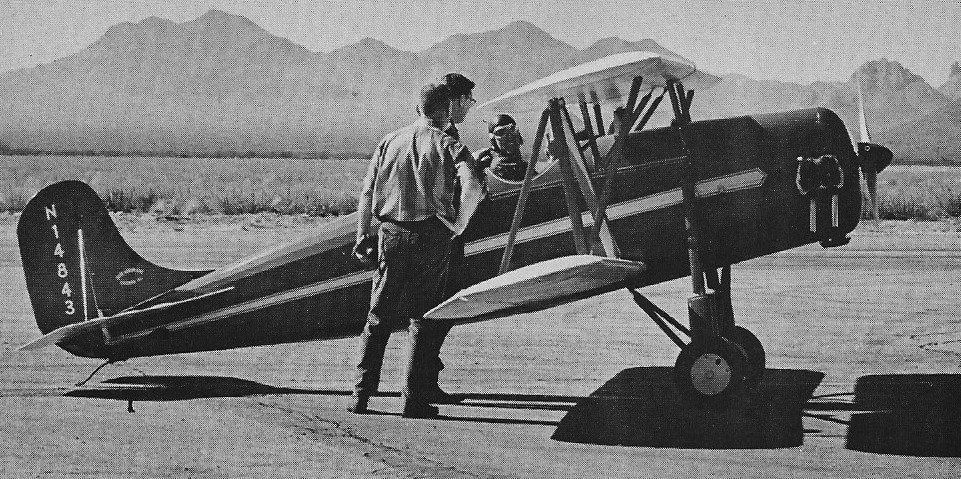
As flying began to recover from the depression, the little Rose Parakeet appeared in 1934. This was built by the Rose Aeroplane & Motor Co. of Chicago, Illinois. Powered with the new (and relatively expensive) 37-hp Continenal A.40 flat-four engine, it drew heavily on the layout of the old Lincoln Sport but incorporated welded steel-tube fuselage and tail construction and greatly modified wing rigging. The airfoil was a Rose design, nearly symmetrical. In spite of winning an ATC, only eight were built before the venture folded.
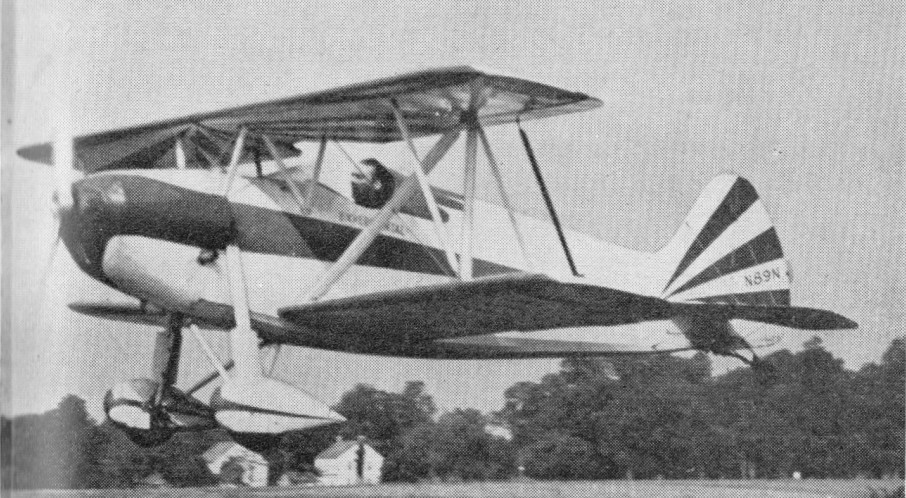
After acquiring in 1948 the manufacturing and marketing rights to the prewar Rose Parakeet single-seat sports biplane from Rose Aeroplane & Motor Company, Hannaford Aircraft Co offered production versions of the airplane with 40- 85hp engines. The design reappeared in the post-World War II homebuilt boom as the “Hannaford Bee,” the plans for which were available to the homebuilders. With 65-to 90-hp engines, the Bees, and some refurbished Parakeets became very suitable sport planes.
The design was revived in 1969 by Doug Rinehart, who used a 100-hp Continental 0-200 engine and intended to make the new Parakeet an ATC’d model for the general aviation market. The market did not accept it.
The RP-5 Peregrine N13NG c/n 101 was a 1998 biplane with a 150hp Lycoming O-320 engine.
It won the biplane class in 2003.
On 11 September 2007, the Rose Peregrine RP-5 biplane appeared to experience difficulties almost immediately after takeoff, at about 1745 local time. Witnesses say smoke billowed from plane at less than 100 feet after takeoff from Reno Stead Airport, practicing for the start of the 2007 Reno National Championship Air Races. The pilot, from Lemon Grove, Calif., was dead on impact. The Rose Peregrine was based at Montgomery Field in San Diego, and owned by David Rose. Rose was reportedly not the accident pilot.
Another example has been registered as a Peregrine 4 N111AY.
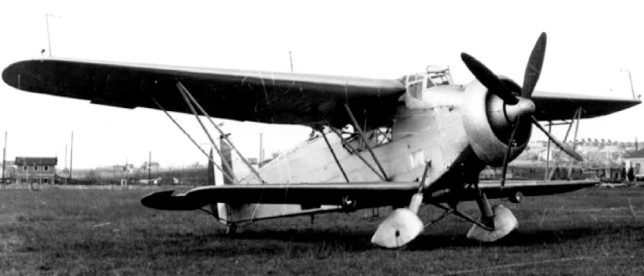
In the early 1930’s, the Regia Aeronautica put out a requirement for a light reconnaissance aircraft and also a heavier reconnaissance aeroplane. The first should have a 350 km/h (190 knots/220 mph) maximum speed, five hours endurance, three machine-guns and a bomblets dispenser, armour, and the capability to operate from improvised airfields. The heavier one should have a 325 km/h maximum speed, at least 1,300 km (800 miles) endurance, 7,000 m (22,750 feet) ceiling, climb to 5,000m (16,000) in 19 minutes, three crew, five weapons, high wing and other details.
Ro.37 with Fiat A.30 inline engine
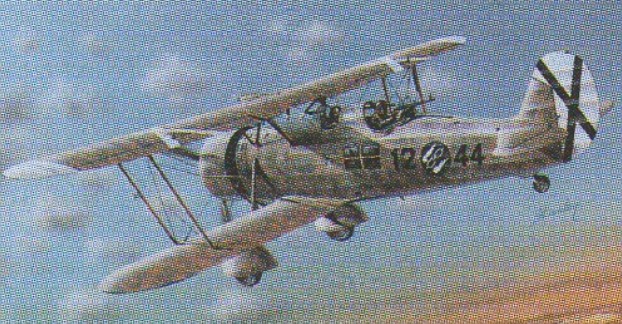
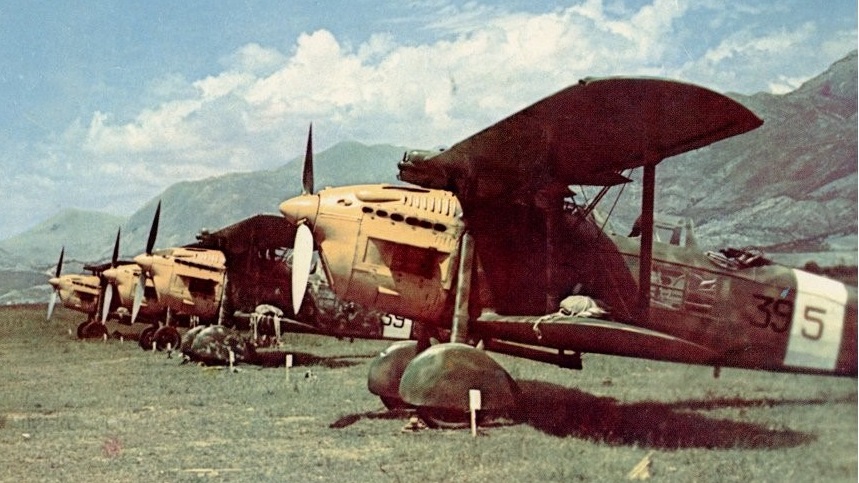
IMAM designed a new aircraft, the Romeo Ro.37, which first flew in 1933. The aircraft was an unequal-span single-bay biplane of mixed wood and metal construction. Its design included fixed tailwheel landing gear, all three wheels being provided with spats; a braced tail unit incorporating a variable-incidence tailplane; and accommodation for two in tandem enclosed cockpits, Power was provided by a 522kW Fiat A.30RA Vee engine of 560hp. It reached 300 km/h (162 knots). An improved Ro.37bis was developed subsequently, and this introduced an optional radial powerplant comprising either the Piaggio P. IX or P.X supercharged engine. The better reliability of this engine was considered more desirable and so this was the main version produced.
Both models proved popular for their day, with production of the Ro.37 and Ro.37bis exceeding 160 and 475 respectively. Ro.37 were exported (ten to Uruguay, sixteen to Afghanistan, fourteen to Hungary, eight to Austria, and one to Ecuador) and around 280 were in service with the Regia Aeronautica in 1940 in thirty squadrons.
IMAM also built a successor to the Ro.37, the Ro.45. This was an enhanced Ro.37 that first flew as a prototype on 10 December 1935. The 820 hp Isotta-Fraschini Asso XI.RC40 engine boosted maximum speed slightly to 217mph, increased the ceiling to 26,200 feet, and endurance to 1,398 miles. Destined for long-range reconnaissance and light bombing, it remained a single prototype.
The Ilmavoimat / Maavoimat evaluated both the Ro.37 and the single Ro.45 prototype but considered the design unsuitable for their overall requirement.
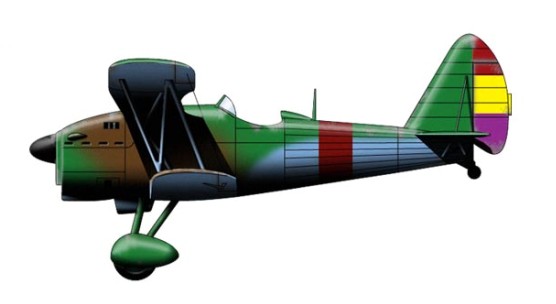
Ro.37 and Ro.37bis aircraft were involved in the Spanish Civil War from October 1936, when the first 10 arrived. Another 26 (possibly 58) went to this theatre and were used for many missions and tasks. They were used as assault aircraft, even though they were unarmoured. The results were satisfactory and some were even converted to a single-seat machine for use as attack fighters. The two-seat versions were used as heavy fighters, providing protection for S.81 bombers from Republican I-15s. It is not known if there were any air-to-air victories. They were also used extensively by the Regia Aeronautica during Mussolini’s invasion of Abyssinia between October 1935 and May 1936 and during the Italian occupation of that country until 1941. Some 275 Ro.37bis aircraft were in service with the Regia Aeronautica when Italy became involved in World War II, and these saw first-line service in the East and North African campaigns and in the Balkans. Some were in service up to 1943 and perhaps even later. They were very vulnerable, but in the war Italy did not have sufficient resources to produce a better observation aircraft, not even the Ro.63, a superior aircraft, similar to the Storch, but with more endurance. After withdrawal from first-line service they found a variety of uses, but all had been retired before Italy’s armistice with the Allies on 8 September 1943. The aircraft was produced until 1939 with a total of 569 (237 + 332bis) produced.
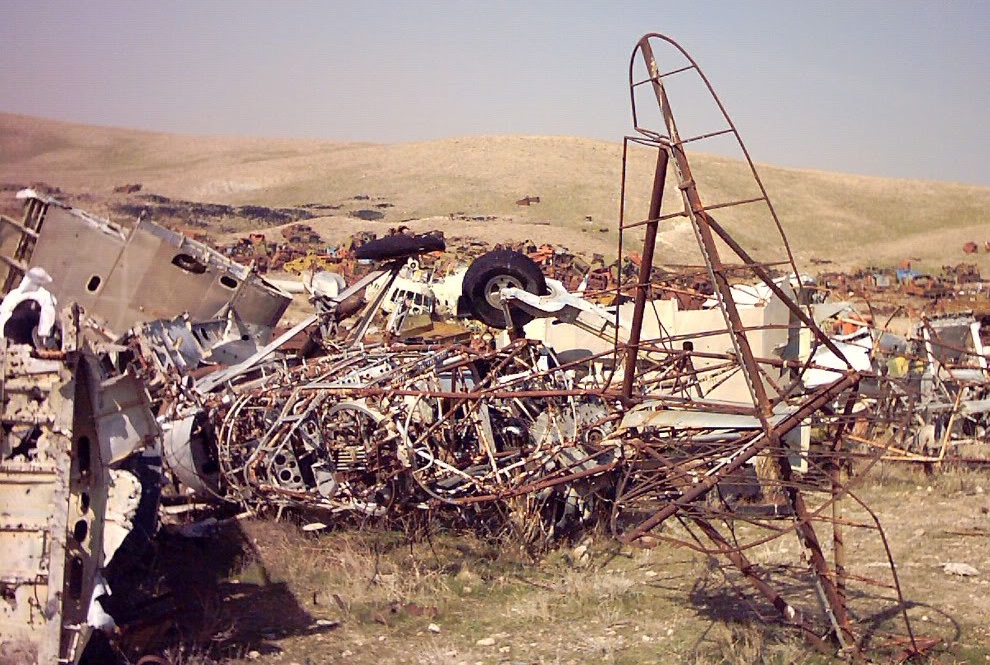
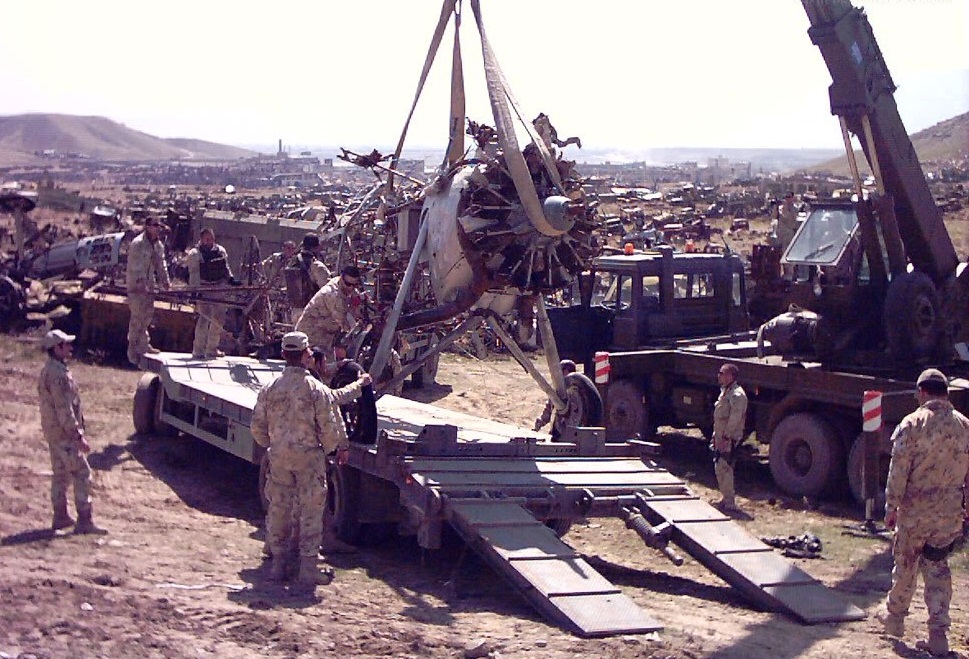
The remnants of the Ro.37’s sold to Afghanisatan were found northeast of Kabul by the Italian Army’s 132nd Artillery Regiment “Ariete”.
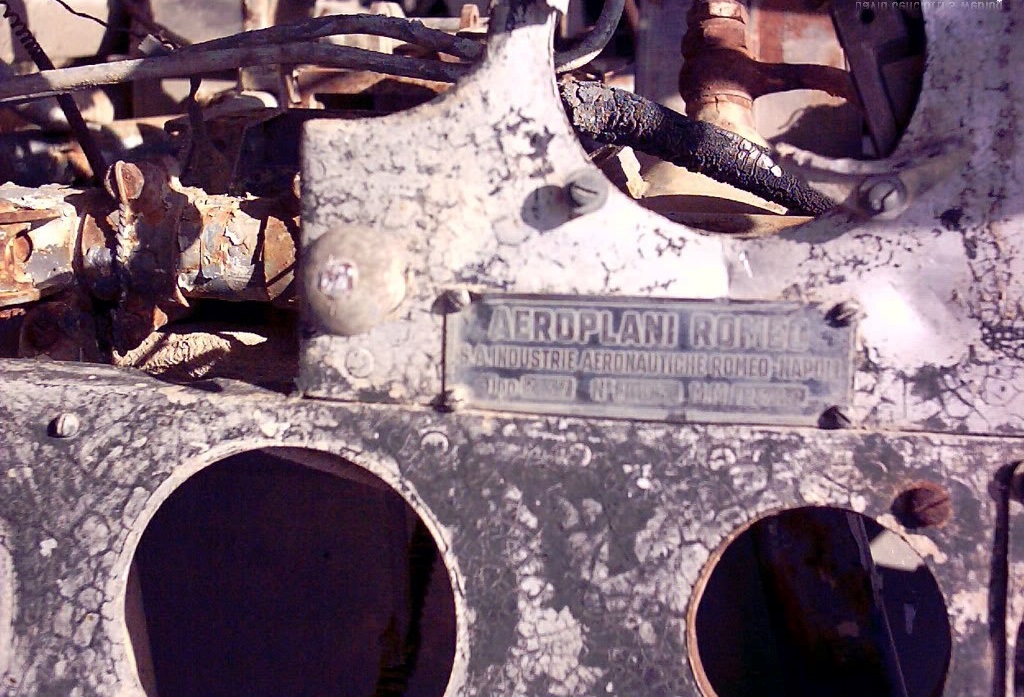
Of the 16 Ro.37bis sold to Afghanistan in 1938, 6 relics were recovered by an Italian / US team to the North East of Kabul and one of them is exhibited at Vigna di Valle Museum waiting to be completely restored.
Tom Martin, LTC of the US Army, was the garrison commander at the Kabul Military Training Center and “neighbor” to the Italian garrison at Camp Invicta. Their garrison commander, LTC Mauro D’ Ubaldi, and Martin became friends through mutual security needs and engineer projects. D’ Ubaldi approached Martin and asked if he would help his team come onto our site and remove from the boneyard the a plane. They also recovered wings and there were scraps of material with paint on some of the parts which showed the material and colors.
Ro.37 Crew: 2 Engine: Piaggio P.IX RC.40, 560 hp (418 kW) Maximum speed: 205mph Range: 696 miles Service ceiling: 23,620 ft Armament: three machine guns (two in nose / one flexible mount rear cockpit) Bombload: 397 lb (180kg) of bombs (twelve x 15 kg bombs) on underfuselage racks
IMAM proposed the IMAM Ro.30, an improved Ro.1 (the Ro.1 was actually a Fokker C.V built under license in Italy) with a defensive turret and better engine. Limited numbers were built but a larger order was rejected by the Regio Esercito and the aircraft was not chosen for mass production, being only capable of 200 km/h (110 knots), five hours endurance, a climb rate of 4,000 m (13,000 feet) in 20 minutes, and had three weapons.
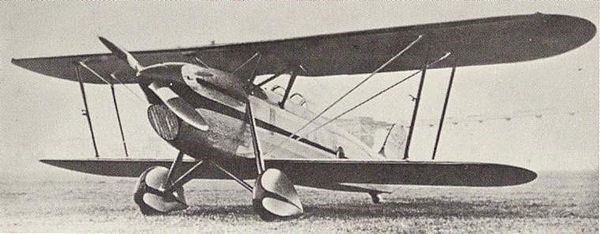
Apart from their contract for the R-83, the Spanish Republicans financed development as the R-92 of a version of the same design powered by an Hispano-Suiza 12Ycrs-l liquid-cooled 12-cylinder Vee engine rated at 900hp at 1900m. Similar to the R-83 apart from engine installation, an increase in vertical tail area, some local structural strengthening and the addition of a 20mm engine-mounted cannon to the armament, and in reverting to the gull configuration of the R-90, the R-92 prototype was apparently transported to a Sabena hangar at Evere, Brussels, for final assembly.
Euphemistically referred to as a “sportive plane” and assigned a Belgian civil registration, the R-92 was flight tested under the utmost secrecy by Jacques Lecarme of the French Centre d’Essais du Materiel Aerien (CEMA) before delivery to Barcelona in the summer of 1938. The subsequent fate of the sole example of the R-92 is unrecorded.
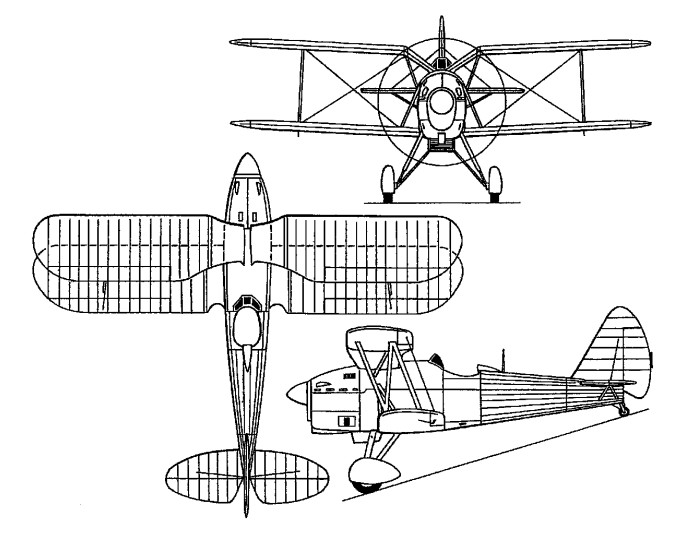
Wingspan: 8.88 m / 29 ft 2 in Length: 7.63 m / 25 ft 0 in Height: 3.10 m / 10 ft 2 in Wing area: 21.00 sq.m / 226.04 sq ft







 All Aero