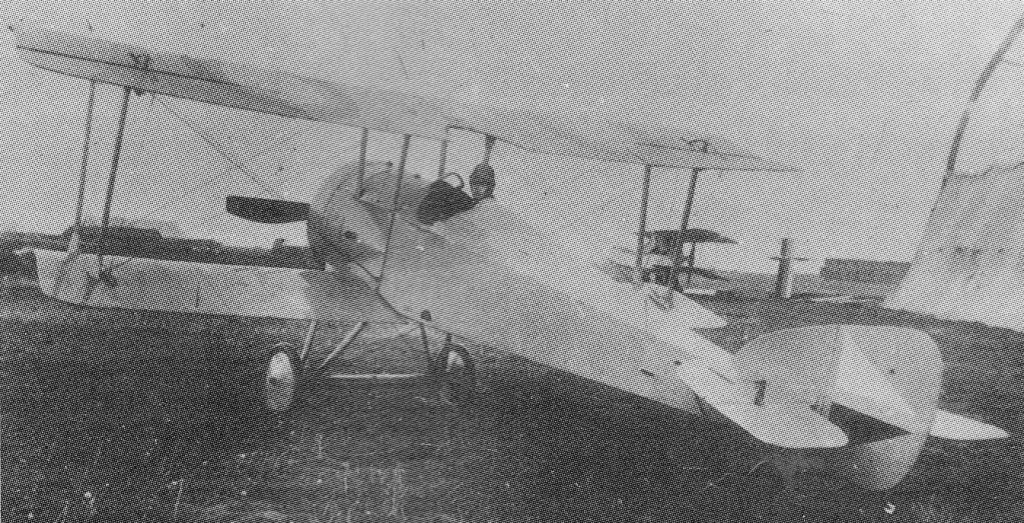
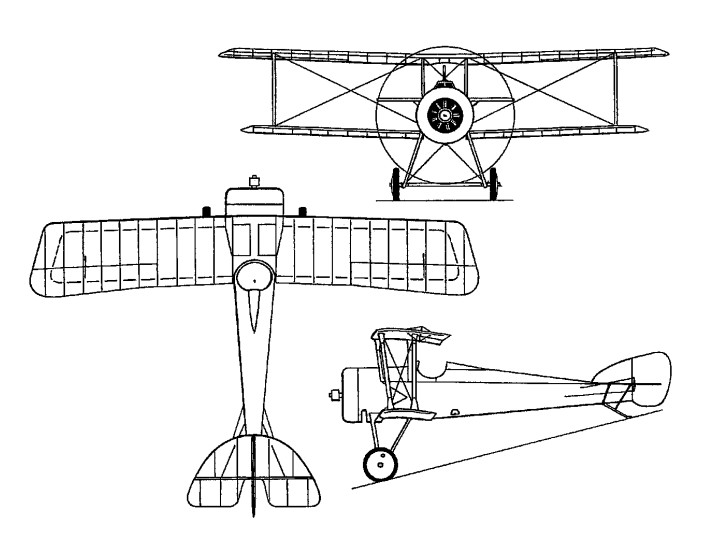
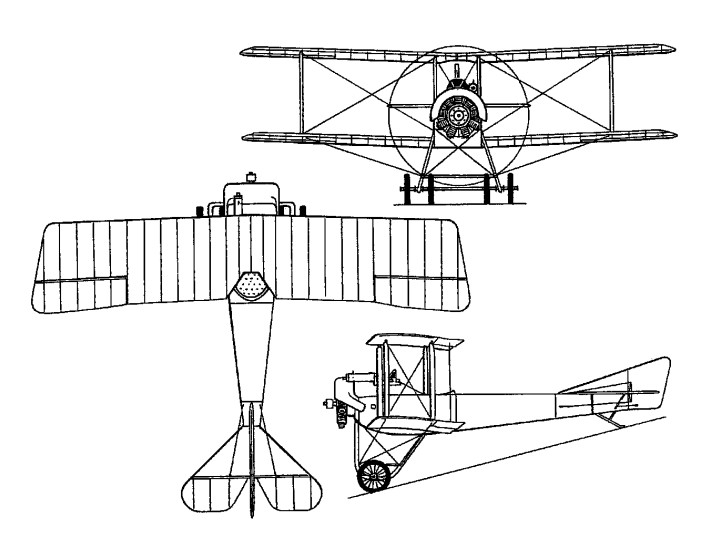
The last of the RBVZ’s First World War fighters, the S-20, embodied lessons learned from licence manufacture of the French Nieuport 17. The production version, with a 120hp Le Rhone engine, was said by its pilots to be faster than the Nieuport, with a top speed of 190km/h; but only five were ordered, leaving the RBVZ free to concentrate on production of its Ilya Mourometz bombers.
The S-19 had two 150hp Sunbeam engines in tandem and a cockpit in the nose of each of the twin tailbooms that projected slightly forward of the lower wings. The design seems to have emanated from the Russian War Department, which ordered the RBVZ to match German experiments with twin-boom combat aircraft. The prototype was completed in late 1916.
Intended as a twin-engined fighter capable of inflicting heavy blows on enemy aircraft penetrating Russian airspace, the S-18 had a cockpit in the nose for an observer-gunner. Two 150hp Sunbeam pusher engines failed to lift it off the ground at its maximum weight of 2100kg.
During the First World War most Russian squadrons flew French-designed aircraft, many of them built under licence. Sikorsky’s single-seat S-13 and S-14 biplanes were probably not completed. Three two-seat S-16s were built as trainers for bomber crews of the Squadron of Flying Ships in 1915, followed by about twenty-four more as two-seat S-16-2 and single-seat S-16-3 bomber escort and reconnaissance scouts with 80hp Gnome engines in 1916-17. A machine-gun was mounted under the top wing, firing clear of the propeller, until Engineer Lavrov invented an interrupter gear for a fuselage-mounted gun.
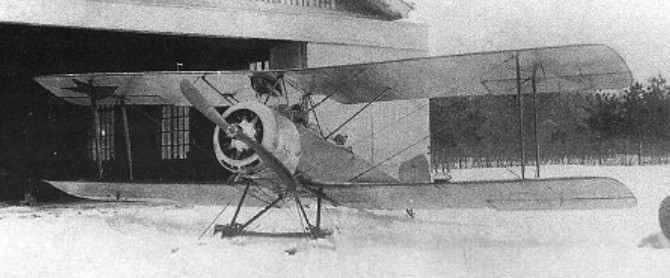
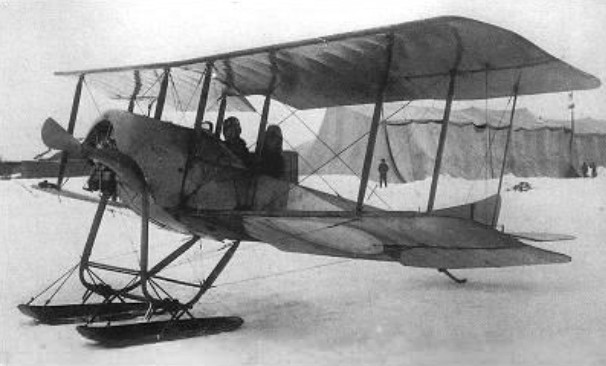
For winter operation, a number of S-16s were flown on skis in place of the standard four-wheel landing gear; at least one was fitted with twin floats in 1916. Contemporary accounts show that pilots enjoyed the stability, manoeuvrability and delicate controls of the S-16s, but they were outclassed by German fighters of the time.
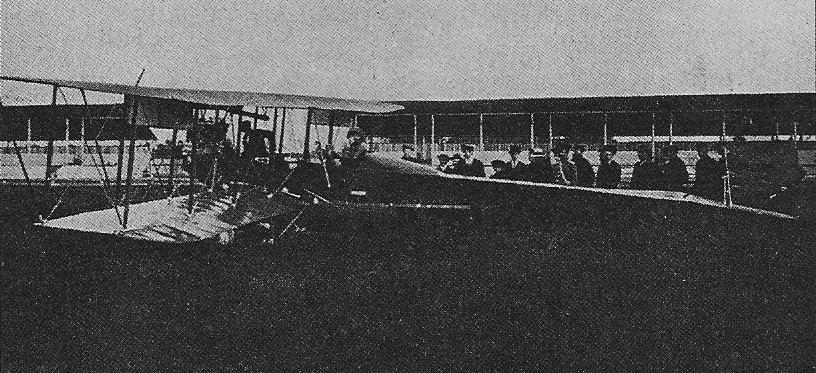
Constructed in Kiev, this 100 hp Argus-powered biplane was used by Igor Sikorsky to set new Russian flight records in November 1911, even setting a world-record with his design – a distance record with two passengers.
S-6A
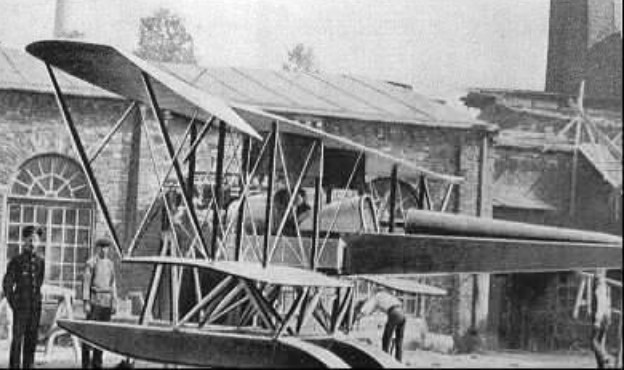
S-10
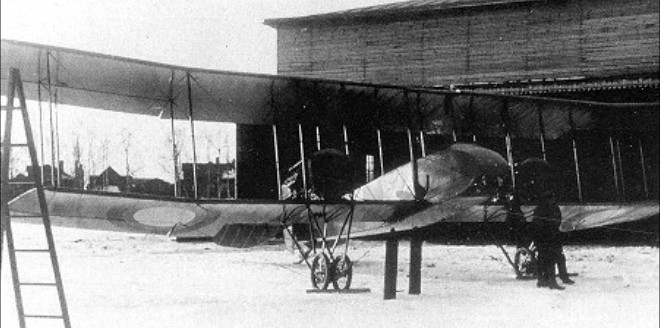
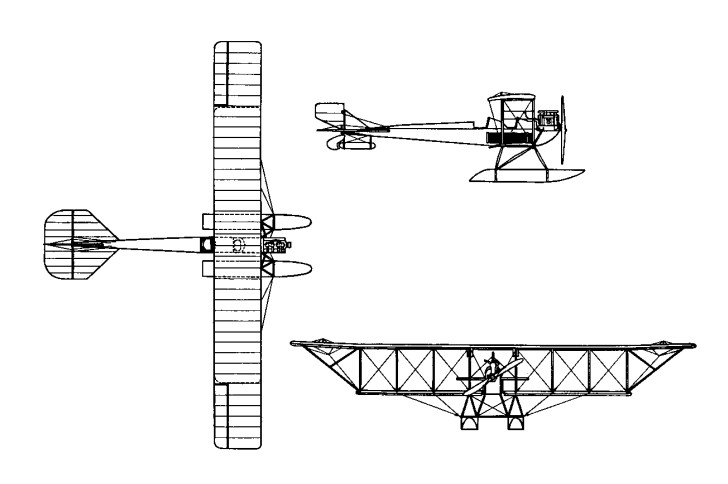
Under the designation S-10, about sixteen production versions of the S-6B were built by the RBVZ. The majority were delivered as twin-float seaplanes for service with the Baltic Fleet, from the summer of 1913 to 1915, with 100hp Argus or Gnome Monosoupape engines. Some were deployed on the world’s first operational seaplane carriers.
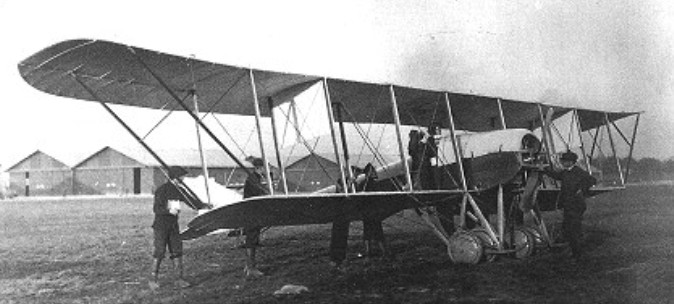
S-10
A special Competition S-10 landplane, with 80hp Gnome engine, was built for the 1913 military aircraft competition. The wing span was increased to 16.75m, with outer panels that could be folded for storage. The two seats were placed side-by-side, and the control wheel could be swung from pilot to co-pilot during flight. Production test pilot Alechnovich set a Russian record by flying it 500km in 4 hours 56 minutes, and it took first prize in the 1913 competition although it lacked the speed and manoeuvrability of the S-6B. After its span had been reduced to 13.70m and a 100hp Monosoupape installed, it served as a trainer with the Baltic Fleet.
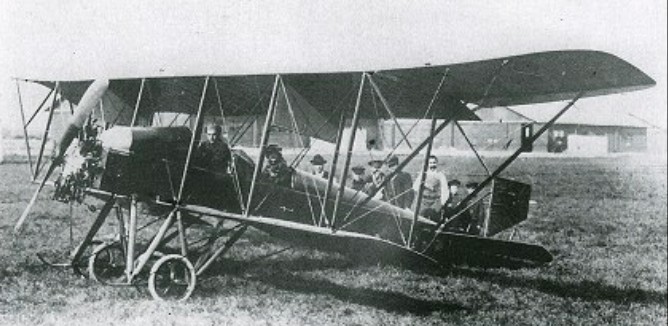
S-10
The S-10A’s span of 13.7m and two seats in tandem set the standard for all S-10 seaplanes, and its 125hp (de-rated to l00hp) Anzani engine gave it better speed and rate of climb than the Competition S-10. Its flying characteristics were less good, preventing it from gaining first prize, but it set a new Russian height record of 3420m, piloted by Gleb Alechnovich. Modified to have a 100hp Monosoupape and floats, it was assigned to the Baltic Fleet.
Engine: 1 x 100hp Argus Wingspan: 16.9 m / 55 ft 5 in Length: 8.0 m / 26 ft 3 in Height: 4.1 m / 13 ft 5 in Wing area: 45.0 sq.m / 484.38 sq ft Max. speed: 90 km/h / 56 mph
EDA VII was a monoplane with a small second wing, with which from August to the end of 1910, flew successfully several times.
With its construction, in the summer of 1910, the brothers Rusjan exhaust all their financial possibilities. Their savings and those of the father Franc were gone. They sort finance in France, Austria and Hungary but with little success.
EDA III was a biplane developed from the EDA I, with a similar flying capacity as EDA I.Edvard was able to perform maneuvers, and on March 28, 1910 made his first public flight for the citizens of Gorizia.
The brothers gained aeronautical knowledge rapidly and learned that the Anzani engine was not powerful enough for the biplane, so they decided to make only monoplanes in the future.
First in a series of new airplanes designed by the Rusjan brothers was the EDA 2 Triplane which incorporated progressive construction techniques that helped reduce its empty weight to 90 kilograms. With the EDA 2, the pair hoped to attain an altitude of 100 meters.
The triplane EDA II had the rudders beside the wings and the motor behind.
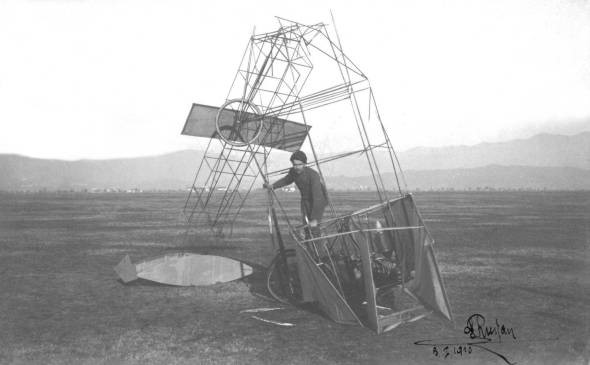
However, during the first flight on January 5, 1910, the airplane was damaged beyond repair.
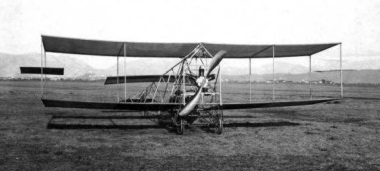
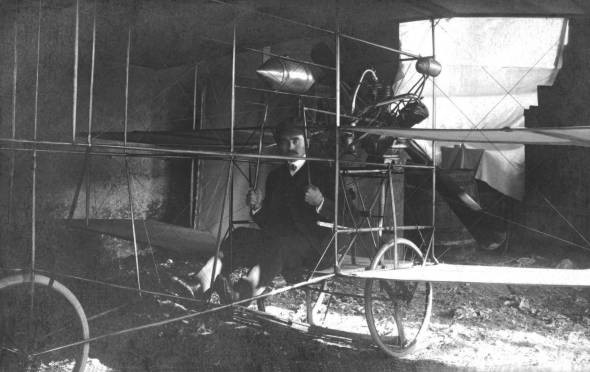
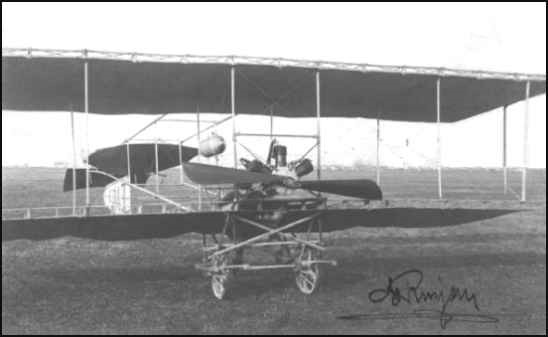
After returning to Gorica, with his brother’s help Edvard Rusjan built a motor biplane on the model of the Curtiss and Farman aircraft, which had been most successful in Brescia. In the fall of 1909, the Rusjan brothers began work on a powered airplane using a 3-cylinder, 25-horse-power. Anzani-model engine. The airplane was a canard-type biplane with paper covered wings, 8 m wingspan, with the larger part of the horizontal stabilizer forward of the wings.
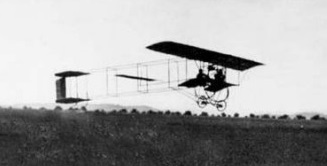
Flight tests, however, fell short of expectations. By relocating the vertical stabilizer aft of the wings in what has evolved as the conventional configuration, they achieve success. On November 25, 1909, on the Mila Rojice Airfield in the neighborhood of Gorizia, Edvard made the first successful powered flight in Yugoslav Aviation history in his EDA 1 airplane.
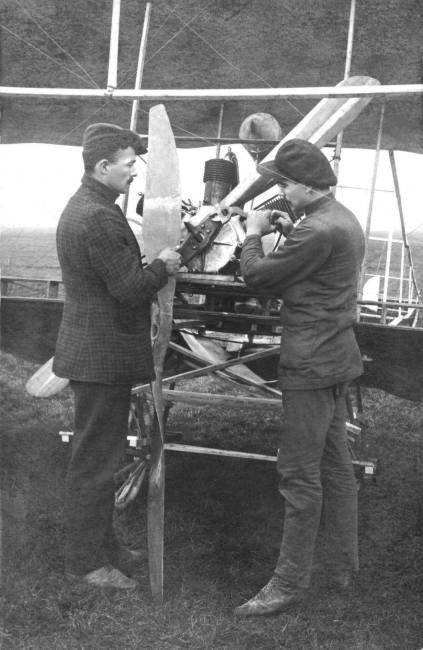
Giuseppe and Eduardo replacing the propeller of EDA I (1909)
The flight lasted about 10 seconds and Edvard traveled approximately 60 meters at a height of 2 meters. Four days later, he increased his distance to, 500 meters at a maximum altitude of 12 meters. Observers estimated that the airplane reached speeds between 50 and 60 kilometers per hours. It was a remarkable flight for Edvard – he was the first Yugoslavian to successfully fly an airplane.
After these two flights, all the Rusjan’s tests were transferred over a field called “Campagna Grande” (great meadow) by Merna.
During the first flights in 2004, the Shvetsov M-11FR radial was damaged and needed to be overhauled. Albatros Aviation Services carried out the recent engine rebuild, using many hard-to-find original parts.
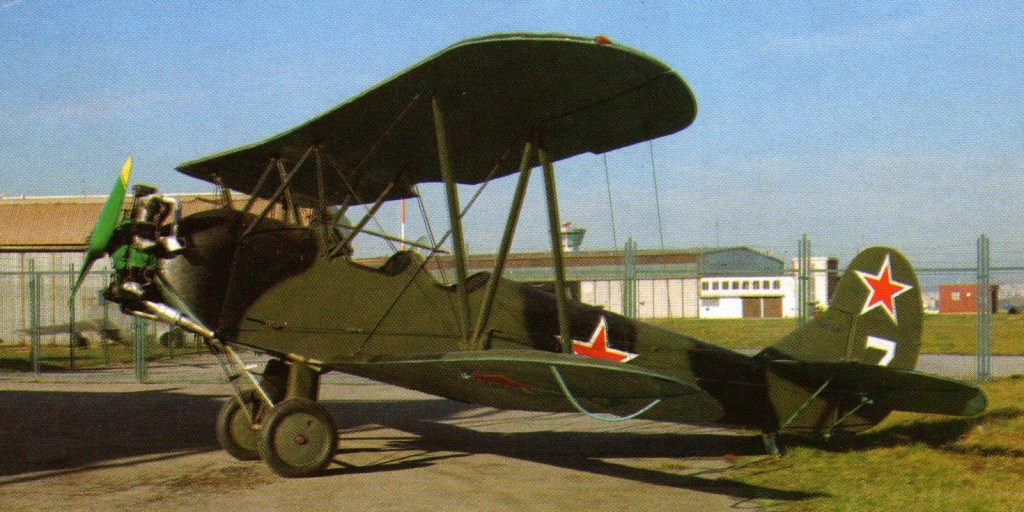
Slovak Republic-based Polikarpov U-2 replica ‘White 7’ (OM-LML) took to the air again after the engine overhaul on October 11, 2007. This machine was built by Rusavia in Moscow and was gifted to the Museum of Aviation collection at Kosice by Russia in August 2004.

 All Aero