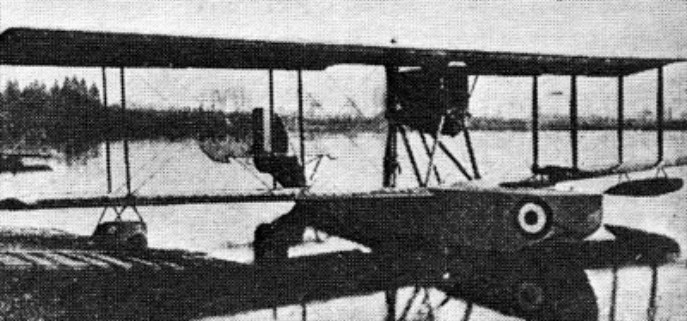
The S.8 was a reconnaissance and anti-submarine two-seat biplane flying-boat of 1917, powered by a 126kW Isotta-Fraschini I.F.V-4B or 89kW Colombo F-150 engine mounted in pusher configuration. A total of 172 was produced for the Italian Navy.
Max take-off weight: 1375 kg / 3031 lb Empty weight: 900 kg / 1984 lb Wingspan: 12.77 m / 42 ft 11 in Length: 9.84 m / 32 ft 3 in Height: 3.3 m / 11 ft 10 in Wing area: 46 sq.m / 495.14 sq ft Max. speed: 144 km/h / 89 mph Ceiling: 6000 m / 19700 ft Range: 700 km / 435 miles Armament: 1 x 7.7mm machine-gun, 120kg of bombs
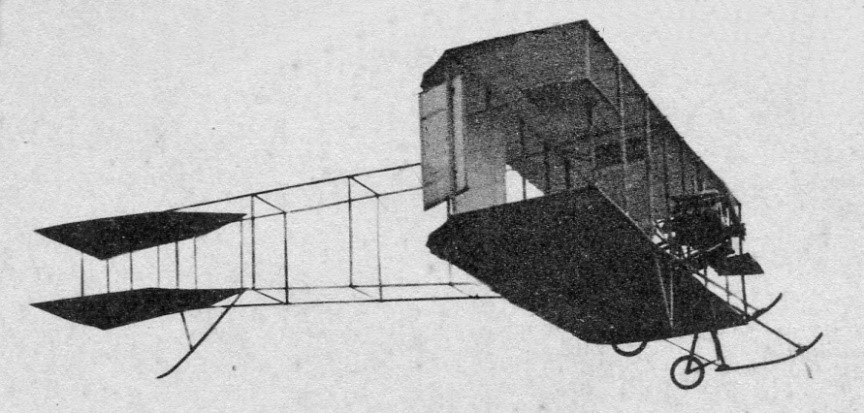
The Savary biplane, built by Leon Boller, was characterized by the biplane horizontal tail surfaces, without any rudder. The rudders were instead placed at the wingtips. This single-propeller version was flown by Pierre Picard (Brevet No. 164) at the 25 August – 6 September 1910 Baie de Seine Meeting.
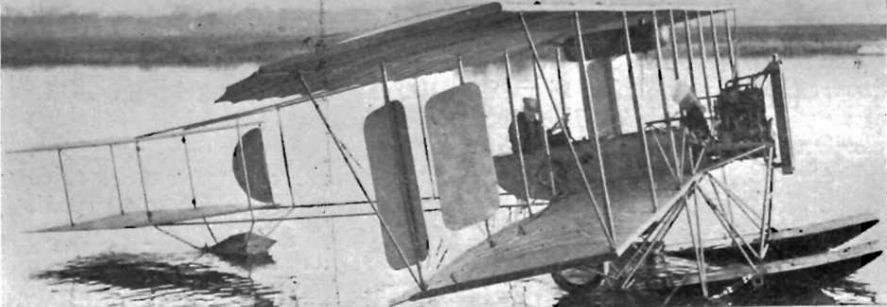
A seaplane version of Savary’s unique two-propeller biplanes with wing-tip rudders, powered by first by a 75 hp Renault engine and later by a 70 hp Labor. The machine was wheel-tested at Juvisy on 2 January 1913.
In February 1913 Joseph Frantz established time-to-height record on Savary biplane with Salmson engine, carrying five passengers, but prewar output was ten machines only.
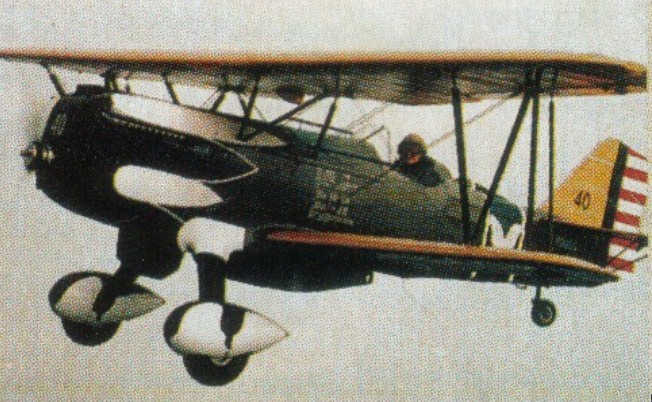
When Don Sauser saw Curtiss P6E Hawks as an 11 year old at the 1933 Chicago World’s Fair, he wanted one.
Sixty odd years later, having inspected the P6E on display at the Air Force Museum in Dayton Ohio, he elected to design and build an 82% scale replica. Sauer’s P6E replica has been designed either as a single seater or a two place tandem configuration where the front windshield can be removed and a cover put over the front cockpit when the pilot wants a single seat look. The two place P6E-QC (Quick Change) model as developed in Sauser’s prototype is 5 in longer than the single seat version. The forward seat is nearer the C of G.
Construction if a steel tube fuselage, wood wings with plywood covered leading edges, and fabric covered.
On the original P6E the wings are far forward with a stagger to compensate for the V-12 engine, three blade metal prop, liquid cooling system and guns. The pilot was located further aft than typical. Sauser’s is powered by a Chevrolet HO 350 crate engine, off the shelf automotive with direct drive to the prop.
The engine uses a 600 cfm electronic leaning four barrel carb. Aluminium heads and intake manifold result in a crate engine weight of 398 lb. The unique exhaust system is designed to replicate the original V-12 look.
Sauser calcaluates that only 180-200 hp is needed with two people on board. The HO 350 should produce 190 hp at 2800 rpm. Testing was to be carried out with a two blade 76 x 60 in prop.
It took over a year to design the 25 different ribs for the tapered wings that range from five foot long at the root to two foot at the tip. The 26 ft span wing has two 13 ft soars with a 12:1 splice in the centre. Sauser supplies a component package of precut components including ribs, tapered spars, and wingtip bows.
The original Clark Y airfoil is used with a wing loading of 11.5 lb/sq.ft. Stall is around 50 mph. The airframe is stressed for positive G only, just like the original.
The original Curtiss Hawks flew with a droppable belly fuel tank. The replica has a tank that can be used for fuel or baggage. Standard fuel is 30 USG carried in the fuselage just aft of the firewall. The drop tank is 20 in x 10 in x 62 in with a 150 lb carrying capacity. Three cables from the cockpit raise or lower the pod.
Engine: Chev HO 350 V-8 HP range: 180-275 Height: 7.3 ft Length: 19.2 ft Wing span: 26 ft Wing area: 170 sq.ft Fuel capacity: 25 USG Empty weight: 1360 lb Gross weight: 2040 lb Vne: 185 mph Top speed: 145 mph Cruise: 130 mph Stall: 55 mph Range: 450 sm Rate of climb: 1500 fpm Seats: 2 Landing gear: tail wheel
Reflecting the design concept of British flying-boats that had originated in the 1920s, the Sarò London twinengine biplane was an all-metal aircraft with fabric-covered wings and tail, and a metal-skinned hull. The type served with RAF Coastal Command during the first two years of World War II. Designed to Air Ministry Specification R. 24/31, the prototype first flew in 1934 with two 559kW Bristol Pegasus III radiais, the engines being mounted on the top wing to be well clear of spray while taking off and landing; the prototype went on to serve for periods between 1934 and 1936 with Nos 209 and 210 Squadrons at Felixstowe and Gibraltar.
Production deliveries started in March 1936 with Pegasus III engines, but from the eleventh aircraft the Pegasus X was fitted and the aircraft’s designation changed to London Mk II, this variant equipping Nos 201 and 204 Squadrons in 1936 at Calshot and Mount Batten repectively. In 1937 they joined No. 202 Squadron at Kalafrana (Malta) and No. 228 Squadron at Pembroke Dock respectively. By the outbreak of war in September 1939 Londons still equipped No. 201 Squadron, then at Sullom Voe in the Shetland Islands, and No. 202 Squadron still at Gibraltar, while No. 240 Squadron had re-equipped with Londons in July 1939 and was stationed at Invergordon, These flyingboats carried out sea patrols over the North Sea and the Mediterranean, some aircraft being fitted with a large dorsal fuel tank to increase their range. Bombs, depth charges and (occasionally) mines up to a total weight of 907kg could be carried under the lower wing roots. Indeed, the old biplanes undertook a considerable share of the patrol work over the North Sea, keeping watch for the likely breakout into the Atlantic by German surface and submarine raiders as well as the return to German port by blockade runners. Gradually maritime reconnaissance aircraft such as the Lockheed Hudson came to assume these responsibilities while Short Sunderland flying-boats equipped the squadrons flying over the Atlantic and Mediterranean. The Londons were replaced on No. 201 Squadron in April 1940, followed two months later by those on No. 240 Squadron. Only No. 202 Squadron continued to fly Londons at Gibraltar until June 1941.
Saunders Roe A 27 London Mk II Engines: 2 x Bristol Pegasus X, 902 hp / 787kW Wingspan: 80 ft / 24.38 m Wing area: 1424.938 sq.ft / 132.38 sq.m Length: 57 ft 9 in / 17.31 m Height: 18 ft 9 in / 5.72 m Max take off weight: 18400 lb / 8346.0 kg Weight empty : 11100 lb / 5035.0 kg Max. speed: 134 kts / 249 km/h / 155 mph Cruising speed: 112 kts / 208 km/h Service ceiling: 19900 ft / 6065 m Wing loading: 12.92 lb/sq.ft / 63.0 kg/sq.m Range: 956 nm / 1770 km / 1100 miles Crew: 6 Armament: 3x cal.303 MG, 907kg Bomb.
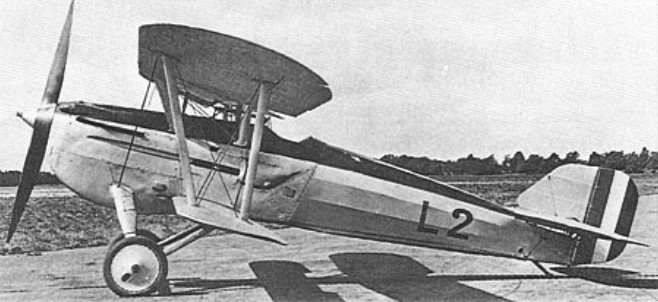
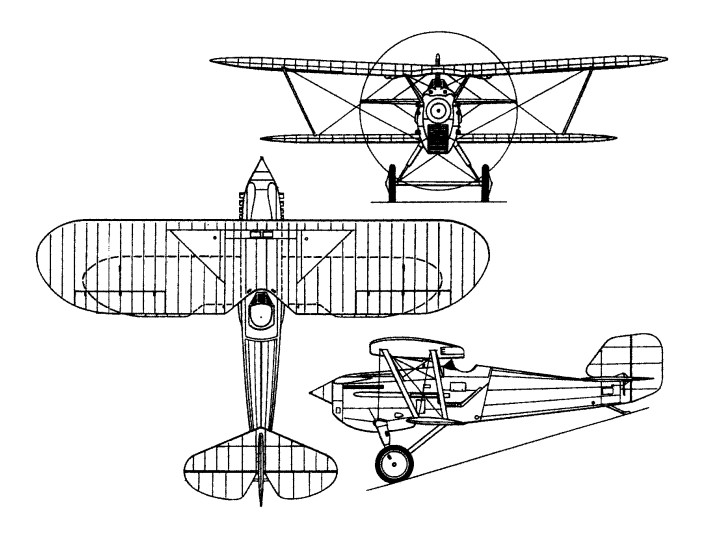
Having specialised in flying boats for a decade, in 1926 S E Saunders Limited began the design of a land-based single-seat all-metal fighter sesquiplane. This, the A.10 proposal, featured what was, for its time, the unusually heavy armament of four 7.7mm machine guns, power being provided by a 480hp Rolls-Royce F.XI 12-cylinder Vee-type engine. After revising the design in 1927 to comply with Specification F.20/27, Saunders built a prototype which flew on 27 January 1929.
Possessing an all-metal structure with fabric covering and all four guns located in the fuselage, the A.10 suffered handling and performance shortcomings which led to numerous modifications, including fuselage lengthening. It was assessed at the A&AEE against other F.20/27 contenders and also for F.10/27 (which called for six-gun armament), but it aroused little enthusiasm and was struck off Air Ministry charge in November 1933 – by which time its manufacturer had become Saunders-Roe Limited.
Max take-off weight: 1633 kg / 3600 lb Empty weight: 1213 kg / 2674 lb Wingspan: 9.75 m / 32 ft 0 in Length: 7.44 m / 24 ft 5 in Height: 2.97 m / 10 ft 9 in Wing area: 25.36 sq.m / 272.97 sq ft Max. speed: 322 km/h / 200 mph
Designed by Omer Woodson, the 1922 Sattco Commercial was a six place open or closed cockpit biplane. The pilot in an open cockpit behind the cabin in the only Commercial built.
Engine: 350hp Liberty Wingspan: 43’6″ Length: 30’2″ Useful load: 1960 lb Max speed: 125 mph Stall: 45 mph
The Santos-Dumont No.15 Biplane of 1907 was a 100 hp Antoinette-powered tractor biplane with sharp dihedral wings similar to No.14 bis, although made of wood instead of fabric and with elevators on the outer forward corners of these planes. Its biplane empennage was enclosed by two vertical panels and acted as both an elevator and rudder, being mounted on a universal joint at the end of bamboo outriggers. Trials of the No.15 began March 22, 1907 and ended five days later when the machine collapsed while taxiing before a flight attempt. No successful flights appear to have been made.
The Brazilian aviator Alberto Santos Dumont, in January 1906 announced that he would compete for the prize offered by industrialist Henri Deutsche de la Meurthe for the first 1 km (0.6 mile) circle flown in an aircraft.
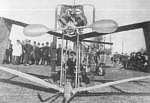
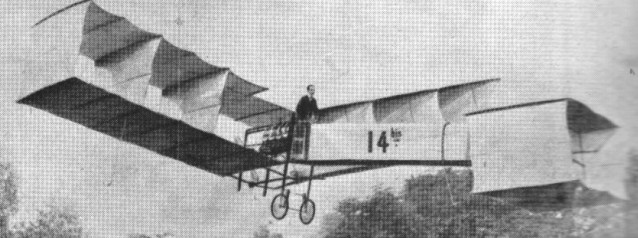
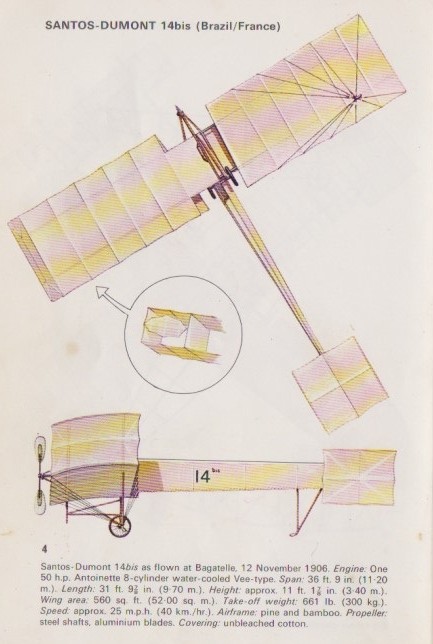
In 1906, Santos-Dumont took the nacelle of his dirigible balloon no. 14 and added to it a fuselage and biplane wings. An Antoinette V8 engine of 24 hp power was installed ahead of the wings, driving a propulsion propeller; the airplane flew rear-first and was denominated 14-bis (since it was descendent of the dirigible balloon no. 14). Santos’s entry was his No. 14bis, with a 12 m span wing consisting of six box kite cells joined in sharp dihedral. Another cell, which could be tilted up, down, or sideways for steering was mounted at the very front of the fuselage in canard configuration. Santos planned to fly the machine from a standing position just in front of the wing. His first tests were con¬ducted in typically bizarre fashion. Santos rigged up a tightrope and pulley contraption from which he suspended the machine, then hired a donkey to tow it back and forth while he tested the controls.
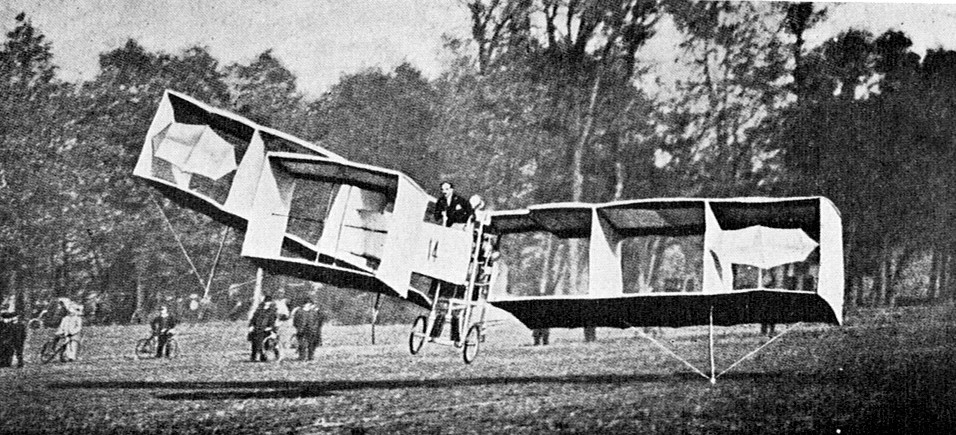
14bis at Bagatelle, near Paris in 1906
The first official flights at Bagatelle, near Paris in 1906 were only hops. The best lasting 21 seconds and covering 220 m / 721 ft.
On 21 August 1906 No.14bis showed no inclination to leave the ground and succeeded only in shattering its pusher propeller. On the next day the undercarriage collapsed during another abortive take off run. Santos decided that lack of power was the problem, and so substituted a new eight cylinder 50 hp Antoinette engine, which he obtained through Louis Bréguet, for the original 24 hp motor.
On September 13th, Santos Dumont made the first flight of 7 or 13 m (according to different accounts) above the ground, which ended with a violent landing, damaging the propeller and landing gear.
On October 23th, 1906 his 14Bis biplane flew a distance of about 60m (197ft) at a height of 3 to 5 m (10 to 16ft) during a seven-sec-long flight. The first officially recognised flight in Europe. The precise distance flown was never measured. In their excitement, official observers from the Aero Club quite forgot their primary task. Santos Dumont won the 3,000 Francs Prize Archdeacon, instituted in July 1906 by the American Ernest Archdeacon, to honor the first flyer to achieve a level flight of at least 25 m.
Before his next flight Santos-Dumont modified the 14-bis by the addition of large hexagonal ailerons, to give some control in roll. Since he already had his hands full with the rudder and elevator controls (and could not use peddles since he was standing), he operated these via a harness attached to his chest. If he wanted to roll right he would lean to his right, and vice versa. One witness likened Santos-Dumont’s contortions while flying the 14-bis to dancing the samba.
With the modified aircraft, on 12 November 1906, Santos-Dumont again had No. 14-bis at Bagatelle, Paris. This time the Brazilian made six increasingly successful flights. One of these flights was 21,4 sec long within a 220 m path at a height of 6 m. The Brazilian always used his Cartier wristwatch to check the duration of his flights. The flight experiments with the 14Bis took place at Le Bagatelle (air)field in Paris. Santos Dumont did not employ any catapult or similar device to place his craft aloft. As far as the world knew, it was the first airplane flight ever and Santos-Dumont became a hero to the world press. On that day he was to make an attempt to win a prize of 1,500 francs, offered by the Aero Club de France, for the first aeroplane able to exceed a distance of 100m (305 ft). Santos-Dumont and his aircraft rose to the occasion, cheered by an enormous crowd that had flocked to the large open space at Bagatelle, in the Bols de Boulogne. They had come in anticipation of seeing an aeroplane in flight for the first time. No.14-bis excelled itself to record a flight of just over 21 seconds, covering a distance of 220 m (722 ft) and set up the first official air speed record of 25.65 mph.
On April 4, 1907, at Saint-Cyr, the 14-bis flew about 50 m (164 ft) and crashed. Santos-Dumont did not attempt to repair it. For this flight, square ailerons were positioned mid-height in the outer cells of the wings, as opposed to the earlier octagonal type.
April 4, 1907, at Saint-Cyr
Though it had undoubtedly flown, it was unstable in pitch and was incapable of further useful de-velopment.
Engine One 50 hp Antoinette Wing span 38 ft 9 in / 11.5m Length: 31’10” Weight empty: 660 lb / 300 kg Seats: 1 Speed 25 mph (40 kph)




 All Aero