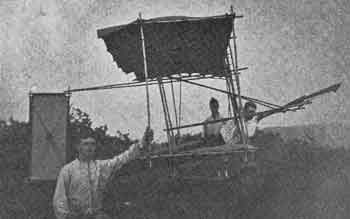
A glider built and flown in the Netherlands by Willem Hendrik Schukking – a member of the the Dutch Royal Engineers – in 1908. It was not proceeded with, one reason being that Schukking married and had to swear that he would never fly again. The machine was a biplane on which the pilot flew downhill while in a forward prone position.
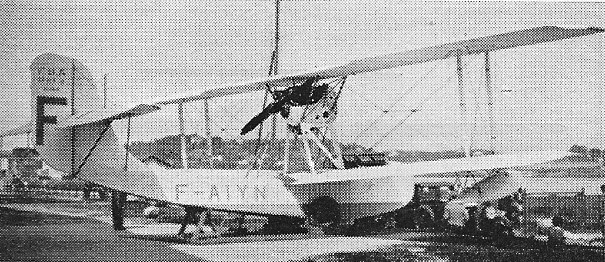
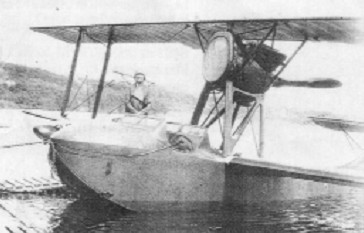
The FBA 17 was a utility type which established a seaplane height record in December 1923.
Two hundred were built, mainly for the French Navy. A development was brought by US Coast Guard in 1931.
17HL2
FBA-17 was a two-seat trainer flying boat HE.2,developed in many categories,HT.2 two seat tourer,HMT.2 military seaplane,HMB.2 also a military seaplane, HT.4 a four-seat tourer, HMT.4 a four-seat amphibian version, HL.1 & HL.2 recce seaplane with single and two seats and HMT.2 amphibian version of Type-172.
FBA-172 was the same as Type-17, developed in three versions, HE.2, HTM.4 & HMT.2 with different engine kinds
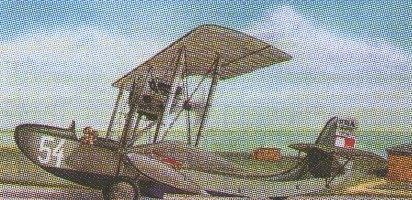
Developed from the HE2 and HMT2 variants, twenty FBA 17HL2 were built for the French Navy in 1927 and served on Cruisers until 1937.
FBA-173 was a version fitted with 230 hp Gnome-Rhone engine
262 built.
Variation: Viking Flying Boat Co V-2
Engine: 180 hp Hispano-Suiza 8Ab Span: 42 ft 4 in Top speed: 100 mph
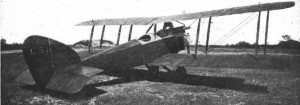
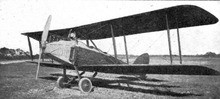
In 1923, the British magazine Flight reported what it termed the first successful flight of an aircraft constructed in China. This conventional biplane was designed by a German engineer, Leopold Carl Ferdinand Friedrich Schoettler. Its engine, instruments, wheels and dope for fabric covering were imported from Europe. All else was locally sourced. Work on it began in the summer of 1922.
The Schoettler I was a conventional European style two seat tractor biplane, with equal span two bay wings. These were mounted with 2° of dihedral and 597 mm, almost 2 ft, of stagger. The gap between the upper and lower planes was 1,676 mm (66 in), maintained by parallel pairs of aerofoil section struts and wire bracing. The unswept wings had a constant chord of 1,600 mm (63 in) with blunt wing tips and ailerons on both upper and lower planes. The Schoettler’s empennage was also conventional.
The fuselage was likewise a standard rectangular section wooden girder structure, fabric covered except around the engine and a wood upper decking around the open, tandem cockpits for pilot and for the observer, who sat under the wing trailing edge. It tapered to a knife-edge at the tail. At the front the 160 hp (119 kW) Mercedes water-cooled upright inline engine was enclosed in a rectangular cross-section metal cowling which tapered vertically, exposing the upper cylinders, to a two-blade propeller. At the rear of the housing an external radiator, with shutters for engine temperature control, projected on each side. The Schoettler had a conventional fixed undercarriage, with the mainwheels on a rigid axle mounted on V-struts.
A first flight date was not reported, but this was on or before 23 July 1923 when the Schoettler was test flown by an ex-RAF pilot, W.E. Holland. The latter reported good handling and an excellent, 360°, field of view for the observer noting the aircraft’s potential for development. More recent articles claim the first flight by a Chinese built aircraft was that of the indigenously-designed Xianyi Rosamonde (or Dashatou Rosamonde) on 12 July 1923, though without mention of the Schoettler; the two aircraft were evidently close contemporaries.
Powerplant: 1 × Mercedes, 120 kW (160 hp) Propeller: 2-bladed Wingspan: 12.04 m (39 ft 6 in) Wing area: 37.324 m2 (401.75 sq ft) Length: 8.3503 m (27 ft 4.75 in) Height: 3.12 m (10 ft 3 in) Empty weight: 741 kg (1,634 lb) Gross weight: 1,160 kg (2,558 lb) Wing loading: 31 kg/m2 (6.3 lb/sq ft) Power/mass: 0.063 hp/lb (103 W/kg) Maximum speed: 206 km/h (128 mph, 111 kn) at 1,000 ft (305 m) Cruise speed: 158 km/h (98 mph, 85 kn) Stall speed: 72 km/h (45 mph, 39 kn) Endurance: 4.5 h Capacity: Two
In 1928 K O Schneider of Long Beach CA., built a two-place cabin biplane, registered N6947 c/n 1. It was powered by a 100hp Hall-Scott engine and noted in a magazine ad selling new for $450. It was purchased by Garland Lincoln
 All Aero